Dearborn Grease Trap is based in Dearborn, and the grease trap cleaning we do here we also bring to 23 towns around us, from the Downriver strip to the west side and north toward Ferndale. Some kitchens we serve run a small trap under a prep sink, and some run a large interceptor buried behind the building. We match the service to the kitchen and to the ground it sits on. This page lists featured towns, the service that fits each best and what the restaurants there look like from our side of the pass.
Call us about your town
If you run a kitchen in one of the towns below, or in one that is not listed, call (313) 351-8079. Tell us what you cook, what size trap or interceptor you have if you know it, and what is going wrong or what you want scheduled. We will tell you how we would handle it.
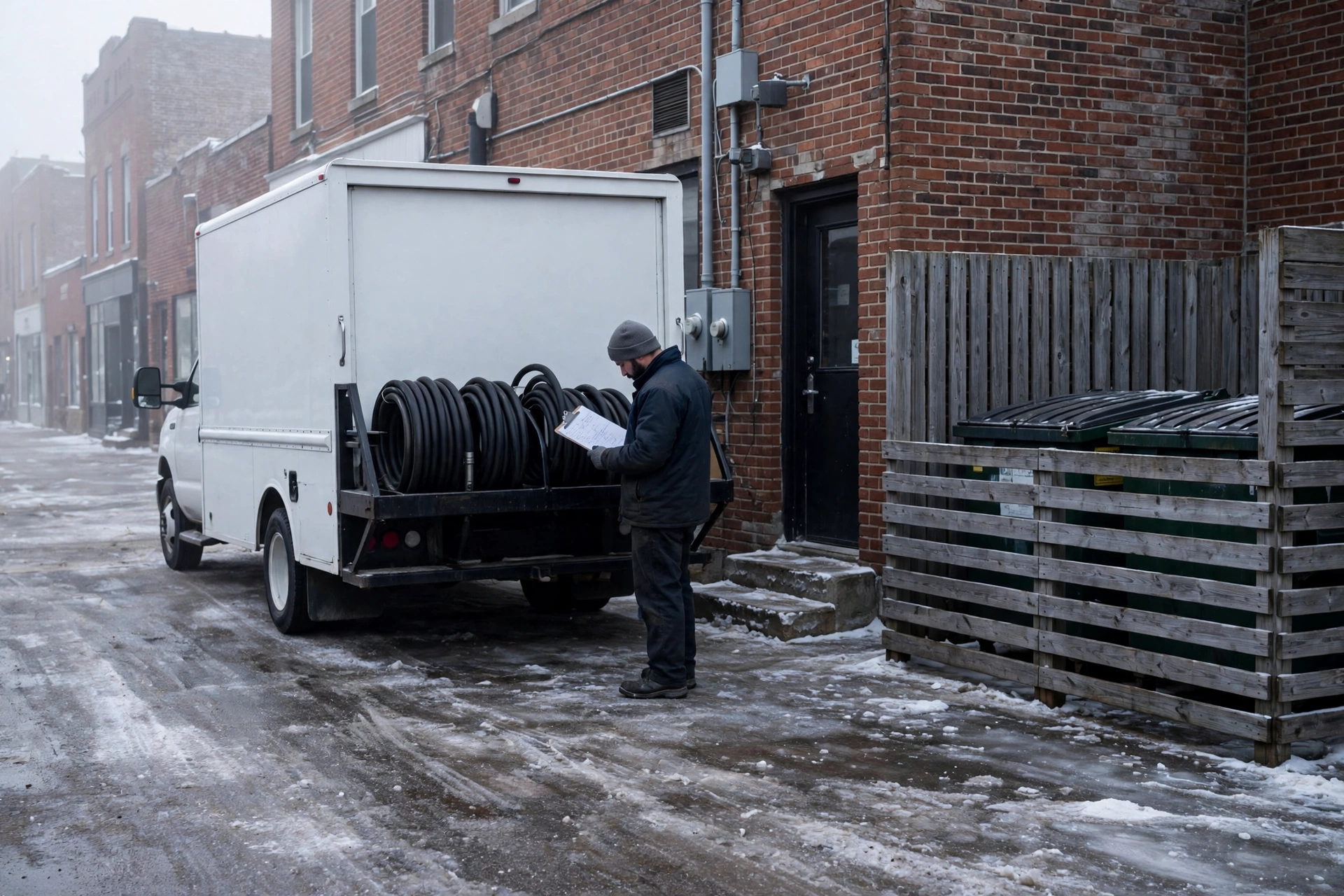
Featured locations
Each town has its own page, built around the one service that fits its kitchens best. Drive times are approximate, from Dearborn.
- Allen Park (about 12 minutes). Best fit: interceptor pumping. Fairlane Green, "the Hill," gathers national chains whose kitchens run exterior interceptors on corporate service schedules. See the Allen Park page.
- Wyandotte (about 21 to 24 minutes). Best fit: interior trap cleaning. The Biddle Avenue downtown row of locally owned gastropubs and restaurants stays busy with the social district. See the Wyandotte page.
- Southgate (about 13 minutes). Best fit: interceptor pumping, with compliance documentation. The Eureka Road chain corridor carries heavy traffic, and chain operators buy documented, scheduled service. See the Southgate page.
- Garden City (about 14 to 16 minutes). Best fit: interior trap cleaning. Ford Road carries a dense independent and ethnic mix: halal Italian, Greek diner, Syrian and Brazilian steakhouse kitchens. See the Garden City page.
- Taylor (about 15 to 17 minutes). Best fit: interceptor pumping. The Telegraph and Eureka chain corridors put chain pads and larger kitchens on exterior interceptors. See the Taylor page.
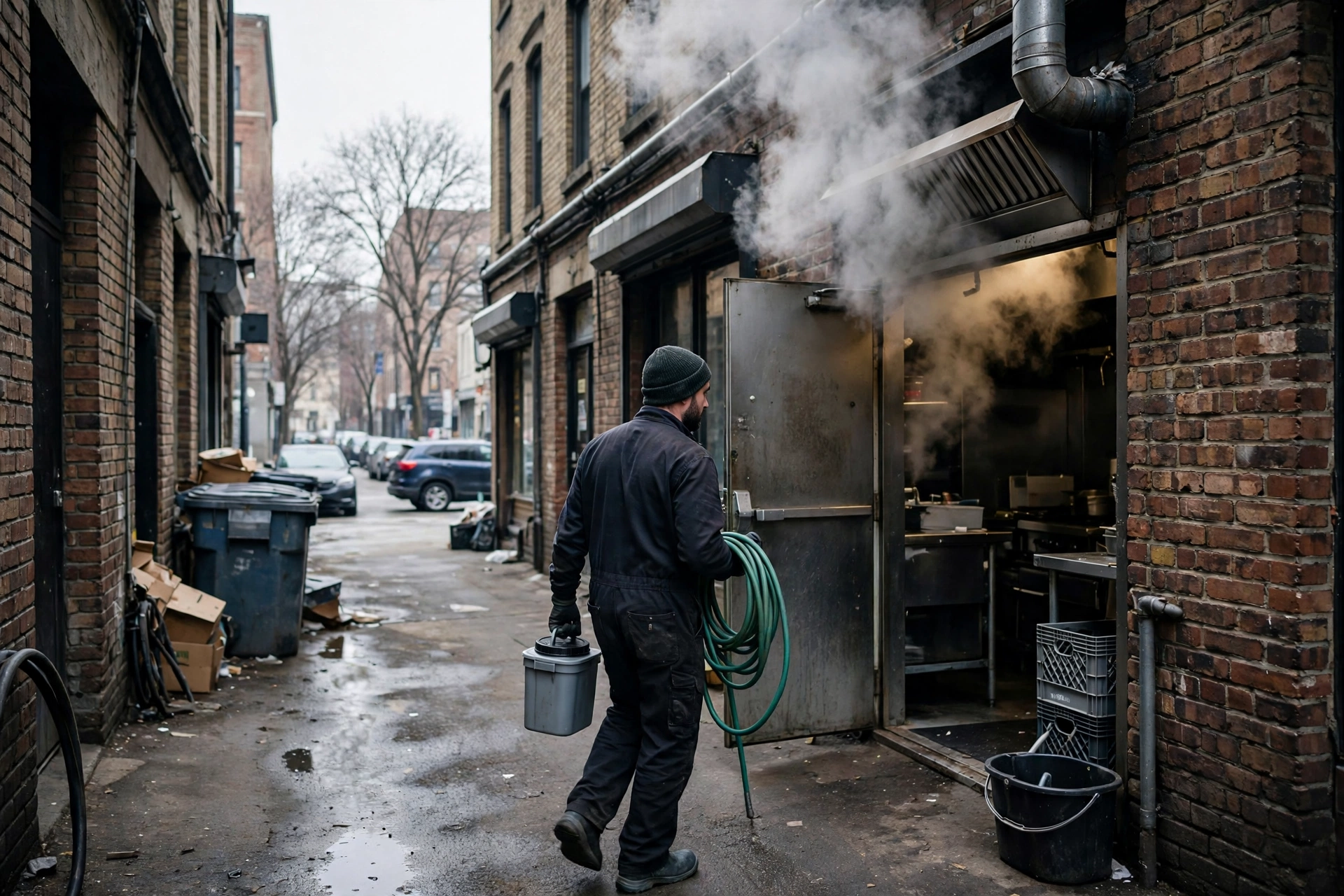
How the routes run
We group stops into scheduled rounds so a crew is not crossing the region for one trap. There are three groupings.
- Downriver: Allen Park, Melvindale, Wyandotte, Southgate, Riverview, Trenton, Grosse Ile, Ecorse, River Rouge, Lincoln Park and Taylor. These sit along Fort Street, West Jefferson and the Eureka and Telegraph corridors, so chains with interceptors and coney strips with small traps often share a round.
- West: Garden City, Dearborn Heights, Inkster, Romulus, Wayne, Plymouth and Northville. Ford Road, Michigan Avenue and the airport hotel row on Merriman Road anchor this round.
- North: Hamtramck, Highland Park, Ferndale, Berkley and Oak Park. Joseph Campau, Woodward and the Nine Mile and 12 Mile corridors hold many small kitchens close together.
Dearborn's own kitchens are served from the yard. Grosse Ile is a standing-route visit that bundles its few restaurants into one trip. Used cooking oil collection and line jetting ride along with the service visit they belong to.
How often a kitchen is on the route is set by the kitchen. The trade's working rule is to pump when grease and solids reach about a quarter of the trap's capacity. That is a scheduling benchmark, not a law. Kitchens with heavy frying commonly run every 4 to 6 weeks, and low-volume kitchens every 3 to 6 months. Those are the frequencies kitchens actually run, not requirements.
What governs the work in any of these towns
Dearborn has no FOG ordinance with a fixed pumping interval, trap-sizing table or manifest rule. What applies in Dearborn is the city code's limit on grease discharge, 1,500 mg/L, together with the Great Lakes Water Authority's pretreatment rules. Those rules call for interceptors where required, regular cleaning and maintenance at the owner's expense, and records kept and produced on request. They set no fixed interval.
The hauling is regulated by Michigan. Grease trap clean-out waste is a liquid industrial by-product under Part 121, so it moves only with a registered and permitted hauler, on a shipping document, and the restaurant keeps its copies.
Outside Dearborn your town and its sewer authority may have their own requirements. We do not speak for them here. Ask your sewer authority what applies, and keep your service records either way.
What the service costs
These are our prices.
| Service | Price |
|---|---|
| Interior grease trap cleaning, small indoor traps | $150 to $350 |
| Medium traps | $300 to $600 |
| Large exterior interceptors | $500 to $1,000 or more, by capacity and waste volume |
| Emergency call-out | One and a half to two times the standard service price |
| Used cooking oil collection | No charge for clean oil |
Line jetting is priced with the service visit it rides with. Beyond these ranges, the price comes down to the capacity of the trap or interceptor, how easy it is to reach, and how much waste is in it.
Talk to us about your route
Not sure which round your kitchen falls on, or whether a standing schedule fits your volume? Call (313) 351-8079 and we will place you on the right one.
Questions
Which towns do you serve?
Dearborn plus 23 towns: Allen Park, Melvindale, Wyandotte, Southgate, Riverview, Trenton, Grosse Ile, Ecorse, River Rouge, Garden City, Lincoln Park, Dearborn Heights, Taylor, Inkster, Romulus, Wayne, Hamtramck, Highland Park, Ferndale, Berkley, Oak Park, Plymouth and Northville.
My town is not on the list. Can you still help?
Call (313) 351-8079 and tell us where you are. The list above is where we run scheduled rounds, and we will tell you plainly whether we can reach you.
How do I know which service fits my kitchen?
Size and location of the unit decide it. Small indoor traps get interior cleaning, and large exterior interceptors get pumping and cleaning. Each town page names the service that fits that town's kitchens best, but your own unit is what counts. A call or a look at the trap settles it.
How are your rounds organized?
In three groupings: Downriver, west and north. Grouping stops lets one crew cover a stretch of road in one trip. Grosse Ile is served as a bundled visit on a standing route.
How often should my trap be cleaned?
There is no fixed interval set for Dearborn. The trade's benchmark is to pump when grease and solids reach about a quarter of the trap's capacity. High-volume kitchens commonly run every 4 to 6 weeks, and low-volume kitchens every 3 to 6 months. We can set a schedule from how fast your unit fills.
Do the Dearborn rules apply in my town?
The 1,500 mg/L limit is in Dearborn's own code, and the pretreatment rules we describe are the ones that govern Dearborn. Michigan's Part 121 rules on hauling the waste apply to the waste itself. For anything specific to your town's sewer rules, ask your sewer authority. We do not state another town's rules.
Does the price change depending on my town?
Our price is set by the capacity of the trap or interceptor, how easy it is to reach and how much waste is in it. This page lists no separate distance charge. Tell us your town when you call and we will confirm your quote.
What do you charge?
Small indoor traps cost $150 to $350. Medium traps cost $300 to $600. Large exterior interceptors cost $500 to $1,000 or more, by capacity and waste volume. Emergency call-out is one and a half to two times the standard service price. Clean used cooking oil is collected at no charge.
Why is Northville treated differently?
Northville is about 30 minutes off-peak and 45 to 60 minutes at peak. We serve it, but we plan those stops around the drive.
Do you collect used cooking oil in every town?
Used cooking oil collection is part of our service set, and clean oil is collected at no charge. It is the best-fit pairing in towns with heavy fryer loads, such as Ecorse, River Rouge, Inkster, Highland Park, Trenton and Ferndale. In winter, oil can freeze in outdoor bins, so the fix is a bin swap, an empty one delivered and the full one carried away.
What if I have an emergency backup?
Call (313) 351-8079. Emergency call-out is priced at one and a half to two times the standard service price. The Romulus airport hotel row is a place where we pair interceptor pumping with emergency cover.
What records will I get?
Scheduled service comes with service records and compliance documentation. Your sewer authority may ask for records of cleaning and maintenance, and a hauler must give you a shipping document for the waste. Keep your copies together.
How do I set up scheduled service?
Call and give us the basics about your kitchen. We will place you on the round for your area and set the schedule from your volume.
Request service in your town
Fill in the form and we will call you back. Name and phone are required. Everything else is optional. A consent box is required. The more details you give, the better we are able to help you.
Or call (313) 351-8079.