Dearborn Grease Trap keeps a plain record of the kitchens it works in, and this page is where that record is shown. Most of it is routine grease trap cleaning in small kitchens where the trap sits under a prep sink or behind a line, plus grease interceptor pumping for the larger exterior tanks that chain and hotel kitchens run. The rest is the work that keeps those two from turning into a problem. On a set schedule, grease trap maintenance keeps the trap from ever getting near the line. When a drain slows down, line jetting clears the run before it backs up. The fryer oil leaves with us through used cooking oil collection. And when a kitchen backs up in the middle of a shift anyway, emergency grease trap service is the call that gets a truck rolling.
Talk to us before you scroll
If you have a trap, a tank or a notice on your desk and want to know what the work would look like in your kitchen, call (313) 351-8079. Tell us the kind of kitchen you run and what is worrying you, and we will say what the visit involves.
Jobs told in full elsewhere
Two kinds of jobs are told in full on other pages, and we do not retell them here.
- The home page carries our featured job. Read it there for the whole account, from first call to the records left with the owner.
- Each service page (interior trap cleaning, exterior interceptor pumping, scheduled maintenance, line jetting, used cooking oil, emergency call-out) carries its own account of a job in that service, with its before and after images.
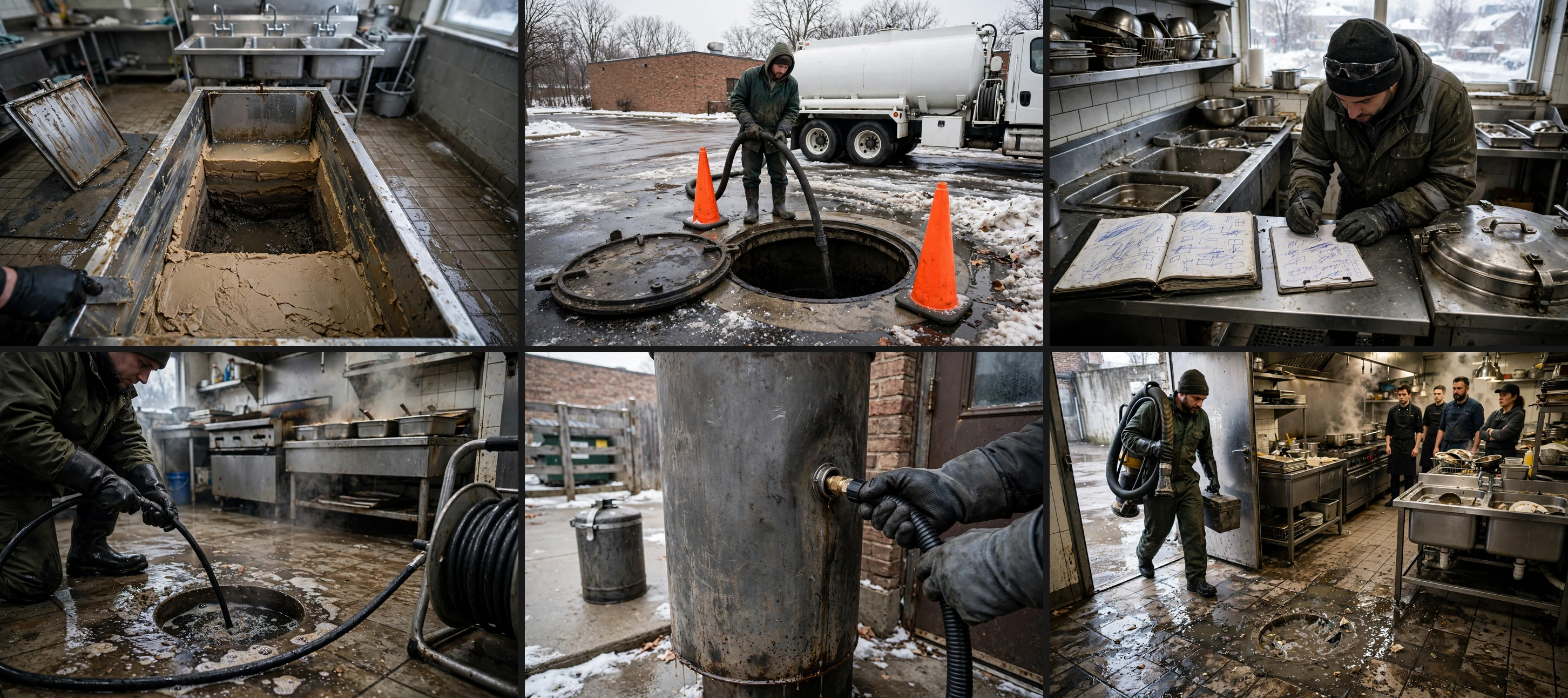
Wyandotte: a Biddle Avenue gastropub
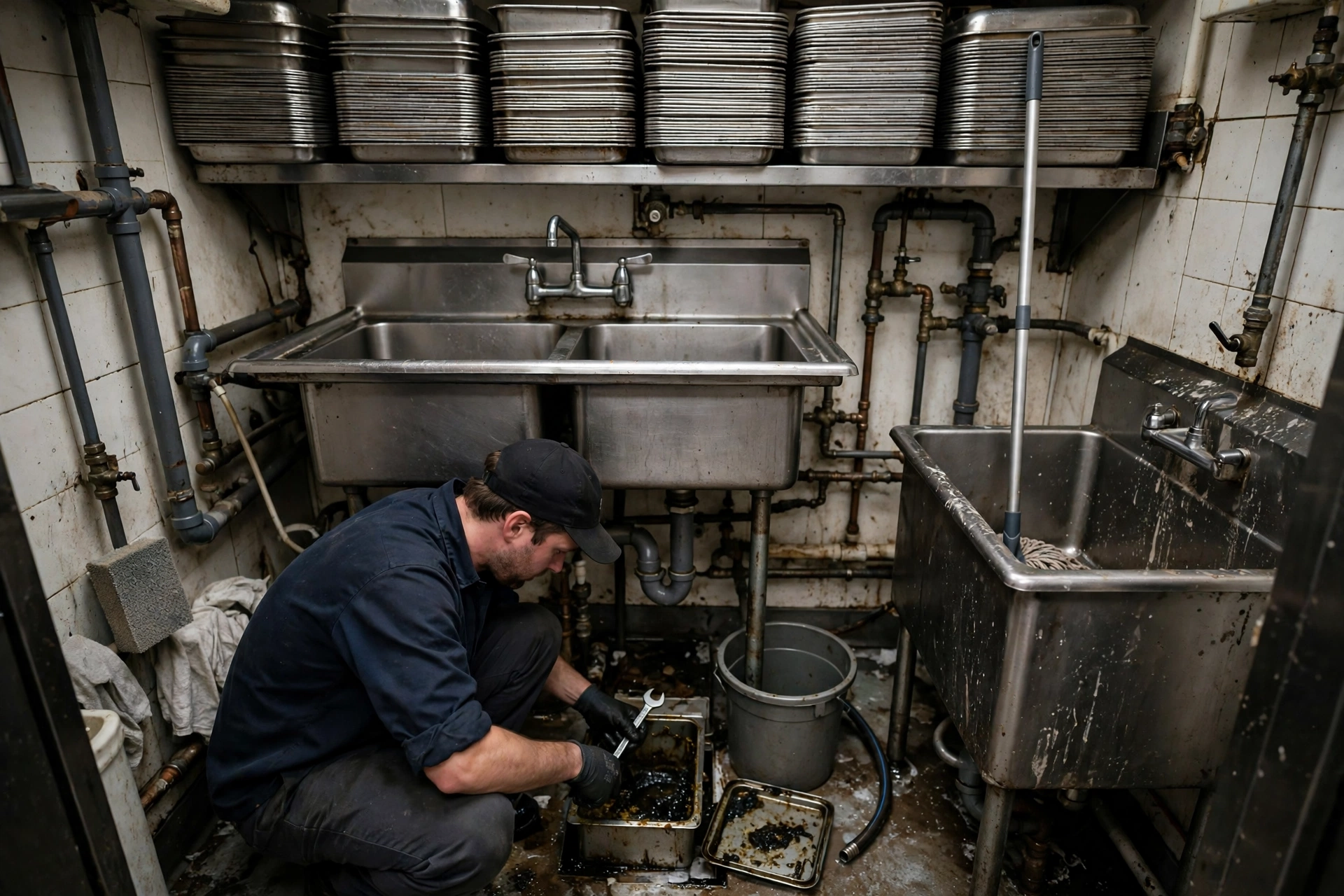
The kitchen sits on the downtown Biddle Avenue row, where the social district keeps the dining room full on weekend evenings. The trap was a medium unit, and the cook who closed each night had noticed the kitchen sink draining slower by the end of a busy week. When the crew lifted the lid, the grease cap was thick and the solids below it had built up past the point where the trade would normally pump, which is when grease and solids reach about a quarter of the trap's capacity.
The crew pumped out the liquid and the sludge, scraped the walls, cleared the baffles and checked the lid and fittings. The owner was left with a service record and the shipping document for the hauled waste, which Michigan's Part 121 rules treat as a liquid industrial by-product. We also set a visit rhythm around the weekend rush, so the trap gets cleaned before the busiest stretch rather than after it.
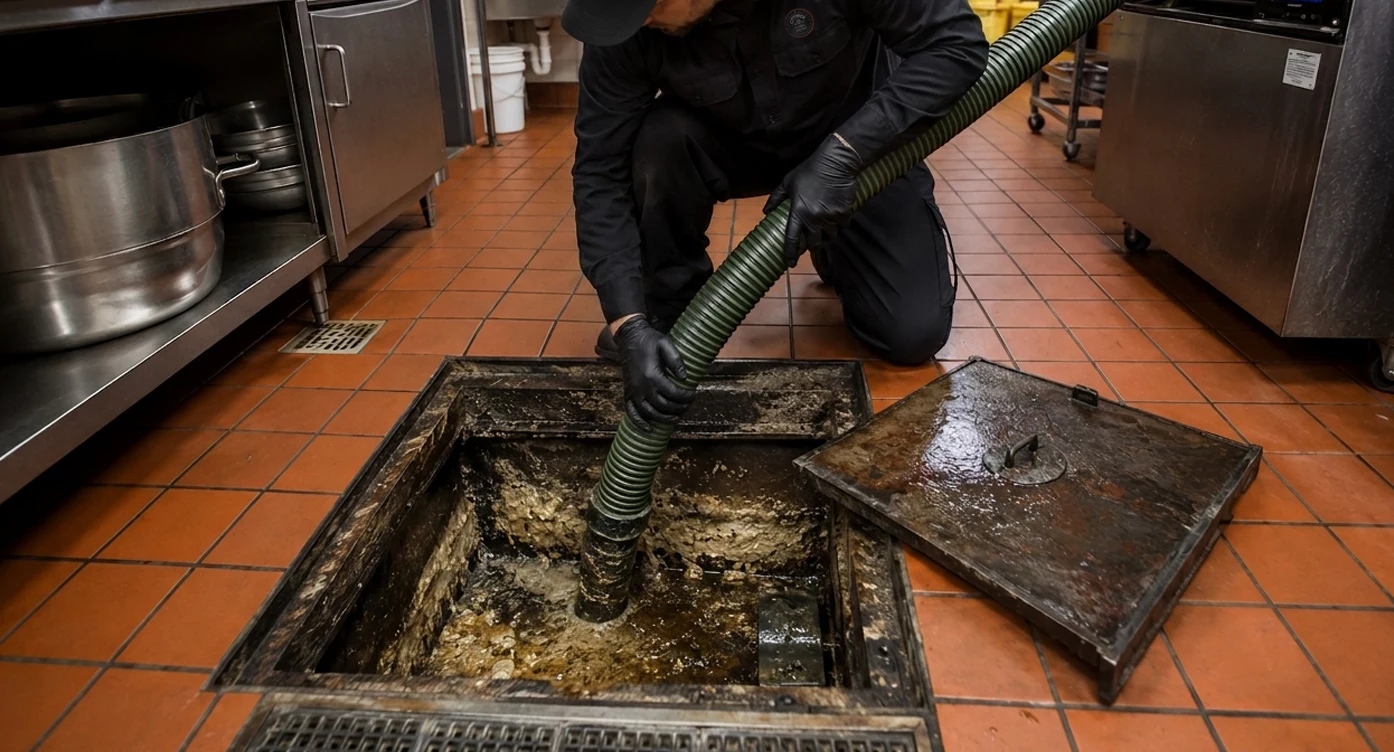
Riverview: a Fort Street coney
A coney on the Fort Street strip runs the flat-top and the fryer from open to close. The owner called about a smell near the back drain and a floor drain that gurgled when the dish machine emptied. The trap was a small indoor unit, due for a pump-out, but the drain line behind it was also coated.
The crew cleaned the trap first, then ran line jetting on the drain behind it so the flow cleared all the way to the main. Jetting was priced with the service visit it rode with. The owner kept the service record and a note of when the trap should be looked at next, based on how fast that kitchen fills a trap.
Mid-page invitation
Seeing your own kitchen in one of these entries is a good sign it is time to call. Reach us at (313) 351-8079, describe what you are seeing, and we will tell you what the visit would cover and how it is priced.
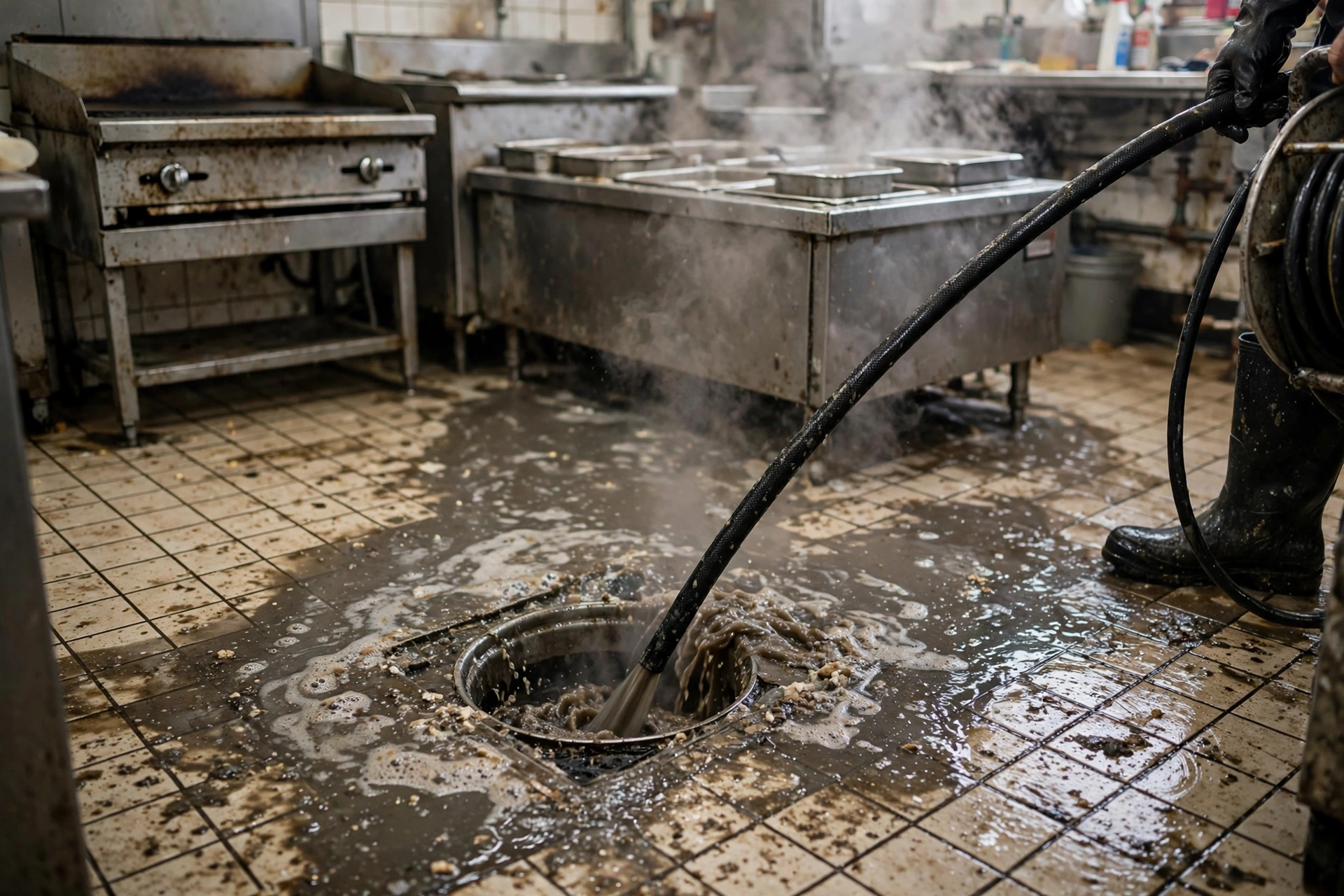
Ferndale: a Nine Mile independent
An independent restaurant in the Nine Mile and Woodward district fries a lot and had two separate problems: a trap that was filling quickly and a fryer oil container that had gone more than it should between pickups. The oil was clean, which matters, because we collect clean used cooking oil at no charge.
The crew cleaned the trap and swapped the oil container in the same stop, so the kitchen did not have to schedule two visits. The owner kept the service record and a pickup rhythm for the oil. With a fryer-heavy menu, the trap fills faster than the owner had assumed, so the visits were set closer together than the kitchen had been running.
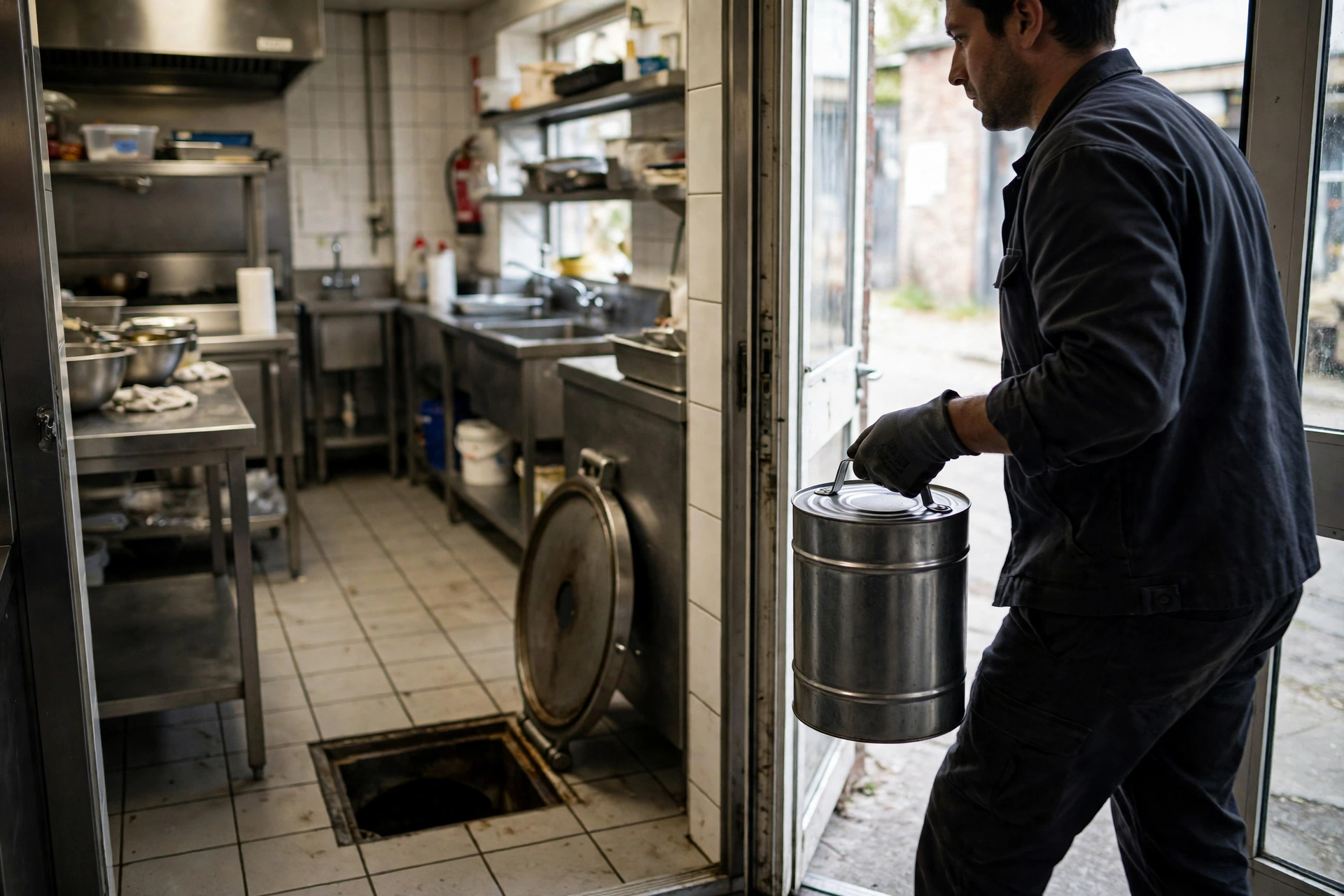
Melvindale: an Oakwood Boulevard family kitchen
A family-run kitchen on Oakwood Boulevard works with a small indoor trap under the prep sink, in tight quarters with little room to kneel. The family had never had a schedule for it. They called after a sink backed up on a Saturday, and the crew treated it as an emergency call-out, priced at one and a half to two times the standard service price.
The crew cleared the backup, pumped the trap and checked the baffles. Afterward the family moved to a regular visit so the next one would not arrive on a weekend. They kept the service record, which they can show an inspector on request.
What the work costs
These are our prices, and they are the same on every page.
| Service | Price |
|---|---|
| Interior grease trap cleaning, small indoor traps | $150 to $350 |
| Medium traps | $300 to $600 |
| Large exterior interceptors | $500 to $1,000 or more, by capacity and waste volume |
| Emergency call-out | One and a half to two times the standard service price |
| Used cooking oil collection | No charge for clean oil |
Line jetting is priced with the service visit it rides with. What moves a price inside these ranges is the size of the unit, how hard it is to get to, and how much waste comes out.
What the rules do and do not say
Dearborn has no fixed pumping interval for traps. What applies is the city's code limit on grease discharge, 1,500 mg/L, and the regional sewer authority's rules, which call for interceptors where required, cleaning and maintenance at the owner's expense, and records kept and produced on request. Hauling the waste falls under Michigan's Part 121, which means a licensed hauler and shipping documents. The quarter-full rule and the visit rhythms in the entries above are how kitchens in the trade schedule their work, not requirements.
Book a visit
Call (313) 351-8079, or send the form below. Name and phone are required and everything else is optional. A consent box is required before the form can be sent.
The more details you give, the better we are able to help you.
- Name (required)
- Phone (required)
- Business or kitchen type (optional)
- Town (optional)
- What you need: trap cleaning, interceptor pumping, scheduled service, jetting, oil collection or emergency (optional)
- Anything else we should know (optional)
- Consent to be contacted about this request (required checkbox)