Dearborn Grease Trap builds grease trap maintenance programs around one question: how fast does your trap fill? A scheduled grease trap service visit is timed to land before the trap holds about a quarter of its capacity in grease and solids, and each visit is either grease trap cleaning of an indoor unit or grease interceptor pumping on an outdoor one. Every visit closes with FOG compliance documentation, the paper you hand to a sewer authority or a health inspector when one asks. The same route can pick up used cooking oil collection from your fryers and add line jetting for drain runs that keep slowing, so one schedule covers the grease side of the kitchen.
Most kitchens come to us after a backup, a smell in the dining room, a failed inspection or a notice. Others come before any of that, because they would rather not learn the schedule the hard way. A program replaces guessing with a calendar built from your own kitchen's volume.
Talk through a schedule with us
If you already know your trap is filling faster than you pump it, or you have no schedule at all, call (313) 351-8079. Tell us what kind of kitchen you run and where the trap sits, and we will start from there.
What actually governs grease in Dearborn
Dearborn has no FOG ordinance. The city code has no trap-sizing table, no fixed pumping interval and no city manifest rule for restaurants. Some neighbouring towns run programs with set intervals, but those belong to those towns. Here, three layers of rules apply.
- Dearborn's own code (Chapter 19, section 19-145). Grease that obstructs flow is a prohibited discharge. Floating fats, oil and grease that interfere with the treatment works are prohibited. Fats, oil and grease above 1,500 mg/L, measured as a 24-hour average of samples, are prohibited.
- The regional sewer authority's pretreatment rules (GLWA). Dearborn buys sewage treatment from the Great Lakes Water Authority. Its rules require interceptors where the authority deems them necessary. They must be regularly inspected, cleaned and repaired by the user at the user's expense. The authority may require records of inspection, cleaning and maintenance. The rules set no fixed interval. The duty is regular cleaning, and records are how you prove it.
- Michigan's Part 121 rules for the waste itself. Grease trap clean-out residue is a liquid industrial by-product. It may be hauled only by a registered and permitted transporter, on a shipping document for each shipment. The restaurant must use a registered transporter and keep its own copies. A septage hauler's licence does not cover this waste.
On the food side, Wayne County Environmental Health licenses and inspects food-service facilities in Dearborn, and most establishments receive two routine evaluations a year. A clean, documented trap makes those visits easier.
Because no interval is written down, you set the interval, and you need a sound reason for it. That is what a program is.
How we build a program from the quarter-capacity benchmark
The trade's working rule is to pump when grease and solids together reach about a quarter of the trap's capacity. It is a scheduling benchmark that haulers and many kitchens use. It is not Dearborn law, and we do not teach it as law. We use it because it explains why a trap that is pumped late stops working: with less open volume, grease no longer has time to separate and starts moving downstream.
To turn the benchmark into dates, we need three things from you:
1. The trap itself. Where it sits, its size, and whether it is an indoor trap or an outdoor interceptor. 2. Your kitchen's volume. Fryer load, covers, how many shifts, how much dishwashing runs through it. 3. A reading on the first visit. We measure how full the unit is when we open it. The next date follows from that reading and the rate your kitchen fills it.
Then we adjust. If the trap is past a quarter at the second visit, the interval shortens. If it is well under, it lengthens. These are the frequencies kitchens actually run, not requirements:
| Kitchen volume | Frequency kitchens commonly run |
|---|---|
| High volume, heavy fryer use | Every 4 to 6 weeks |
| Moderate volume | Monthly to quarterly |
| Low volume | Every 3 to 6 months |
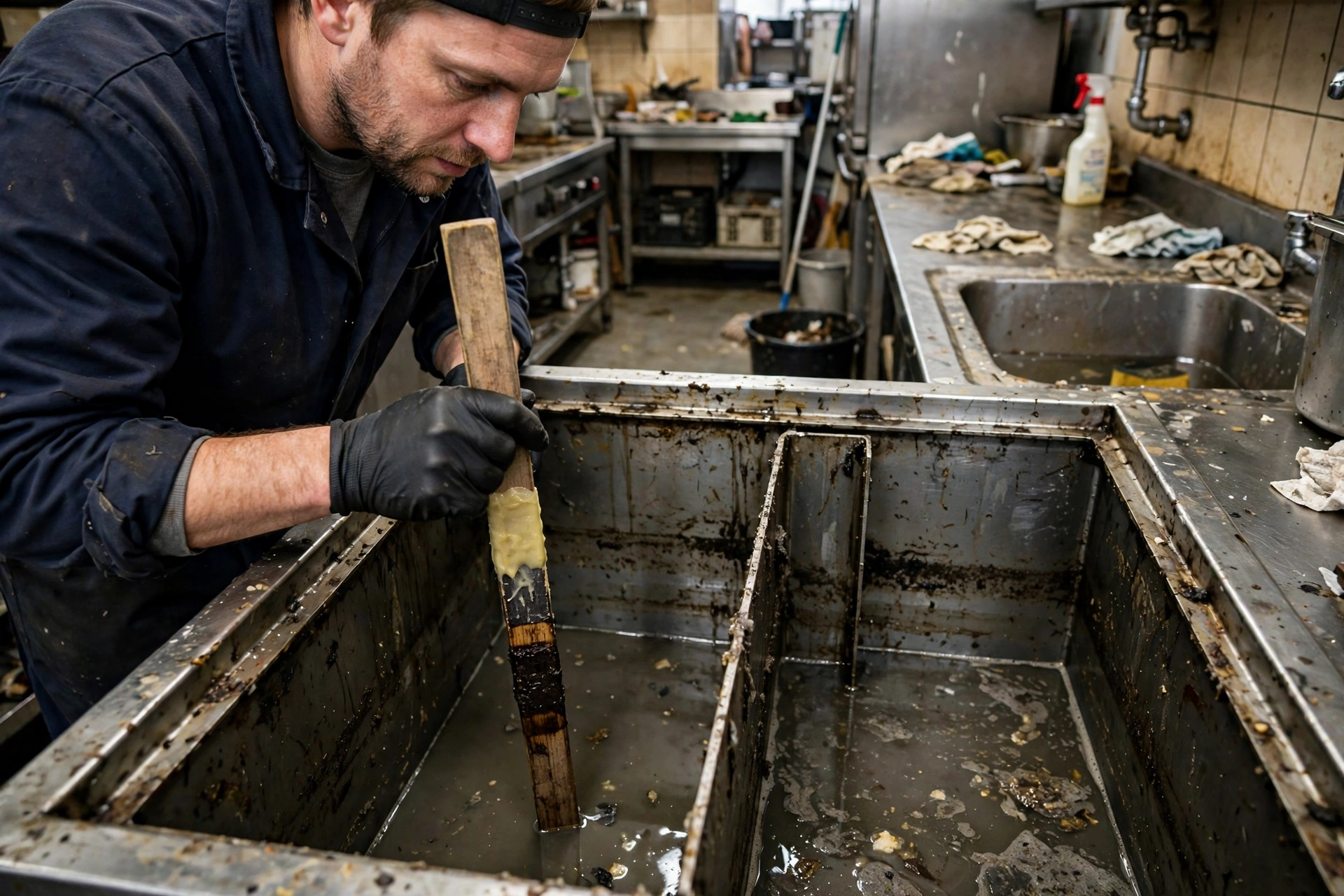
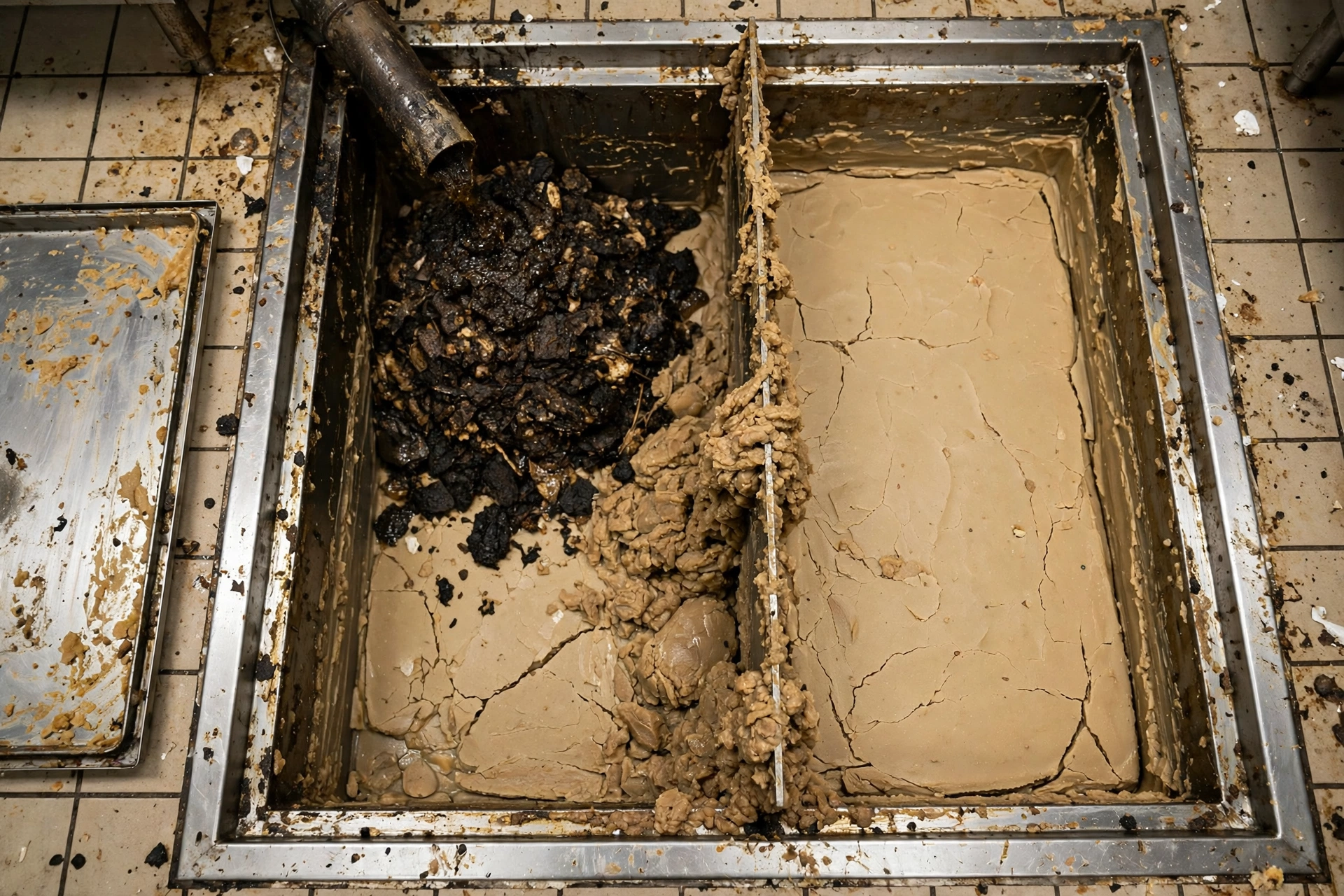
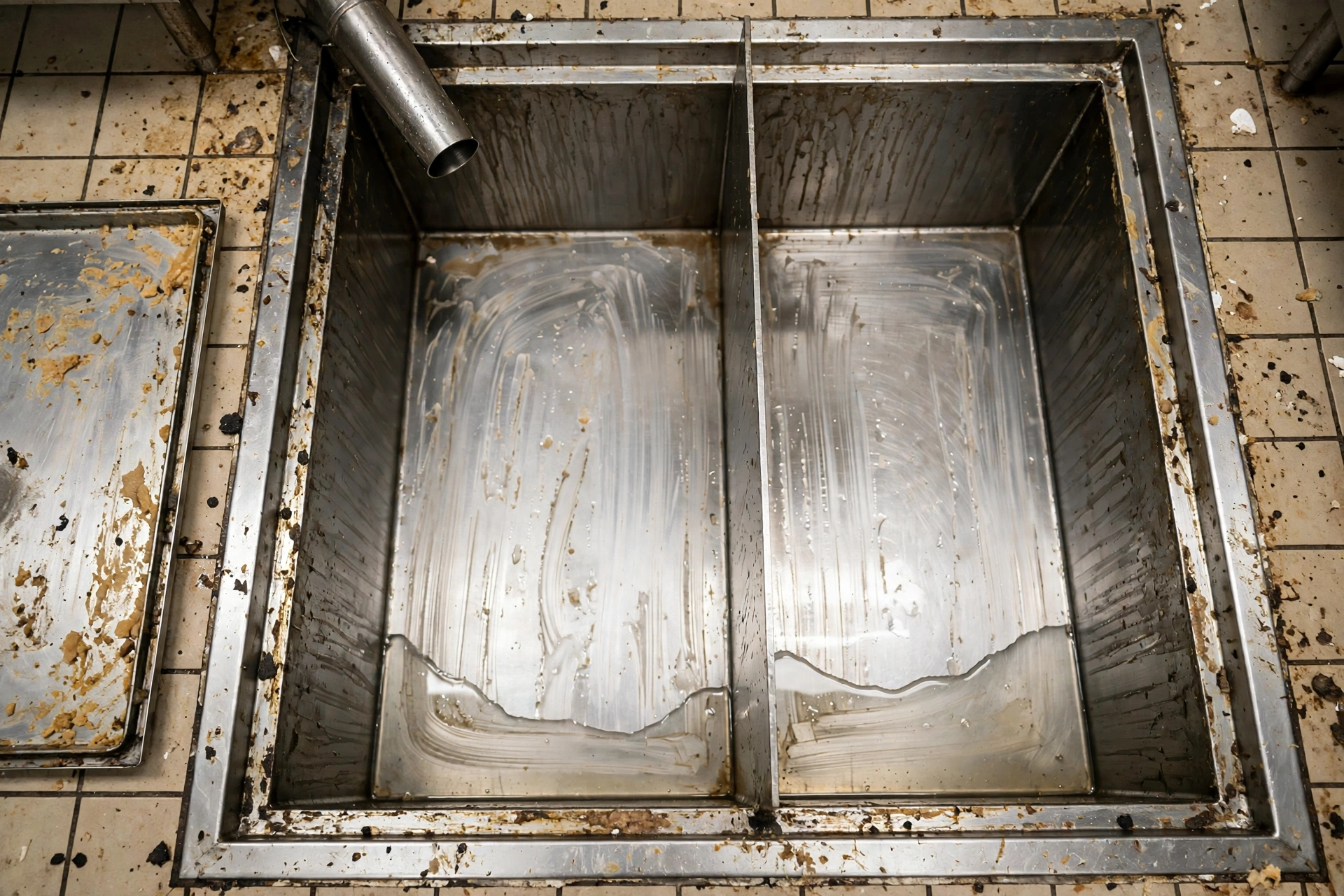
Before and after
How a scheduled visit goes
1. We confirm the plan and the access.
2. We open the unit and read it. We note the grease cap, the liquid and the solids, and record how full the trap is against the quarter benchmark.
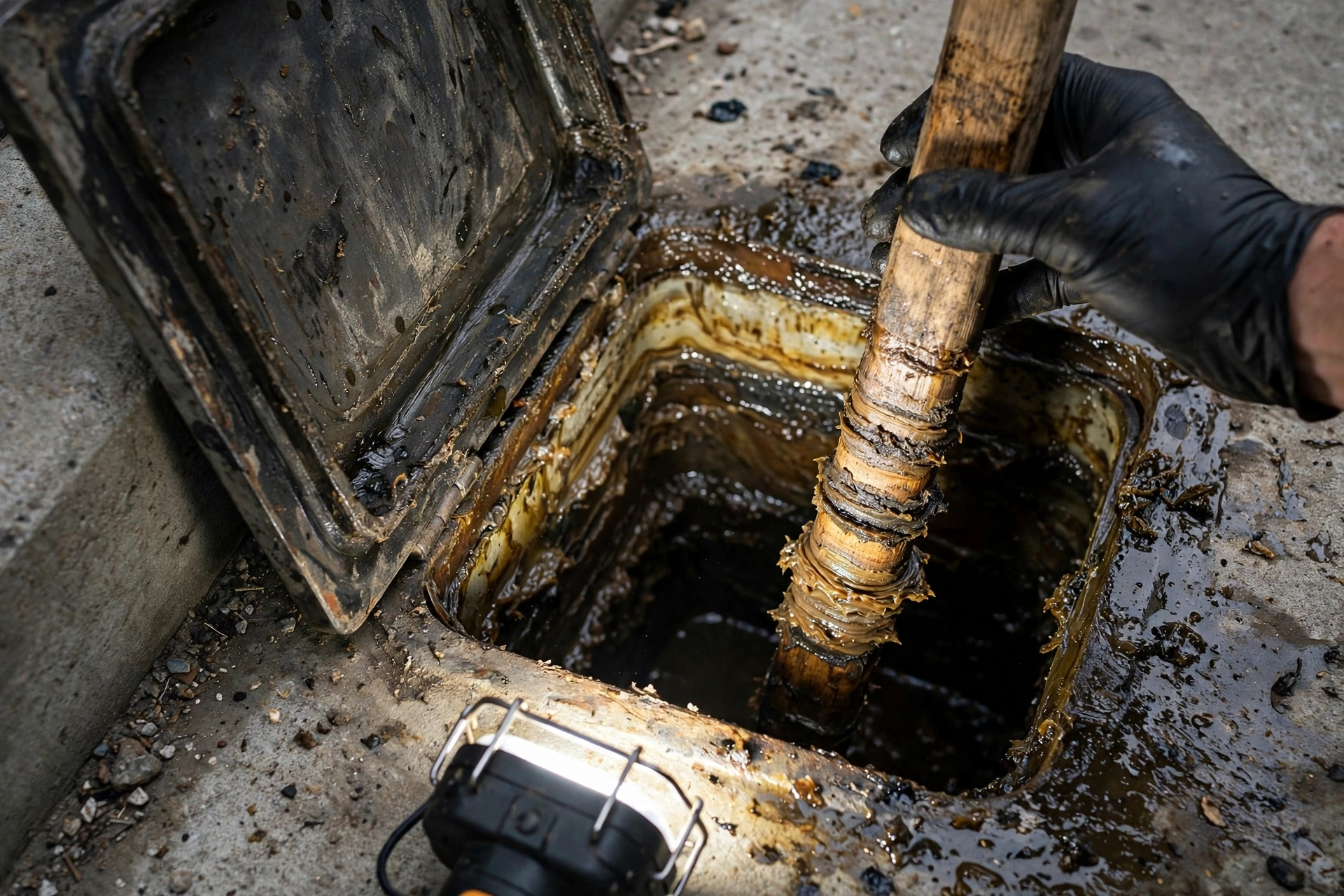
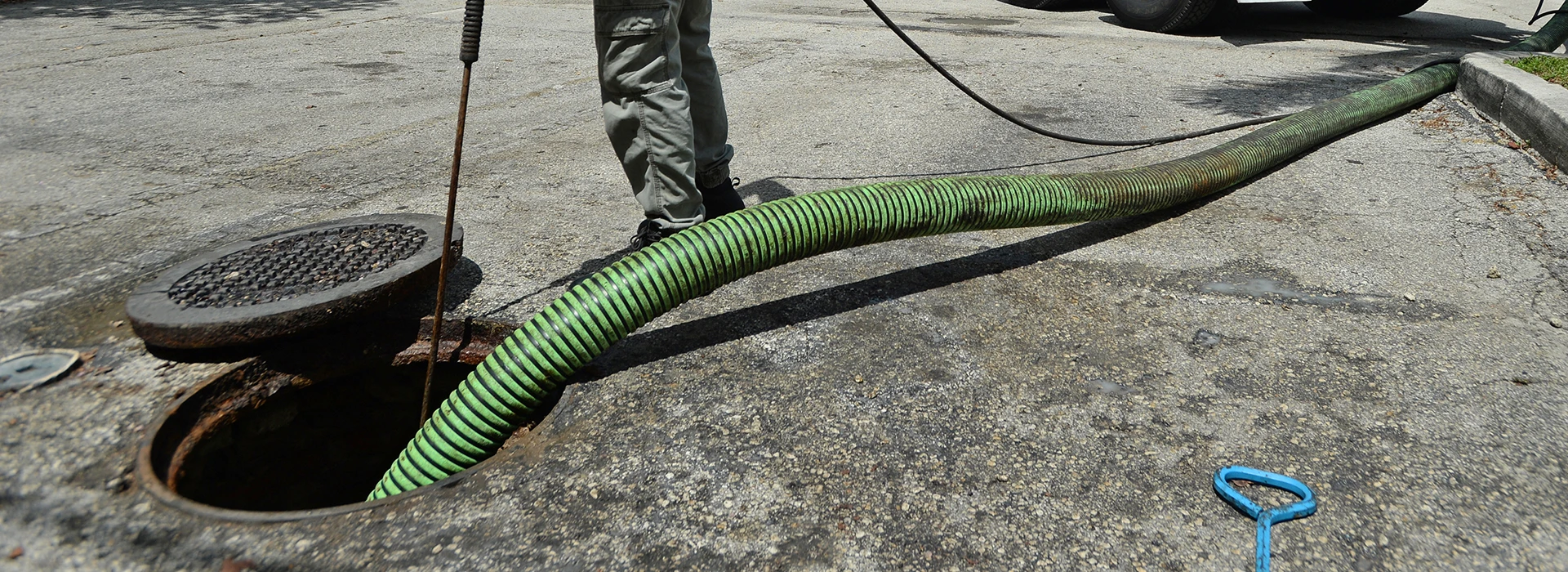
3. We pump out the grease, liquid and solids. For an exterior unit this is grease interceptor pumping with the hose run from the truck.
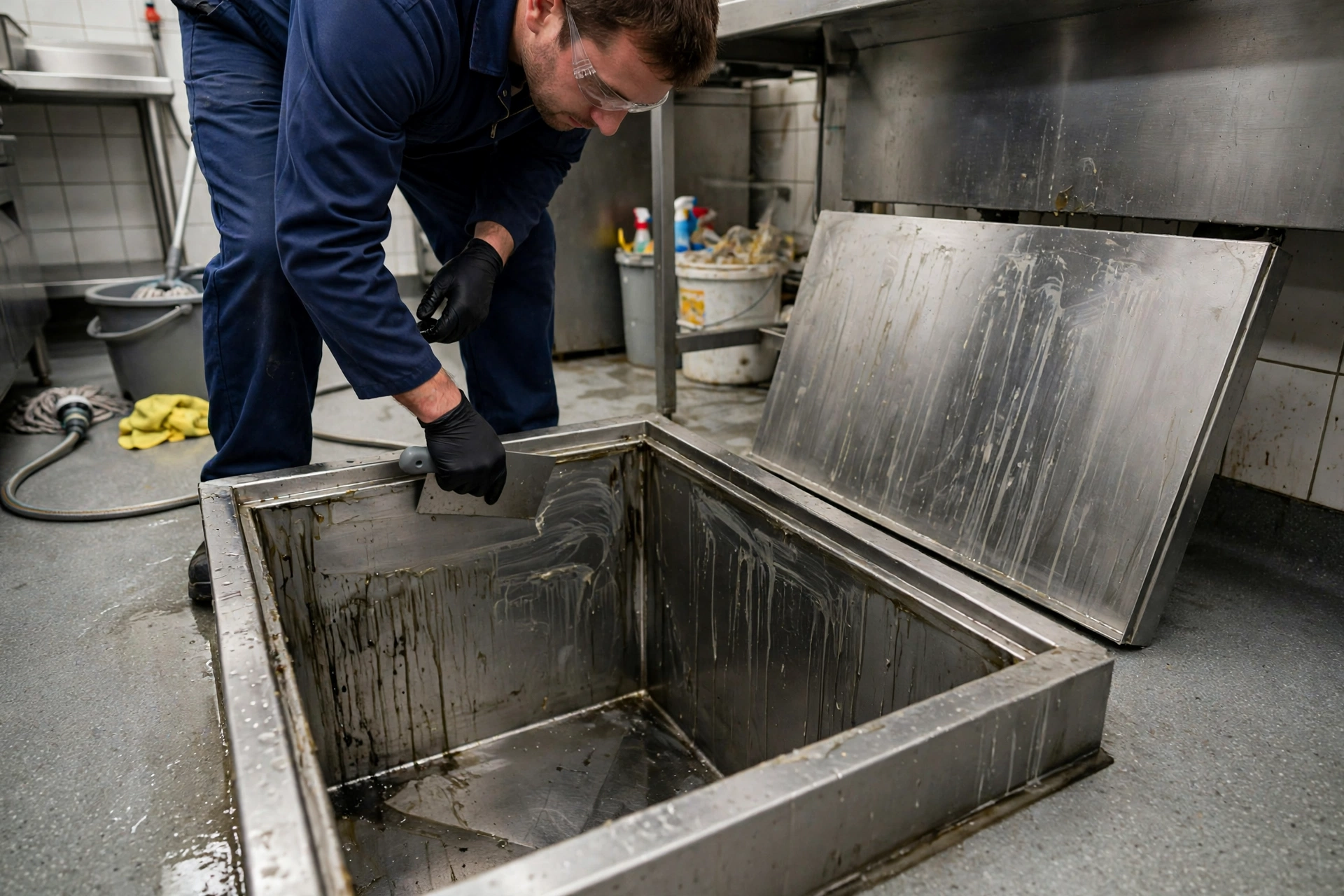
4. We scrape the interior and clear the baffles. We check the lid, baffles, inlet and outlet for condition.
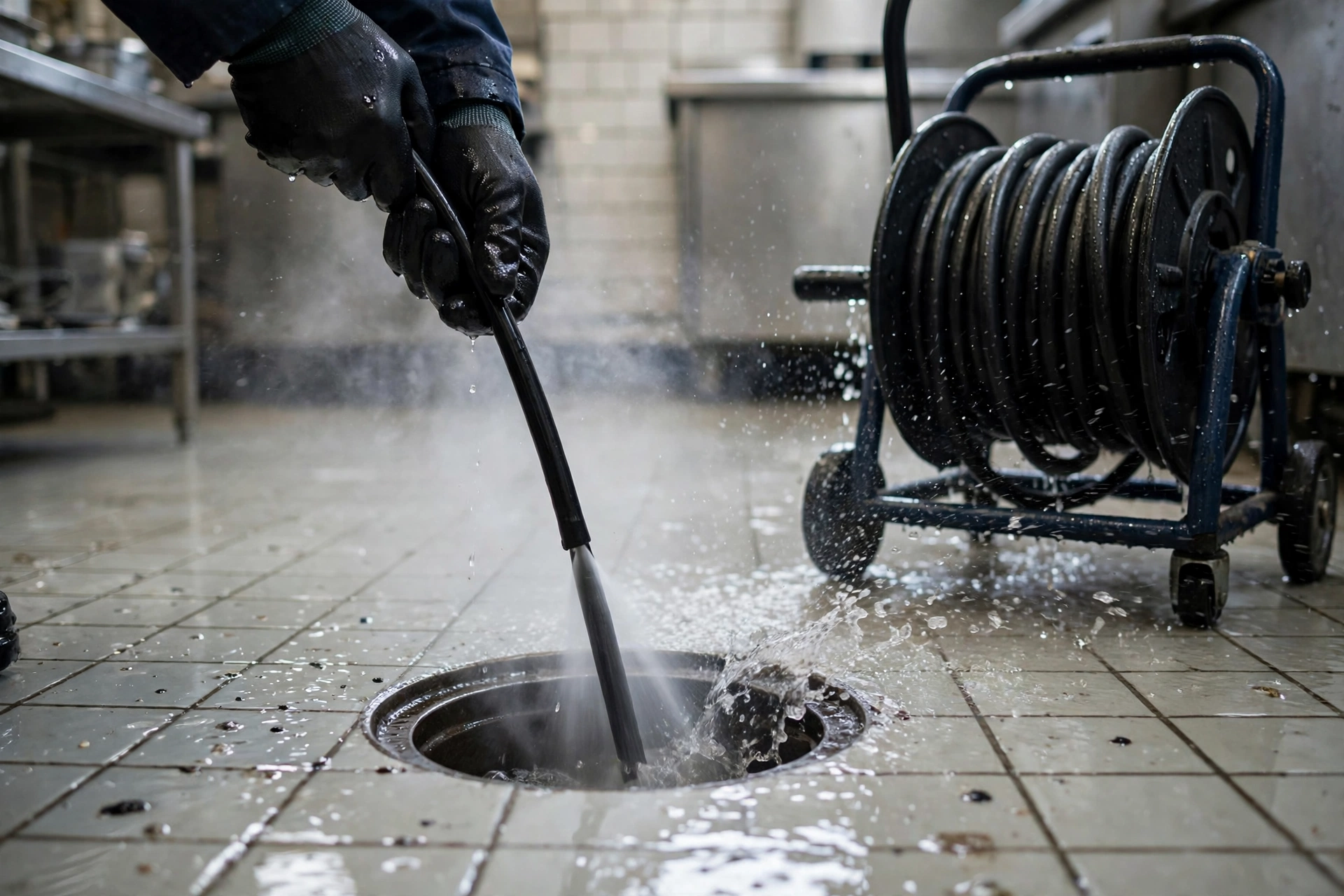
5. We close the unit and add any drain work. If a line has been slowing, line jetting is done on the same visit.
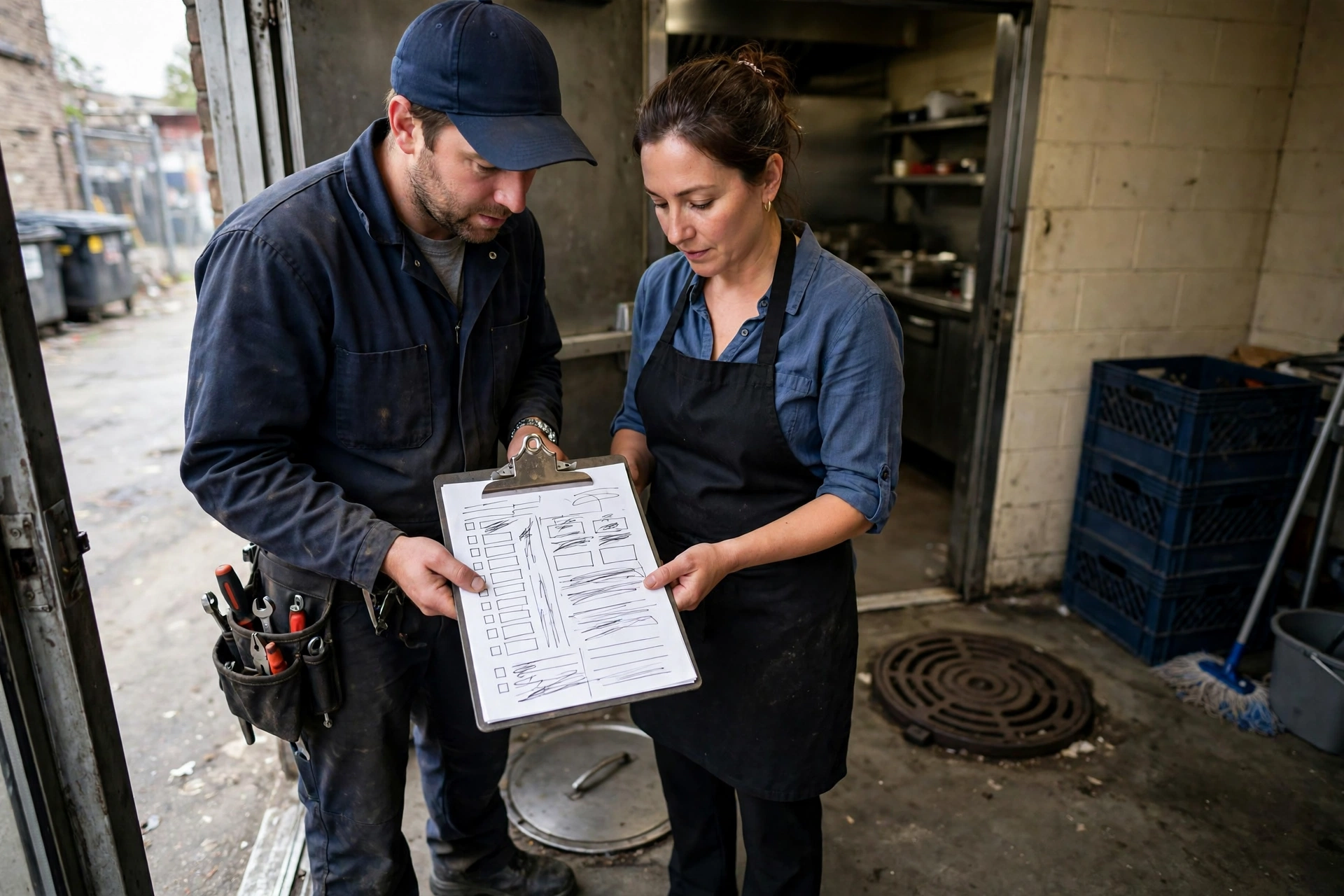
6. We write it up and hand over the paperwork.
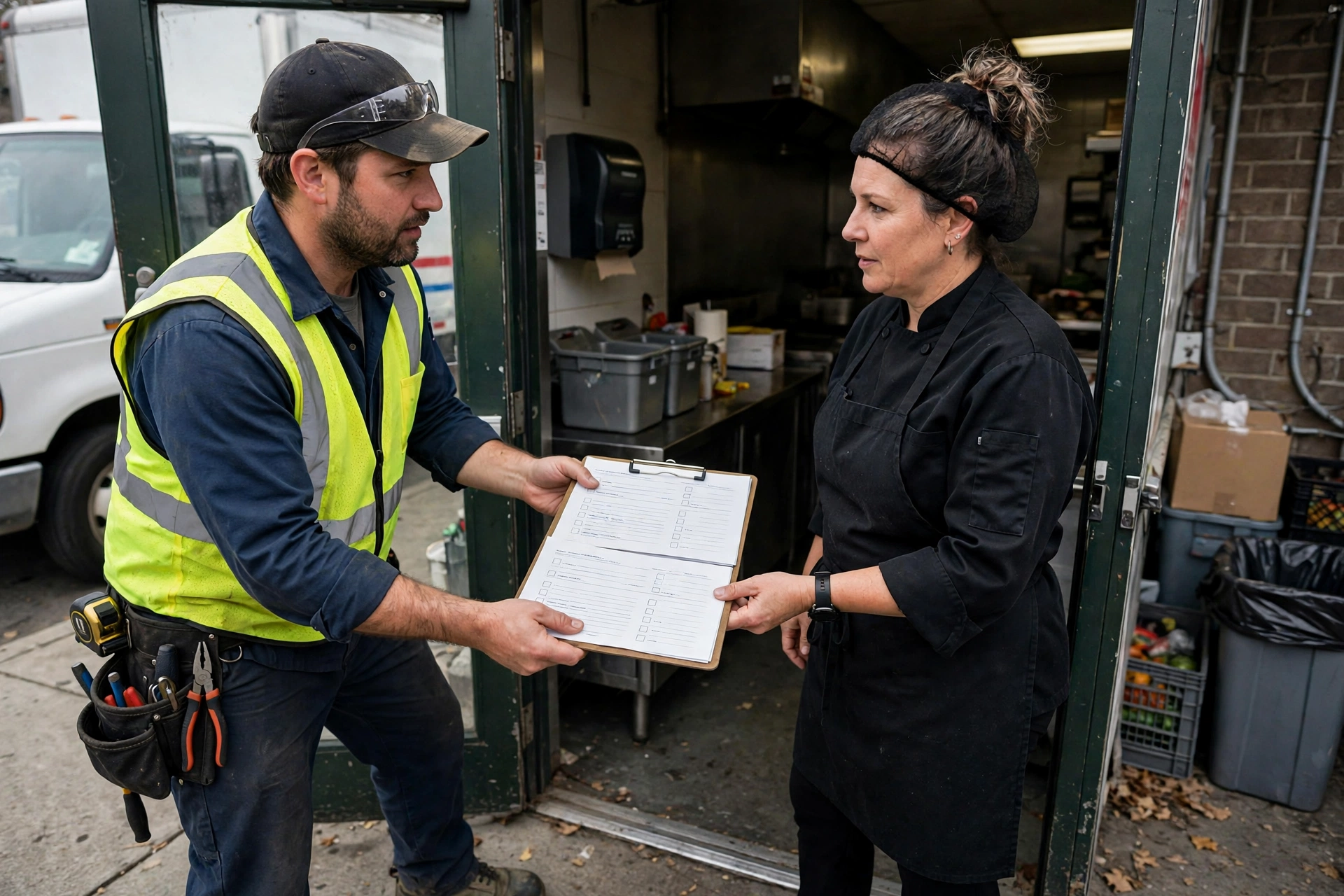
What each visit includes, documents, and what you keep
| What the visit includes | Grease cap, liquid and solids pumped out; interior scraped; baffles cleared and inspected; lid, inlet and outlet condition checked; hauling to a registered transporter's disposal route. |
|---|---|
| What the crew documents | The date, the unit serviced, how full it was against the quarter benchmark, what was removed, the condition of its parts, and anything needing repair. |
| What you keep | A service record for every visit and the shipping document for the waste, filed in order so you can produce them on demand. |
There is no city manifest rule. The duty that applies is the sewer authority's: regular cleaning, proven by records you can produce when asked. The shipping document comes from Michigan's Part 121 rules, which require one for each shipment of the waste. Keep the records in one folder at the kitchen, so a sewer authority notice or an inspector's question is answered in minutes.
Used cooking oil, and a note on drain lines
Used cooking oil collection rides the same route. Clean oil is collected at no charge. We set up sealed containers sized to your fryers and schedule pickups to match.
Line jetting is priced with the service visit it rides with. We do not publish a separate jetting price. The scope of the line decides the work, and we quote it with the visit.
Winter changes the schedule
Cold thickens grease. Fat that stays loose in warm weather congeals as temperatures drop and can set into a solid mass. Hot dishwater cooling in an outdoor interceptor leaves its grease at the top, and in deep cold that layer can harden. Oil poured down a drain can set inside the pipe.
The practice that follows is to check traps more often in winter, not less. If your kitchen runs a quarterly schedule, we may suggest an extra reading in the coldest weeks. Used oil also thickens in outdoor bins, so we swap bins, delivering an empty one and carrying the full one away.
This is practice taught by the trade and by providers that serve Dearborn. No local authority publishes winter rules for this work, so we do not give you a winter number. The first cold-weather reading tells us what your kitchen needs.
Pricing
These are our prices for service visits inside a program.
- Interior grease trap cleaning, small indoor traps: $150 to $350
- Medium traps: $300 to $600
- Large exterior interceptors: $500 to $1,000 or more, by capacity and waste volume
- Emergency call-out: one and a half to two times the standard service price
- Used cooking oil collection: no charge for clean oil
- Line jetting: priced with the service visit it rides with
What moves a price inside those ranges is the capacity of the unit, how hard it is to get to (basement and underground units and long hose runs take more work), and how much waste comes out. Kitchen volume sets how often you pay, not what each visit costs. A tighter schedule means smaller loads each time.
Talk to us about your kitchen
Whether you want a schedule built from scratch or a look at one that is not working, call (313) 351-8079. We will ask about your trap, your fryer load and your busy hours, and give you a price for the first visit.
Featured job: a Ford Road diner put on a six-week schedule
Chapter 1. The call.
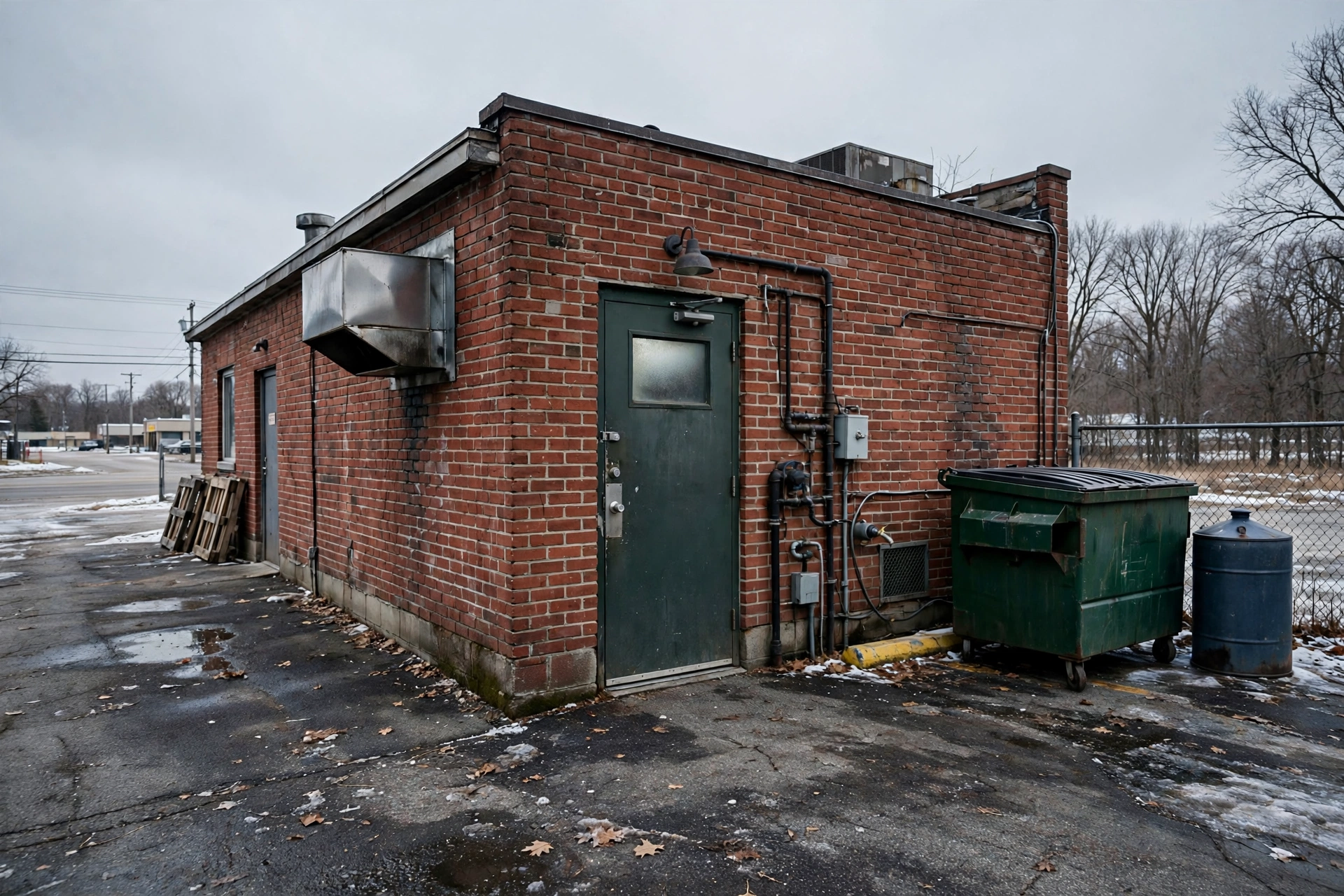
A Garden City diner on Ford Road called about a kitchen sink that drained slowly by midweek and smelled by the weekend. The owner had been having the trap pumped when it seemed to need it, which in practice meant after a problem. There was no record of the last visit.
Chapter 2. The first reading.
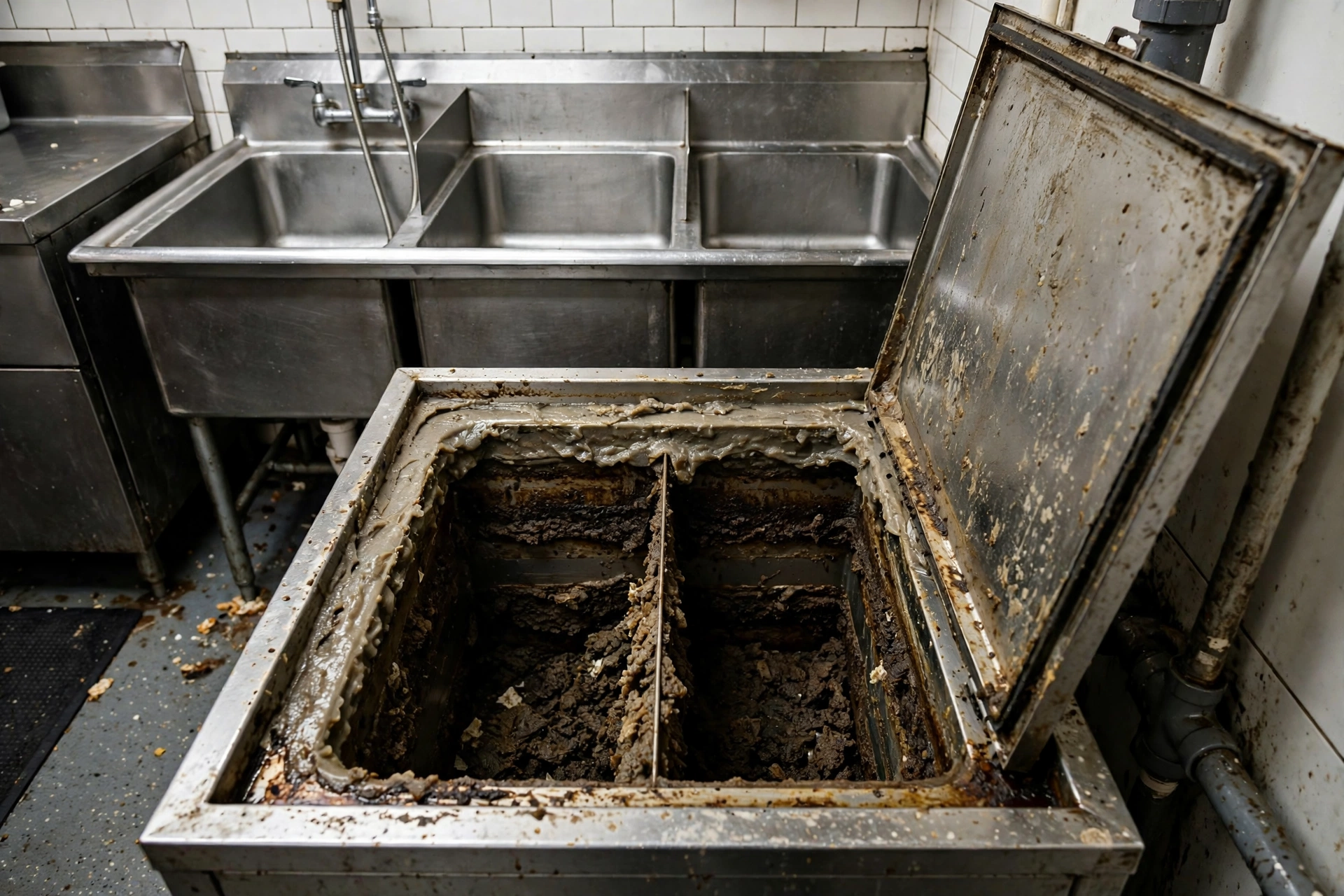
The trap was an indoor unit, and it was well past the quarter benchmark. The diner runs a busy fryer and grill, with a full breakfast and lunch crowd. We cleaned the trap, scraped the interior and cleared the baffle, then walked through how often a kitchen with that load fills it. The answer was every six weeks, and that is the schedule we put in place.
Chapter 3. The schedule holds.
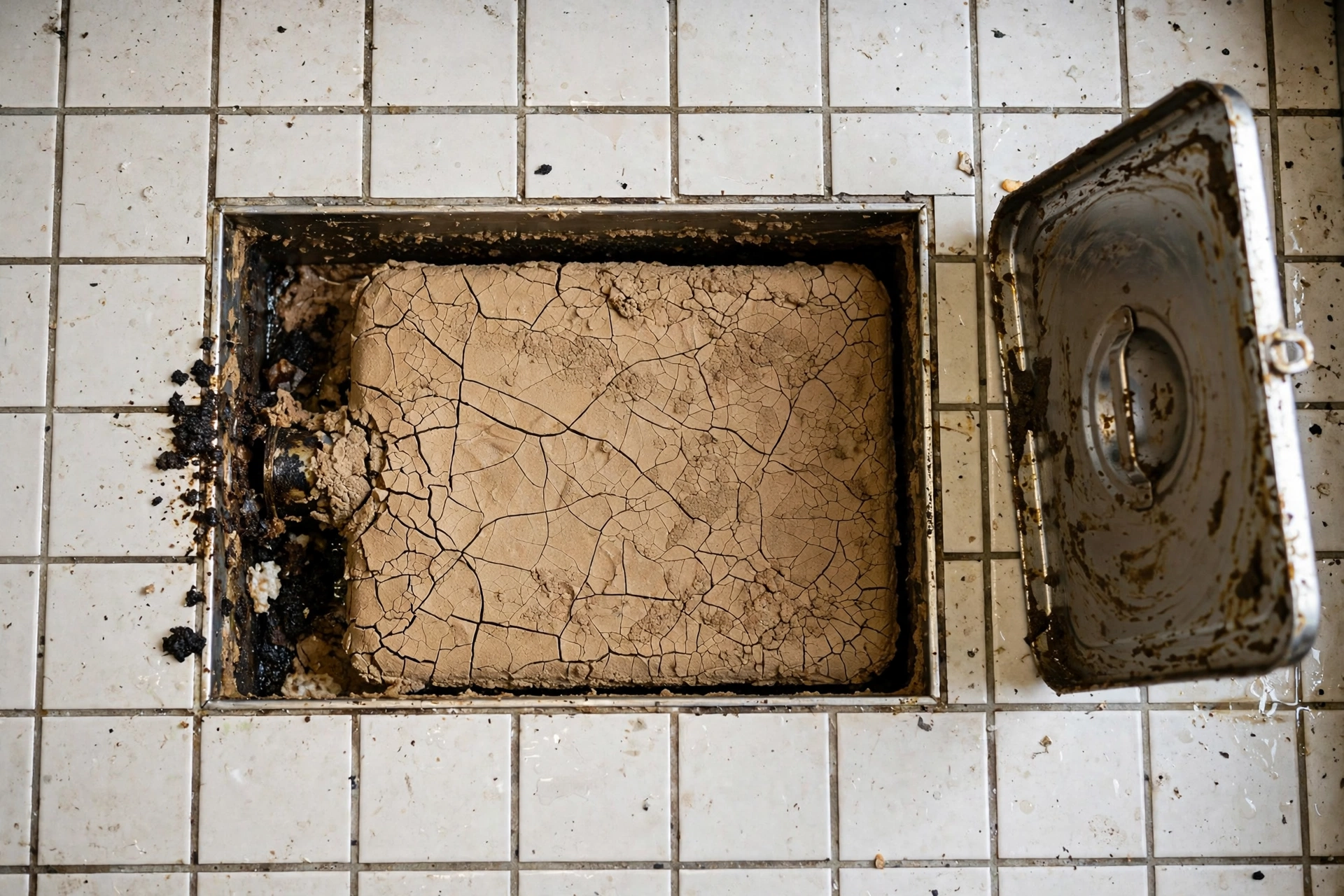
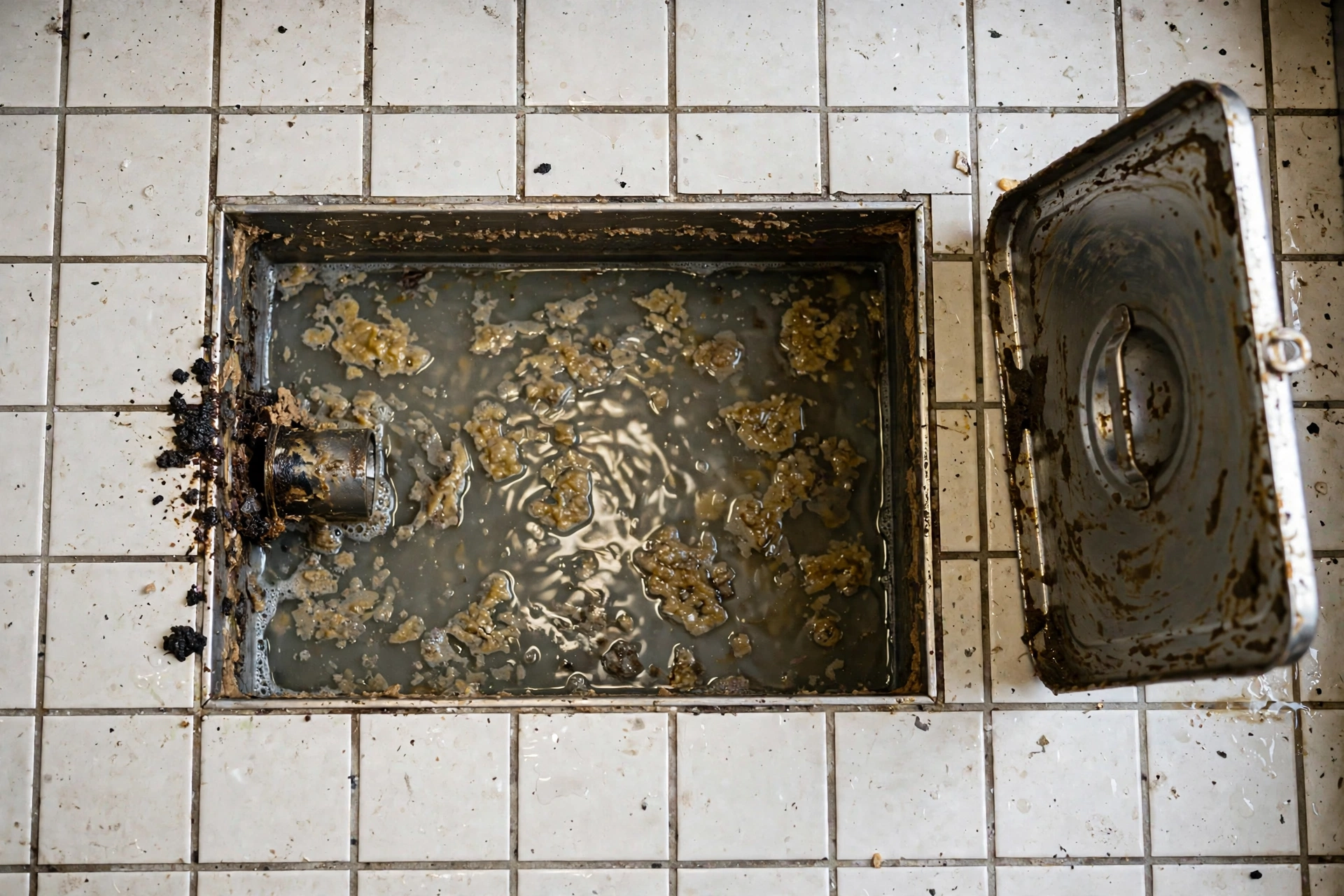
At the second visit the trap read well under the quarter mark. The sinks drained, the smell stopped, and the owner has a folder with a record for each visit. That folder is what the owner would hand over if the sewer authority or an inspector asked.
Questions
Does Dearborn require me to pump my grease trap every 90 days?
No. Dearborn has no FOG ordinance, and its code sets no pumping interval. The code limits grease discharge to 1,500 mg/L, and the regional sewer authority requires regular cleaning proven by records. How often you pump is a decision you have to be able to justify, which is what a schedule is for.
Where does the 90-day figure I keep hearing come from?
Some other municipalities run programs with set intervals. Those are their rules, not Dearborn's. Websites that describe a Dearborn municipal program with set intervals and fines are not describing anything in the city code.
What is the quarter-capacity rule?
It is the trade's working benchmark: pump when grease and solids together reach about a quarter of the trap's capacity. Haulers use it to schedule service. It is not a Dearborn law.
How often will my kitchen need service?
It depends on volume. High-volume kitchens commonly run every 4 to 6 weeks, moderate kitchens monthly to quarterly, and low-volume kitchens every 3 to 6 months. These are the frequencies kitchens actually run, not requirements. We set yours from a reading on the first visit.
What records do I need to keep?
Keep a service record for every cleaning, and the shipping document for each shipment of the waste. The sewer authority may require records of inspection, cleaning and maintenance, and the duty is to produce them on demand. Michigan's Part 121 rules require you to use a registered transporter and keep your own copies of the shipping documents.
Is there a city manifest I have to file?
No. Dearborn has no city manifest rule for restaurants. The shipping document comes from Michigan's Part 121 rules for hauling the waste, and you keep your copies.
Can any septic hauler pump my trap?
No. Grease trap waste is a liquid industrial by-product under Part 121 and must go with a registered and permitted transporter. A septage licence does not cover it.
What does a visit cost?
Interior grease trap cleaning on small indoor traps is $150 to $350. Medium traps are $300 to $600. Large exterior interceptors are $500 to $1,000 or more, by capacity and waste volume. Capacity, access and waste volume decide where in the range yours falls.
What does an emergency call-out cost?
Emergency call-out is one and a half to two times the standard service price. If you are on a schedule, we already know your trap, which shortens the diagnosis.
What does line jetting cost?
Line jetting is priced with the service visit it rides with. We do not publish a standalone figure. The length and condition of the line decide the work, and we quote it with the visit.
Do you charge for used cooking oil?
No charge for clean oil. We set up sealed containers sized to your fryers and schedule pickups.
Does winter change how often I should pump?
Usually it means checking sooner, not later. Cold thickens grease and can harden it in outdoor interceptors and drain lines. We may suggest an extra reading in the coldest weeks. This is trade practice, not a published local rule.
Can I try a single visit before committing to a schedule?
Yes. A one-off visit is priced the same way as one inside a program, and the reading we take at that visit tells us whether a schedule makes sense.
Start your schedule
Call (313) 351-8079, or send the form below. We need your name and phone number. Everything else is optional, and a consent box is required before you send it.
The more details you give, the better we are able to help you.
- Name (required)
- Phone (required)
- Business name (optional)
- Trap or interceptor type and location (optional)
- Message (optional)
- Consent box (required)