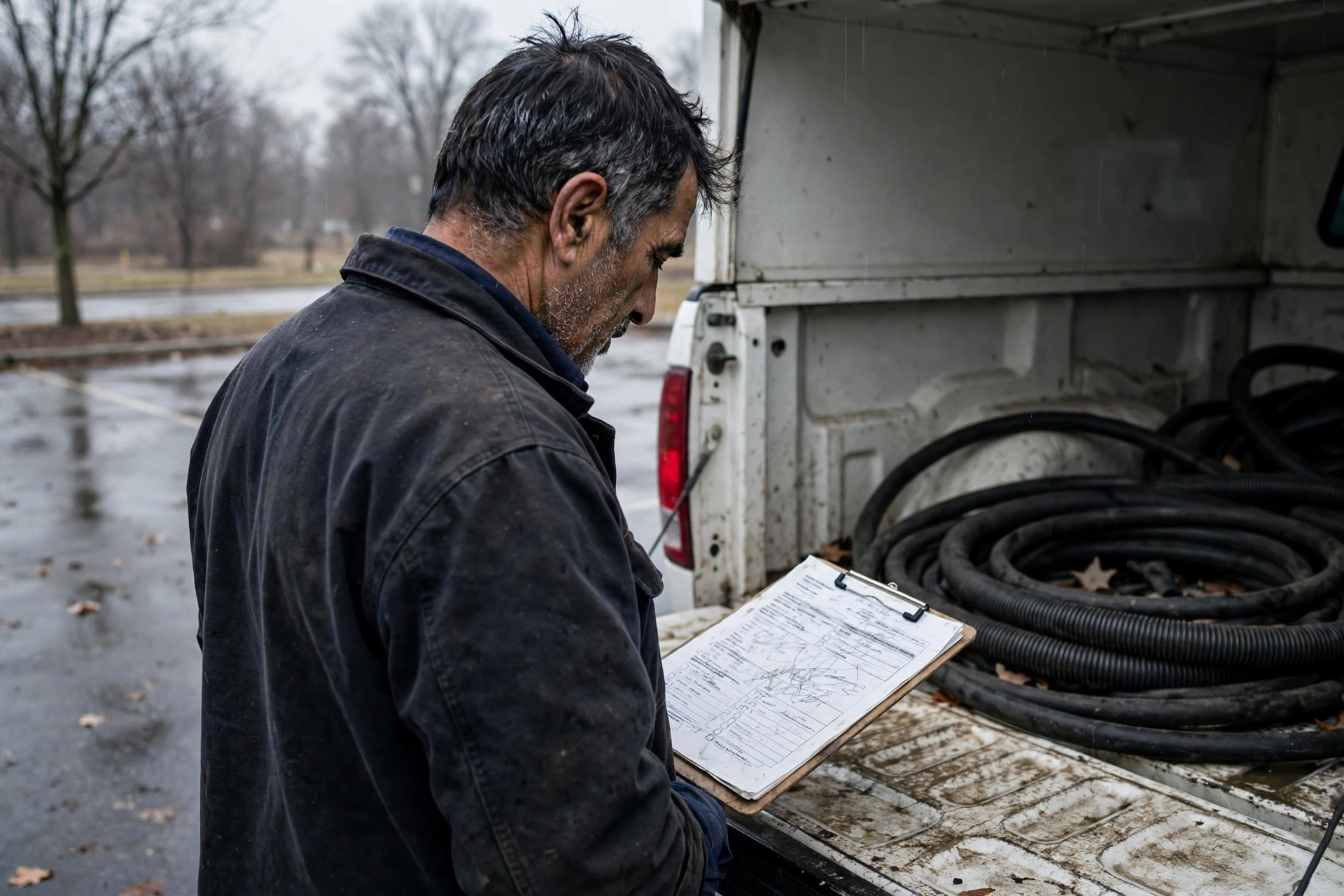
Dearborn Grease Trap is a small operation that works for the kitchens of Dearborn, and Joe Haddad, our operations manager, is the man who runs its routes and its records day to day. Most calls start the same way. A restaurant wants grease trap cleaning before a smell or a slow drain turns into a backup, or a chain location needs grease interceptor pumping on a schedule it can document. Others want grease trap maintenance set up as a standing route so nobody has to remember it, and some need line jetting because a kitchen drain runs slow even though the trap is clean. Fryer kitchens ask about used cooking oil collection, and when a line has already backed up into a dish pit, they ask for emergency grease trap service. Joe is the person who picks up the thread on all of it.
Talk to Joe's crew first
If you already know what you need, call (313) 351-8079. Tell us the kind of kitchen you run and what you are seeing, and we will say plainly what the work involves and how it is priced. If you are not sure what you need, call anyway. Sorting that out is most of the first conversation.
How Joe came to the work

Joe did not start in an office. He started on the truck, in the cold, which is where most people in this trade learn it. A winter morning on a vacuum truck teaches you things a manual does not. Grease that sits loose and oily in July sets up hard in January. A lid frozen to its frame has to be worked free before anything else happens. A hose run that was easy in summer is a long, stiff haul with ice on the pavement. He learned to read a trap by what came out of it and in what order: the cap, the liquid, the sludge at the bottom, and what the baffles looked like once they were cleared.
He also learned that no two kitchens fill a trap at the same rate. Some kitchens drown a trap in a month. Others hold a season without trouble. The difference is rarely the size of the dining room. It is the fryer load, the dishwashing habits, how often the line cooks scrape plates before they rinse, and how many shifts the kitchen runs. The trade's working numbers reflect this. High-volume kitchens commonly run every 4 to 6 weeks, and low-volume kitchens every 3 to 6 months. Those are what kitchens actually run, not rules anyone handed down, and Joe treats them as a place to start the conversation.
The other half of his education happened at tables, not trucks. Owners would sit down with him with a notice in hand, or a worry about an inspection, and ask what they were actually required to do. He learned to answer that carefully, because the honest answer is more specific than most people expect. More on that below.
What his days look like
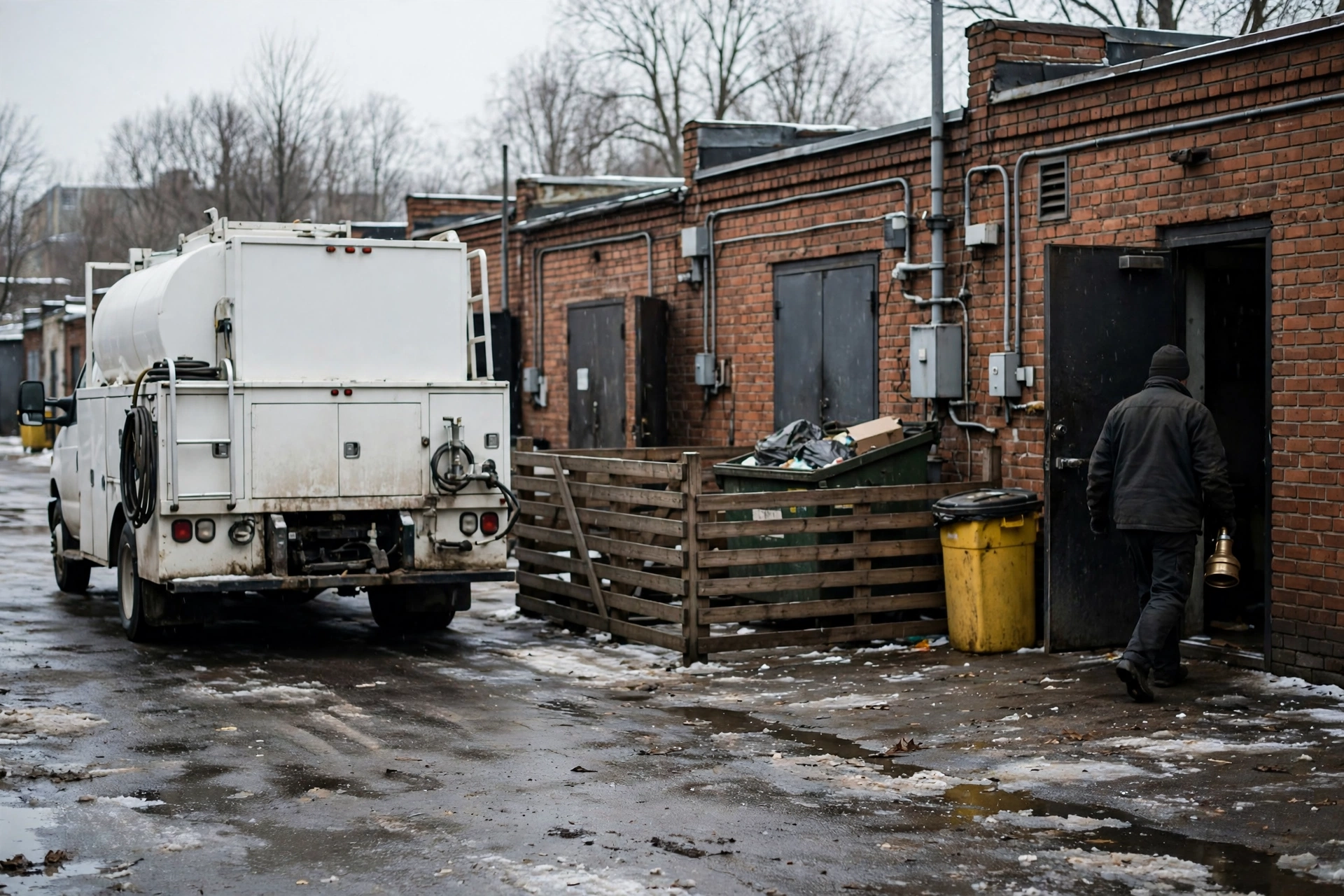
Joe's days run across the kinds of kitchens Dearborn has. Middle Eastern restaurants make up the largest share of the city's dining, and their kitchens run busy, long services with heavy prep. Coney and diner strips run fryers and grills from open to close. Chain locations along the corridors want documented, scheduled work, and the airport hotel row has institutional kitchens that cannot wait out a backup. Each one gets a different rhythm, and Joe builds the route around those rhythms instead of forcing every stop onto the same calendar.
Mornings usually begin with the records. He looks at what each stop on the route was last time: what the trap held, what the crew noted about the baffles and lids, and whether the kitchen's volume has changed. Then he sends the crew out, and he takes his own calls. He fields the questions from managers who want to know why a drain is slow, or whether the smell by the back door means anything, or whether a once-a-quarter visit is still enough now that the menu has more fried items.
In winter he watches the schedule more closely. Grease congeals as temperatures drop, and deep cold can freeze grease sitting at the top of an outdoor interceptor, so traps need checking more often in winter, not less. Used oil freezes in outdoor bins too, and the working fix is a bin swap: an empty bin delivered, the full one carried away. Joe plans for that before the cold arrives, not after a kitchen calls.
What he is particular about
Three habits mark how Joe runs the work.
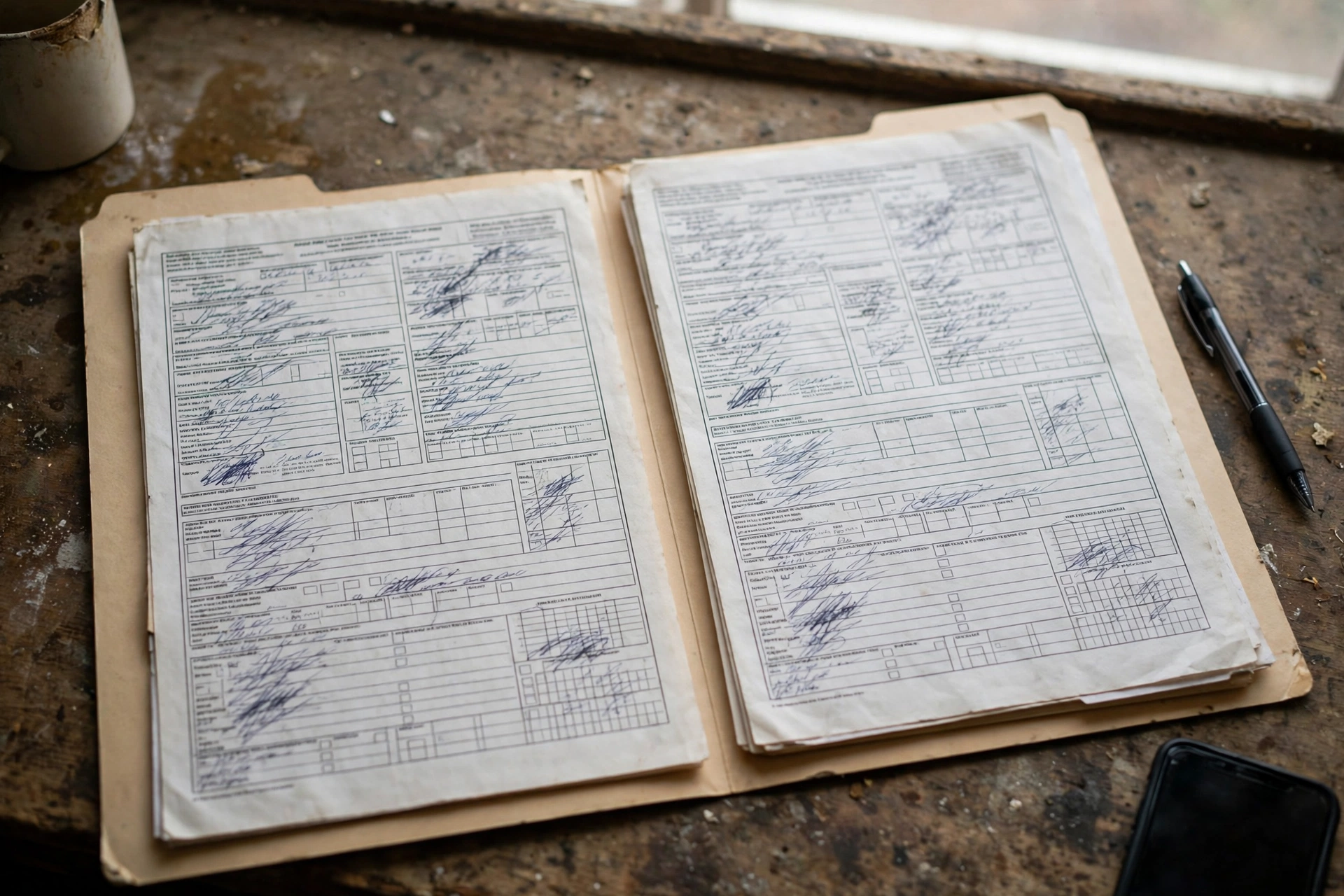
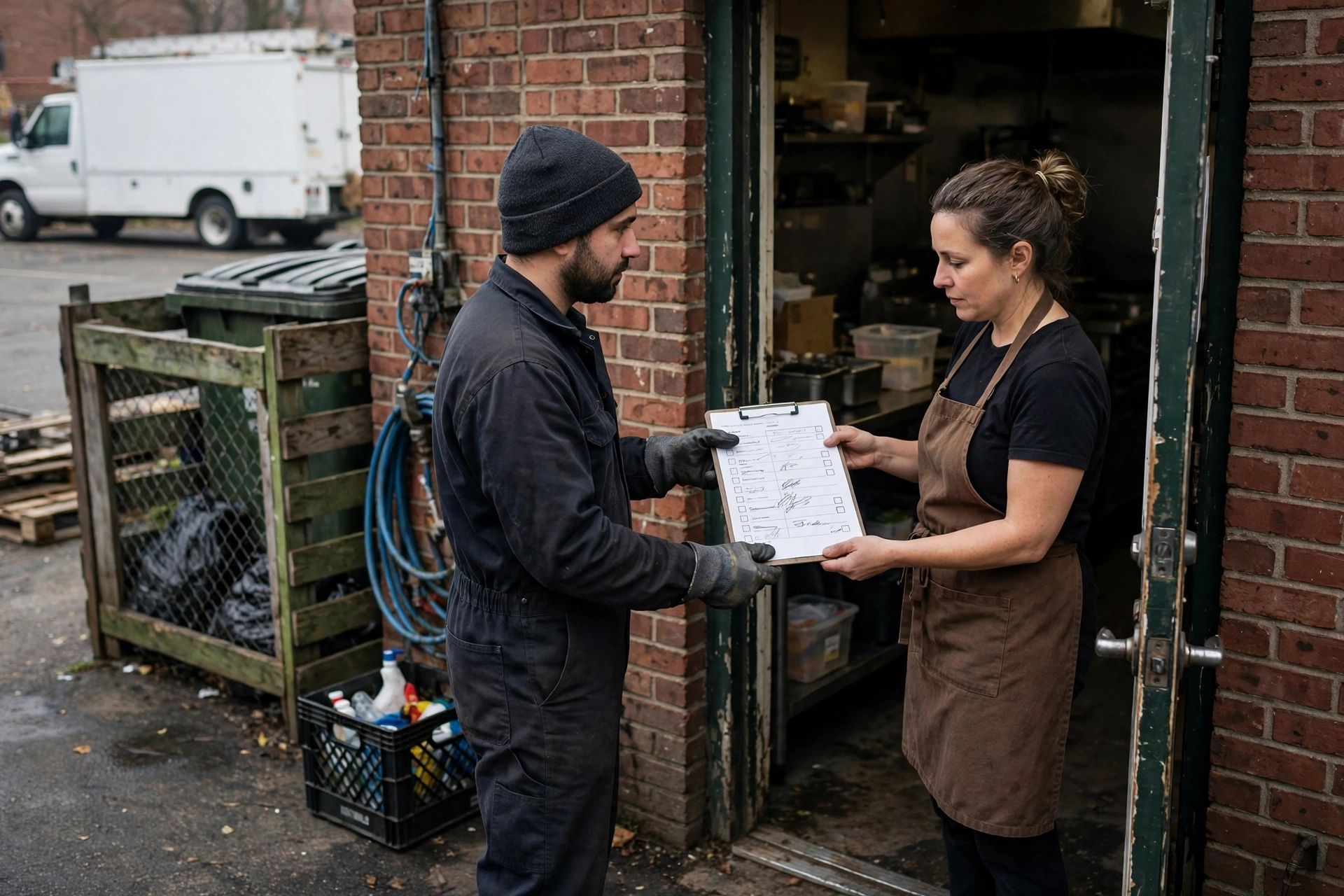
- The record is written before the truck leaves. A service record written that afternoon from memory is a worse record than one written on the spot. The crew documents what was removed, the condition of the baffles, lids and inlets, and anything that needs repair, and the owner keeps a copy. When the regional sewer authority asks for proof of cleaning, that paper is the answer.
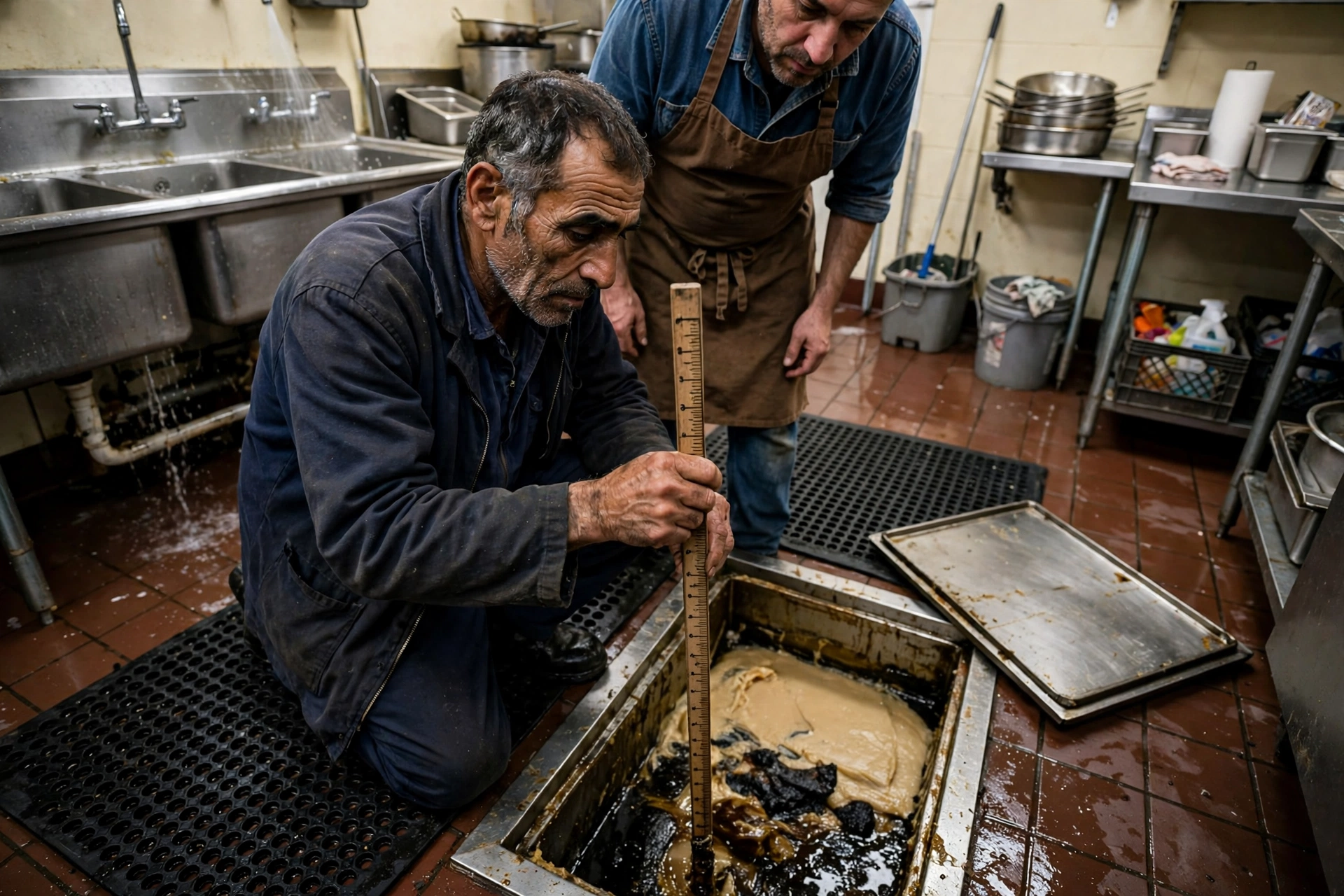
- The trap is measured, not guessed. The trade's scheduling benchmark is to pump when grease and solids together reach about a quarter of the trap's capacity. It is a benchmark from the trade, not a law. Joe has the crew measure the depth of grease and solids at each visit, because a measured number tells a kitchen when to come back and a guess does not.
- The owner is told plainly what the rules do and do not require. Dearborn has no grease ordinance with a pumping interval, a trap-sizing table or a manifest rule. Dearborn's own code sets a limit on grease in what a kitchen discharges, 1,500 mg/L. The Great Lakes Water Authority's pretreatment rules require interceptors where they are deemed necessary, cleaned and maintained regularly at the owner's expense, with records produced on request. Those rules set no fixed number of days. Michigan's Part 121 governs the waste itself: trap waste is a liquid industrial by-product, it must go with a registered hauler, and a shipping document accompanies each shipment, with the owner keeping copies. Joe lays that out and then says what he would schedule for that particular kitchen and why. A neighbouring town's 90-day rule is that town's rule, and he says so when an owner has heard it somewhere.
Why he stays with it
He will tell you, without much prompting, that he likes the part where a problem gets solved in front of someone. A kitchen manager calls about a drain that has been slow for days. The crew finds the cause, clears it, and shows the manager what was in there. Joe likes the moment the manager understands why it happened and what would keep it from happening again. He likes a route where he knows each kitchen's habits well enough to say "you will be fuller than usual after the holiday weeks" before anyone has mentioned it. And he likes handing an owner a clean record before an inspection instead of explaining why there is not one.
Mid-page invitation
Want your kitchen on a route Joe has planned around how it actually runs? Call (313) 351-8079 and describe your trap or interceptor, your menu and your busiest weeks. We will tell you what we would schedule and what it would cost.
When a kitchen calls
Here is how it goes. You call (313) 351-8079 during office hours, Monday to Friday, 9:00 AM to 5:30 PM. Someone asks what you are seeing, what kind of unit you have if you know, and where it is. If it is an indoor trap, we ask about access. If it is an exterior interceptor, we ask about its capacity and how long since it was last pumped. From that, Joe or the crew gives you the price for the visit.
The standard prices are the same every time. Small indoor traps run $150 to $350. Medium traps run $300 to $600. Large exterior interceptors run $500 to $1,000 or more, by capacity and waste volume. An emergency call-out is one and a half to two times the standard service price. Used cooking oil collection carries no charge for clean oil. Line jetting is priced with the service visit it rides with.
At the visit, the crew cleans the unit, measures it, documents what they found, and leaves you your copy of the record. Then Joe sets the next visit by what the measurements say, and if your kitchen needs a standing route, he builds it.
Call or send the form
Call (313) 351-8079, or fill out the short form here. Name and phone are required. Everything else is optional, and a consent box is required before you send it. Tell us about your kitchen, the unit you have, and what has been happening. The more details you give, the better we are able to help you.