Dearborn Grease Trap handles grease interceptor pumping for Allen Park kitchens from our base in Dearborn, about 12 minutes up the road. Most of the work in town sits on exterior interceptors: the large in-ground units behind chain restaurants and larger kitchens, where grease and solids build up out of sight until a drain slows down or a smell rises from the lot. If you run one of those kitchens, this page covers what governs the work, how a visit goes, what it costs and when to call.
Call to Talk Through Your Interceptor
If you have a backup, a smell, a notice from your sewer authority, or you want a standing schedule so none of that happens, call (313) 351-8079. Tell us what kind of kitchen you run and where the interceptor sits. We will tell you what the visit involves and how the price is set.
What Allen Park Kitchens Are Like
Allen Park's restaurant ground is concentrated. Fairlane Green, known locally as the Hill, gathers national chain restaurants in one retail district. Kitchens like these tend to run exterior interceptors, and they tend to run them on corporate service schedules. The facilities manager at a chain location is usually answering to a regional office that wants service records, not stories.
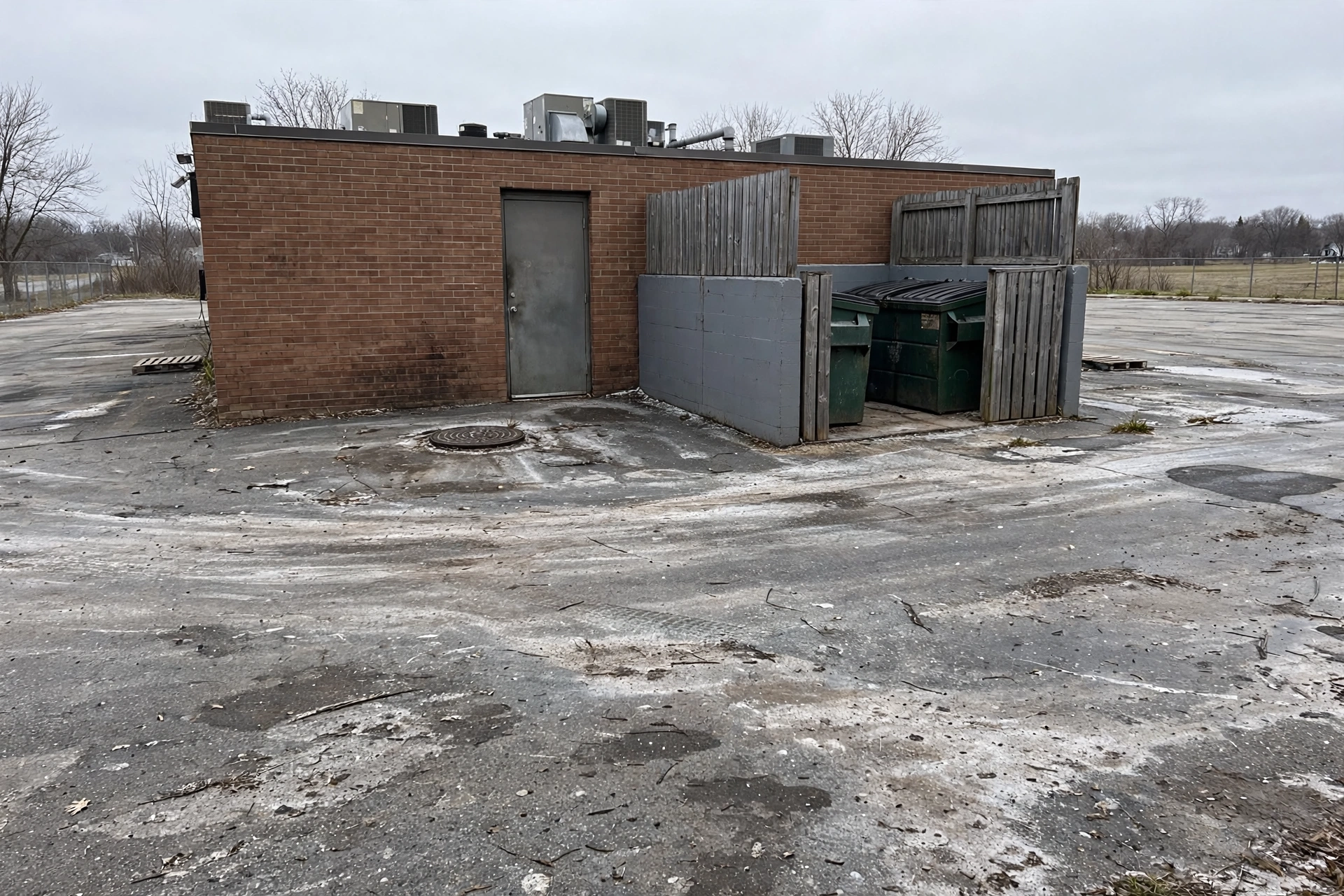
That setting shapes the work in three ways.
- The unit is outside and large. An exterior interceptor holds far more than an indoor trap. It fills slowly, which is why problems are easy to miss until they are serious.
- Records matter as much as the pumping. Chain operators buy scheduled, documented service. Every visit should leave paper that a manager can file and a regional office can read.
- Access decides the visit. Lot layout, lid location and hose run all affect how the crew sets up, and they affect the price.
What Governs an Interceptor Here
Dearborn has no FOG ordinance. There is no trap-sizing table, no fixed pumping interval and no city manifest rule. Nothing on this page is an Allen Park rule of that kind either. We do not state an Allen Park ordinance, sizing rule or pumping interval, because none is ours to state. Your city and your sewer authority set what applies at your address. If you have a notice in hand, read us the wording and we will work to it.
What we can teach, and what applies to the waste itself, is this:
- State law covers the waste. Under Michigan's Part 121, the clean-out residue from a grease trap or interceptor is a liquid industrial by-product. It may be hauled only by a registered, permitted transporter, on a shipping document for each shipment. The transporter keeps its papers three years, and the restaurant, as the generator, must use a registered transporter and keep its own copies.
- Regional pretreatment rules follow a pattern. Rules such as those of the Great Lakes Water Authority call for interceptors where the authority considers them necessary, cleaned and maintained regularly by the user at the user's expense, with records produced on request. Those rules set no fixed interval. The duty is regular cleaning, proven by records.
- Dearborn's own code limit is Dearborn's. Dearborn's code sets a limit of 1,500 mg/L on grease discharge. We mention it so nobody carries it across a city line by mistake.
The trade has a scheduling benchmark of its own: pump when grease and solids together reach about a quarter of the unit's depth. It is trade practice, not law. Kitchens set their frequency from what the readings show. High-volume kitchens often run every 4 to 6 weeks. Low-volume kitchens often run every 3 to 6 months. Those are what kitchens actually run, not requirements.
Featured Job: A Chain Kitchen on the Hill
This job is a casual-dining chain location in Allen Park's Fairlane Green district. The facilities manager there had a corporate service schedule on paper and a kitchen that had stopped matching it.
Chapter 1: The Slow Drain
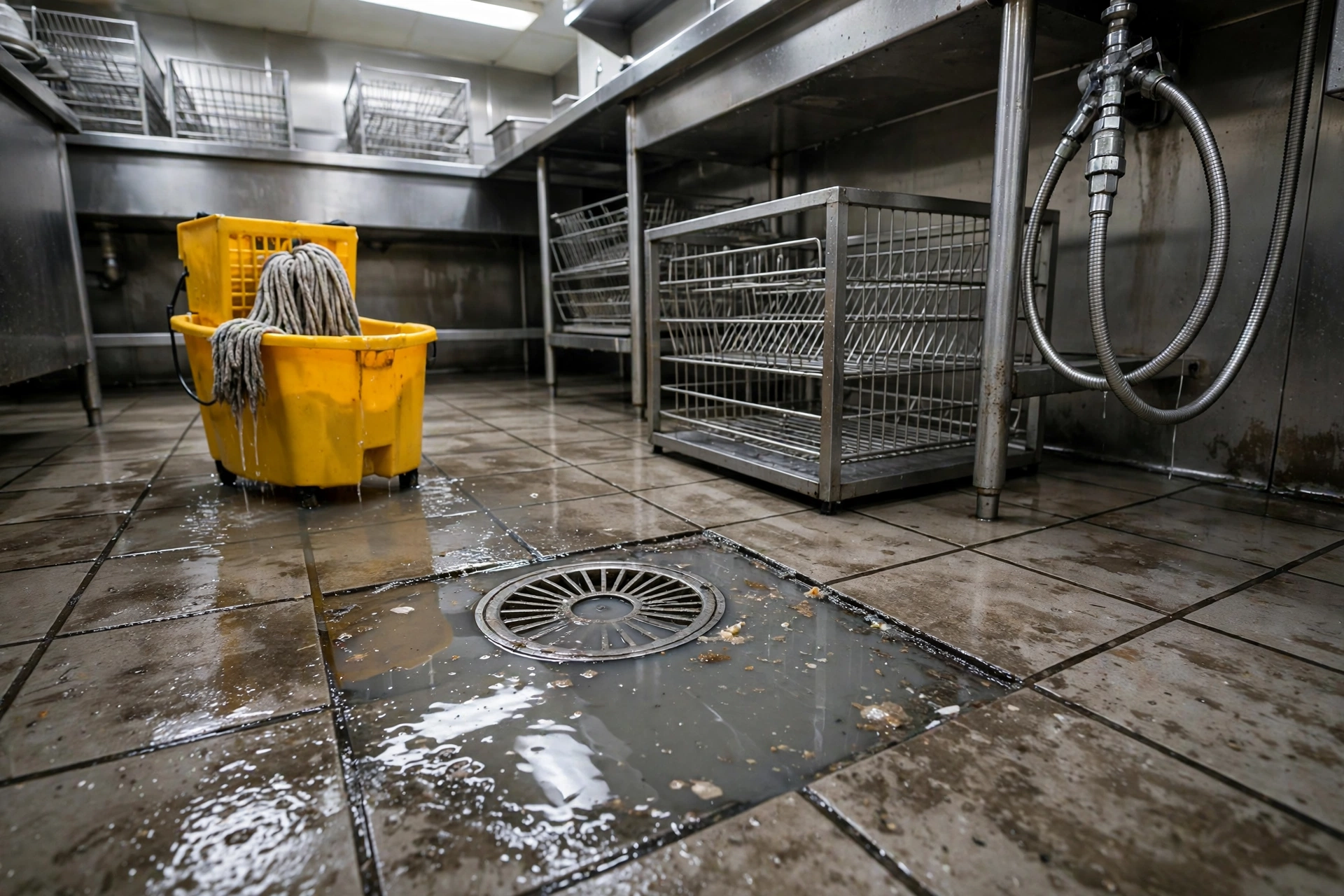
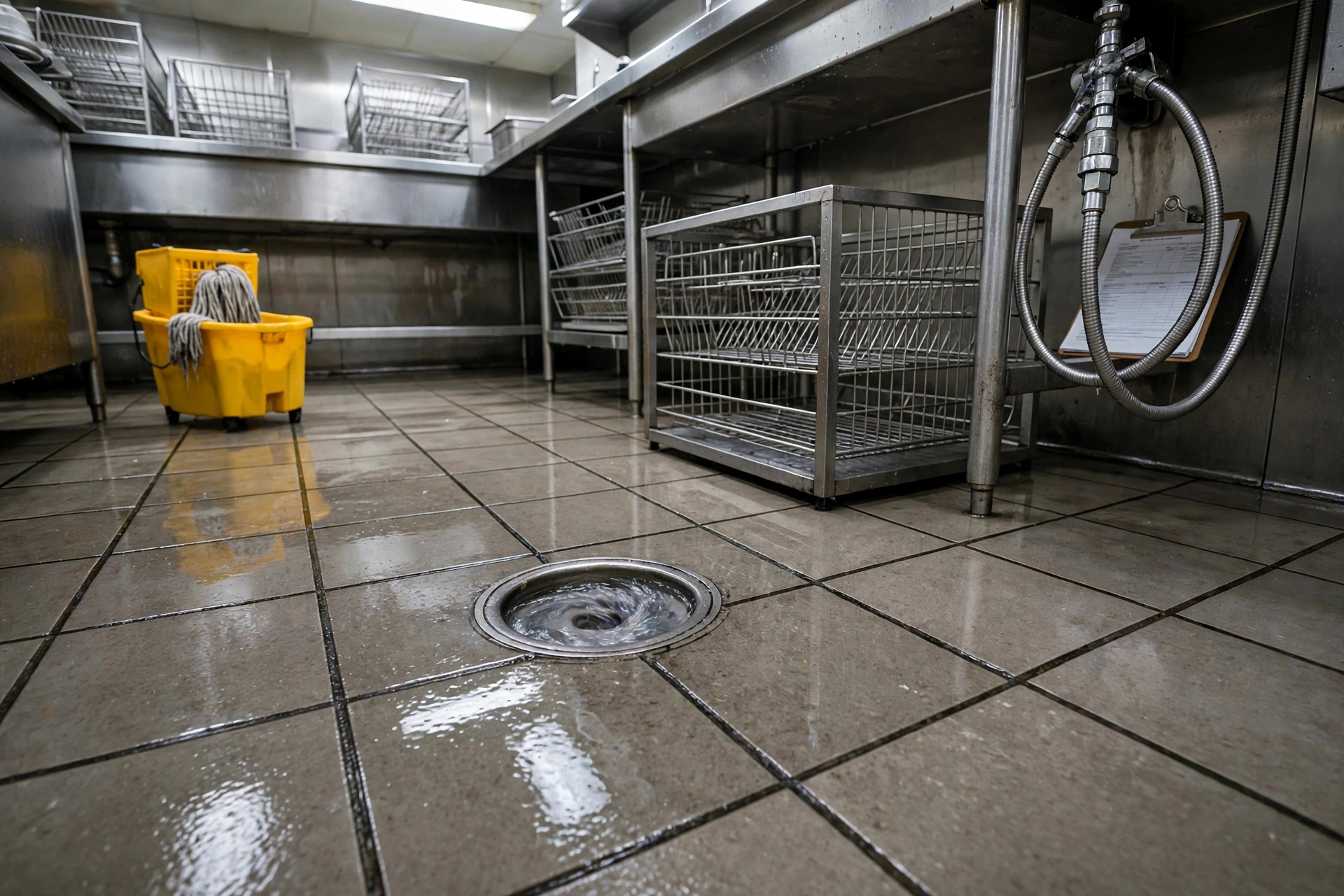
The kitchen had been busy for weeks. A floor drain near the dish station was draining slowly, and staff had noticed a sour smell near the back door at close. The manager called us before it became a backup.
Chapter 2: Opening the Lid
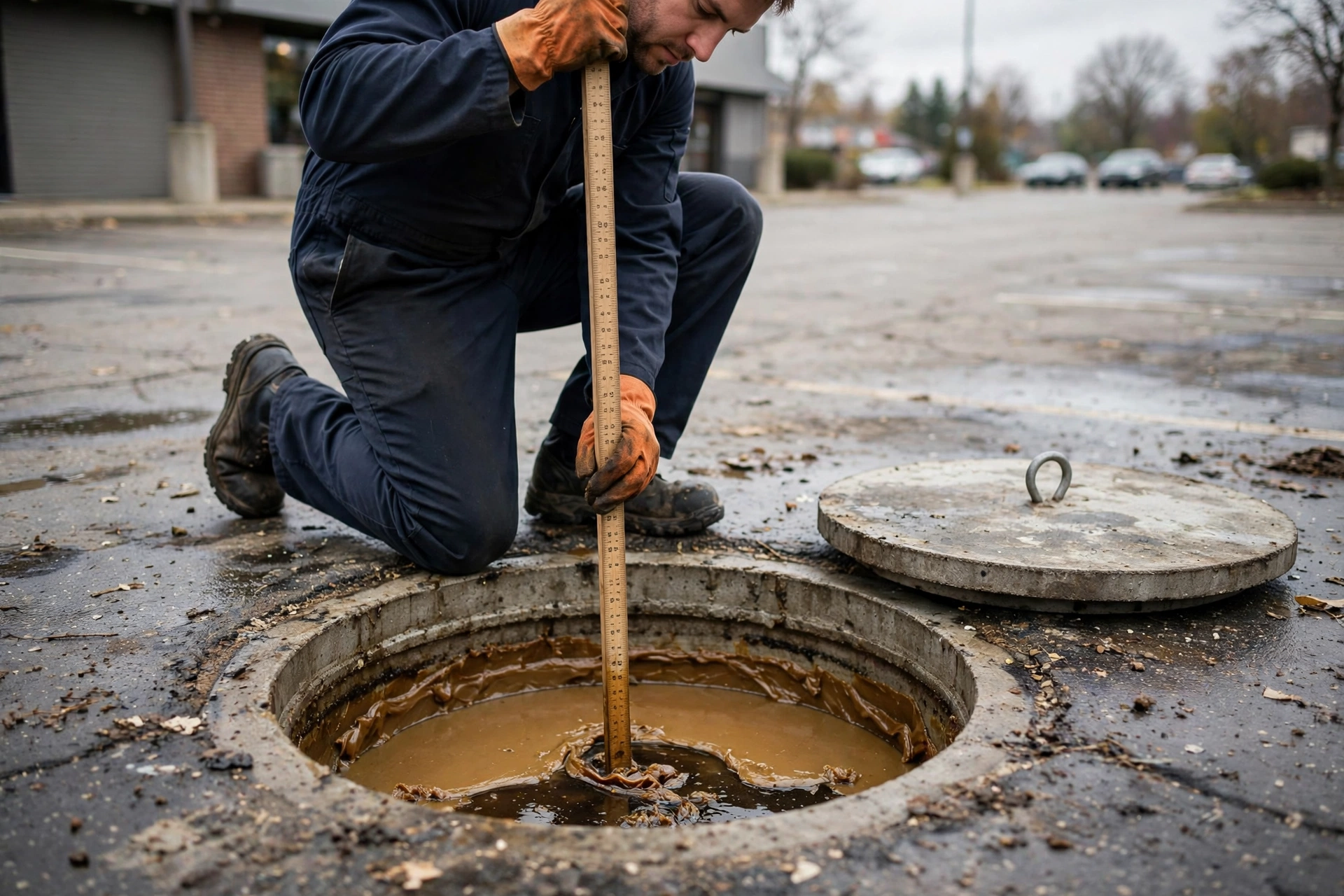
The crew parked at the rear of the pad and set out cones around the interceptor lid. They lifted it and measured the layers. Grease sat thick across the top and settled solids lay on the bottom. Together they stood at or past about a quarter of the unit's depth, which is the trade's signal that the unit is due.
Chapter 3: Pumping and Scraping
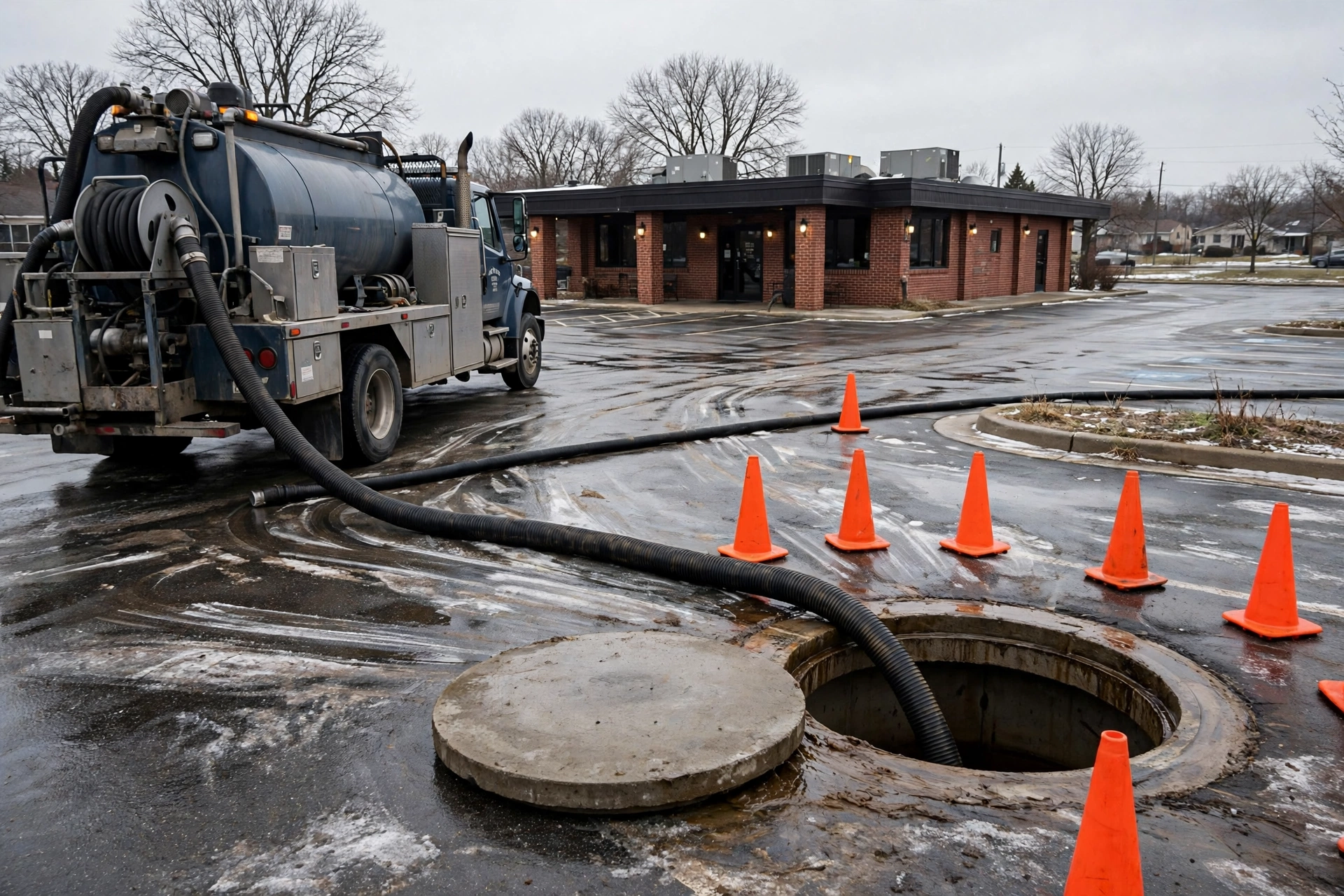
The crew ran the hose from the truck to the lid and pumped out the grease cap, the liquid and the sludge. They scraped the walls, cleared the baffles and inspected the inlet, the outlet and the lid seal. They noted the condition of each component. The waste went into the truck to travel on a shipping document, as Part 121 requires.
Chapter 4: Paper and a Schedule
When the unit was clean, the crew photographed the empty chambers and closed the lid. The manager received the shipping document and a service record. The job was priced inside the large exterior interceptor range of $500 to $1,000 or more, by capacity and waste volume. With the readings in hand, the manager set a standing schedule to match how fast this kitchen fills its interceptor, instead of leaving it to the calendar on the corporate sheet. The slow drain cleared.
Look Inside the Interceptor
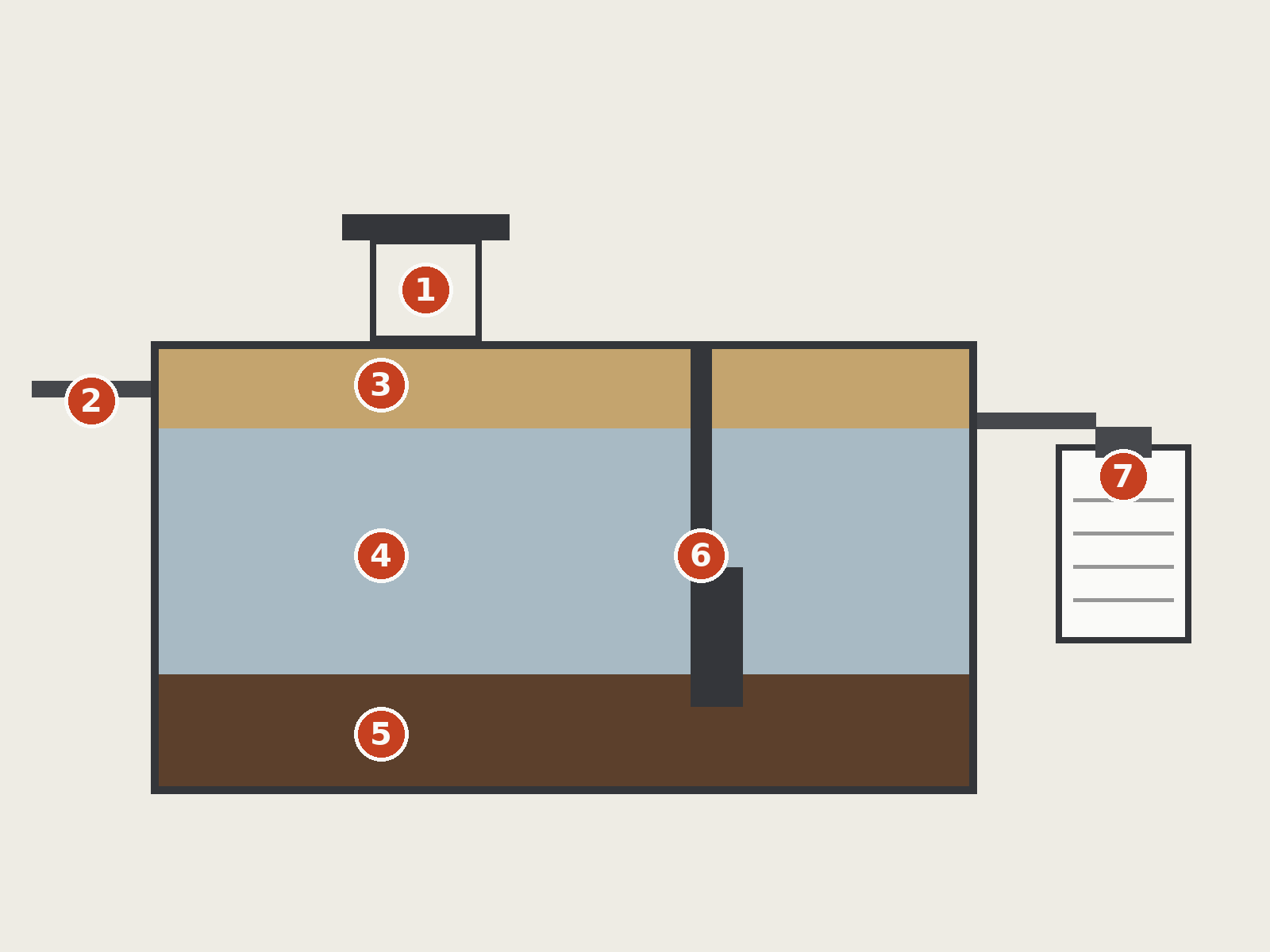
Lid and access: the lid location and the hose run affect the setup and the price.
Inlet: where kitchen wastewater enters; the crew inspects it at every visit.
Grease cap: floating grease collects at the top; pump when grease and solids together reach about a quarter of the unit's depth (trade benchmark, not law).
Liquid layer: removed with the cap and sludge in a full pump-out.
Sludge layer: settled solids on the bottom; scraped and pumped, then walls scraped.
Baffles and outlet: cleared and inspected, with component condition noted.
Paperwork: trap waste is a liquid industrial by-product under Part 121; it moves on a shipping document with a registered transporter, and the restaurant keeps its own copies.
Call Us Before the Drain Backs Up
If the story above sounds like your kitchen, call (313) 351-8079. You do not need to wait for a backup to book a visit, and the first conversation is about what your unit is doing and what schedule fits it.
How the Service Runs for an Allen Park Kitchen
A visit follows the same order every time.
1. Set-up. The crew locates the lid, marks the work area and plans the hose run. 2. Measure. They read the grease cap and solids against the unit's depth. 3. Pump and scrape. They remove the grease, liquid and sludge, then scrape the interior. 4. Inspect. They clear and inspect the baffles, inlet, outlet and lid, and note component condition. 5. Document. The shipping document and a service record go to you.
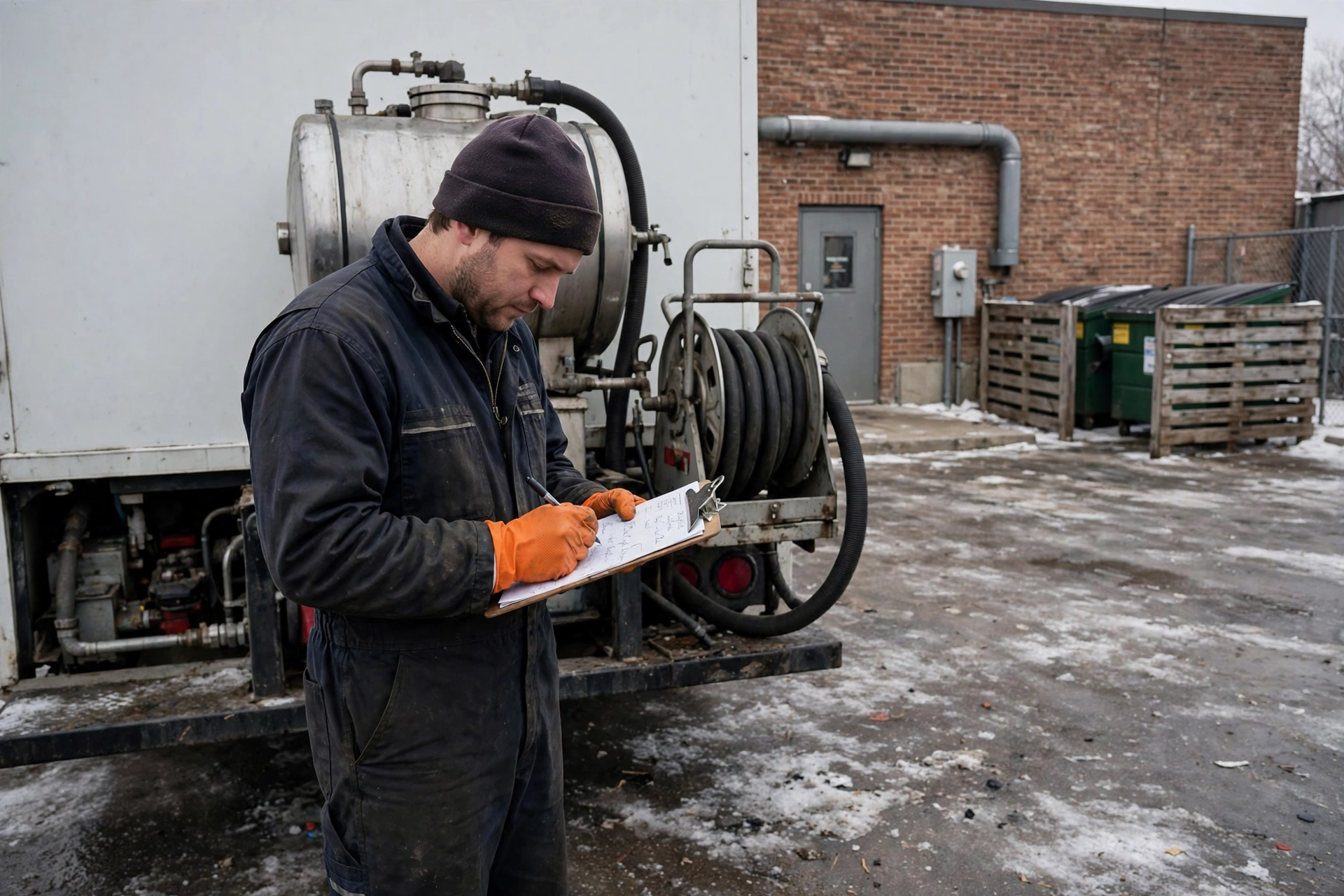
What the visit includes: a full pump-out of the grease cap, liquid and sludge, interior scraping, and baffle and component inspection.
What the crew documents: the readings, the condition of components and the shipment of the waste.
What you keep: the shipping document and the service record, in your own files, ready if your sewer authority asks.
What It Costs
Large exterior interceptors: $500 to $1,000 or more, by capacity and waste volume. Three things set where a visit lands:
- Capacity. A larger unit holds more waste to remove.
- Waste volume. A kitchen that fills its unit quickly produces more per visit.
- Access. Long hose runs and hard-to-reach lids add time.
Emergency call-out runs one and a half to two times the standard service price. Used cooking oil collection carries no charge for clean oil. Line jetting is priced with the service visit it rides with.
If your kitchen also has small indoor traps, those run $150 to $350 for small traps and $300 to $600 for medium traps.
When to Call
Floor drains drain slowly or back up.
A sour smell comes from the drains or from the lot near the interceptor lid.
You have a notice from your sewer authority, or an inspection is coming and you want records in order.
Your measured grease and solids are at or near a quarter of the unit's depth.
Your menu or hours changed and the old schedule no longer fits.
Cold weather is coming. One Dearborn-area provider's guidance holds that grease can congeal as temperatures drop, so traps and interceptors should be checked more often in winter, not less.
Send Us the Details
Fill in the form below, or call (313) 351-8079. Name and phone are required. Everything else is optional, and a consent box is required before you send it. The more details you give, the better we are able to help you.
Questions
Does Allen Park have a grease ordinance with a required pumping interval?
This page does not state one. Dearborn has no FOG ordinance with a fixed interval, and we do not pass any city's program off as another's. Ask your city or sewer authority what applies at your address, and we will work to it.
How often should an Allen Park restaurant pump its interceptor?
The trade's working rule is to pump when grease and solids together reach about a quarter of the unit's depth. That is a scheduling benchmark, not law. Busy kitchens often run every 4 to 6 weeks, and low-volume kitchens every 3 to 6 months.
How much does interceptor pumping cost?
Large exterior interceptors are $500 to $1,000 or more, by capacity and waste volume. Access and hose run also affect the visit.
What do emergency calls cost?
Emergency call-out is one and a half to two times the standard service price.
What happens to the waste you remove?
Trap and interceptor residue is a liquid industrial by-product under Michigan's Part 121. It must go with a registered transporter on a shipping document for each shipment.
What paperwork do I get?
A shipping document and a service record. The restaurant keeps its own copies as the generator of the waste.
How long should I keep the records?
Part 121 has transporters keeping their papers three years, and the restaurant keeps its own copies. Regional pretreatment rules require records on demand with no fixed interval, so keep them in order and easy to find.
Is my sewer authority's rule the same as Dearborn's 1,500 mg/L limit?
That limit is Dearborn's own code. We do not state it as an Allen Park limit. Check with your city or sewer authority.
Do you handle chain-restaurant schedules?
Yes. Chain kitchens commonly buy scheduled, documented service, and we leave a shipping document and service record at each visit so your regional office has what it needs.
Will pumping disrupt service in my kitchen?
Interceptors sit outside, so the work happens at the lot, not in your dining room. The crew sets cones, runs the hose and works at the lid.
Do you collect used cooking oil?
Yes. Clean oil is collected at no charge. In winter, a Dearborn-area provider reports that oil freezes in outdoor bins, and the working fix is a bin swap: an empty bin delivered and the full one taken away.
Can you jet my kitchen lines?
Yes. Line jetting is priced with the service visit it rides with.
I only have a small indoor trap. Can you help?
Yes. Small indoor traps run $150 to $350, and medium traps $300 to $600.
What should I tell you when I call?
The kind of kitchen, where the unit sits, what you are seeing and any notice you have received. Call (313) 351-8079.