If your kitchen sits on Ford Road in Garden City, you probably have a small indoor trap under or beside the dish station, and it needs emptying on a schedule that fits how hard your kitchen works. Dearborn Grease Trap handles grease trap cleaning for the Greek diners, halal Italian rooms, Syrian restaurants and steakhouse kitchens in Garden City, and the drive from our base in Dearborn is roughly 14 to 16 minutes. We pump out the grease cap, the liquid and the sludge, scrape the interior, clear and inspect the baffles, and write down what we found. That record is yours to keep.
Talk to us about your trap
If you are not sure how full your trap is, or you want a first visit to find out, call (313) 351-8079. Tell us what kind of kitchen you run and where the trap sits, and we will tell you how the visit would go and what it would cost.
Garden City kitchens and why this is the work here
Ford Road carries a dense mix of independent and ethnic restaurants: a halal Italian room, a Greek diner, Syrian kitchens, a Brazilian steakhouse. Most of these are owner-run rooms of modest size. They fry, grill, simmer and wash dishes all day, and the waste from all of it ends up in a small indoor trap rather than a large buried interceptor.
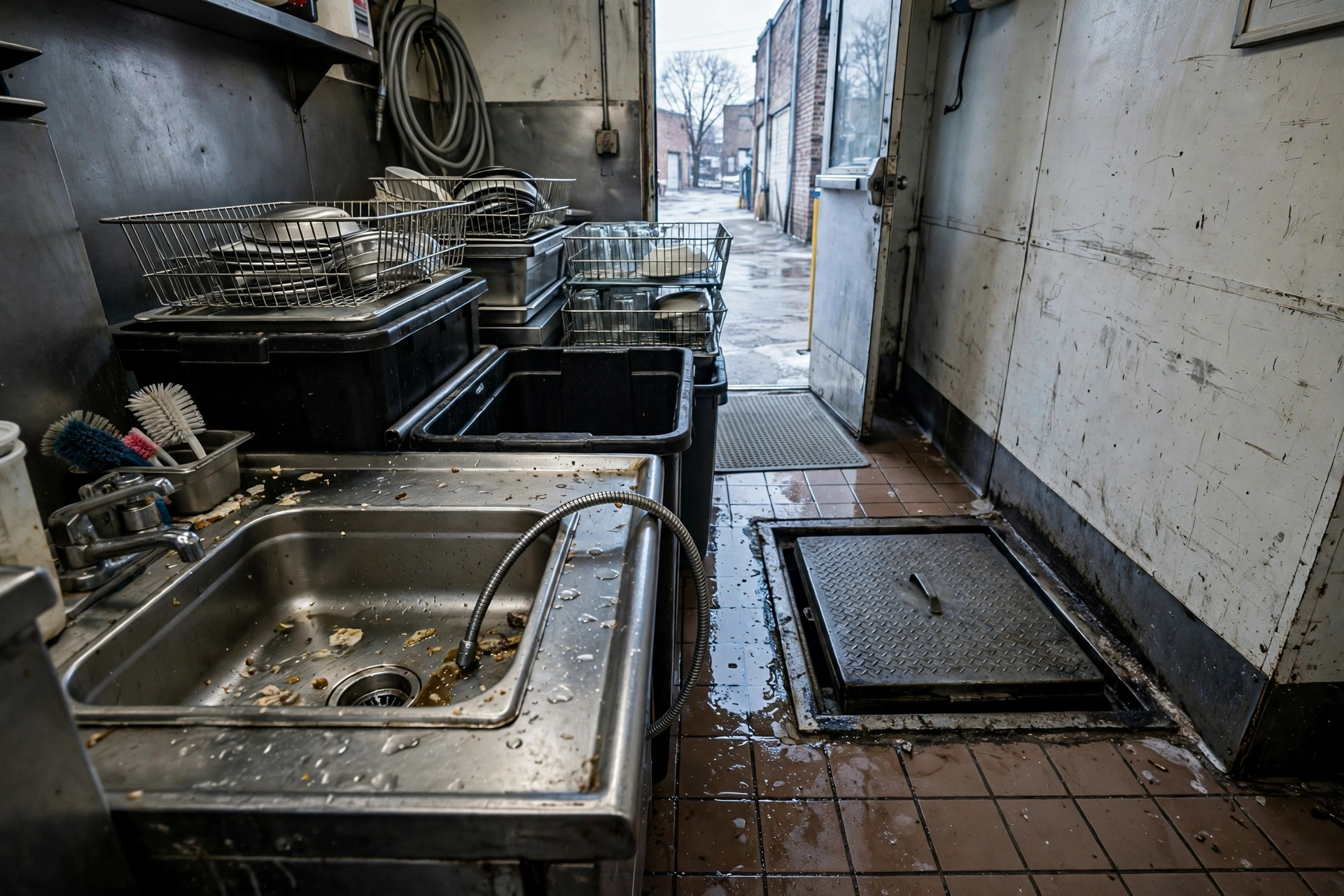
That is why interior trap cleaning is the fit here. A small trap fills quickly, and its capacity is limited. A kitchen with a steady fryer and a busy dish line can reach the point where the trap stops catching grease well, and the grease starts moving downstream into your drain line. The trade's working benchmark is to pump when grease and solids together reach about a quarter of the trap's capacity. That is a scheduling rule that cleaning crews use. It is not a law, and we teach it as trade practice.
What actually governs your kitchen
Three things shape the job, and we want you to know which is which.
- The sewer rules for your building. These come from the city and the sewer authority that serve your address. We do not summarize Garden City's sewer rules on this page, and we will not tell you a fixed interval or trap size that we cannot source. Check your own requirements with the city, and keep records of every cleaning, because records are what any authority asks to see.
- Michigan's rules for the waste. Trap clean-out residue is a regulated liquid industrial by-product under Part 121 of Michigan's environmental law. It may be hauled only by a registered and permitted transporter, on a shipping document for each shipment. As the generator, you keep your own copies.
- The trade's habits. High-volume kitchens commonly run every 4 to 6 weeks. Moderate kitchens run monthly to quarterly. Low-volume kitchens often run every 3 to 6 months. These are what kitchens actually do, not requirements.
Featured job: a Greek-style diner on Ford Road
Chapter 1: The slow drain
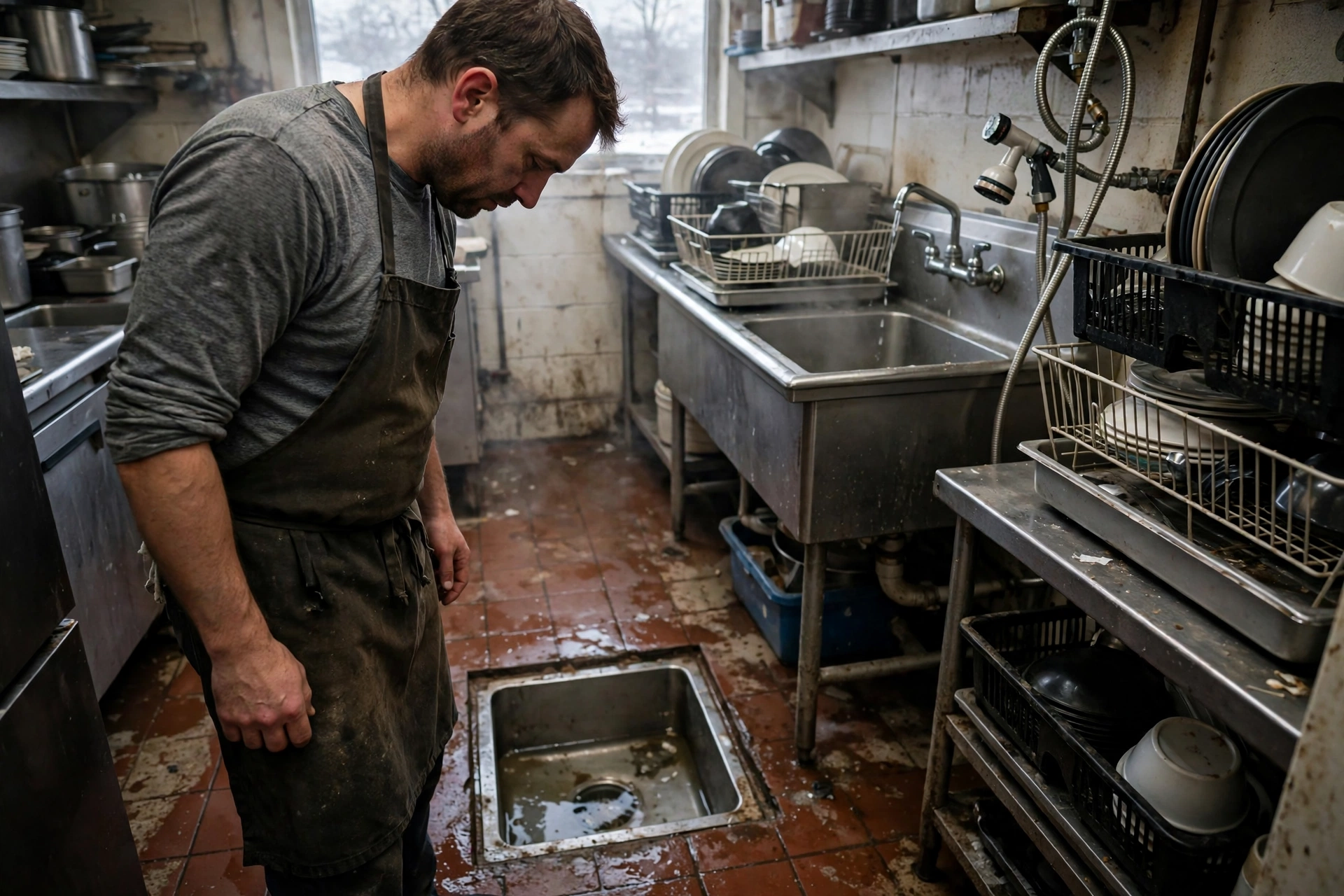
A diner on Ford Road ran a full breakfast and lunch trade with a fryer going most of the day. The kitchen manager noticed two things in the same week: the floor sink by the dish station drained slower after the Saturday rush, and a sour smell hung around that corner when the line was quiet. Nobody had opened the trap in a long while, and nobody was sure where the lid had been put.
Chapter 2: Lifting the lid
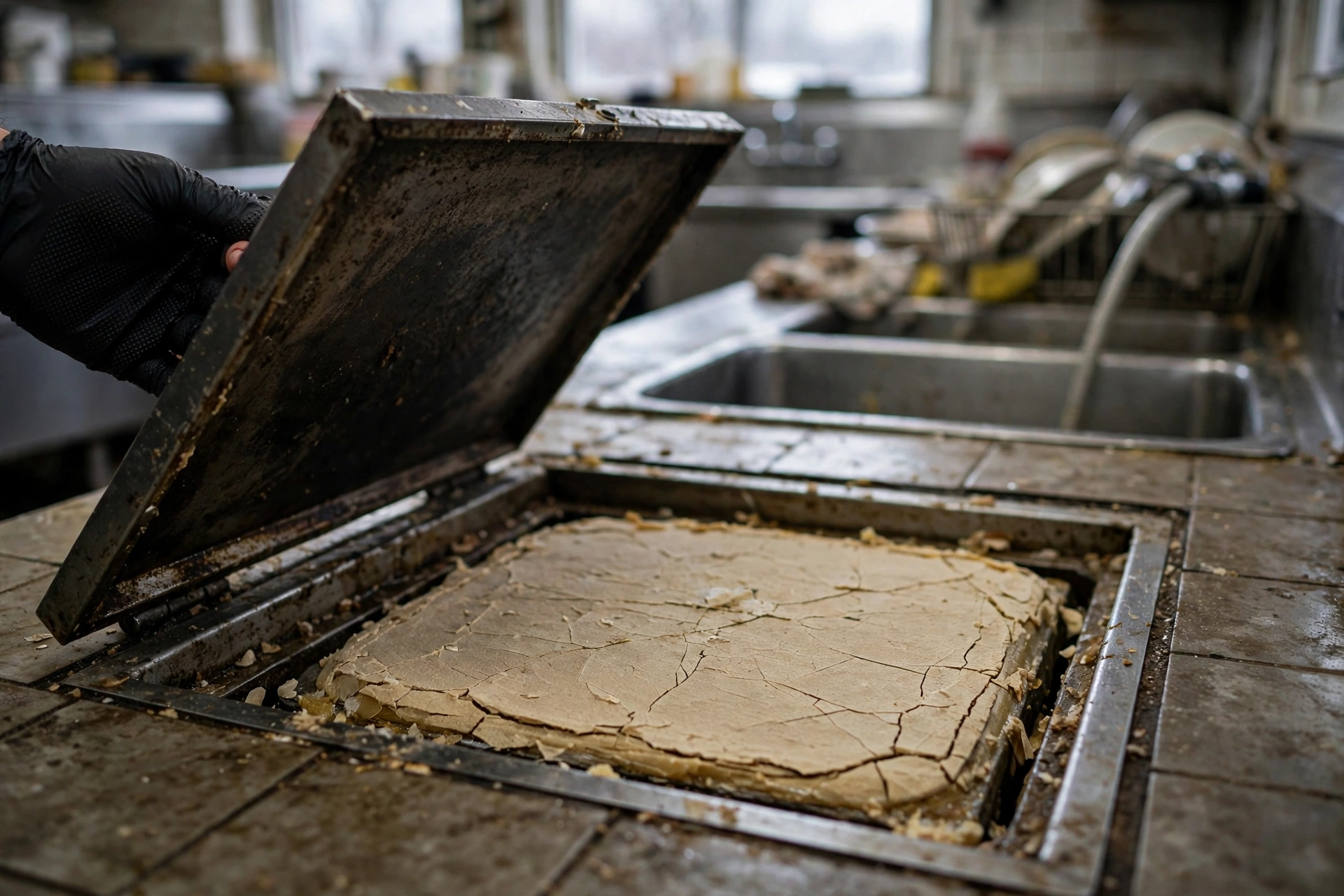
The crew arrived and located the trap beside the dish station, under a lid that had been stacked with supply boxes. Once the lid was off, the grease cap was thick and hard across the top, and solids had built up below it. The trap was well past the quarter mark. The smell the kitchen had been chasing was coming from the trap itself.
Chapter 3: The clean-out
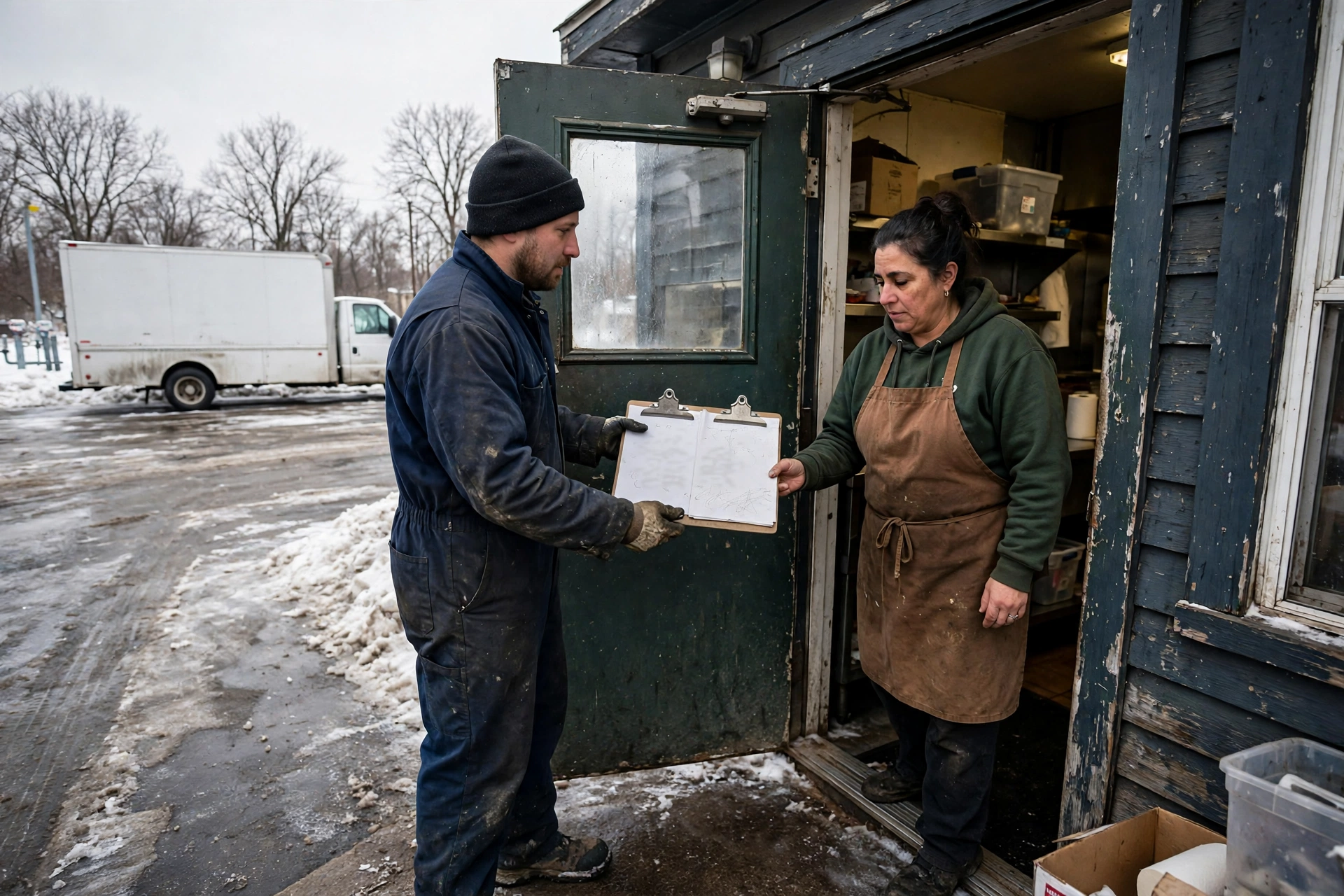
The crew pumped out the grease cap, the liquid and the sludge into the truck's tank, then scraped the walls and floor of the trap. They cleared the baffles, checked that they were intact, and looked over the lid seal and the inlet and outlet. Everything was in working shape. The lid seal was worn, which the crew noted for the kitchen manager. The waste left on a shipping document, and the manager received a service record. The visit was priced for a small indoor trap, in the $150 to $350 range we charge for that size.
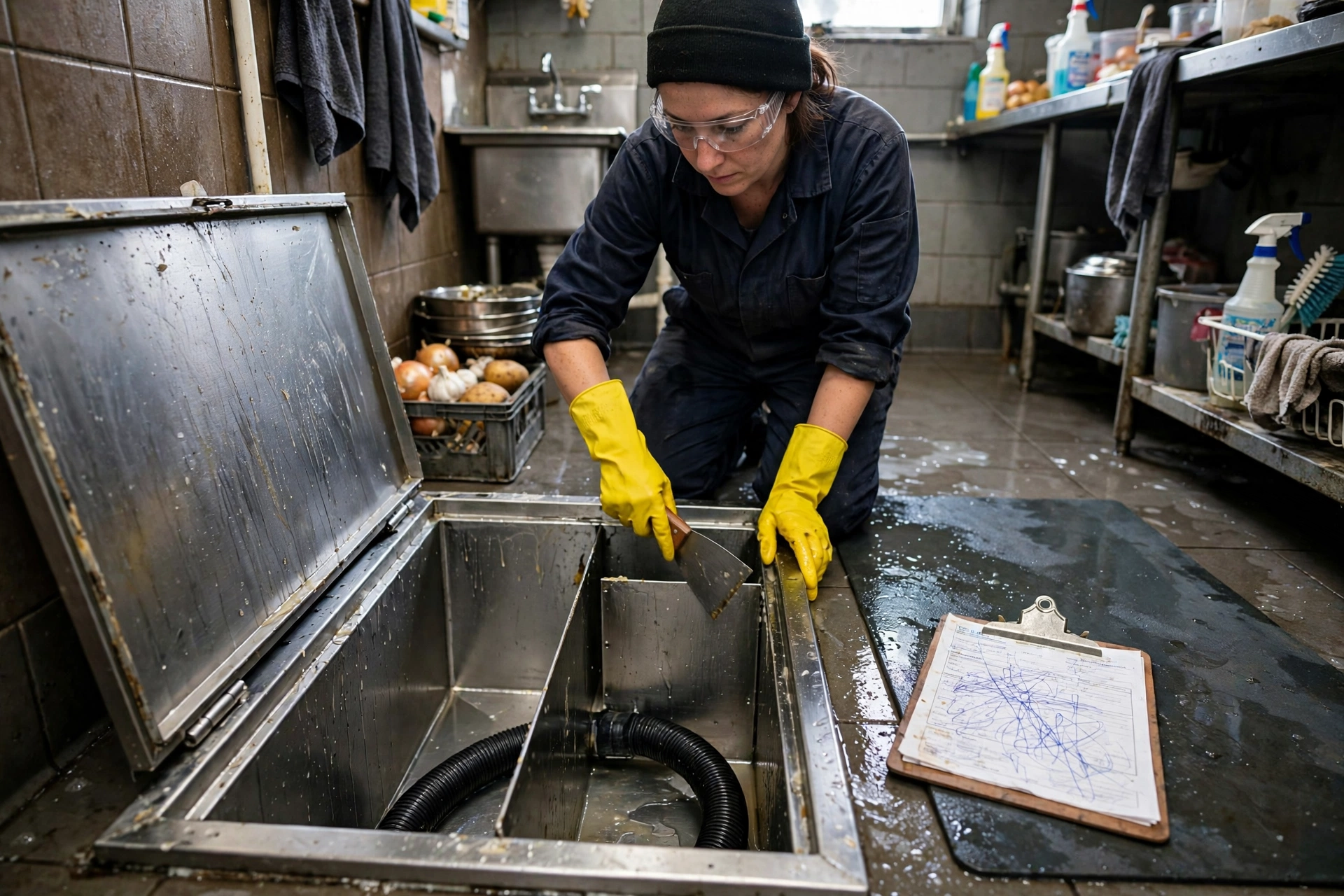
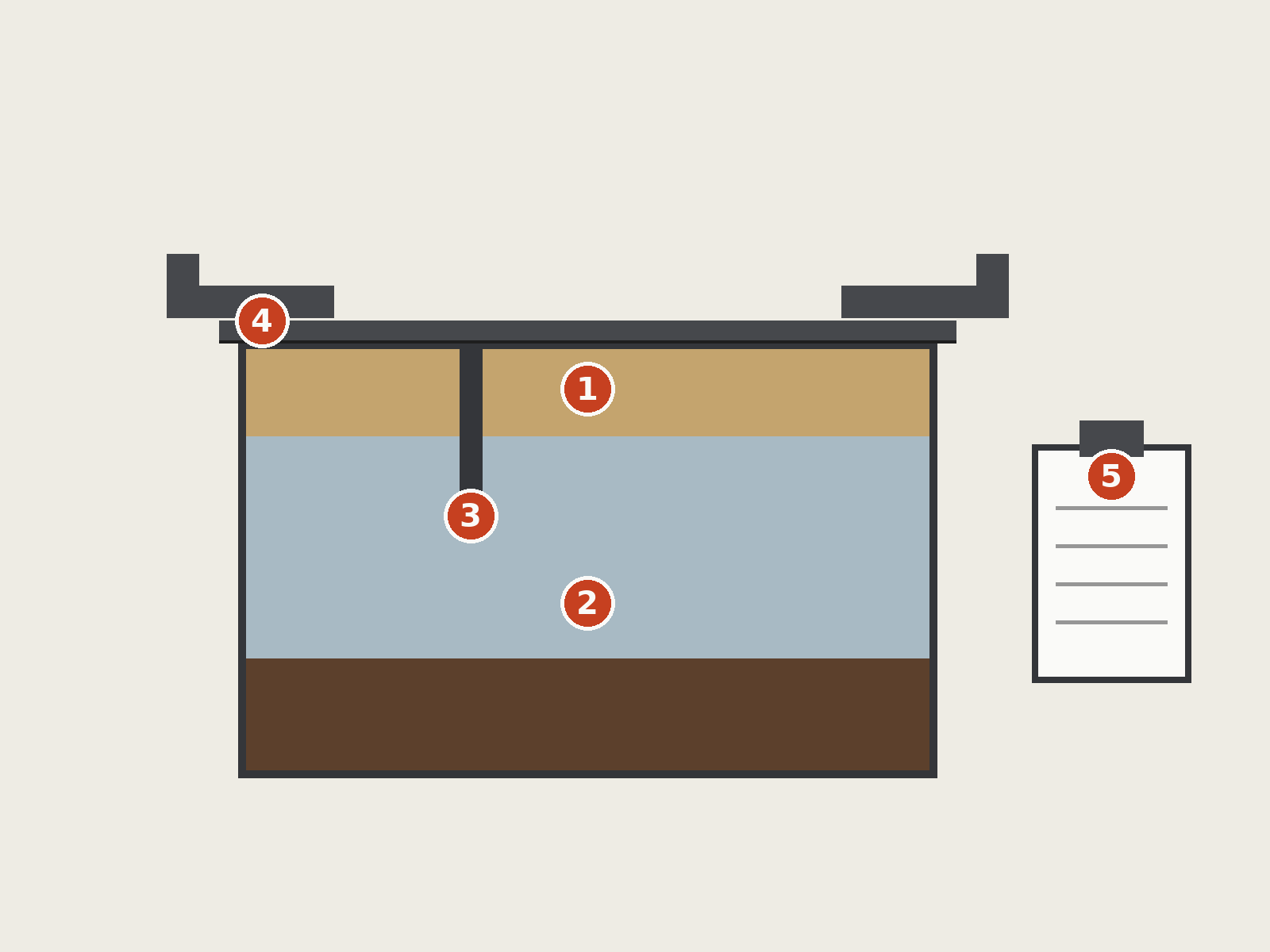
Grease cap: the floating layer that is pumped out first; part of the fill the quarter benchmark counts.
Liquid and sludge: pumped out in the same pass; sludge plus grease is what the trade measures against about a quarter of the trap's capacity.
Baffles: cleared and inspected on every visit; a damaged baffle lets grease past the trap.
Lid and seal: component condition is checked and noted on the record.
Paperwork: the waste moves on a shipping document under Michigan's Part 121 rules; the kitchen keeps its own copies. Source: the Part 121 and trade-practice facts in the kit. No figures beyond those.
Chapter 4: Setting the rhythm
After the clean-out, the manager and the crew talked about how the kitchen runs. A busy fryer and a full dish line put the diner closer to the high-volume end, so they started on a shorter cycle and agreed to check the trap against the quarter mark on each visit, lengthening or shortening the cycle as the records showed. The worn lid seal was replaced by the kitchen's own maintenance person. The floor sink drained normally, and the smell was gone.

How the service runs for a Garden City kitchen
1. You call and describe the kitchen. Trap location, size if you know it, menu, and how long since the last cleaning. 2. We schedule the visit with you. We plan around your service so the crew is not in your way. 3. The crew cleans the trap. Grease cap, liquid and sludge out, interior scraped, baffles cleared and inspected, component condition checked. 4. The waste leaves properly. It moves on a shipping document with a registered transporter. 5. You keep the record. Service record and copies, for your files and for any authority that asks. 6. We set the next visit from what we found. Your trap's fill level decides the cycle, not a calendar rule.
What a visit costs
Prices are set by trap size, access and waste volume.
| Service | Price |
|---|---|
| Interior grease trap cleaning, small indoor traps | $150 to $350 |
| Medium traps | $300 to $600 |
| Large exterior interceptors | $500 to $1,000 or more, by capacity and waste volume |
| Emergency call-out | one and a half to two times the standard service price |
| Used cooking oil collection | no charge for clean oil |
| Line jetting | priced with the service visit it rides with |
A trap that is hard to reach, or a long hose run, changes the price. Tell us about access when you call and we will explain how your price is set.
When to call
The floor sink or dish drain is slow after busy shifts
A sour or rancid smell hangs near the dish station or trap
Your trap has not been opened in a long while and you do not know where it stands
A sewer authority or inspector has asked for your cleaning records
You are setting up scheduled service before a problem starts
Drains are backing up now, which is an emergency call-out
Ready to schedule
Call (313) 351-8079, or send the form below. Name and phone are required, everything else is optional, and a consent box is required before you send it. The more details you give, the better we are able to help you.
Questions
What does grease trap cleaning include?
The crew pumps out the grease cap, liquid and sludge, scrapes the interior, clears and inspects the baffles, and checks the condition of the components. You receive a service record.
How much does it cost for a Garden City kitchen?
Interior grease trap cleaning for small indoor traps is $150 to $350. Medium traps are $300 to $600. Large exterior interceptors are $500 to $1,000 or more, by capacity and waste volume. Access and waste volume set where your trap falls.
How often should the trap be cleaned?
Trade practice is to pump when grease and solids reach about a quarter of the trap's capacity. High-volume kitchens commonly run every 4 to 6 weeks, moderate kitchens monthly to quarterly, and low-volume kitchens every 3 to 6 months. These are working habits, not requirements.
Is there a set legal interval?
We cannot point you to one. Dearborn has no fixed pumping interval, and the sewer authority rules we reviewed set none, only a duty to clean regularly and keep records. For rules specific to your building in Garden City, check with the city and the authority that serves your address.
What paperwork do I get?
A service record from the visit, and the waste moves on a shipping document. Under Michigan's Part 121 rules, the transporter keeps shipping papers for three years and the generator keeps its own copies.
Who is allowed to haul the waste?
Trap clean-out residue is a regulated liquid industrial by-product in Michigan. Only a registered and permitted transporter may haul it. A septage license does not cover it.
Do I have to close the kitchen?
We plan the visit around your service with you, and indoor traps sit at or near the dish area. We do not promise a particular visit length, so ask when you call.
What if my drains are backing up right now?
Call (313) 351-8079 and say it is an emergency. Emergency call-out is one and a half to two times the standard service price.
Do you collect used cooking oil?
Yes. Collection of clean oil has no charge.
Do you jet lines?
Yes. Line jetting is priced with the service visit it rides with, so we quote it with the visit, not on its own.
Does cold weather change anything?
Trade guidance says yes. Grease that stays soft in warm weather congeals as temperatures drop, so traps need checking more often in winter, not less. Used oil can freeze in outdoor bins, and the fix is swapping the full bin for an empty one.
Why does my trap smell between cleanings?
A trap that is past the quarter mark can turn sour. A smell can also mean a worn lid seal or a damaged baffle, which we check on each visit.
My restaurant has a large outdoor interceptor, not a small trap. Can you help?
Yes. Large exterior interceptors are $500 to $1,000 or more, by capacity and waste volume.
What if a sewer authority or inspector asks for my records?
Show them your service records and shipping document copies. Records of cleaning are what authorities may ask to see.