Taylor's restaurants sit on busy pads along Telegraph and Eureka, and most of the bigger kitchens there drain to an exterior tank buried outside. Dearborn Grease Trap handles grease interceptor pumping for those kitchens. A crew comes to your lot, opens the tank, takes out the grease cap, the liquid and the settled solids, and leaves you with the paperwork that shows it was done. If your interceptor is overdue, or you want a standing schedule so it never gets that far, we would like to hear about it.
Call us about your Taylor kitchen
Tell us what kind of kitchen you run and what the interceptor has been doing. If there is a smell, slow drains or a notice in your hand, say so. Call (313) 351-8079 and we will work out the visit with you. The form is at the bottom of this page if you would rather write.
What Taylor's kitchens are like
Taylor's food service runs along two chain corridors, Telegraph and Eureka. This is the Southland ground, where chain pads and larger kitchens cluster. A kitchen on a pad like that usually has a fryer line, a grill, a dish pit and a lot of covers. All of it drains to an exterior gravity interceptor outside the building, not a small trap under a sink.
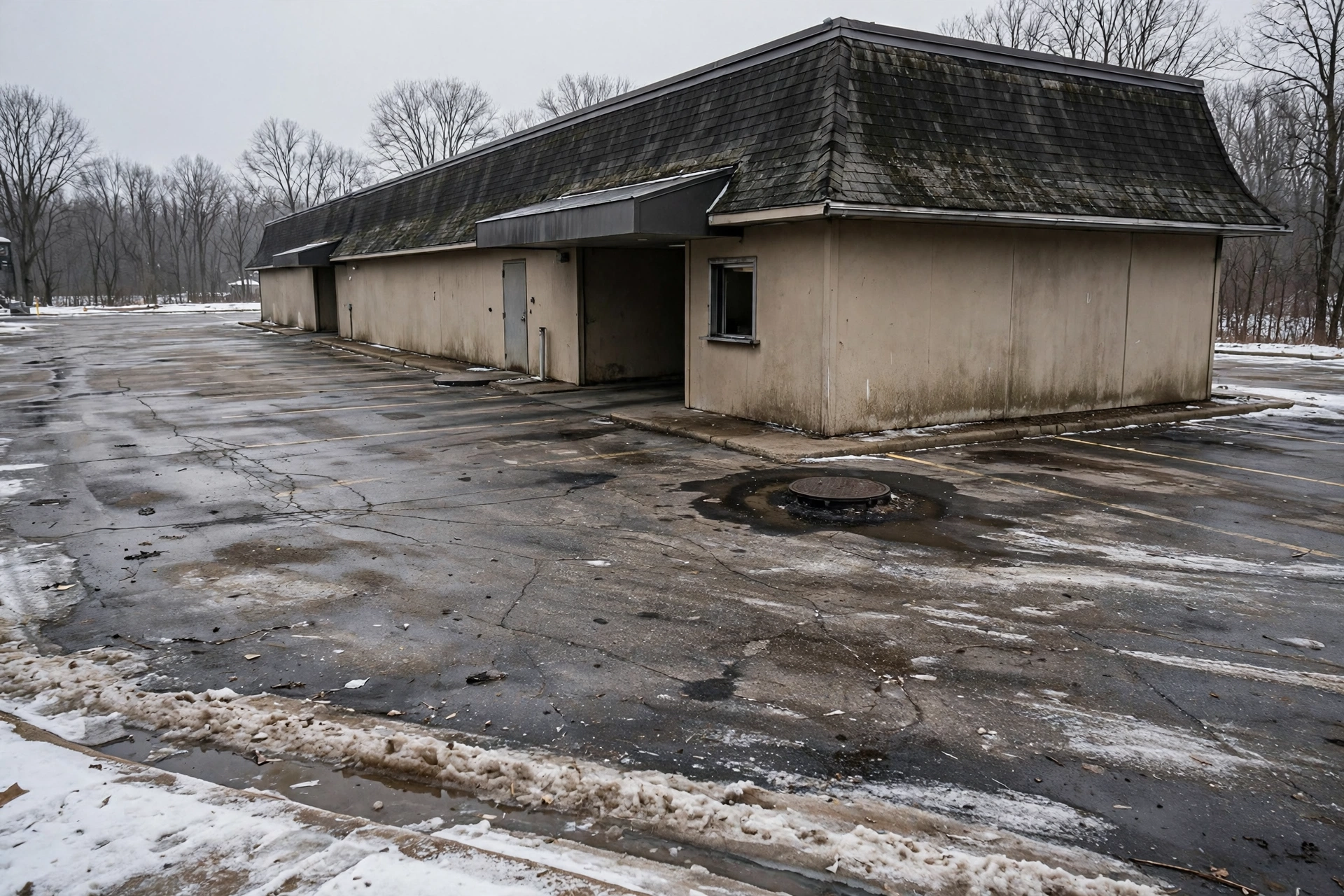
Those tanks are bigger than indoor traps, and they fill out of sight. Nobody sees the grease cap thicken. Many chain operators also work from a corporate service schedule, so the question is rarely whether to pump. It is who does it, how often, and what record comes back. That is why interceptor work is the core of what we do for Taylor.
What governs your interceptor
Start with what is not there. Dearborn has no FOG ordinance with a trap-sizing table, a fixed pumping interval or a city manifest rule, and we do not tell Taylor kitchens otherwise. What actually applies to the work is this:
- Dearborn's own code limits grease discharge to 1,500 mg/L. That is Dearborn's limit, written for Dearborn's sewer. It is not a Taylor rule. The kit we work from carries no Taylor ordinance, so ask your city or your sewer authority what, if anything, applies at your address.
- The regional sewer authority's pretreatment rules that govern our area call for interceptors where the authority deems them necessary. They say interceptors must be regularly inspected, cleaned and repaired by the user at the user's expense. The authority can ask for records of that cleaning. The rules set no fixed interval. The duty is regular cleaning, proven by records.
- Michigan's Part 121 treats grease trap clean-out residue as a liquid industrial by-product. Only a registered and permitted transporter may haul it. Each shipment moves on a shipping document, and papers are kept three years. As the generator, you must use a registered transporter and keep your own copies. A septage license does not cover this waste.
How often to pump
No rule hands you a number, so the trade uses a benchmark. When grease and solids together reach about a quarter of the interceptor's liquid depth, it is time to pump. That is trade practice for scheduling, not law, and we teach it as such.
How fast a tank reaches that point depends on the kitchen. Working frequencies run like this:
| Kitchen load | What kitchens commonly run |
|---|---|
| High volume, heavy frying | Every 4 to 6 weeks |
| Moderate volume | Monthly to quarterly |
| Low volume | Every 3 to 6 months |
These are what kitchens actually run, not requirements. We read your tank, then set the schedule to what it shows.
Featured job: a pad-site family restaurant on Eureka
This is a job we ran for a full-service chain-affiliated restaurant on a Eureka Road pad. We tell it in chapters.
Chapter 1: The smell by the back door
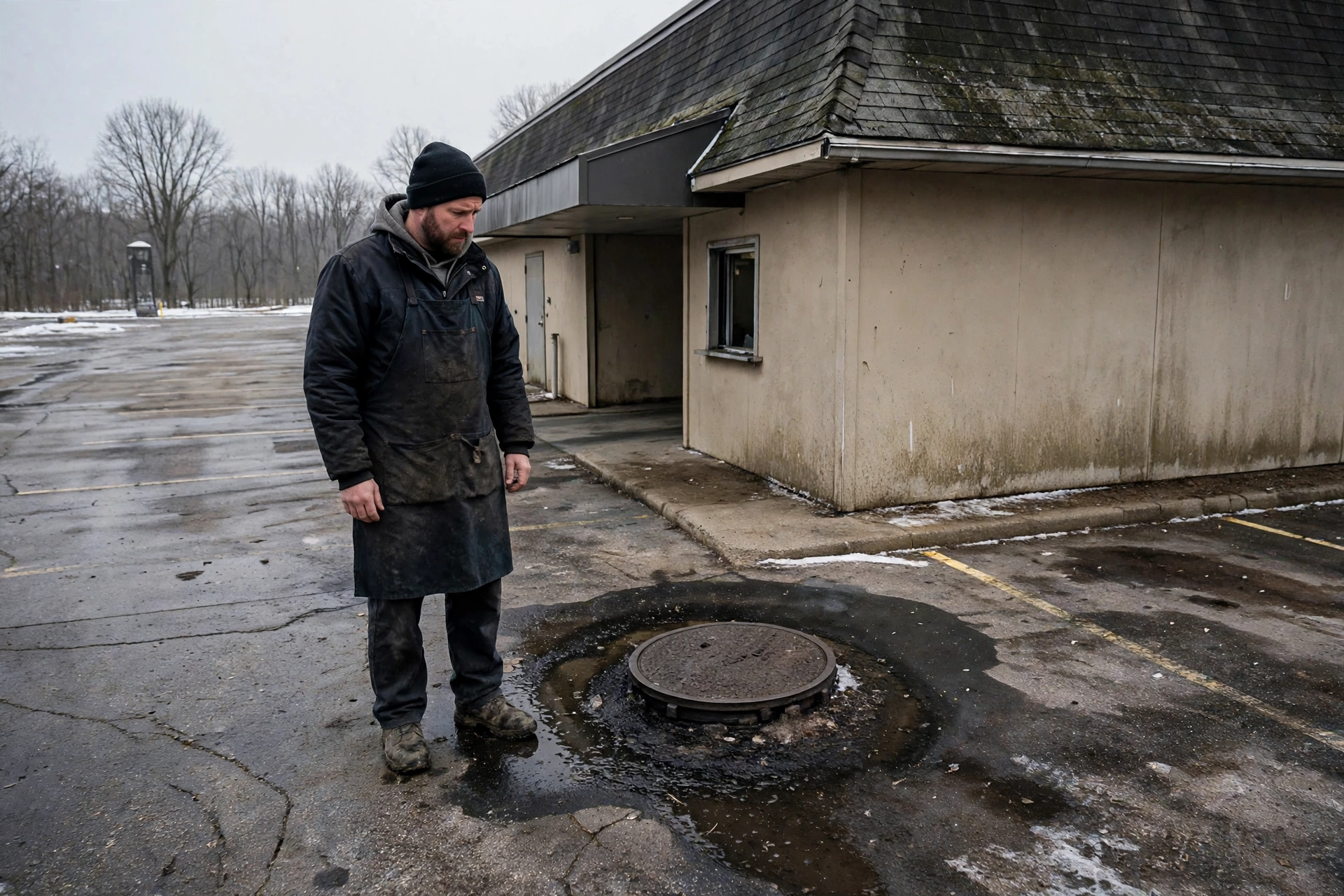
The kitchen manager called because the dumpster corner smelled sour. The dish sink was draining slowly at the end of the dinner rush. The restaurant had a corporate schedule on paper, but nobody on site could say when the interceptor was last opened.
Chapter 2: Opening the tank
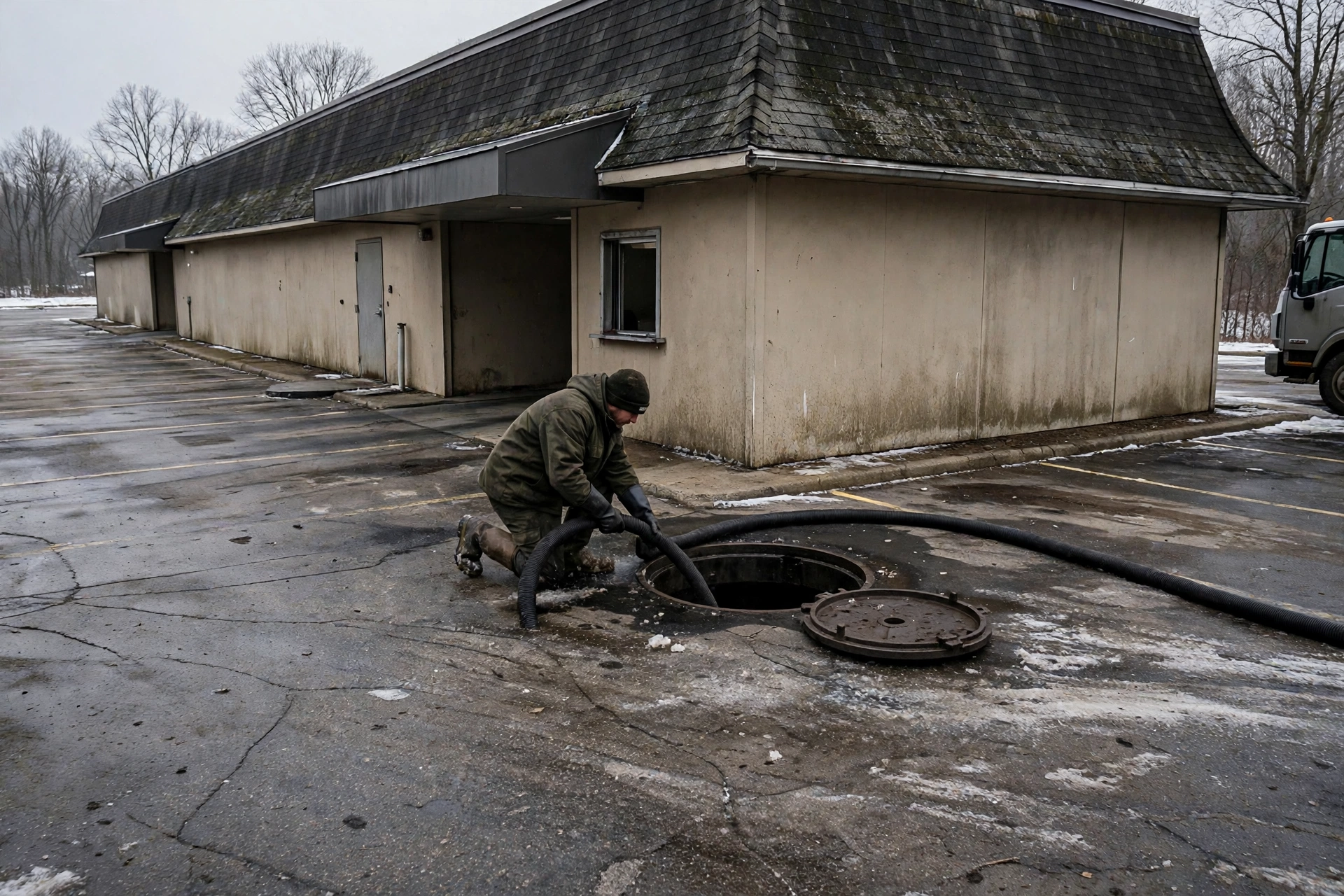
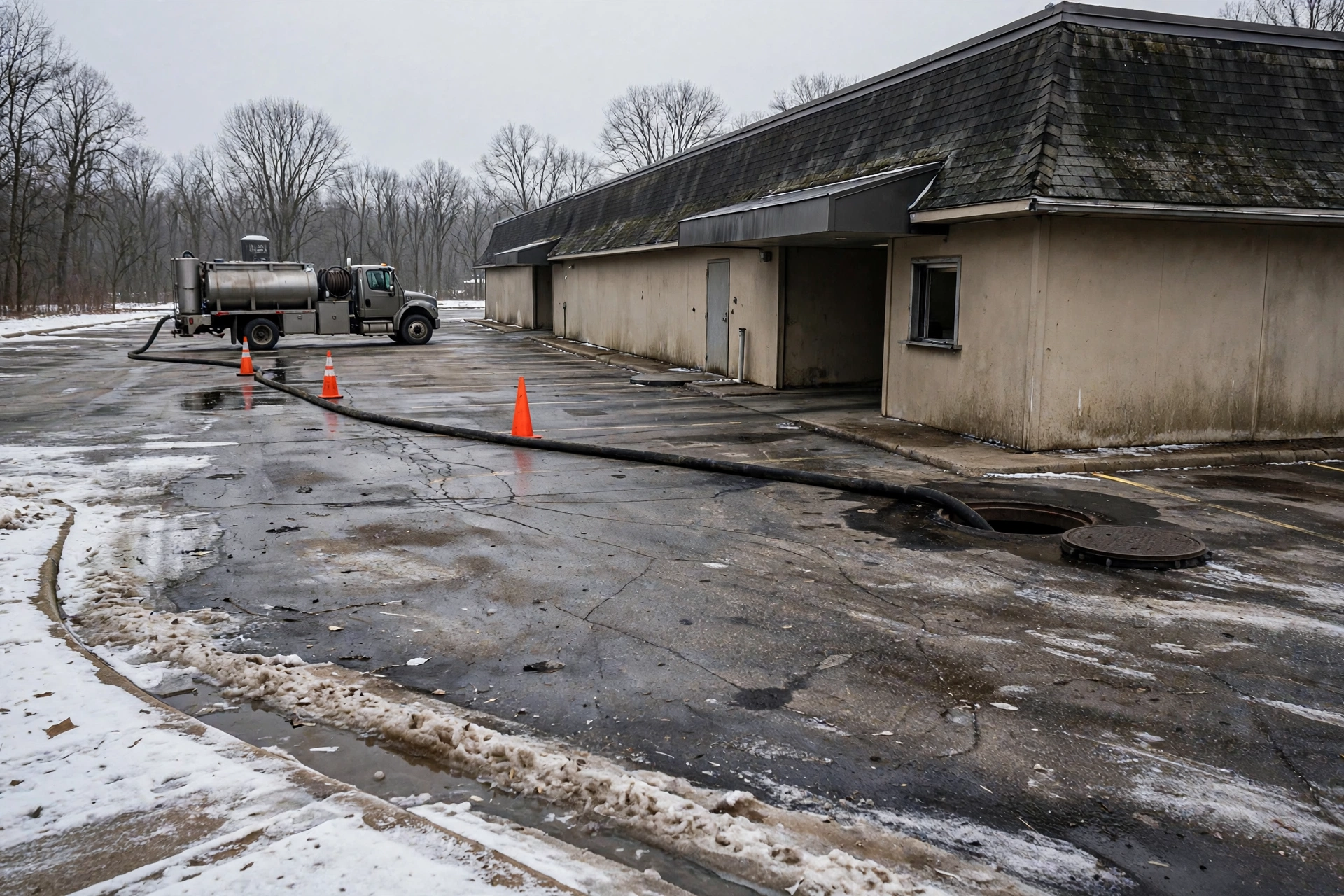
Our crew lifted the lid and checked the grease cap and the depth of settled solids against the tank's liquid depth. Both were well past the quarter mark. The crew pumped out the cap, the liquid and the sludge, scraped the interior, cleared the baffles and checked the inlet and outlet and the condition of the tank.
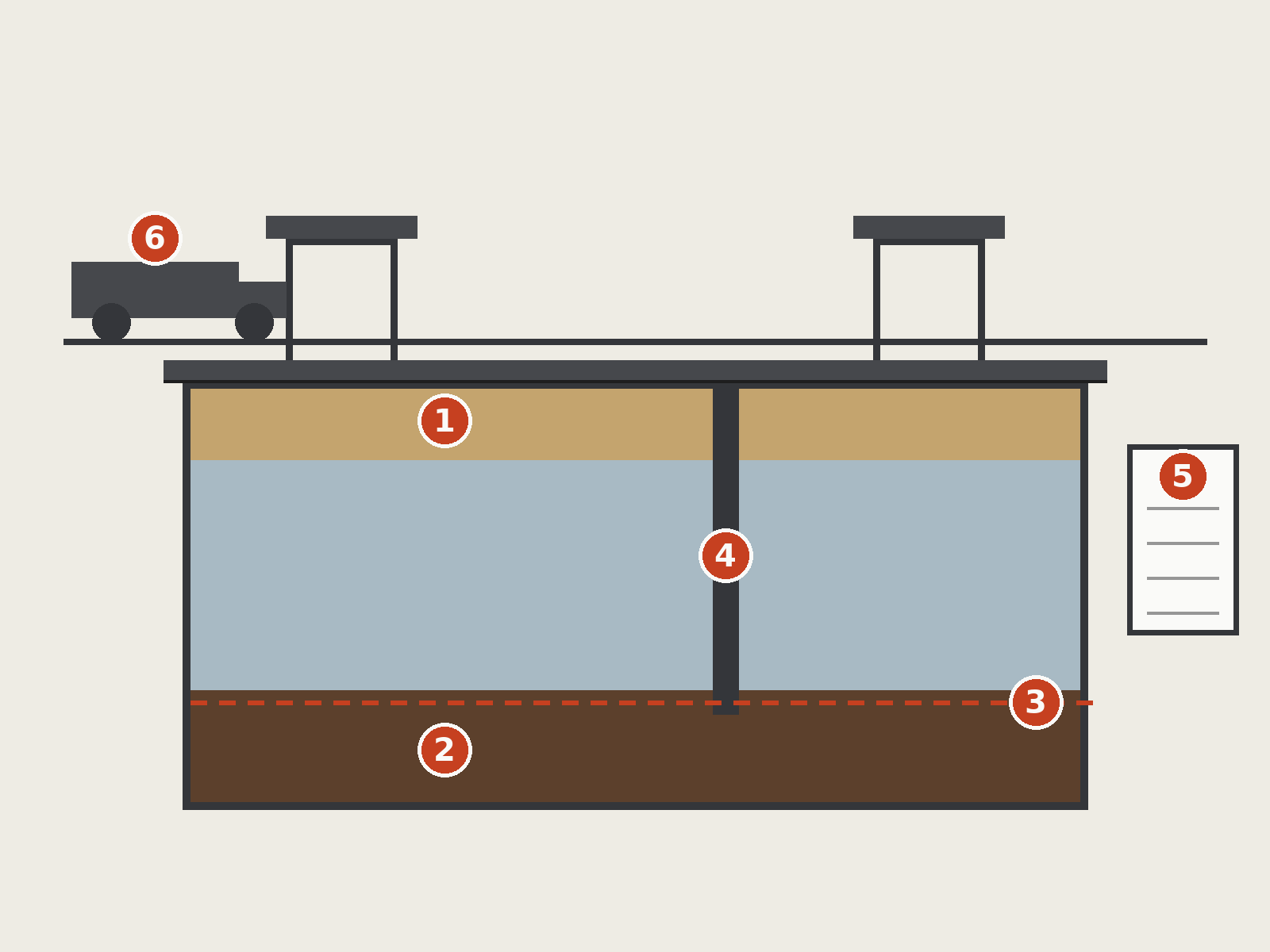
Grease cap: fats float to the top of the tank.
Settled solids: food solids sink to the bottom.
The quarter mark: the trade pumps when grease and solids together reach about a quarter of the liquid depth, a scheduling benchmark and not a local law.
Baffles: cleared and inspected on every pump-out.
The hauling paper: each shipment of the residue moves on a shipping document, and the generator keeps its own copy, with papers kept three years under Michigan's Part 121.
The hauler: only a registered, permitted transporter may take the waste, and a septage license does not cover it.
Chapter 3: The paperwork and the schedule
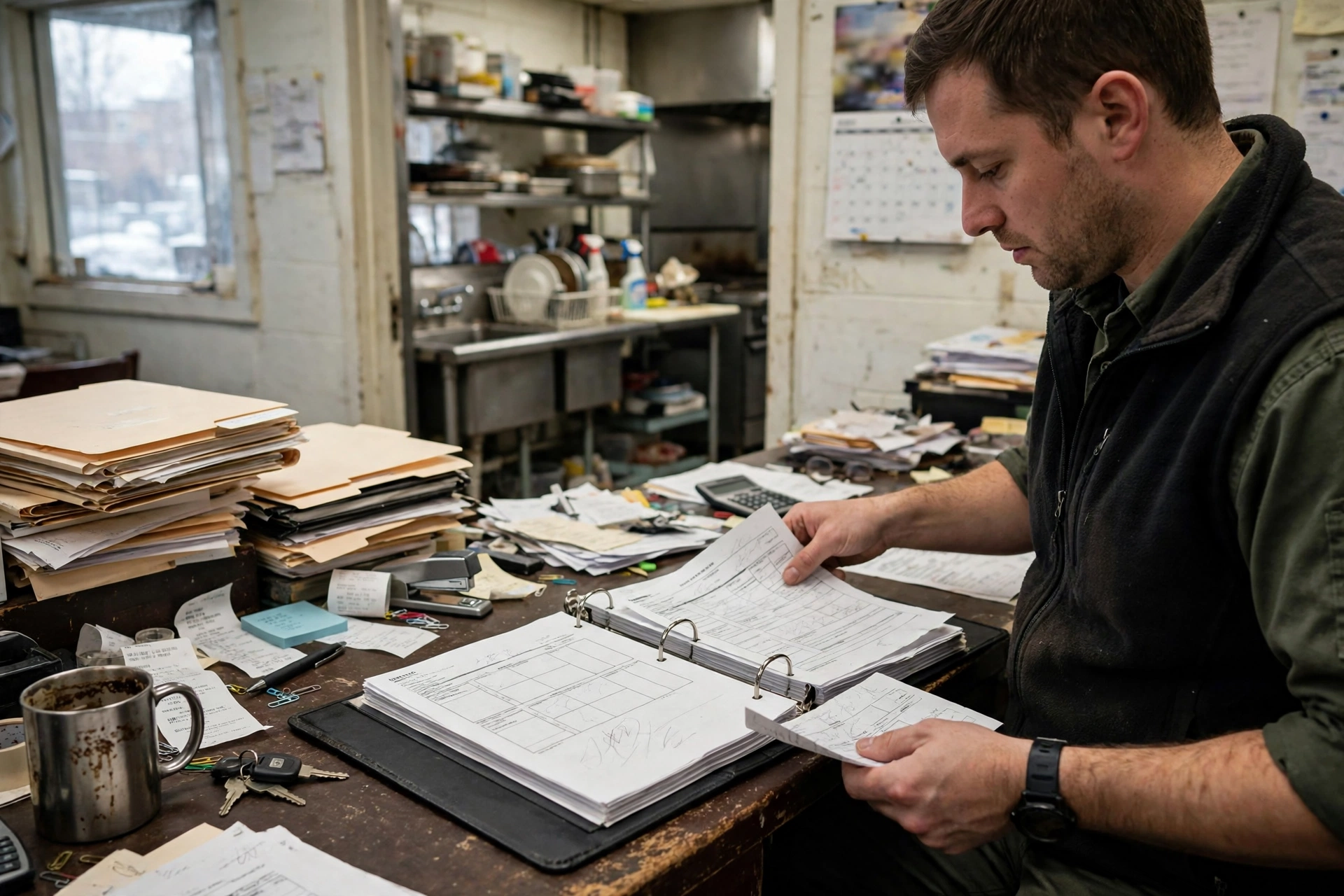
After the pump-out, the crew left the restaurant a service record and the shipping paperwork for the waste. The manager filed copies where the corporate office and any inspector could find them. Reading the tank gave us a basis to suggest a standing schedule, and the restaurant set one up. For a large exterior interceptor, our price is $500 to $1,000 or more, by capacity and waste volume.
Pump out the quarter-full tank before it backs up
If your interceptor has not been opened in a while, do not wait for the smell. Call (313) 351-8079 and we will tell you how a visit would run for your tank and what to expect on price.
How a service visit runs for a Taylor kitchen
We arrange the visit with you, then the crew comes to the tank outside your building. Here is what each visit includes, what we document and what you keep.
What the visit includes
- Opening the interceptor and reading the grease cap and solids against the liquid depth
- Pumping out the grease cap, liquid and sludge
- Scraping the interior and clearing the baffles
- Checking the inlet, outlet, lid and general condition of the tank
- Line jetting when the line needs it, priced with the service visit it rides with
What the crew documents
- The condition of the tank and baffles
- What was removed
- A service record for the visit
- The shipping document for the waste
What you keep
- Your copies of the service record and shipping paperwork, which are the proof of regular cleaning the regional authority can ask to see and which Part 121 expects the generator to hold
Pricing
Our prices are the same on every page of this site.
| Service | Price |
|---|---|
| Large exterior interceptors | $500 to $1,000 or more, by capacity and waste volume |
| Medium traps | $300 to $600 |
| Interior grease trap cleaning, small indoor traps | $150 to $350 |
| Emergency call-out | One and a half to two times the standard service price |
| Used cooking oil collection | No charge for clean oil |
Interceptor price turns on capacity, how much waste is in the tank, and how easy the lid and the truck's approach are. Line jetting is priced with the service visit it rides with. We do not publish a standalone jetting price.
When to call
Call for a standing schedule if you have an exterior interceptor and no firm record of when it was last pumped. Call right away for any of these:
A sour smell near the lid, the dumpster corner or the back door
Dish sinks or floor drains slow at the end of a rush
A notice from your sewer authority asking for cleaning records
An inspection coming and no paperwork to show
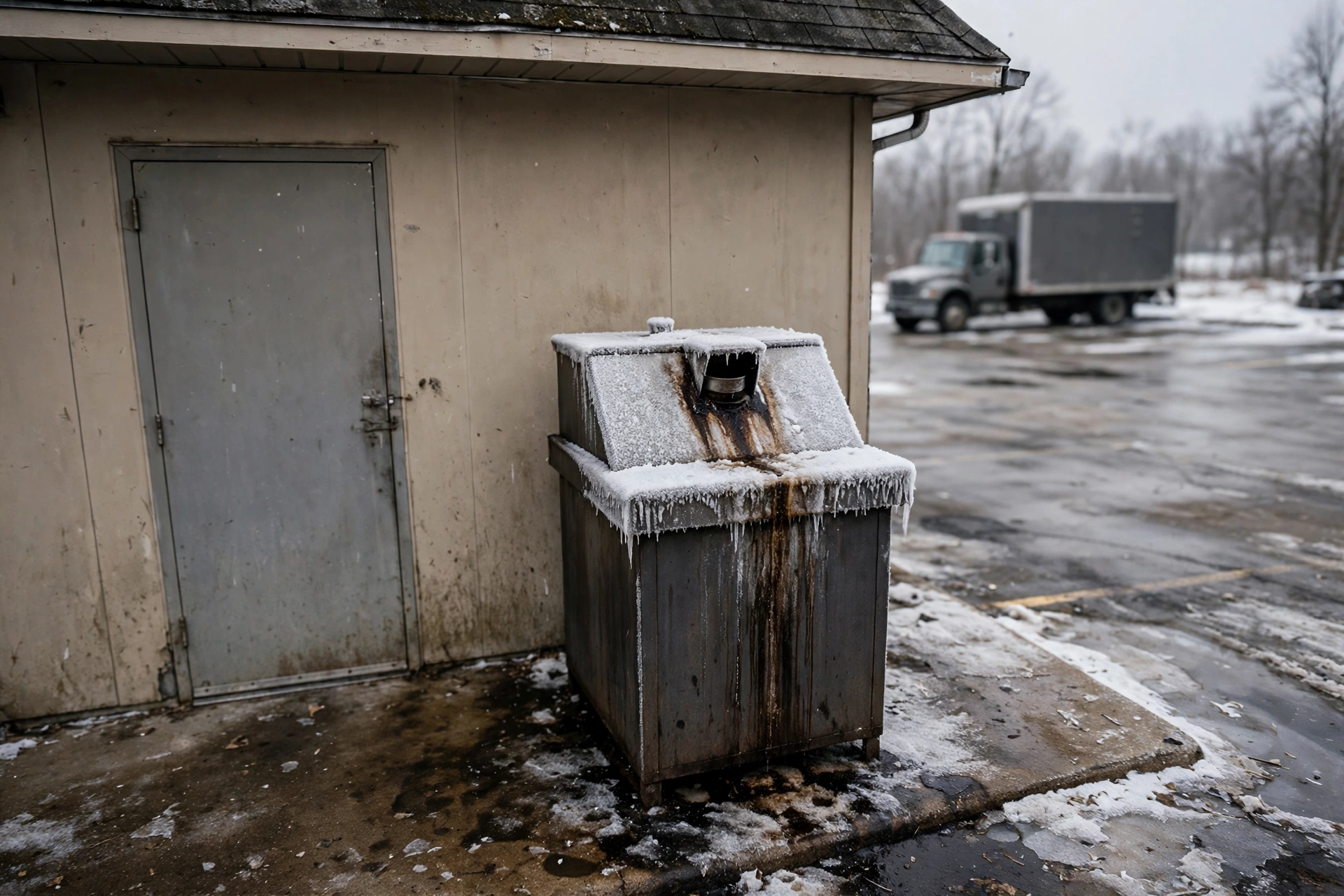
Winter is a time for more checks, not fewer. One Dearborn-serving provider's published winter guidance says fats that stay semi-liquid in warm weather congeal as temperatures drop, and grease can solidify in the line. If your fryer oil sits in an outdoor bin, it can freeze too. We offer used cooking oil collection, with no charge for clean oil. If a bin has frozen, ask us about swapping it for an empty one.
Send us the details
Fill in the form and we will call you back. Name and phone are required. Everything else is optional, and a consent box is required. The more details you give, the better we are able to help you. Or call (313) 351-8079.
Questions
Does Taylor have a FOG ordinance that tells me how often to pump?
We do not tell Taylor kitchens there is one, and the kit we work from carries no Taylor ordinance. Dearborn itself has no fixed pumping interval, sizing table or manifest rule. Ask your city or sewer authority what applies at your address. The regional pretreatment rules we work under set no fixed interval either.
So how often should my interceptor be pumped?
The trade's benchmark is to pump when grease and solids together reach about a quarter of the liquid depth. That is a scheduling guide, not law. Kitchens with heavy frying commonly run every 4 to 6 weeks, and low-volume kitchens every 3 to 6 months.
What does an interceptor pump-out cost?
Large exterior interceptors are $500 to $1,000 or more, by capacity and waste volume.
What if I have a backup and cannot wait for a scheduled visit?
Call (313) 351-8079. Emergency call-out is one and a half to two times the standard service price.
Who is allowed to haul the waste?
Under Michigan's Part 121, grease trap clean-out residue is a liquid industrial by-product. Only a registered and permitted transporter may haul it. A septage license does not cover it.
What paperwork should I have after a visit?
Keep your copy of the service record and the shipping document for the waste. Part 121 expects the generator to keep its own copies, and papers are kept three years.
What is Dearborn's 1,500 mg/L limit, and does it apply to me in Taylor?
It is the limit on fats, oil and grease discharge in Dearborn's code, a 24-hour average. It is Dearborn's limit. Ask your own city or sewer authority what applies in Taylor.
Does my chain's corporate schedule replace anything you do?
We work with whatever schedule you have. The service record and shipping paperwork from each visit give you documentation to hand to the corporate office, and the benchmark helps you check whether the schedule fits your kitchen's load.
Do I have to close the kitchen for a pump-out?
An exterior interceptor sits outside, so the work happens at the lid in the lot. Tell us your service hours when you call and we will plan the visit around them.
Do you also clean the small indoor traps?
Yes. Interior grease trap cleaning is $150 to $350 for small indoor traps and $300 to $600 for medium traps.
Can you take my used fryer oil too?
Yes. Used cooking oil collection carries no charge for clean oil.
Does winter change how I should treat the interceptor?
Per one provider's published guidance, interceptors need more frequent checking in winter, because grease congeals as it cools. Oil in outdoor bins can freeze, and a bin swap is the fix.