Kitchens along Eureka Road in Southgate run long hours and steady fryer and grill loads, and the exterior tank that catches their grease has to be emptied before it fills, not after the dish room drain slows down. Dearborn Grease Trap, based in Dearborn, handles grease interceptor pumping for Southgate kitchens and cleans the indoor traps that feed those tanks. If a lot-side lid smells, a floor drain is running slow, or a notice has landed on the manager's desk, that is the work we do.
Call us first, or read on
If you already know what you need, call (313) 351-8079. If you would rather see how the work goes and what it costs, the rest of this page covers it.
Southgate's kitchens and why the work is interceptor pumping
Eureka Road is a chain corridor. Sit-down grills, steakhouses, a chicken drive-through and family dining chains sit on pads along a road that carries about 35,500 vehicles a day. Most of those kitchens do not use a small under-sink trap. They run an exterior interceptor, a buried or lot-side tank that holds the grease and solids from the whole kitchen's wastewater.
Chain operators also buy differently. A district manager wants a scheduled visit, a record of what was done, and paperwork that can be pulled when someone asks. That is why Southgate's fit is grease interceptor pumping with documentation, plus cleaning of the indoor traps behind it.
What actually governs this work
Here is where kitchen owners get misled, so we will say it plainly. Dearborn has no FOG ordinance. There is no trap-sizing table, no fixed pumping interval and no city manifest rule in Dearborn's code. What exists is layered:
- Dearborn's own code prohibits grease that obstructs flow and sets a limit of 1,500 mg/L on fats, oil and grease in discharge.
- The regional sewer authority's pretreatment rules call for interceptors where the authority deems them necessary, cleaned and repaired regularly at the owner's expense, with records of inspection, cleaning and maintenance produced on request. They set no fixed interval. The duty is regular cleaning, proven by records.
- Michigan's Part 121 rules treat trap clean-out residue as a liquid industrial by-product. It moves only with a registered transporter, on a shipping document for each shipment, and the restaurant keeps its own copies. A septage licence does not cover this waste.
Those are Dearborn and state rules. We have not researched Southgate's own local code, so we do not quote it here. If your kitchen holds a notice from any authority, read what it says and call us with it, and we will tell you what our service records can show.
The working rule the trade uses to schedule pumping is this: pump when grease and solids together reach about a quarter of the trap's capacity. That is a scheduling benchmark that crews follow, not a law. How often a kitchen reaches that mark depends on how hard it cooks.
How the service runs for a Southgate kitchen
1. Access. The crew locates the interceptor lid and any indoor traps and confirms how the hose will run. 2. Measurement. The crew checks the depth of grease cap and settled solids against the quarter-capacity benchmark, and writes the reading down. 3. Pump-out. Grease cap, liquid and sludge come out of the tank. The inside is scraped, and the baffles are cleared and inspected. 4. Condition check. The crew looks over lids, baffles, inlet and outlet and notes anything worn. 5. Indoor traps. Kitchen traps behind the interceptor are cleaned on the same visit when the kitchen wants them done. 6. Paperwork. The waste leaves on a shipping document, and the kitchen keeps a copy with the service record.
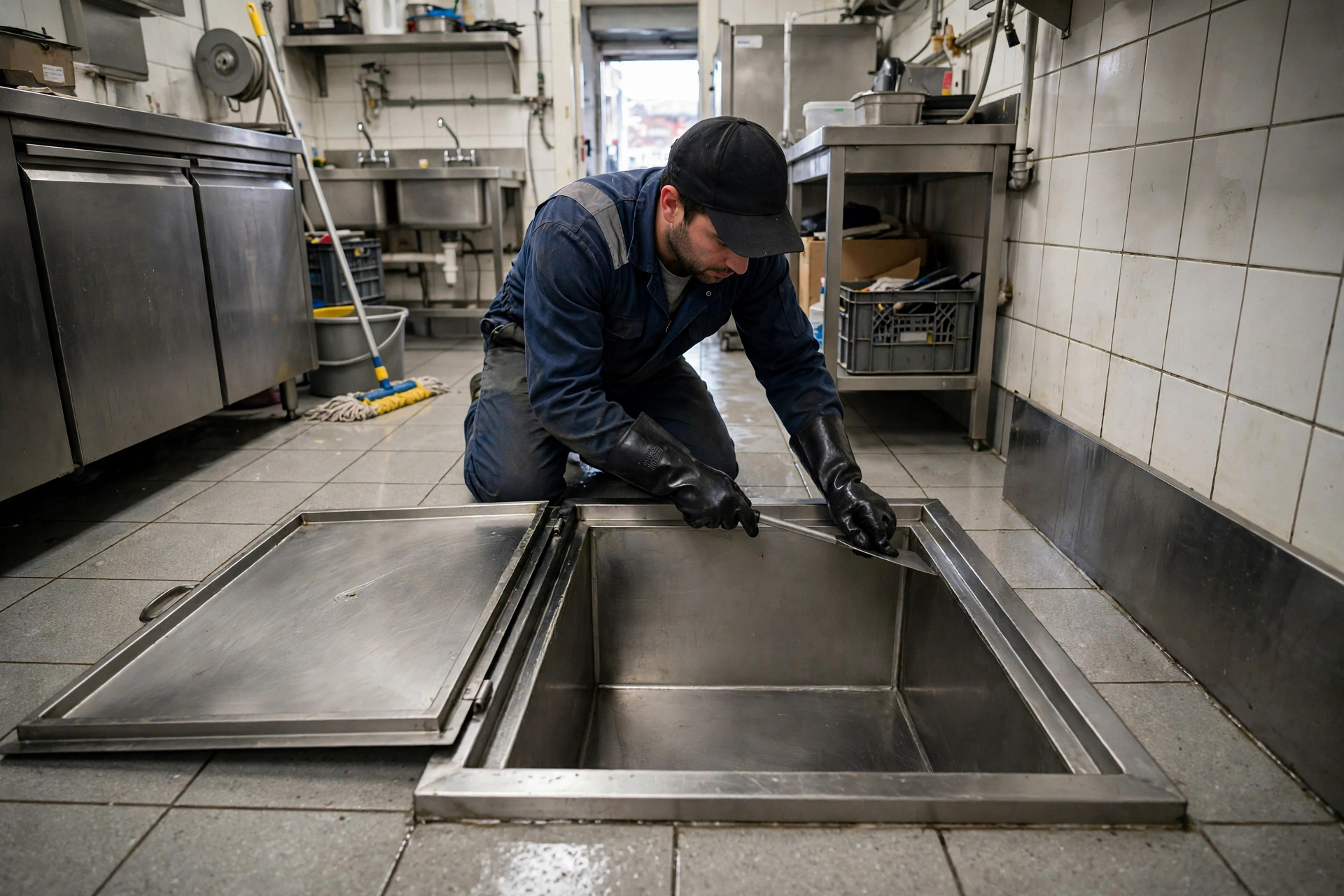
What the crew documents: the measured grease and solids level, the condition of baffles and lids, what was removed, and the shipping document for the waste. What you keep: your copy of the shipping document and the service record, ready if anyone asks to see them.
Featured job: a grill on Eureka Road
Chapter 1: The Friday drain
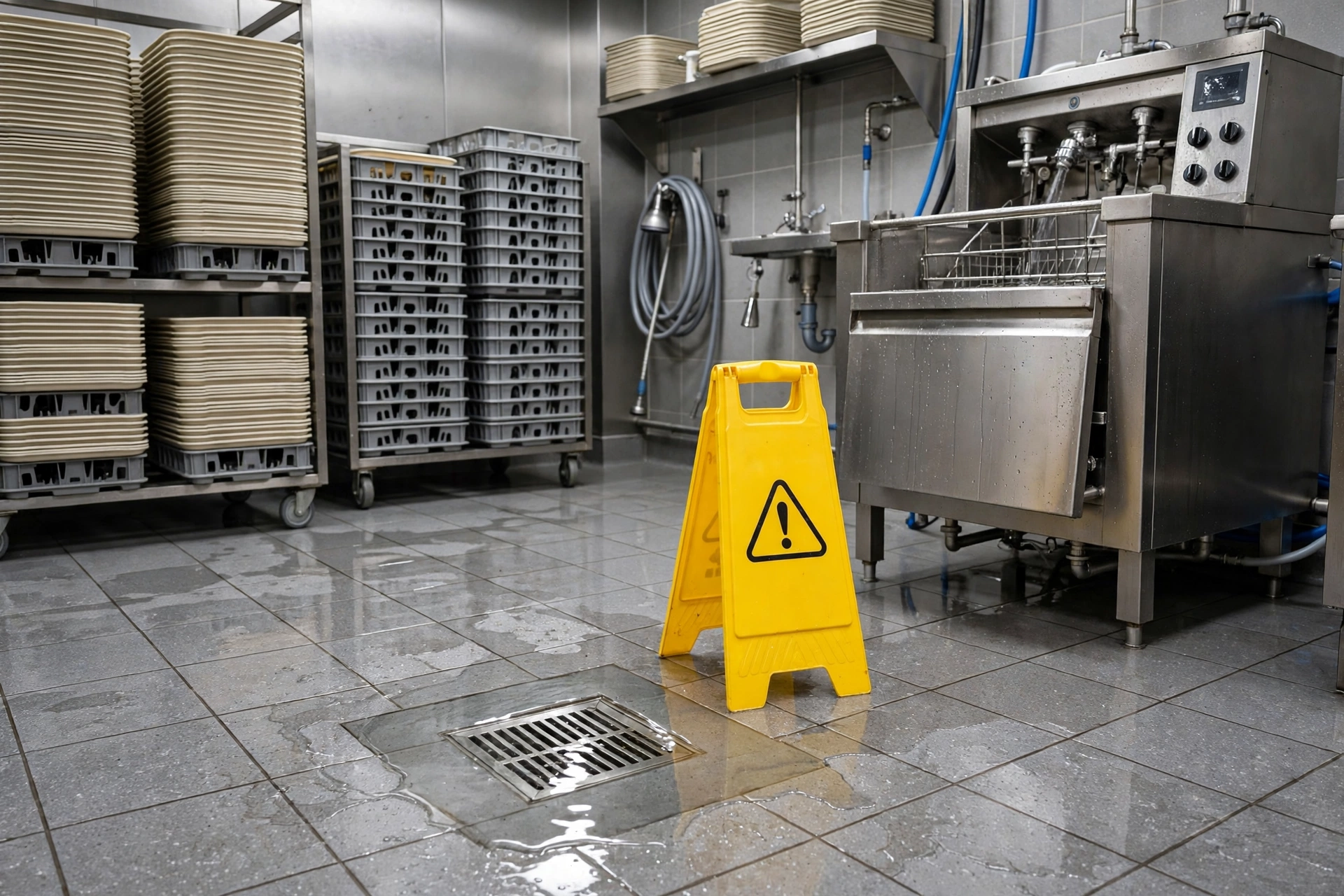
The kitchen manager at a sit-down grill on a Eureka Road pad called on a Monday. The dish room floor drain had run slow through Friday's rush, and the lid out by the lot had started to smell when the sun hit it. The restaurant belonged to a chain, and the interceptor had been pumped on whatever schedule the last manager had left in a binder. Nobody could say when the last service had been.
Chapter 2: What was under the lid
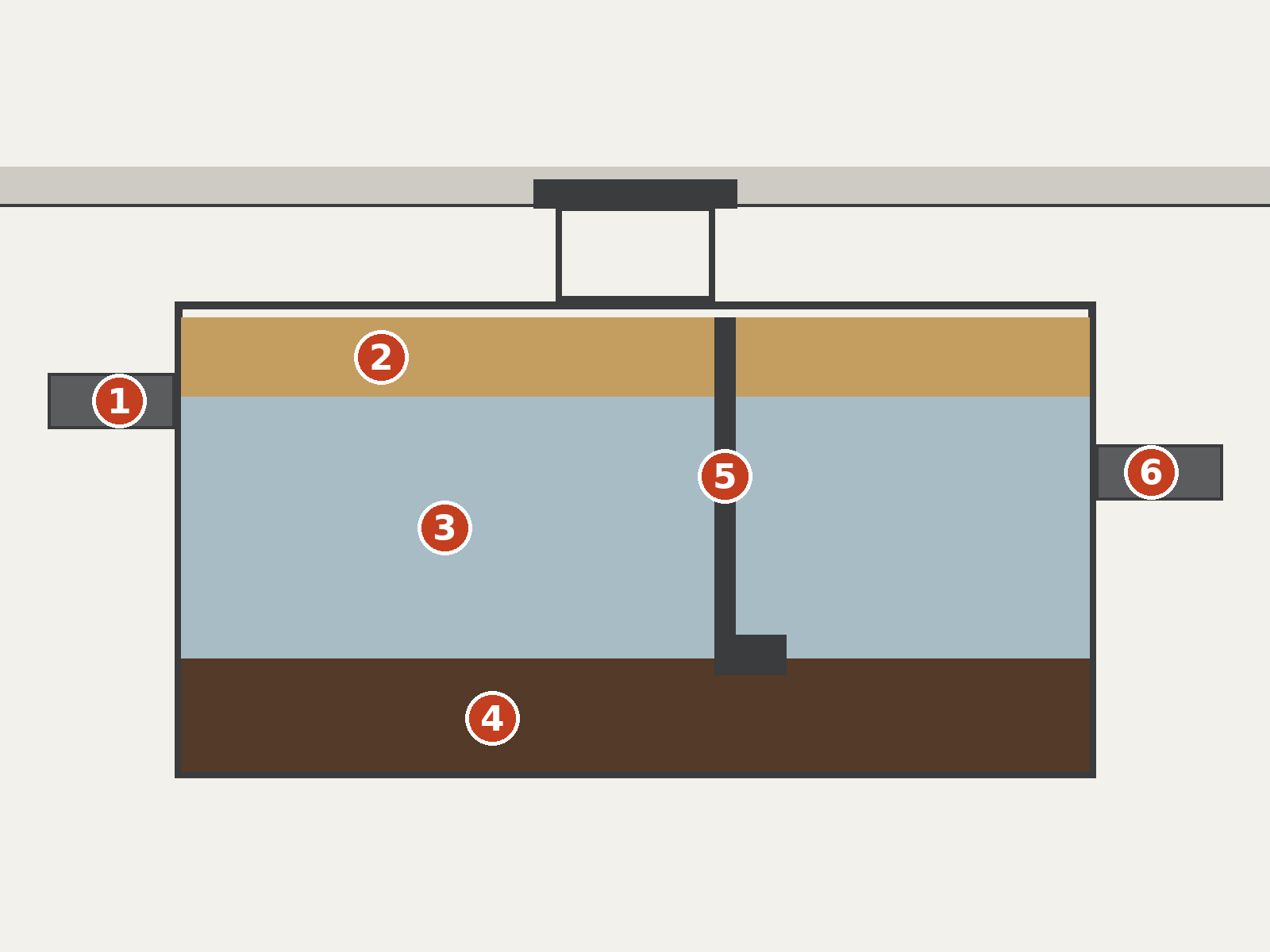
The crew opened the interceptor and measured before pumping anything. The grease cap and settled solids stood past the quarter-capacity mark. The tool in this chapter is the same one the crew uses on every tank, and you can try it yourself below.
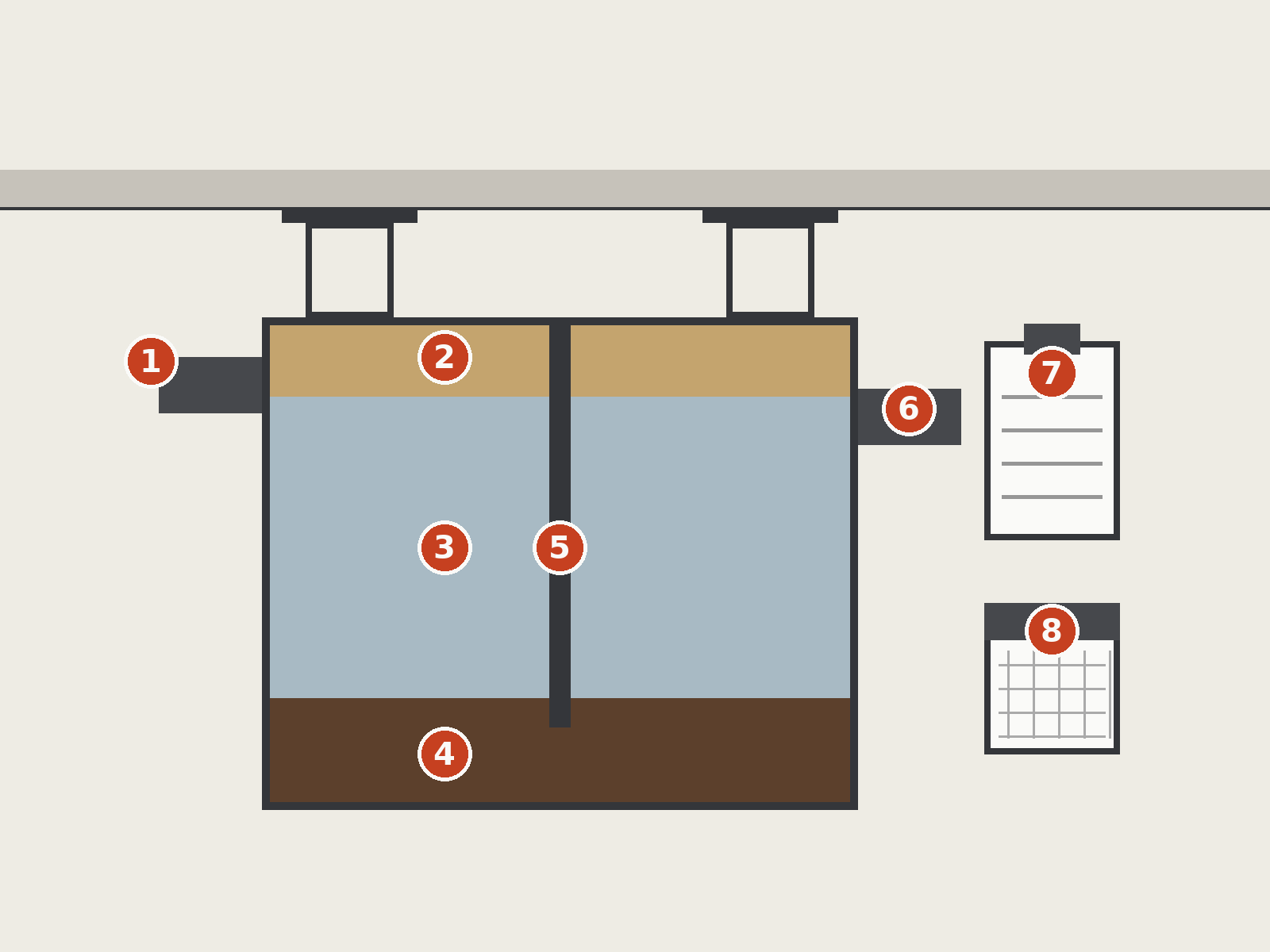
Inlet: kitchen wastewater enters here, and hot water cooling in the tank drops its grease to the top.
Grease cap: the floating layer; trade practice is to schedule pumping when grease and solids together reach about a quarter of capacity. This is a benchmark, not a law.
Liquid middle: pumped out with the rest during a full pump-out.
Sludge layer: settled solids on the bottom, removed and scraped during cleaning.
Baffles: cleared and inspected on each visit.
Outlet: where the cleared water leaves; the crew checks its condition.
Lid and paperwork: the waste moves on a shipping document under Michigan's Part 121, and the restaurant keeps its copy.
Frequency: busy kitchens often run every 4 to 6 weeks, low-volume kitchens every 3 to 6 months, and neither is a requirement.
Chapter 3: The pump-out
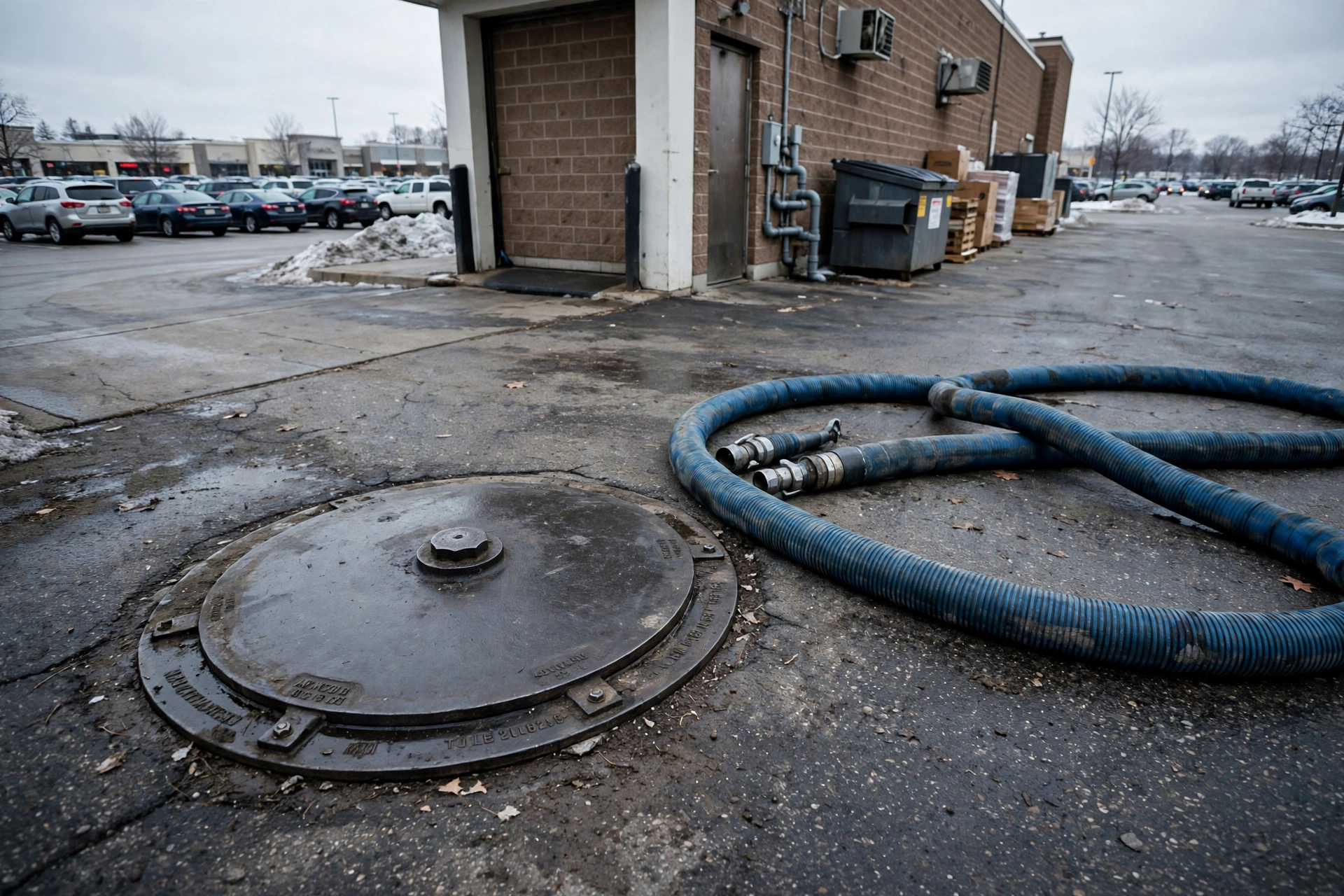
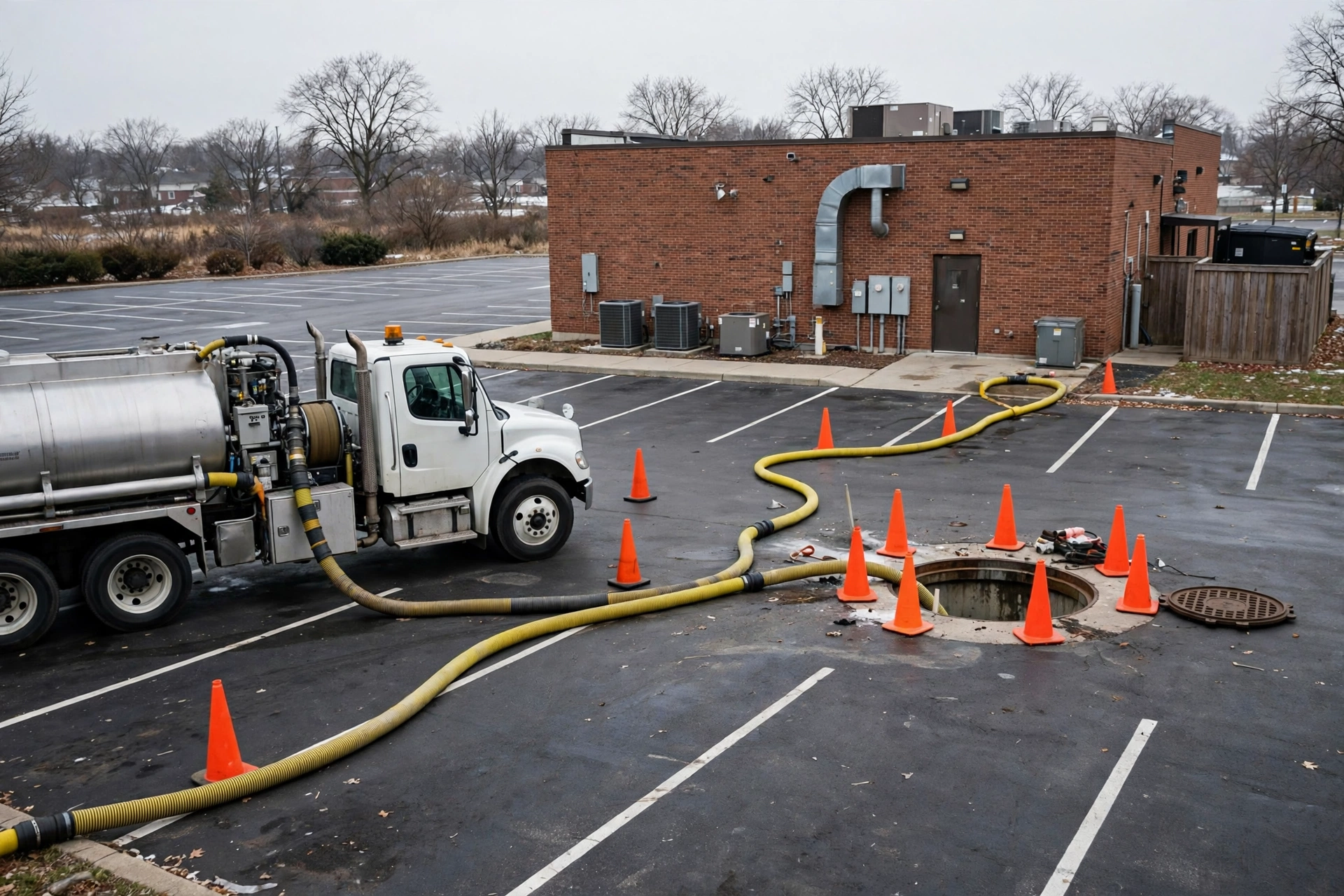
The truck backed to the lid and the hose ran across the lot, clear of the drive-through lane. Grease cap, liquid and sludge came out. The crew scraped the walls, cleared the baffles and checked lids and fittings. Then they went inside and cleaned the kitchen trap that feeds the tank, a job priced in the interior trap bands. The interceptor job sat in the large exterior band of $500 to $1,000 or more, by capacity and waste volume.
Chapter 4: The paperwork and the schedule
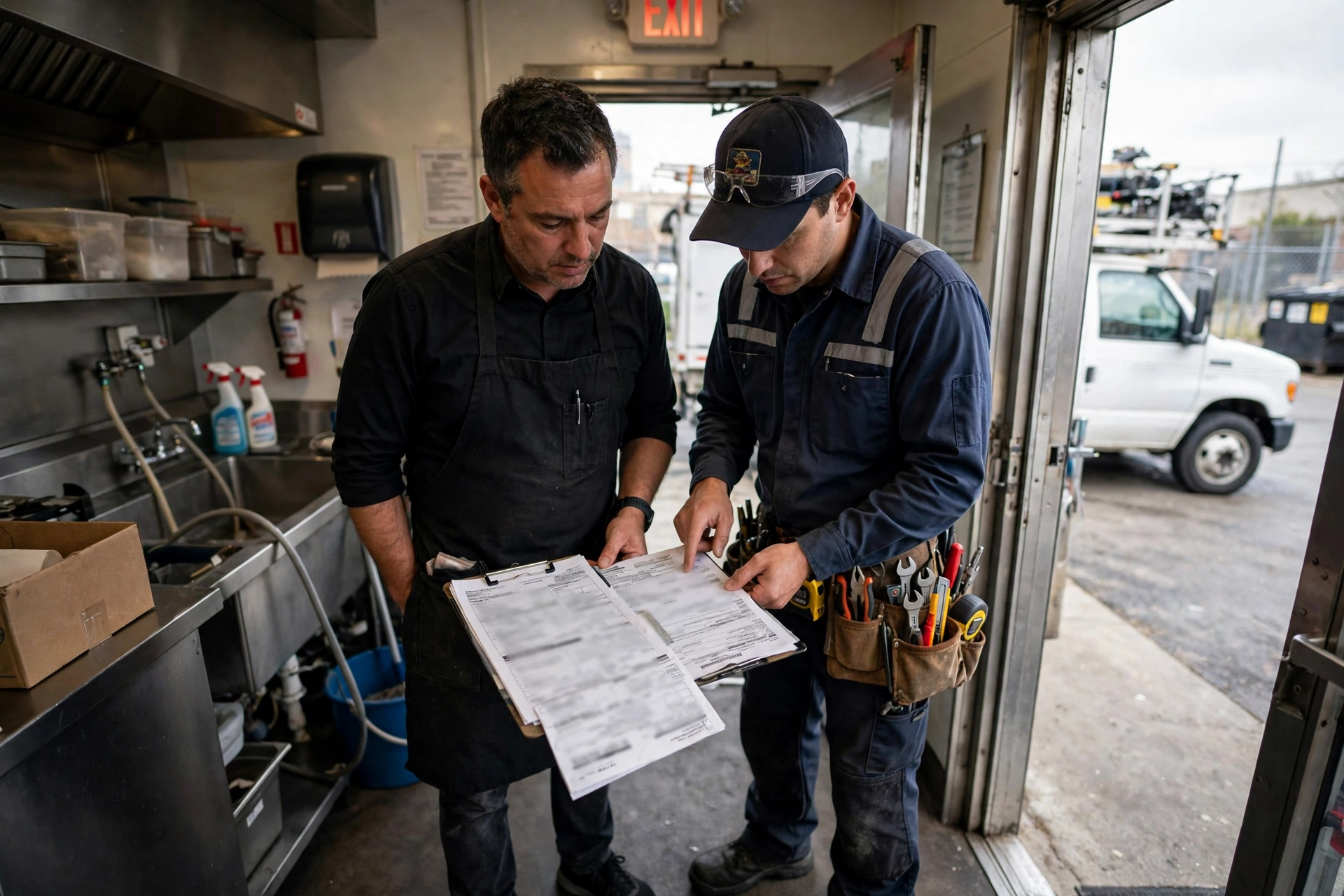
Before leaving, the crew handed the manager the shipping document and a service record that showed the measured level, the baffle check and what was removed. The manager put copies in the binder, and the chain's district office could ask for them later. The crew and the manager then set a pumping rhythm from the kitchen's own fryer and grill load, to be adjusted from the reading at each visit. The floor drain ran clear that afternoon.
What it costs
These are our prices:
| Service | Price |
|---|---|
| Interior grease trap cleaning, small indoor traps | $150 to $350 |
| Medium traps | $300 to $600 |
| Large exterior interceptors | $500 to $1,000 or more, by capacity and waste volume |
| Emergency call-out | one and a half to two times the standard service price |
| Used cooking oil collection | no charge for clean oil |
| Line jetting | priced with the service visit it rides with |
Where a job falls within a band depends on the tank's capacity, how hard the lid and hose run are to reach, and how much waste is in it. Basement, underground and long hose runs cost more.
Mid-page invitation: want a reading on your tank?
Call (313) 351-8079 and tell us what the kitchen cooks and when the tank was last pumped. We will talk through what a visit involves and how the price is set.
When to call
The dish room drain is slow, or the lid smells at the lot.
You do not know when the interceptor was last pumped.
A district office, inspector or authority has asked for your cleaning records.
You are taking over a location and the binder is empty.
You want a standing schedule so the tank is handled before it fills.
The kitchen has backed up. Emergency call-out is one and a half to two times the standard service price.
Questions
Does Southgate or Dearborn set how often I must pump my interceptor?
Dearborn has no FOG ordinance, and its code carries no fixed pumping interval. The regional sewer authority's pretreatment rules call for regular cleaning at the owner's expense with records available on request, but set no interval either. We have not researched Southgate's own code, so if you hold a notice, read it and call us.
How do I know when my interceptor needs pumping?
The trade pumps when grease and solids together reach about a quarter of the tank's capacity. That is a working benchmark, not a law. Our crew measures against it and writes the reading on your service record.
How often do kitchens like mine pump?
High-volume kitchens often run every 4 to 6 weeks, moderate kitchens monthly to quarterly, and low-volume kitchens every 3 to 6 months. Those are what kitchens actually run, not requirements. Your own fryer and grill load sets the rhythm.
What does grease interceptor service cost?
Large exterior interceptors are $500 to $1,000 or more, by capacity and waste volume. Small indoor traps are $150 to $350, and medium traps are $300 to $600.
What moves the price within that range?
Capacity, access and waste volume. Basement, underground and long hose runs cost more.
What paperwork do I get?
A shipping document for the waste and a service record from the visit. Michigan's Part 121 treats trap clean-out residue as a liquid industrial by-product, which moves only with a registered transporter on a shipping document, and the restaurant keeps its own copies.
Can a septic or septage hauler take my grease waste?
A septage licence under Michigan's Part 117 does not cover this waste. It has to go with a transporter registered for liquid industrial by-products.
Can you clean my indoor traps at the same time?
Yes, when the kitchen wants them done on the visit. Small indoor traps are $150 to $350 and medium traps are $300 to $600.
What does Dearborn's 1,500 mg/L limit mean for me?
It is a limit in Dearborn's own code on fats, oil and grease in discharge. We are not quoting Southgate's local limits here. A tank cleaned on a sensible schedule is the practical way a kitchen keeps its grease out of the line.
Do you handle emergencies?
Yes, call (313) 351-8079. Emergency call-out is one and a half to two times the standard service price.
Do you jet kitchen lines?
Yes. Line jetting is priced with the service visit it rides with.
Do you collect used cooking oil?
Yes. There is no charge for clean oil.
Do I need to worry about winter?
Trade guidance says grease that stays semi-liquid in warm weather can congeal as temperatures drop, and cold can freeze grease at the top of an interceptor. That argues for checking more often in winter, not less. Outdoor oil bins can freeze too, and the working fix is a bin swap.
I run a chain location. Can you work to my district's requirements?
Tell us what your district office asks for. We provide a service record and a shipping document on each visit, and those are what a district office or authority would ask to see.
Final invitation: set up your Southgate visit
Call (313) 351-8079 or fill in the form. It asks for your name and phone number, and everything else is optional. A consent box is required. The more details you give, the better we are able to help you.
---