The visit includes
- Cap, liquid and sludge pumped out
- Interior scraped and baffles cleared
- Lid, baffles, inlet and outlet checked
- Waste hauled away on a shipping document
- Line jetting when added, priced with the visit
Dearborn Grease Trap does grease trap cleaning for the small indoor traps under prep sinks and in kitchen floors across Dearborn, and each visit starts from what is in the trap rather than from a calendar. The core of the job is grease trap pumping: the grease cap, the liquid and the settled solids come out, the inside is scraped, and the baffles are cleared and checked. Many kitchens put that visit on a standing schedule, and we treat grease trap maintenance as the way to keep a backup from landing in the middle of a Friday service. If a line is slow past the trap, line jetting can ride with the same visit. If the trap has already failed, emergency grease trap service is how we get to you quickly. Kitchens that run a fryer can hand off their spent oil through used cooking oil collection, at no charge for clean oil.
If you have a smell, a slow drain, a notice from the sewer authority or an inspection coming, call (313) 351-8079. Tell us the kind of kitchen you run, where the trap sits and when it was last cleaned. If you are setting up service so none of that happens, call for that too. We will tell you what the visit involves and what it costs.
A grease trap catches fats, oil and grease from your sinks and dishwashing before they reach the building's drain line. A small indoor trap holds very little, so a busy kitchen fills it quickly. Fat that gets past a full trap cools and hardens in the pipe. That is how a slow drain turns into a backup.
Interior traps are the usual setup in Dearborn's small kitchens: halal grills, bakeries, coney spots, diners, cafés and carry-outs. Large outdoor in-ground interceptors are a different job with a different price. They have their own page.
Dearborn has no FOG ordinance. The city code has no trap-sizing table, no fixed pumping interval and no restaurant manifest rule. Three layers of rules do apply:
Wayne County's Environmental Health Section is a separate matter. It licenses and inspects the food side of your business. That is why a clean trap and a paper trail help on both fronts.
The trade's working benchmark is to pump when grease and solids together reach about a quarter of the trap's liquid capacity. It is a scheduling benchmark that trap crews use. It is not a Dearborn rule.
Small traps reach that quarter mark sooner than large interceptors, because there is less room to begin with. The frequencies kitchens actually run follow from how fast the unit fills:
| Kitchen volume | What kitchens actually run |
|---|---|
| High volume, heavy frying, long shifts | Every 4 to 6 weeks |
| Moderate volume | Monthly to quarterly |
| Low volume | Every 3 to 6 months |
Treat these as what kitchens run, not what anyone requires. A small trap in a busy kitchen may need visits closer together than the high-volume line suggests. The first visits show where your trap sits against the quarter mark, and we set your cadence from what the crew measures. A cadence that holds up gets written onto your service record.
These are our prices for interior trap work:
| Service | Price |
|---|---|
| Small indoor traps | $150 to $350 |
| Medium traps | $300 to $600 |
| Emergency call-out | One and a half to two times the standard service price |
| Line jetting | Priced with the service visit it rides with |
| Used cooking oil collection | No charge for clean oil |
Where a trap lands in its range depends on the unit's capacity, how hard it is to reach and how much waste comes out. A trap under a counter with a clear lid costs less to service than one behind equipment or down a basement stair. Disposal of the waste is part of the visit. Large exterior interceptors are priced on their own page.
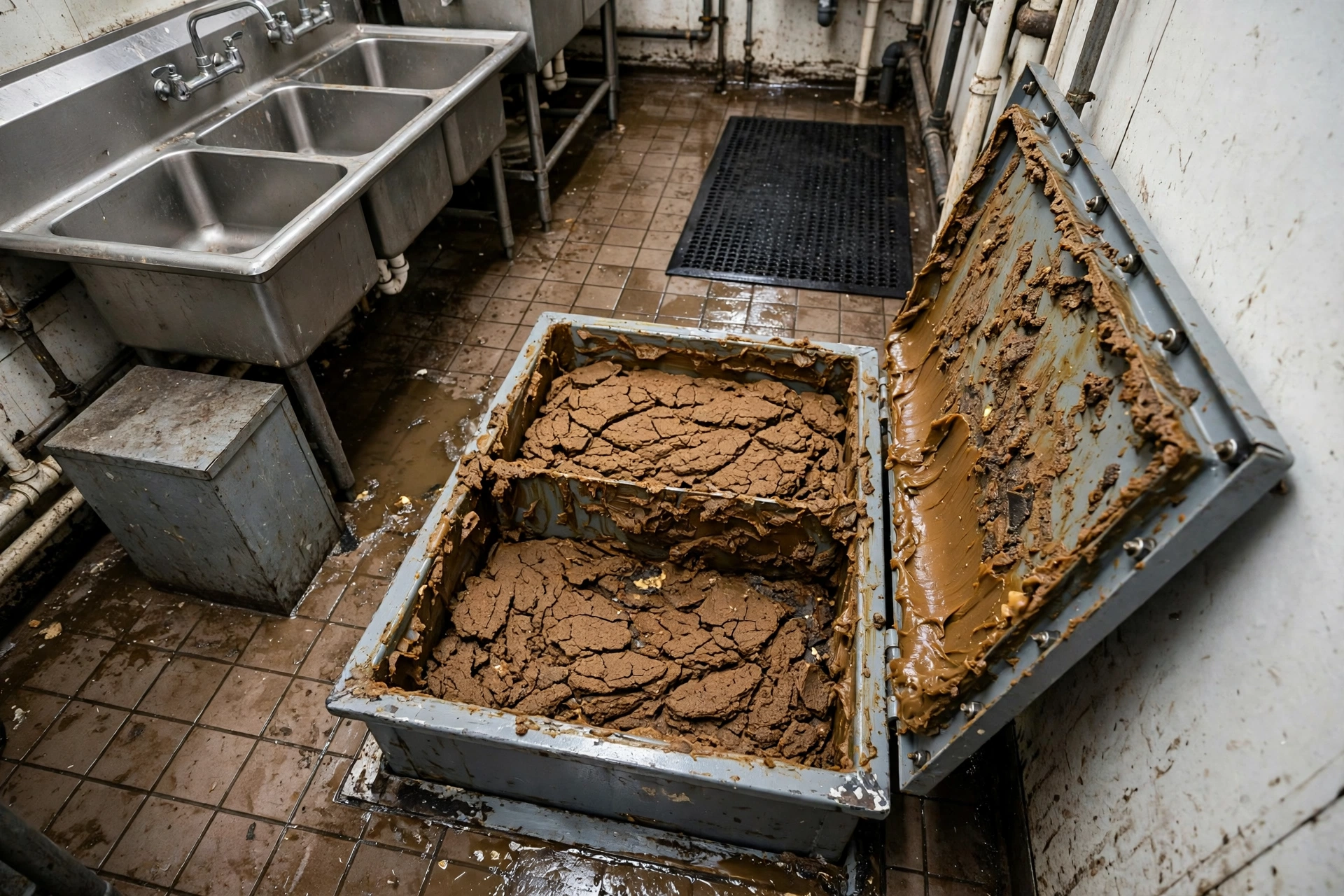
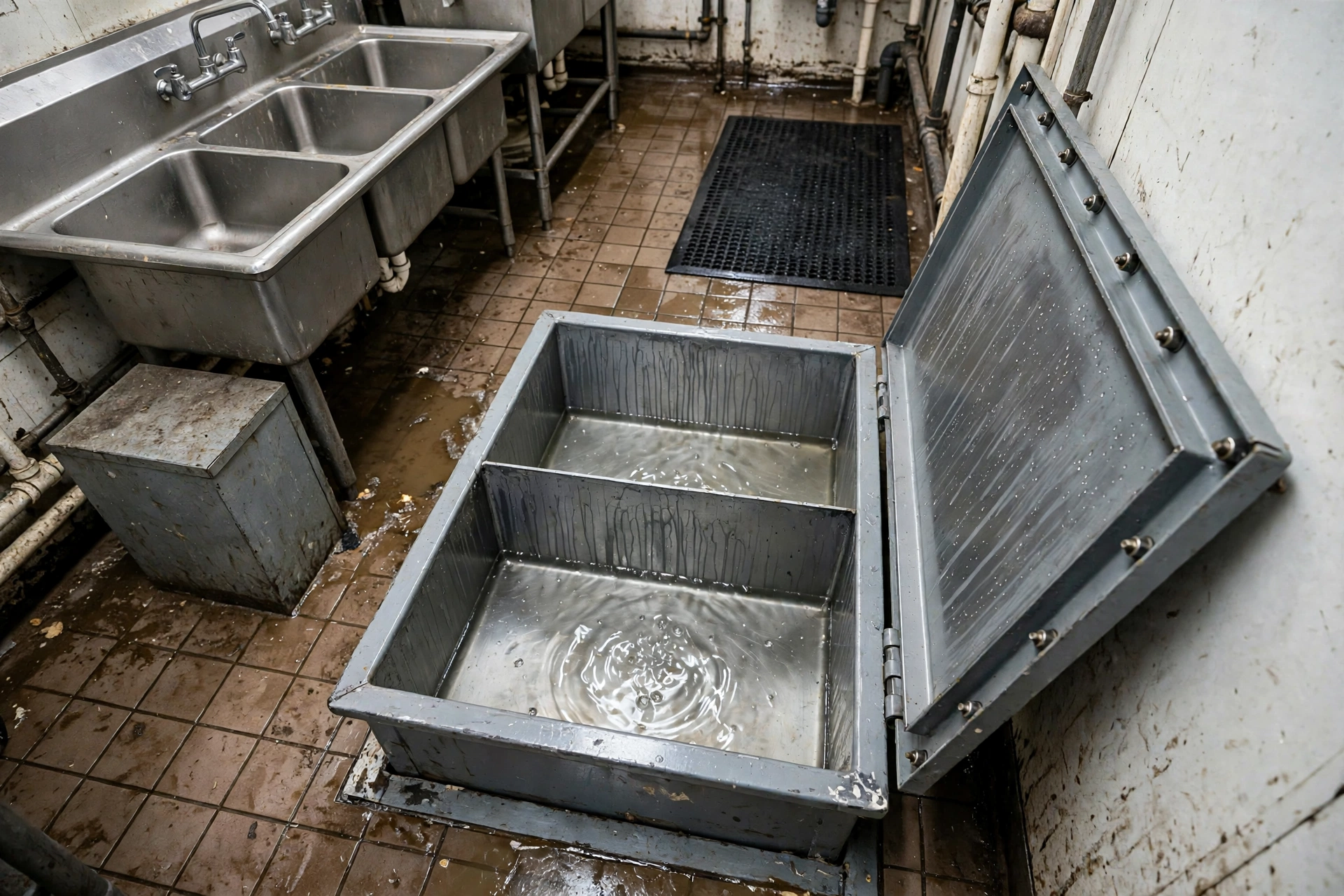
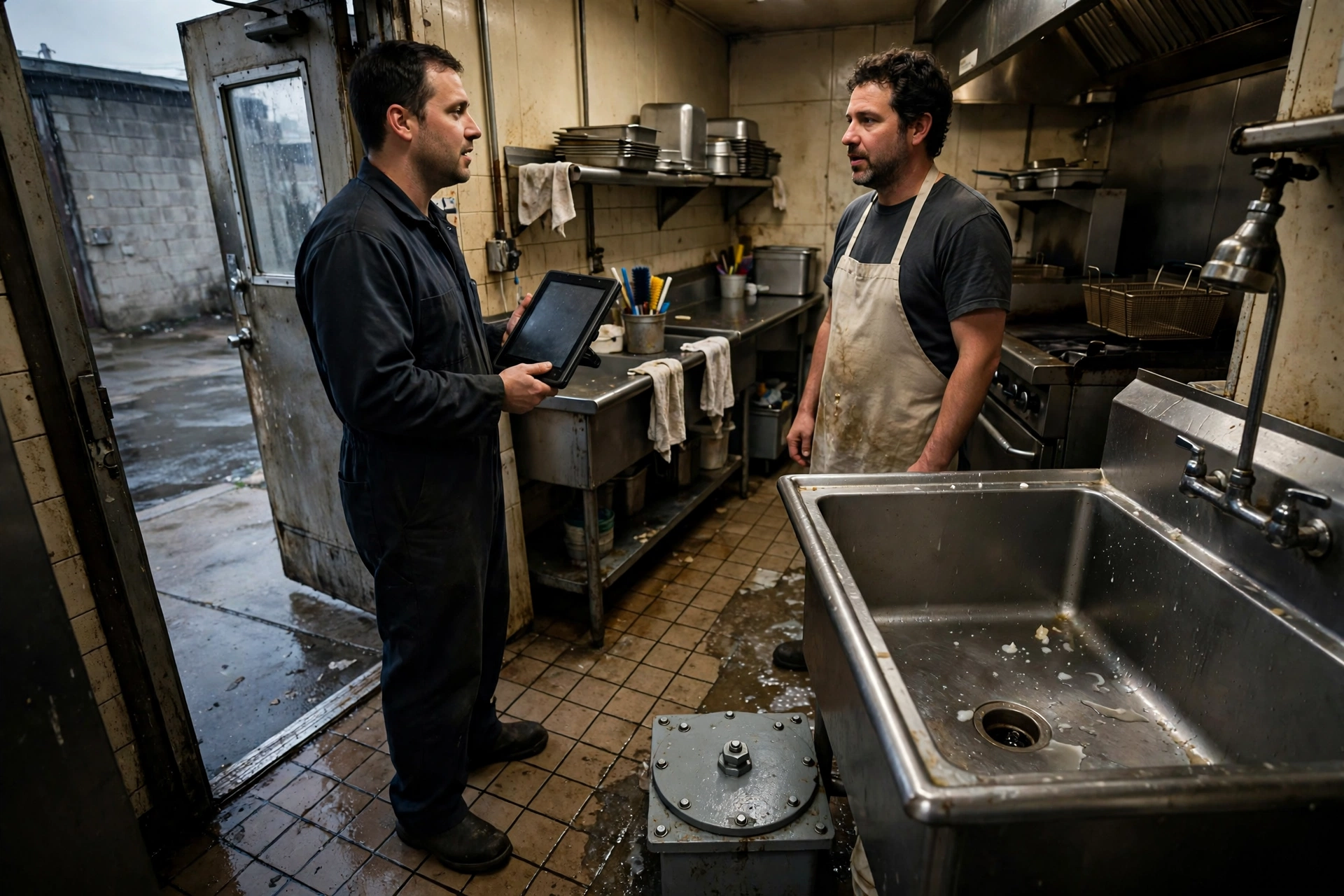
1. Scope and access. We confirm the trap's location, its size and how the kitchen runs, so the visit fits around your prep and service.
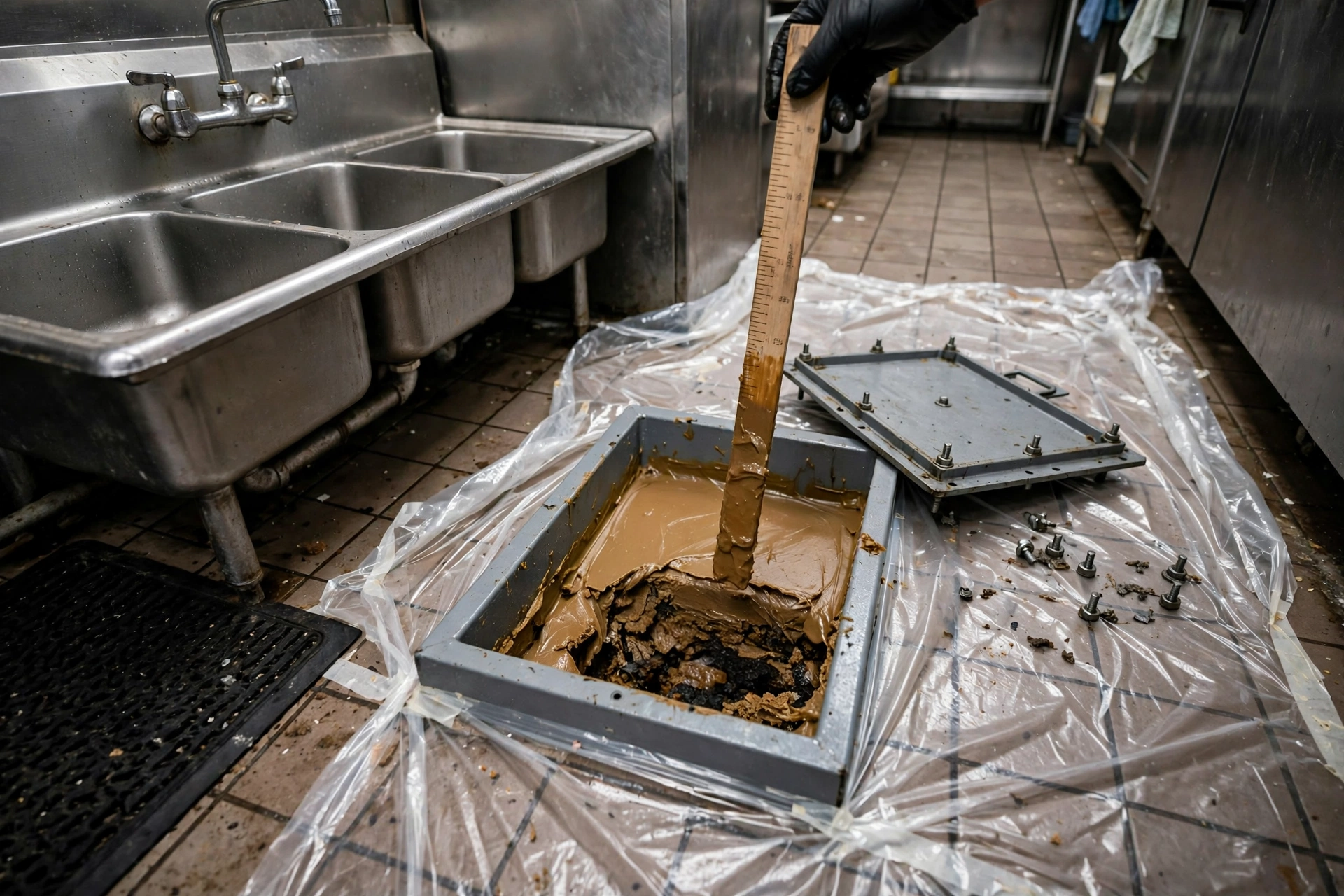
2. Open and measure. We protect the floor, lift the lid and measure the grease cap and solids against the quarter-capacity benchmark. That reading goes on your record.
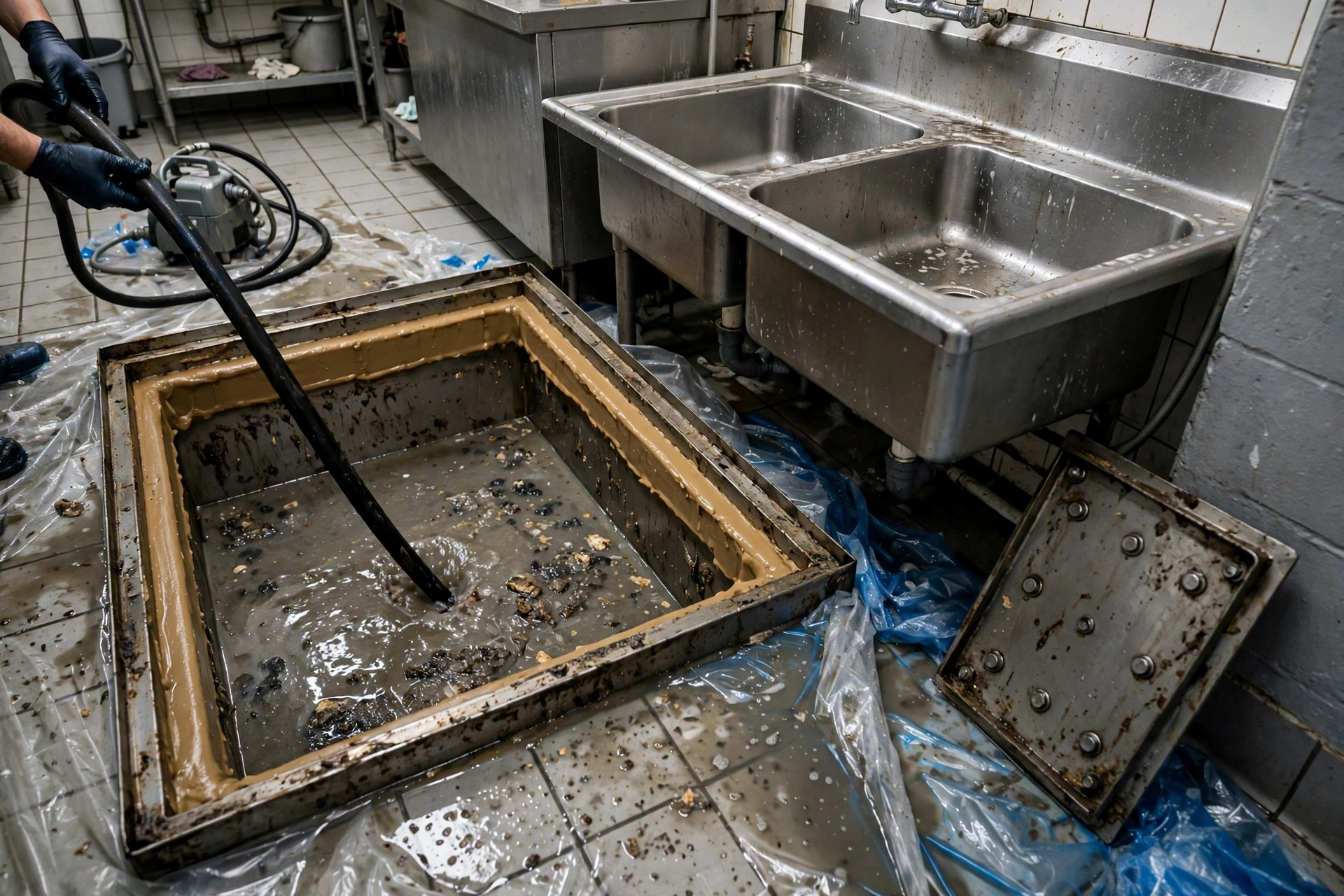
3. Pump out. The full contents come out: cap, liquid and sludge. We do not skim the top and leave the solids behind.
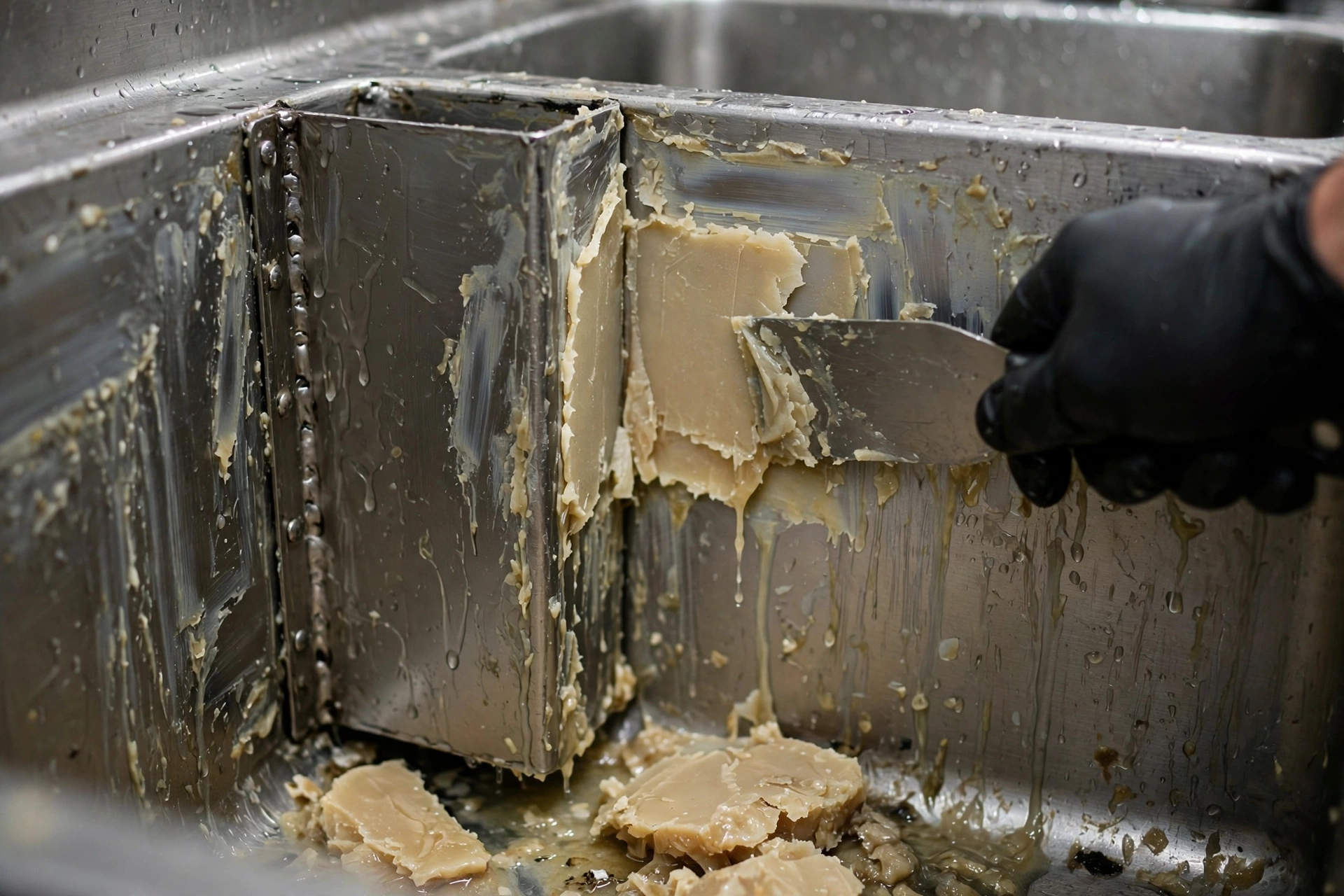
4. Scrape and clear. We scrape the interior and clear the baffles and the inlet and outlet.
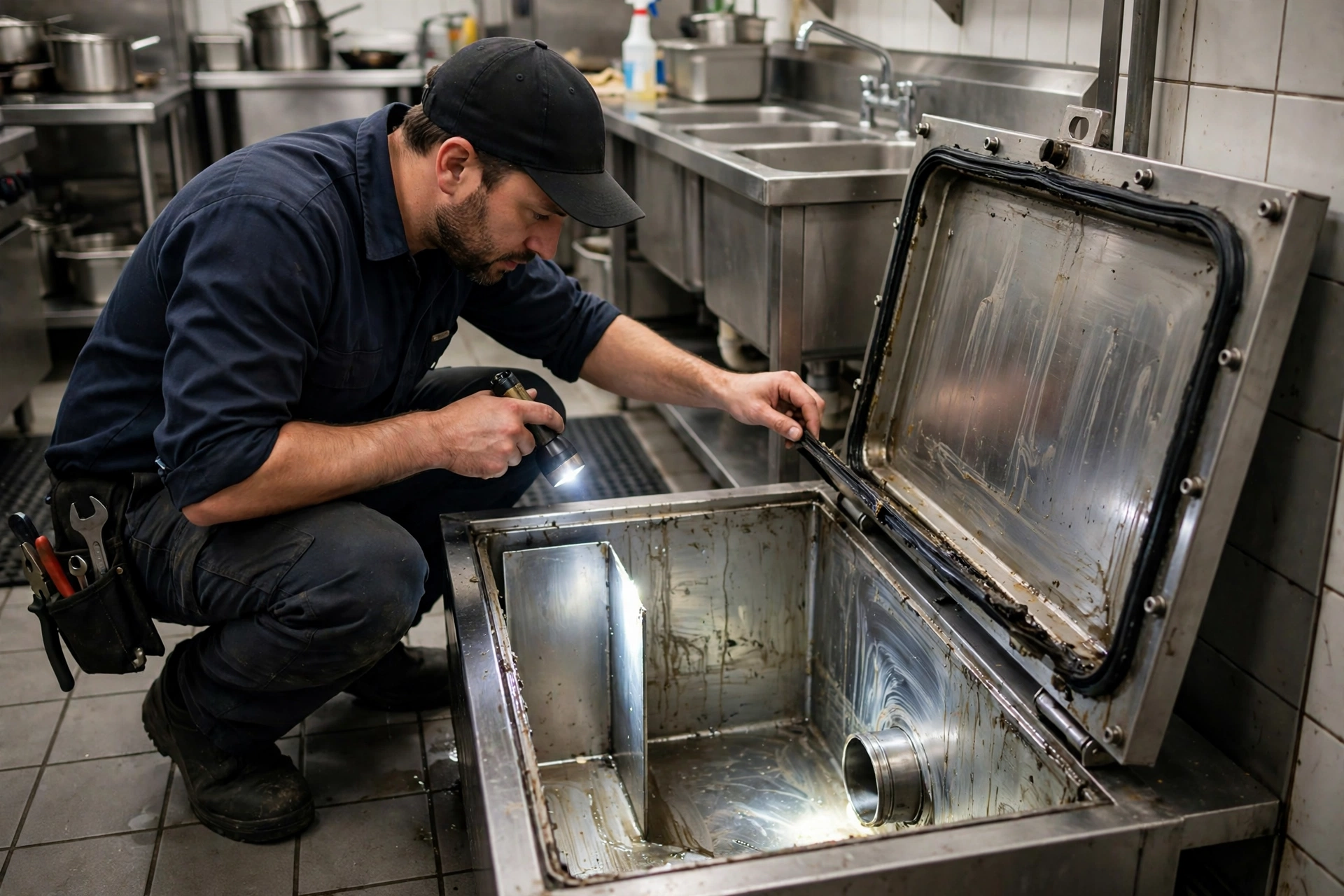
5. Inspect. We look over the lid, gasket, baffles and fittings. Anything worn goes on the record, so you hear about it before it becomes a repair.
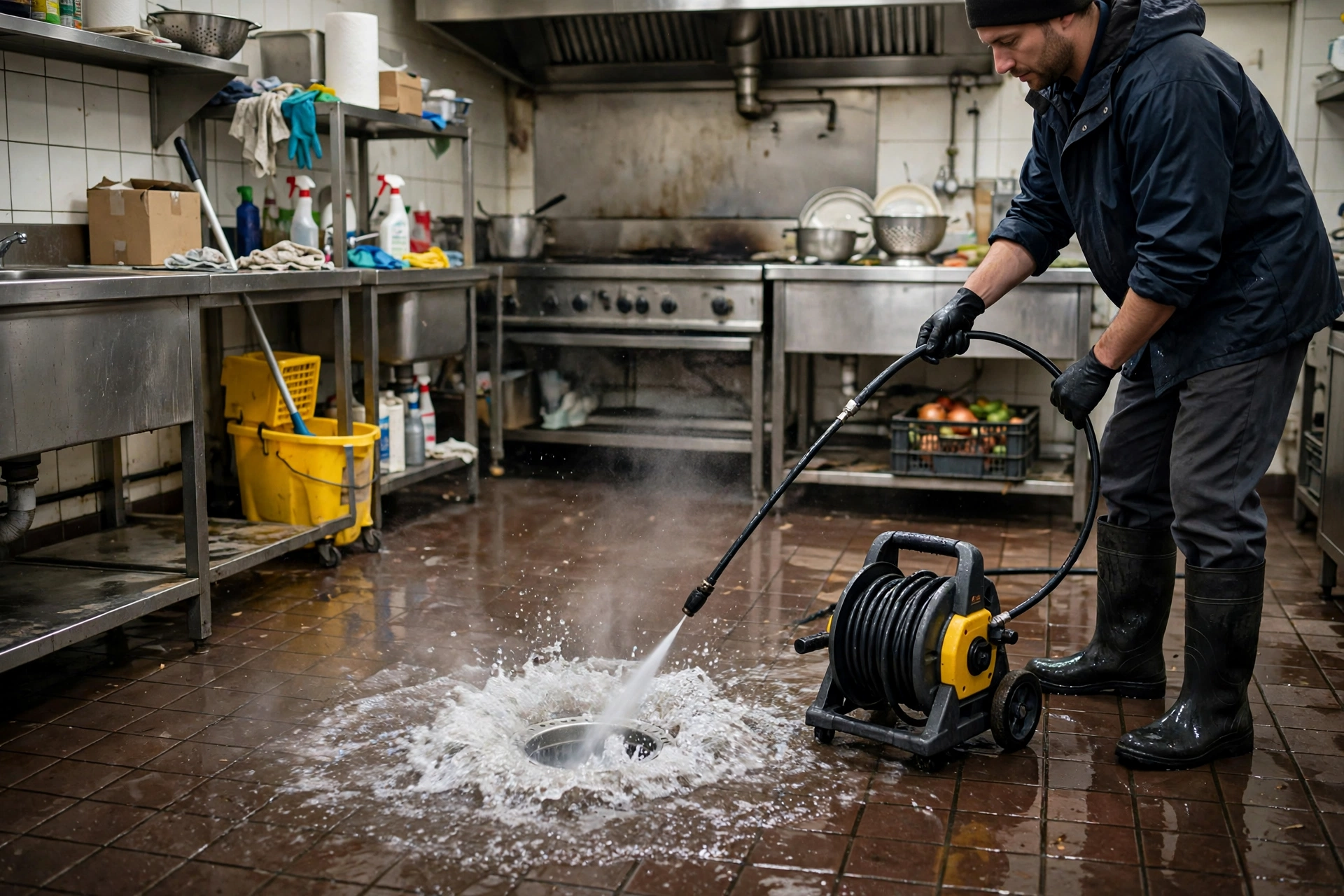
6. Jet the line, if needed. When the line past the trap is slow, jetting is added to the visit and priced with it.
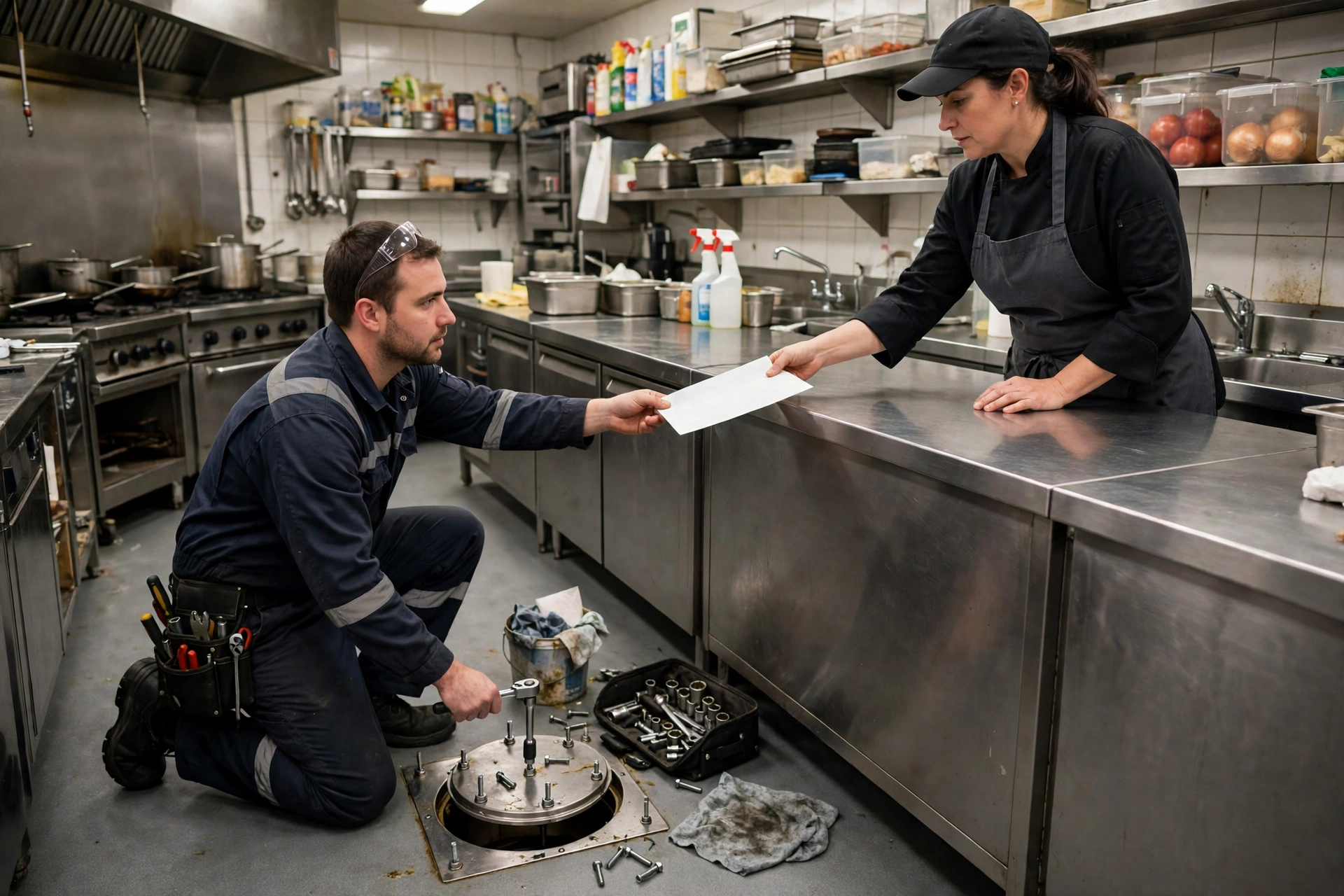
7. Close up and document. We secure the lid, leave the area clean and hand over your service record. The waste leaves with us and moves under a shipping document, as Part 121 requires.
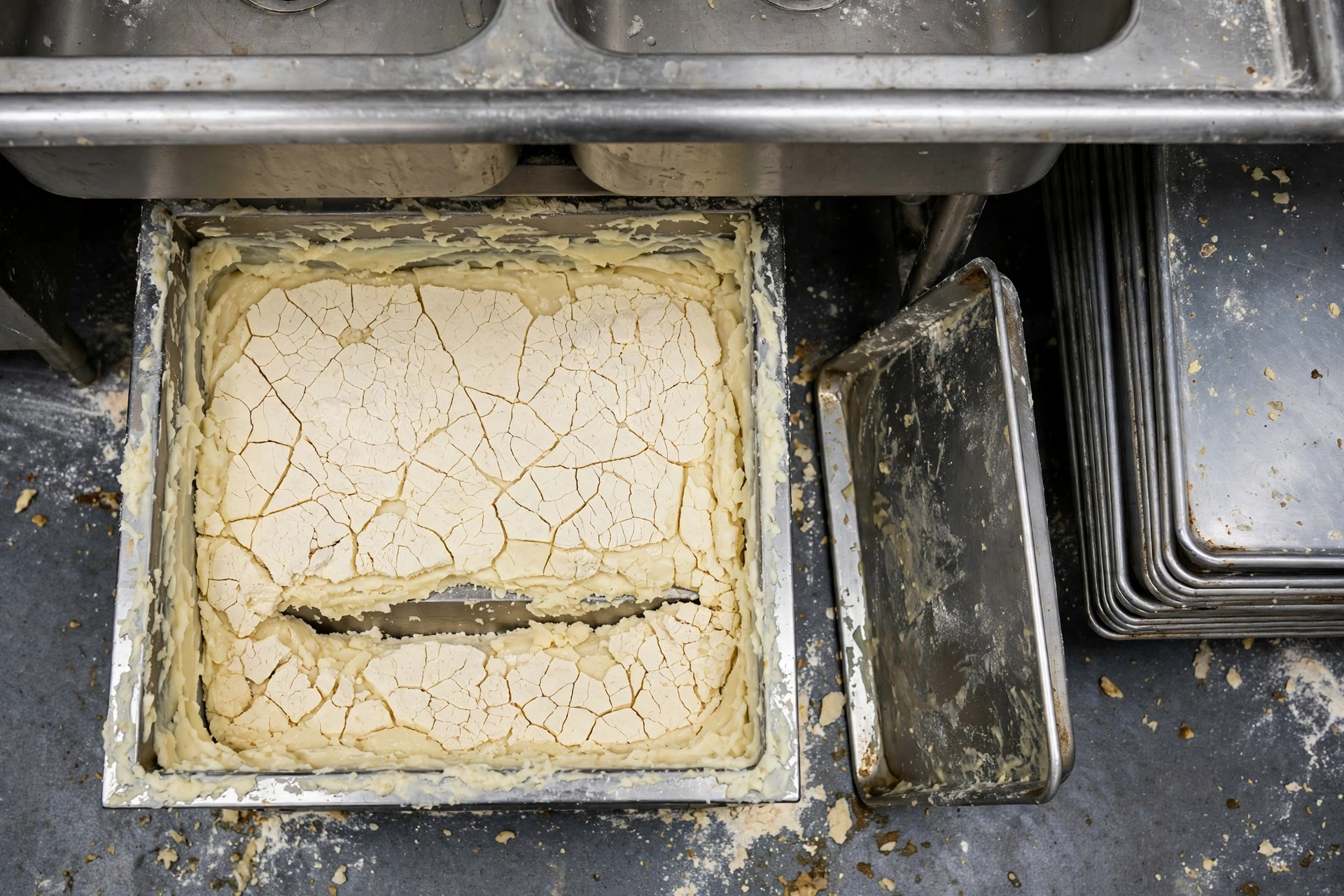
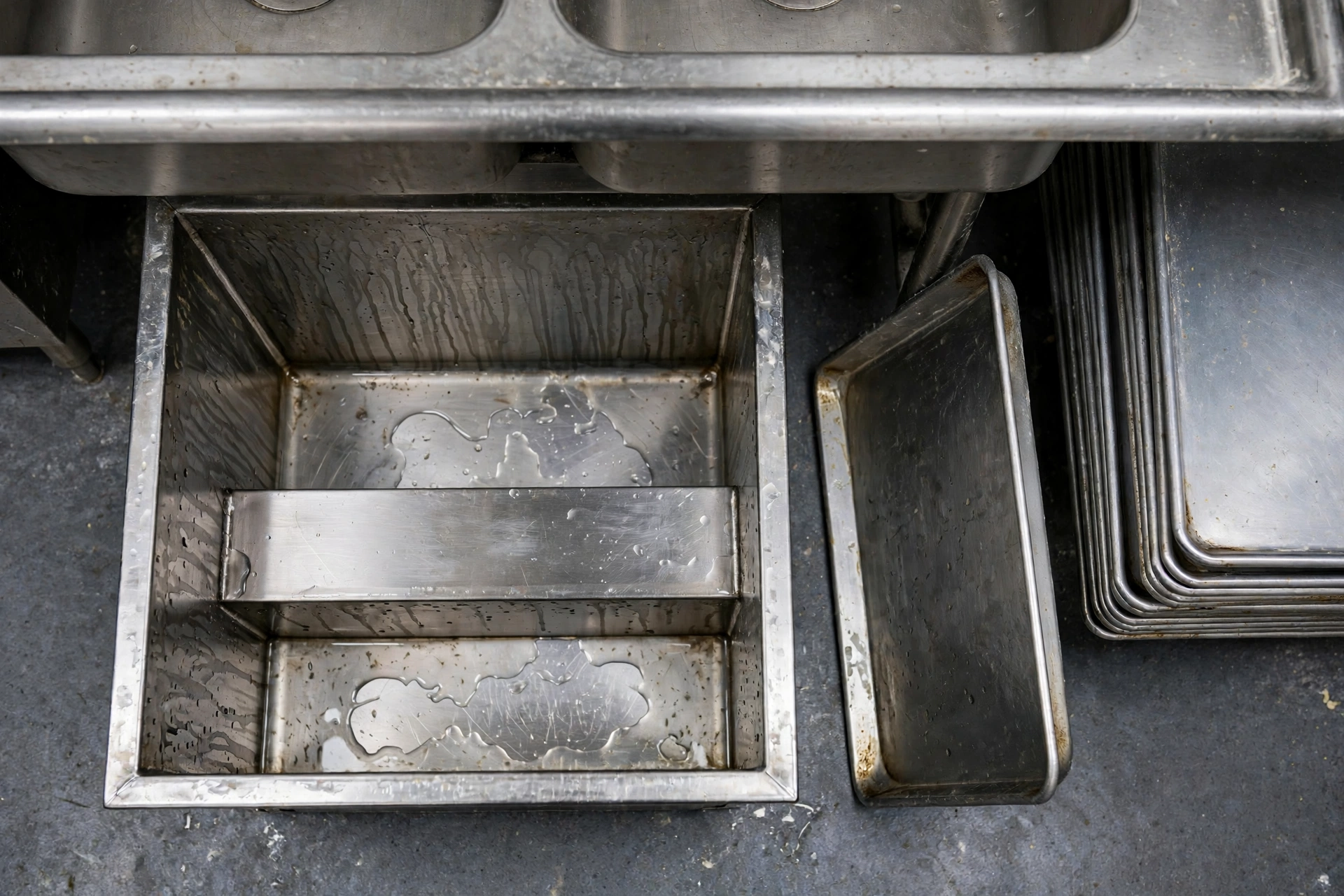
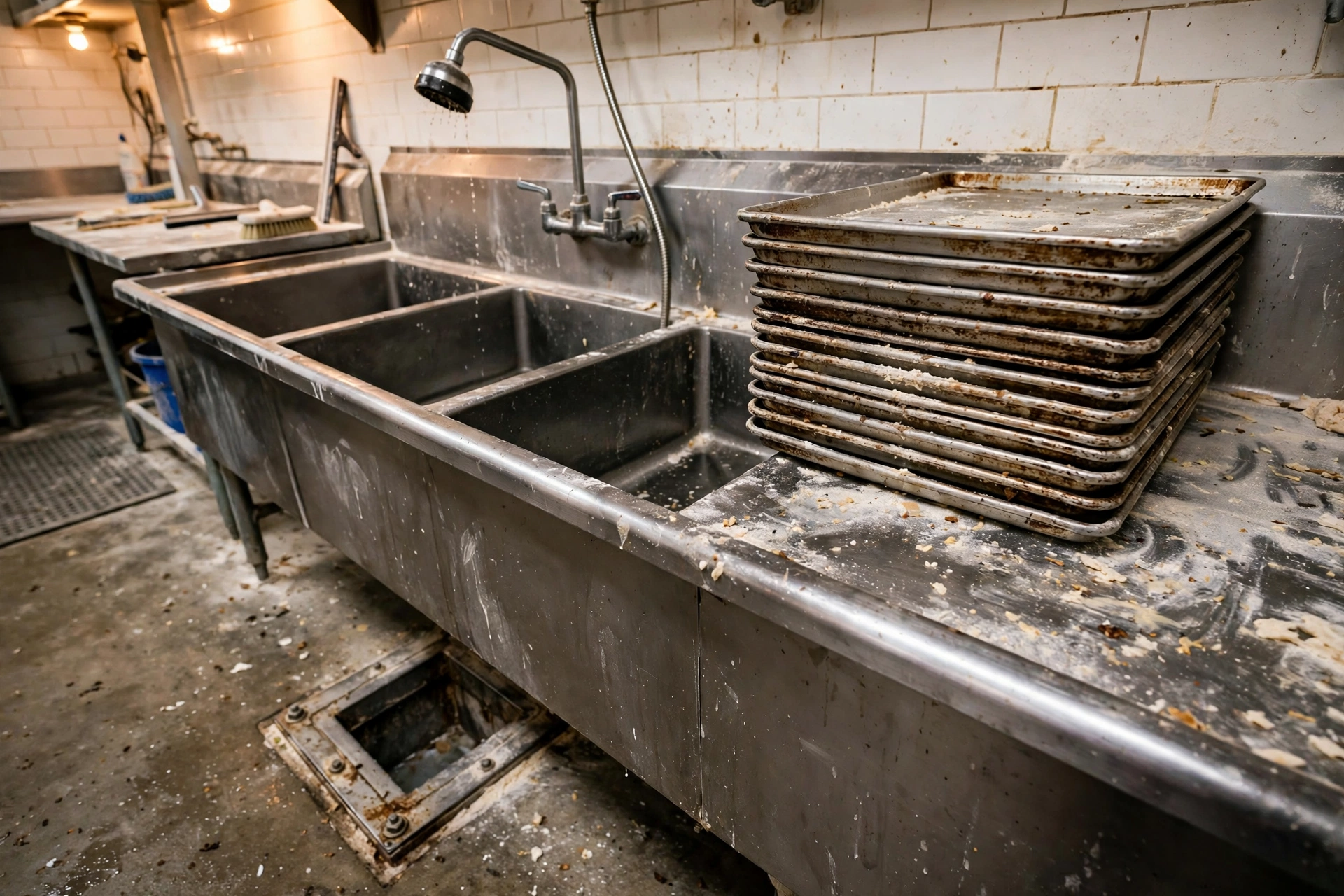
A bakery in Dearborn was seeing its sink drain slow by mid-morning, and the owner wanted to know why a kitchen without a fryer line was clogging. The trap sat under the pan-washing sink, and nobody could say when it was last pumped. The owner called before the problem turned into a backup.
The crew opened the lid and measured. Butter, shortening and pan grease had formed a thick cap, and flour washed off the pans had settled into a paste underneath. Grease and solids together stood well past the quarter mark, which is the point where the trade pumps a trap. That is a scheduling benchmark kitchens work by, not a rule Dearborn sets. The crew pumped the trap, scraped the walls and cleared the baffles. The visit fell within the small indoor trap range of $150 to $350.
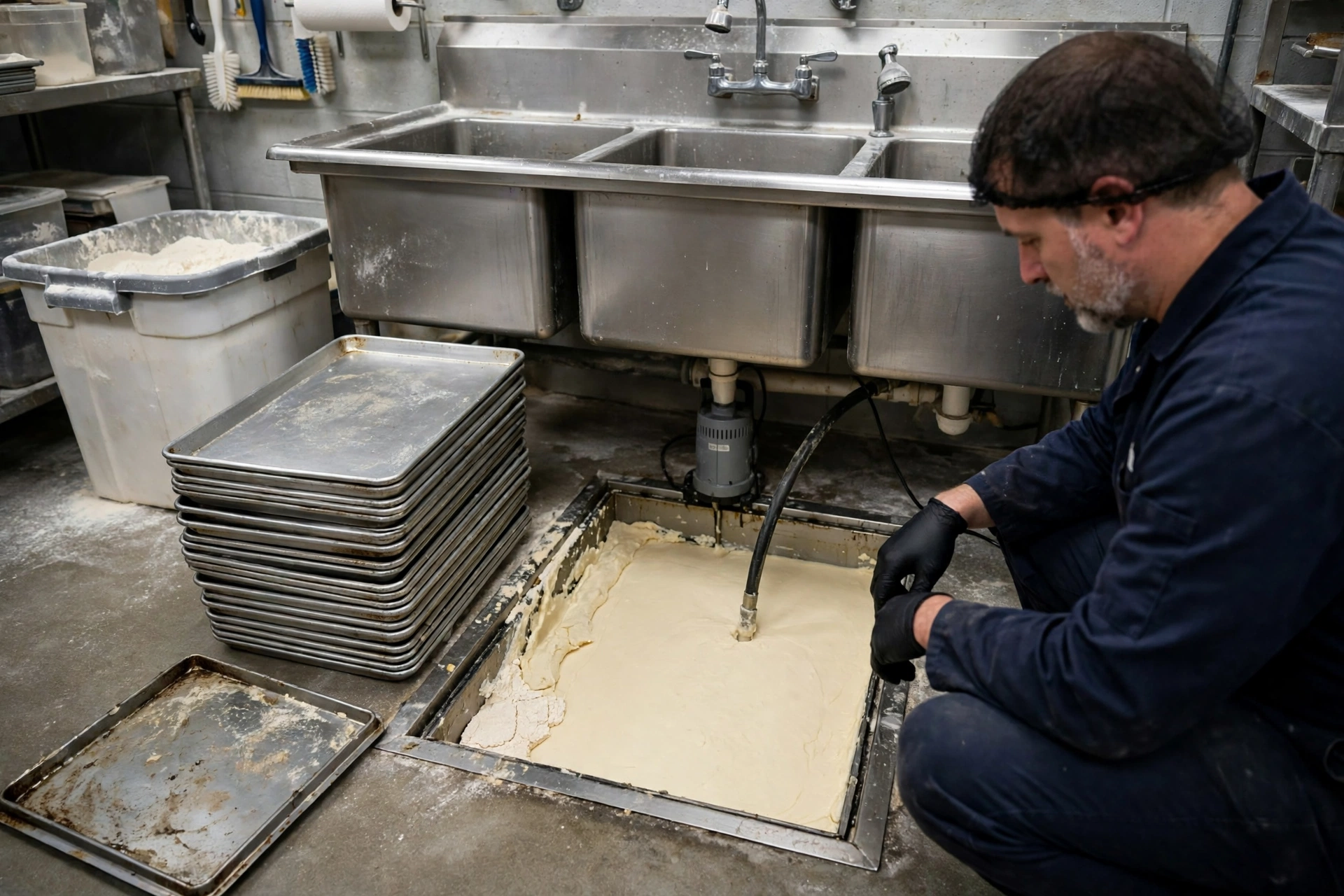
Dearborn has no FOG ordinance that fixes an interval, so the cycle came from the measurements. The bakery's trap fills fast, so the owner set it on the pace busy kitchens often run, every four to six weeks, and the crew rechecks the depth at each visit. If the reading comes in low, the cycle can stretch.
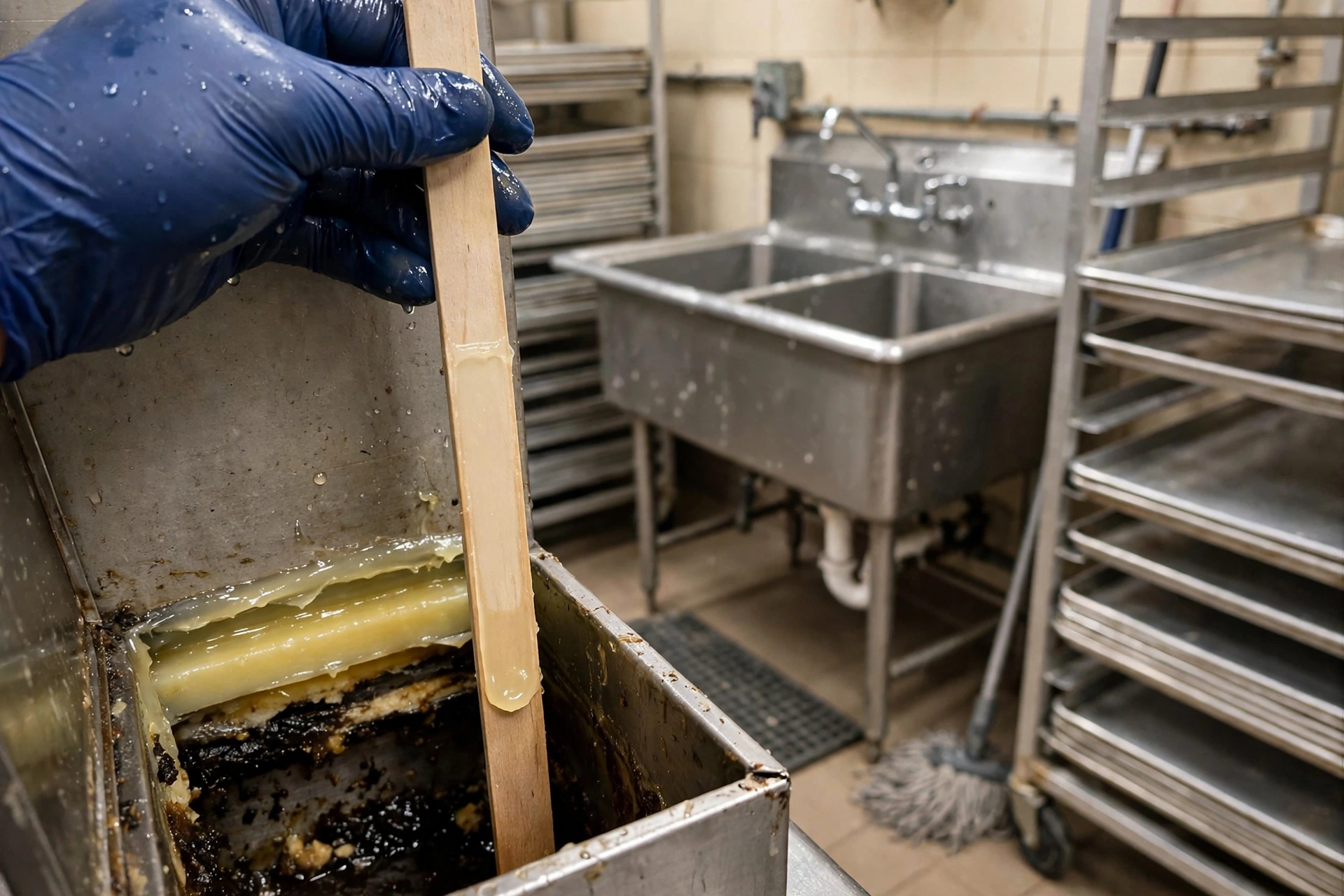
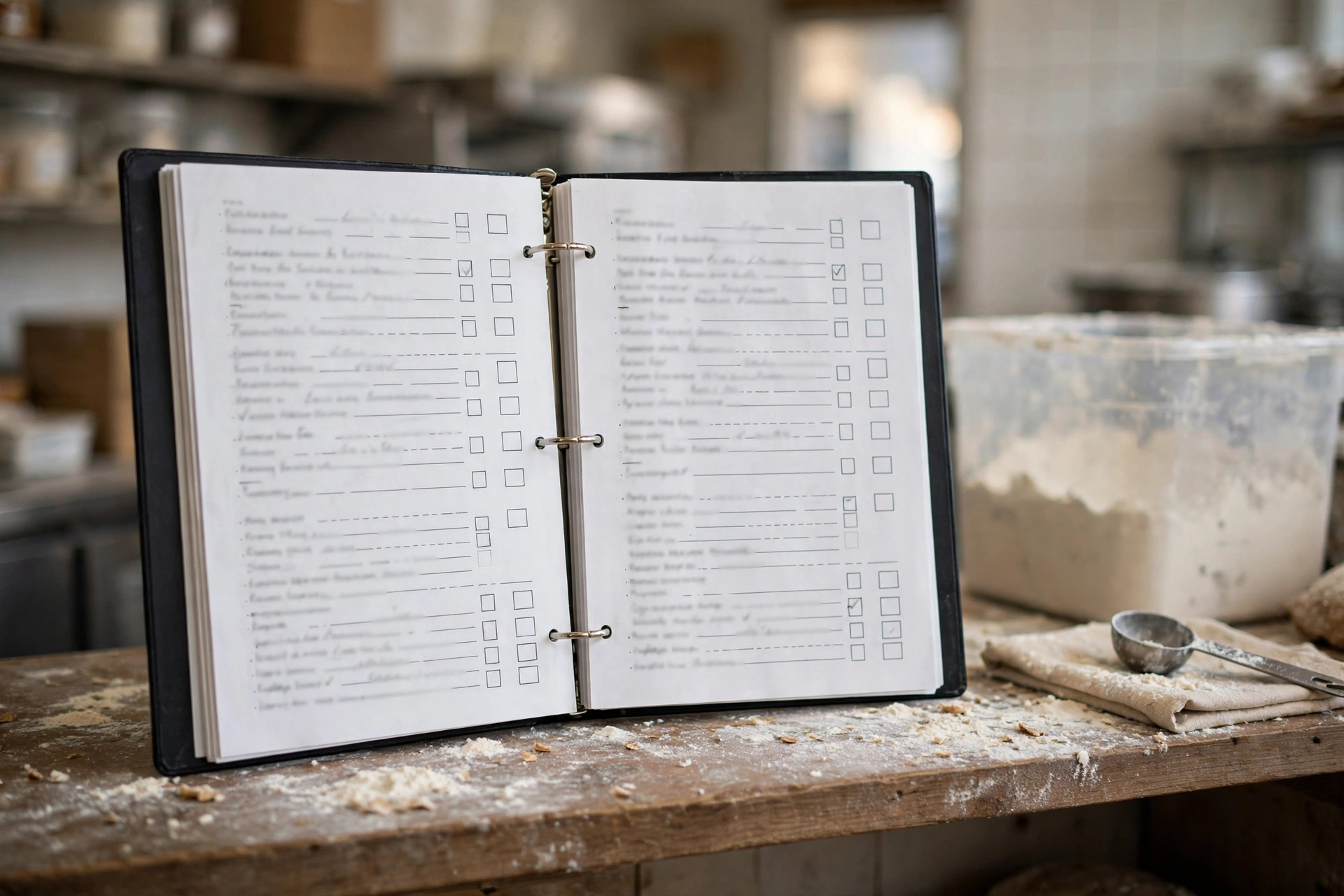
The hauled waste is a liquid industrial by-product under Michigan's Part 121, so it left on a shipping document with a registered hauler. The bakery keeps its copies, and the service record sits beside them in a binder. If the regional sewer authority asks for cleaning records, or an inspector asks to see them, the owner has them on hand.
Call (313) 351-8079 and we will look at your trap, your kitchen's volume and your timing, then set a cadence you can run without thinking about it. Emergency calls are priced at one and a half to two times the standard service price.
When grease and solids reach about a quarter of the trap's liquid capacity. That is the trade's scheduling benchmark, not a Dearborn rule. In practice, high-volume kitchens run every 4 to 6 weeks, moderate kitchens monthly to quarterly, and low-volume kitchens every 3 to 6 months. Small traps fill faster than large ones, so we set your cadence from what the crew measures.
No. Dearborn has no FOG ordinance, no sizing table and no fixed interval. The city code limits grease discharge to 1,500 mg/L. The Great Lakes Water Authority's rules require interceptors where it deems them necessary, cleaned regularly at the owner's expense, with records available on demand. Because no interval is set, a steady cadence backed by records is what protects you.
No. Waterford Township in Oakland County runs a 90-day minimum. That is a neighbour's program. It does not apply to a Dearborn kitchen.
Small indoor traps are $150 to $350. Medium traps are $300 to $600. Where yours lands depends on the trap's capacity, how hard it is to reach and how much waste comes out.
Capacity, access and waste volume. A trap behind equipment, in a basement or down a long hose run takes more time and costs more than one under an open sink. A trap that has gone too long holds more waste than one on a regular cadence.
One and a half to two times the standard service price for the trap in question. Call (313) 351-8079 and describe what is happening.
Line jetting is priced with the service visit it rides with. We look at the line and quote it with the trap work.
Trap clean-out residue is a liquid industrial by-product under Michigan's Part 121. It moves with a shipping document for each shipment and goes to a registered transporter's chain. We hand you a copy of the document, and you should keep it with your service record.
A septage licence does not cover this waste. Part 121 requires a registered transporter for trap clean-out residue. Ask any hauler for the shipping document.
You will have a service record for each visit: the date, the reading against the quarter mark, the condition of the components and any repair items. You will also have the shipping document for the waste. The authority may require records of inspection, cleaning and maintenance, and Wayne County Environmental Health inspects the food side.
A small trap visit is contained work at the trap. We plan the timing with you when you call so the sink is back in use for service.
Yes. Used cooking oil collection is offered at no charge for clean oil. It can ride with the trap visit so one crew handles both.
Provider guidance says it does. Fats that stay semi-liquid in warm weather congeal as temperatures drop. Traps need more frequent checking in winter, not less. Oil poured into pipes can solidify inside them. Used oil can also freeze in outdoor collection bins, and the working fix is a bin swap.
Use the form to tell us about your kitchen. Name and phone are required. Everything else is optional. A consent box is required before you send. The more details you give, the better we are able to help you.
Or call (313) 351-8079.