Dearborn Grease Trap does grease interceptor cleaning for the large underground units behind chain restaurants, hotels and institutional kitchens in Dearborn and the towns around it. On a pumping visit, grease interceptor pumping takes out the floating grease cap, the liquid and the settled solids in one visit, and the crew checks the baffles, lids and inlets while the unit is empty. Many kitchens first look into grease trap pumping when a drain slows or a smell comes up from the lot, but grease trap maintenance on a schedule costs less than a backup in the middle of service. When the problem is in the pipe and not the tank, line jetting can ride along with the visit. When the kitchen is already backing up, emergency grease trap service is the call to make. Every visit ends with FOG compliance documentation you can put in a binder and hand to an inspector.
Talk to us about your interceptor
If you run an exterior interceptor and you are not sure when it was last pumped, or you have a notice in hand, call (313) 351-8079. Tell us what the unit serves and what you have noticed. The form at the bottom of this page works as well.
What governs interceptor cleaning in Dearborn
Dearborn has no FOG ordinance. The city code has no trap-sizing table, no fixed pumping interval and no city manifest rule for restaurants. Three layers of rules apply instead, and they are worth knowing before anyone sells you a schedule.
- Dearborn's own code. Grease that obstructs flow, and floating fats, oil and grease that interfere with the treatment works, are prohibited discharges. So is FOG above 1,500 mg/L, measured as a 24-hour average of samples. Installing an interceptor is a permitted plumbing job.
- The regional sewer authority's pretreatment rules. Dearborn sends its sewage to the Great Lakes Water Authority. Its rules call for interceptors where the authority deems them necessary, of a type and capacity acceptable to the city and the authority. They must be regularly inspected, cleaned and repaired by the user at the user's expense. The authority can ask for records of inspection, cleaning and maintenance. The rules set no fixed interval. The duty is regular cleaning, proven by records.
- Michigan's Part 121 rules for the waste. Material cleaned out of a grease trap or interceptor is a regulated liquid industrial by-product. It has to leave your property with a transporter registered and permitted under state law, on a shipping document for each load.
A pumping interval, then, comes from how fast your unit fills. It does not come from a city table. The trade's working benchmark is to pump when grease and settled solids together reach about a quarter of the unit's capacity. That is how crews schedule, and it is trade practice, not law. Kitchens run to it in different ways. High-volume kitchens often pump every 4 to 6 weeks. Moderate kitchens land between monthly and quarterly. Low-volume kitchens run every 3 to 6 months. These are the frequencies kitchens actually run, and your unit's own fill rate decides yours.
Hauling: what the law says about the waste
The state treats the stuff in your interceptor as regulated waste, and you, as the generator, share the responsibility for where it goes.
- It may be hauled only by a transporter registered and permitted under Michigan law. A septage license does not cover grease trap waste.
- Each shipment moves on a shipping document. The transporter keeps its papers for three years.
- You must use a registered transporter and keep your own copies of the paperwork.
You can ask to see the shipping document for your pump-out. It is part of what you keep, listed below, and it is your proof of where the waste went.
What exterior interceptor pumping costs
Large exterior interceptors: $500 to $1,000 or more, by capacity and waste volume.
Three things move a job within that range:
- Capacity. A bigger tank holds more to haul.
- Waste volume. A unit that has gone long between visits carries more grease and solids.
- Access. A deep unit, a long hose run or a lid that is hard to reach adds work.
Disposal of the hauled waste is part of the price, not an add-on at the end. Emergency call-out is one and a half to two times the standard service price. Line jetting is priced with the service visit it rides with, so you get one figure and not a separate bill. If you give us the unit's size and location when you call, we can talk through where your job falls.
Used cooking oil collection: no charge for clean oil. Ask about it if your fryers feed this kitchen.
Before and after
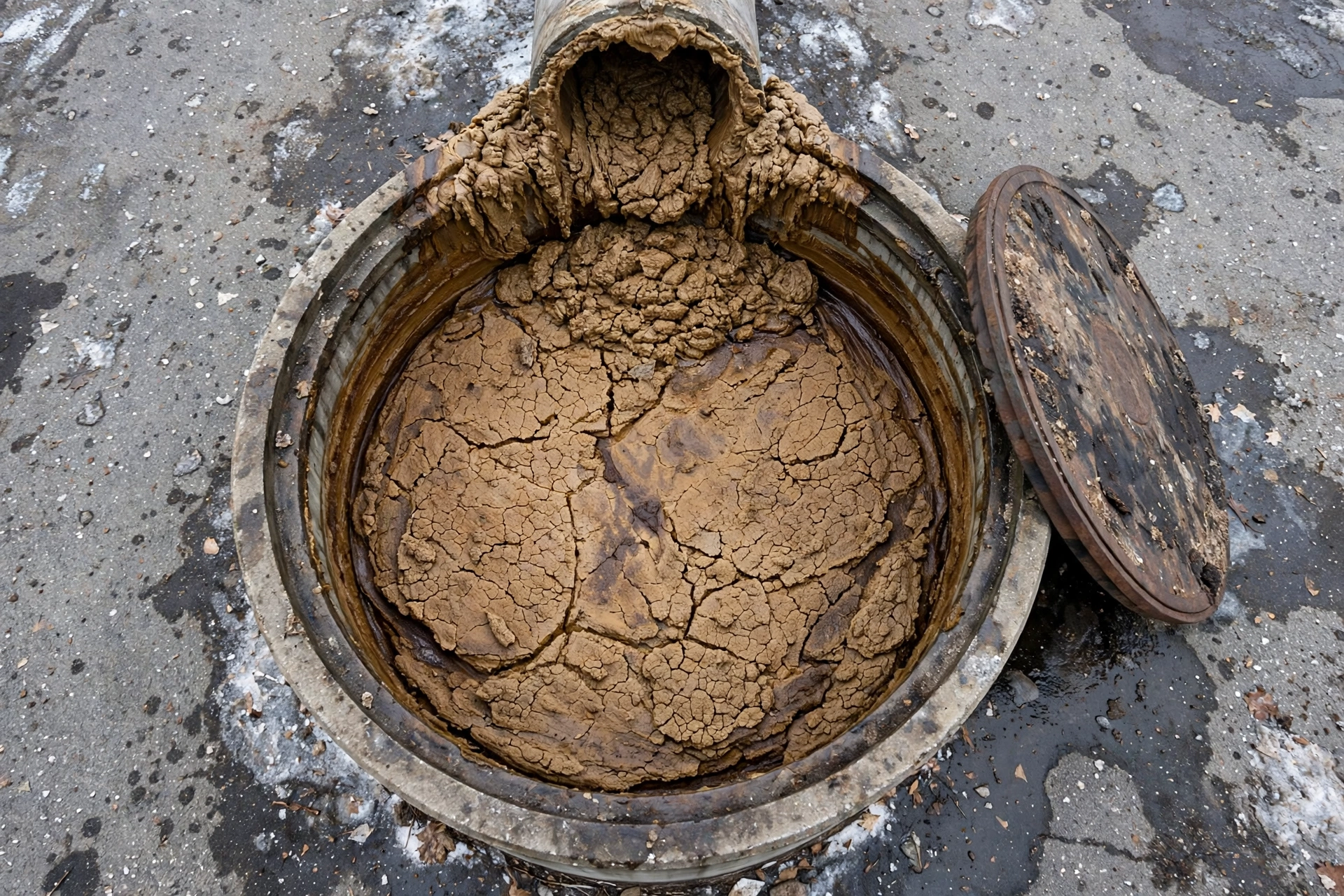
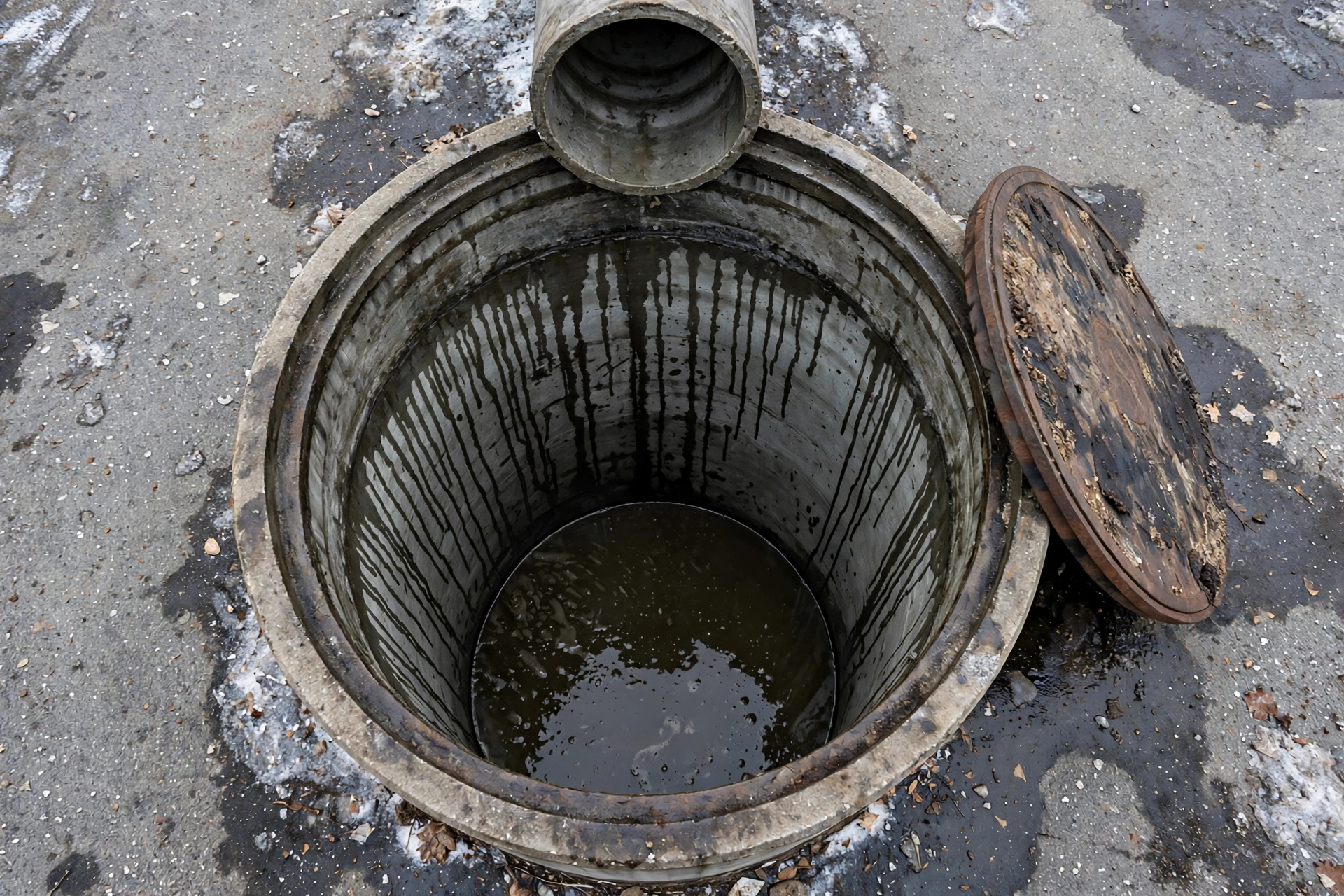
Call before the next scheduled date
If your last pump-out is a guess, or your schedule was set by habit and not by what is in the tank, call (313) 351-8079. We can look at the unit and set a schedule that follows how fast it fills.
How an interceptor pump-out goes
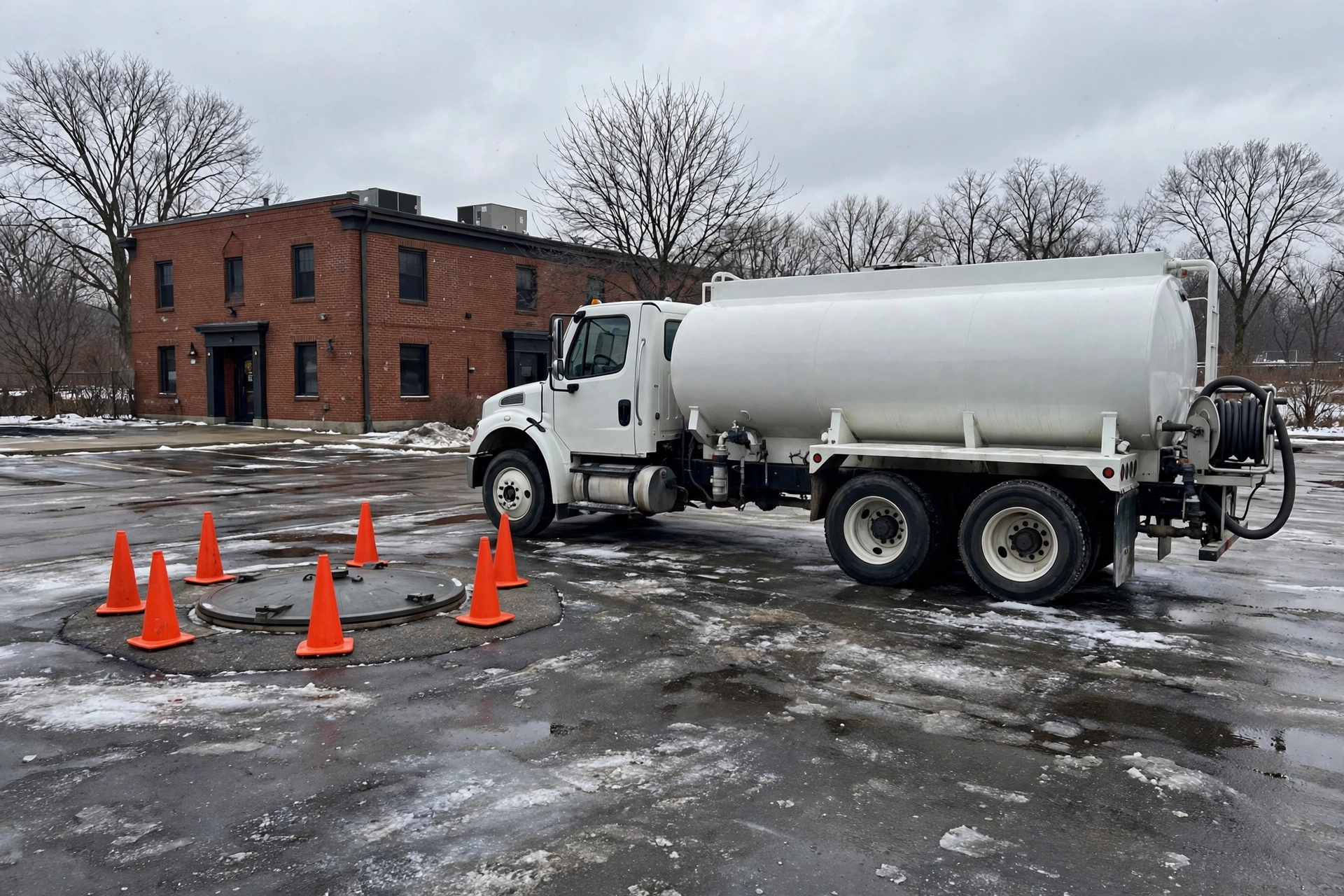
1. Position and set up. The crew parks where the hose reaches the lid without crossing a walkway or a drive lane, and marks off the area. Access is the first thing we sort out, because it shapes the rest of the job.
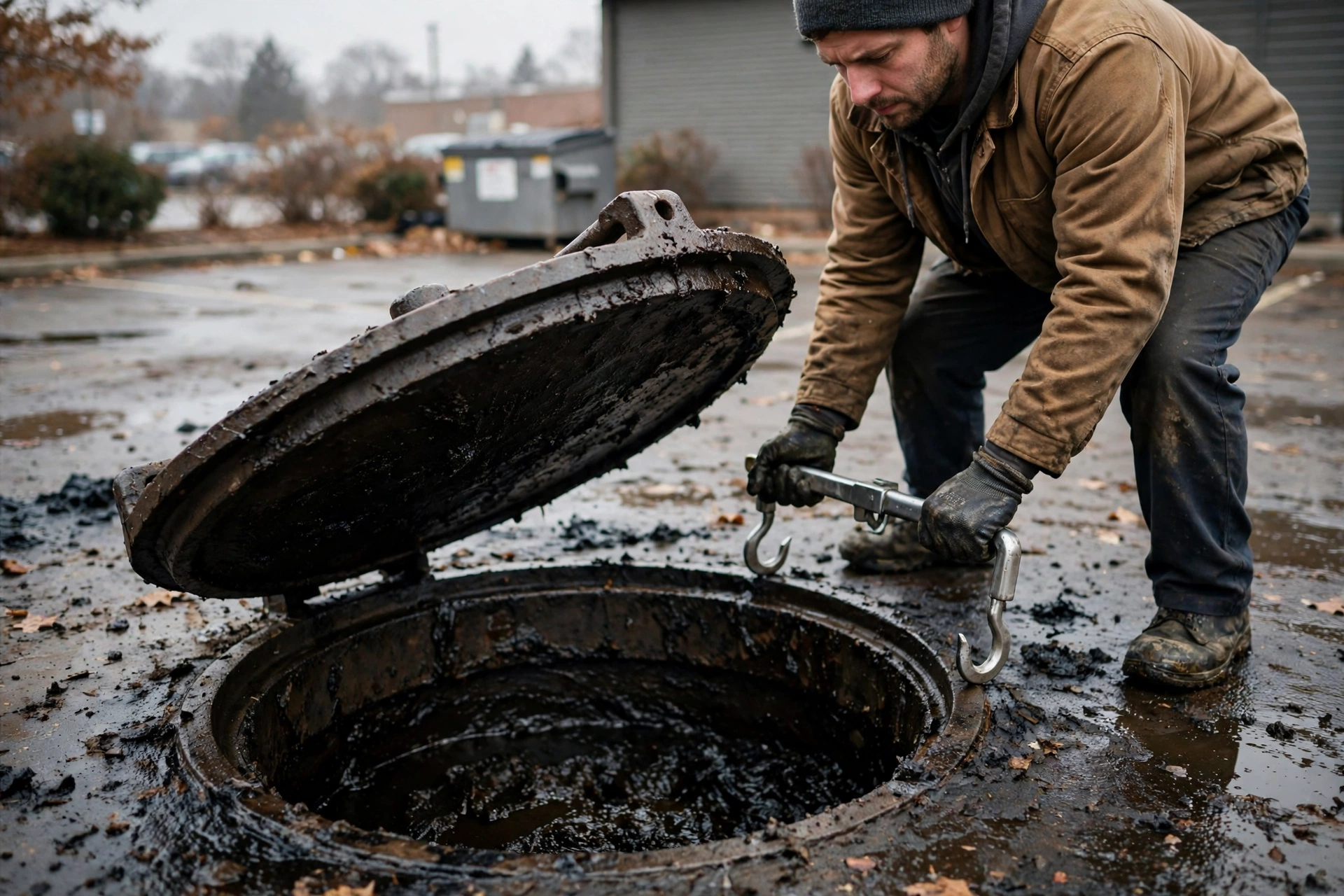
2. Open the unit. The lid comes off and the crew looks at the tank before touching anything. The condition of the cap and the level of the solids tell us how long it has been since the last pump-out.
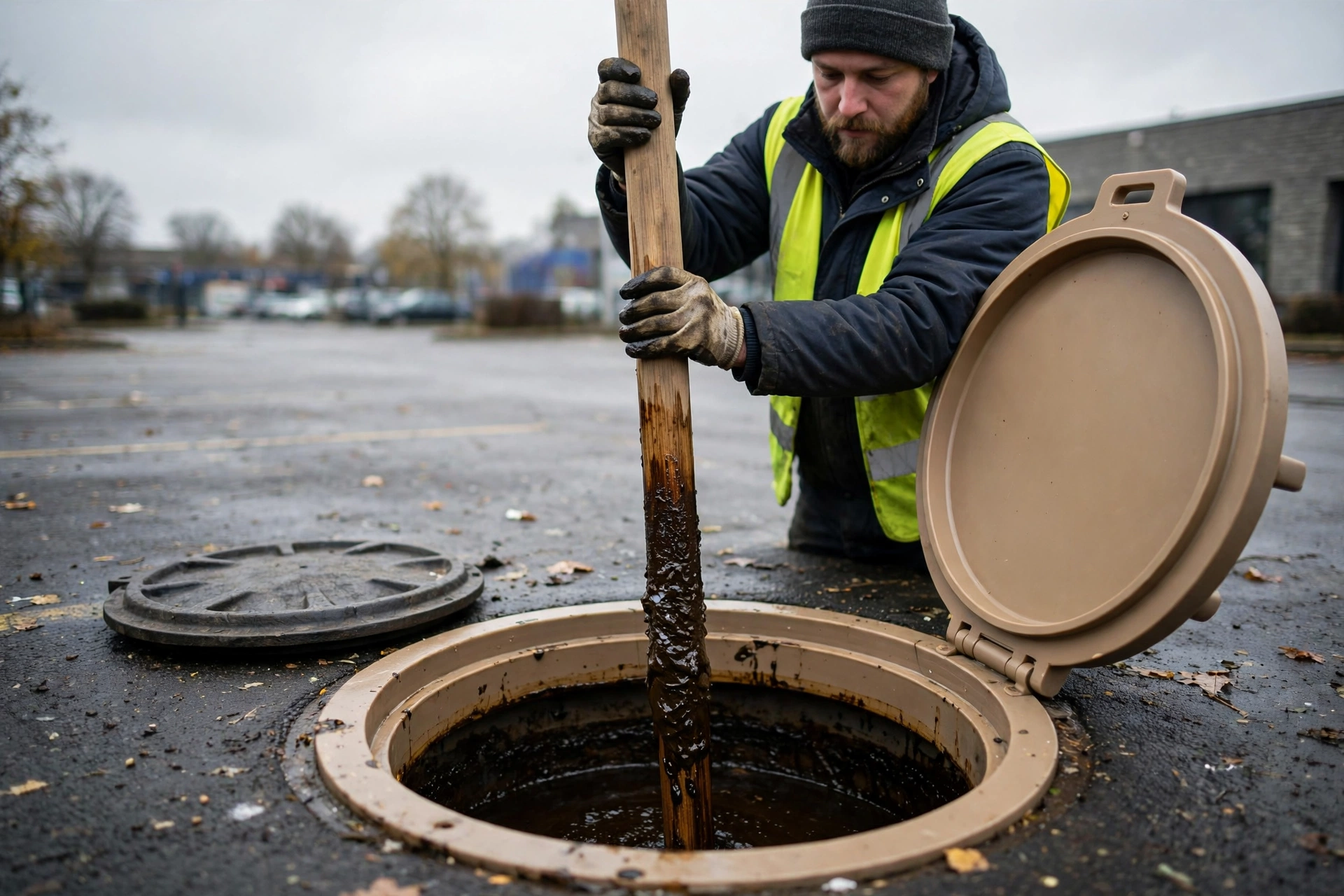
3. Measure what is in it. The crew measures the grease and solids against the tank's capacity and notes where they stand against the quarter benchmark. That reading goes into your record and helps set your next date.
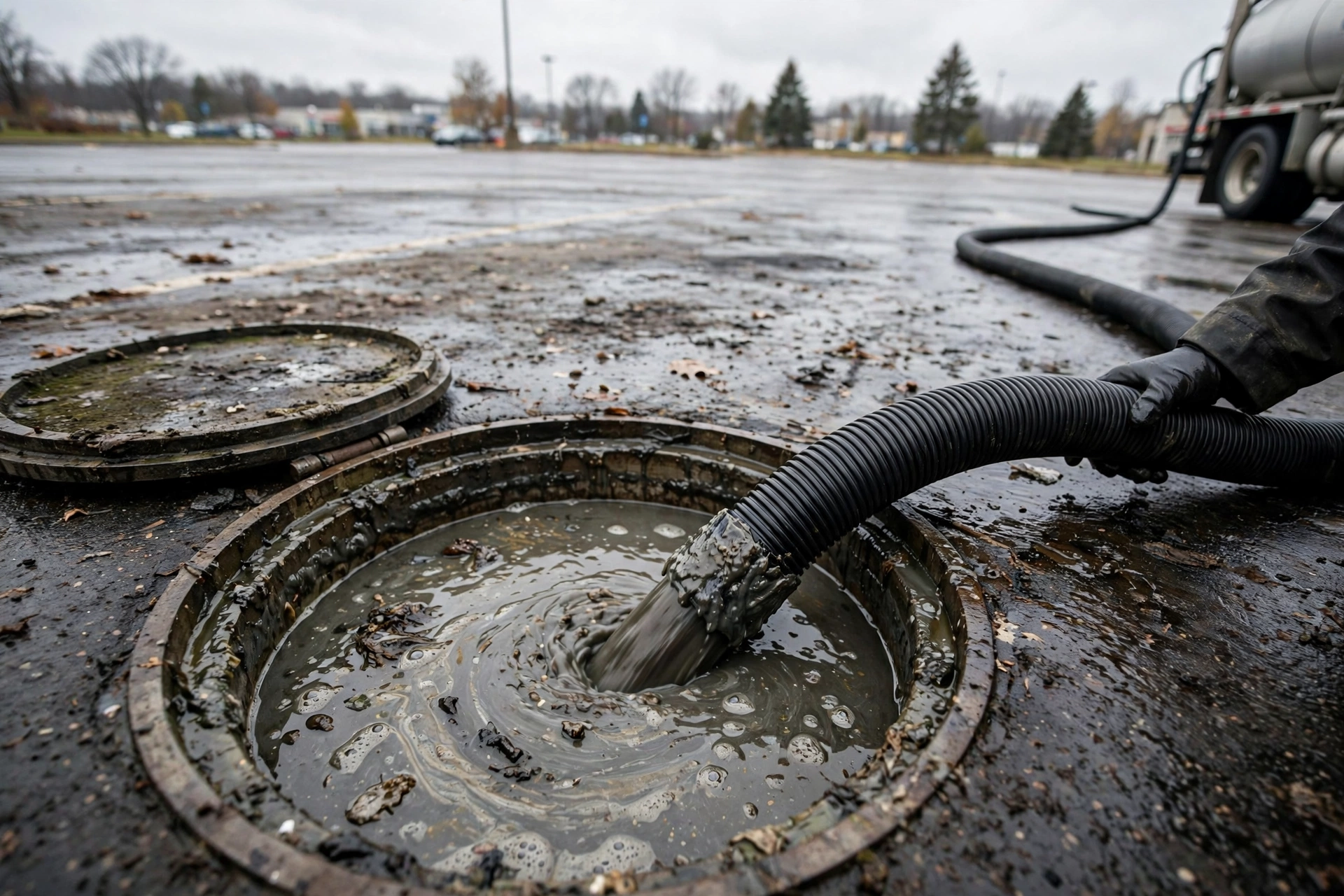
4. Pump it out. The grease cap, the liquid and the settled solids all go into the truck. A partial pump-out leaves the worst of it behind, so the tank is emptied.
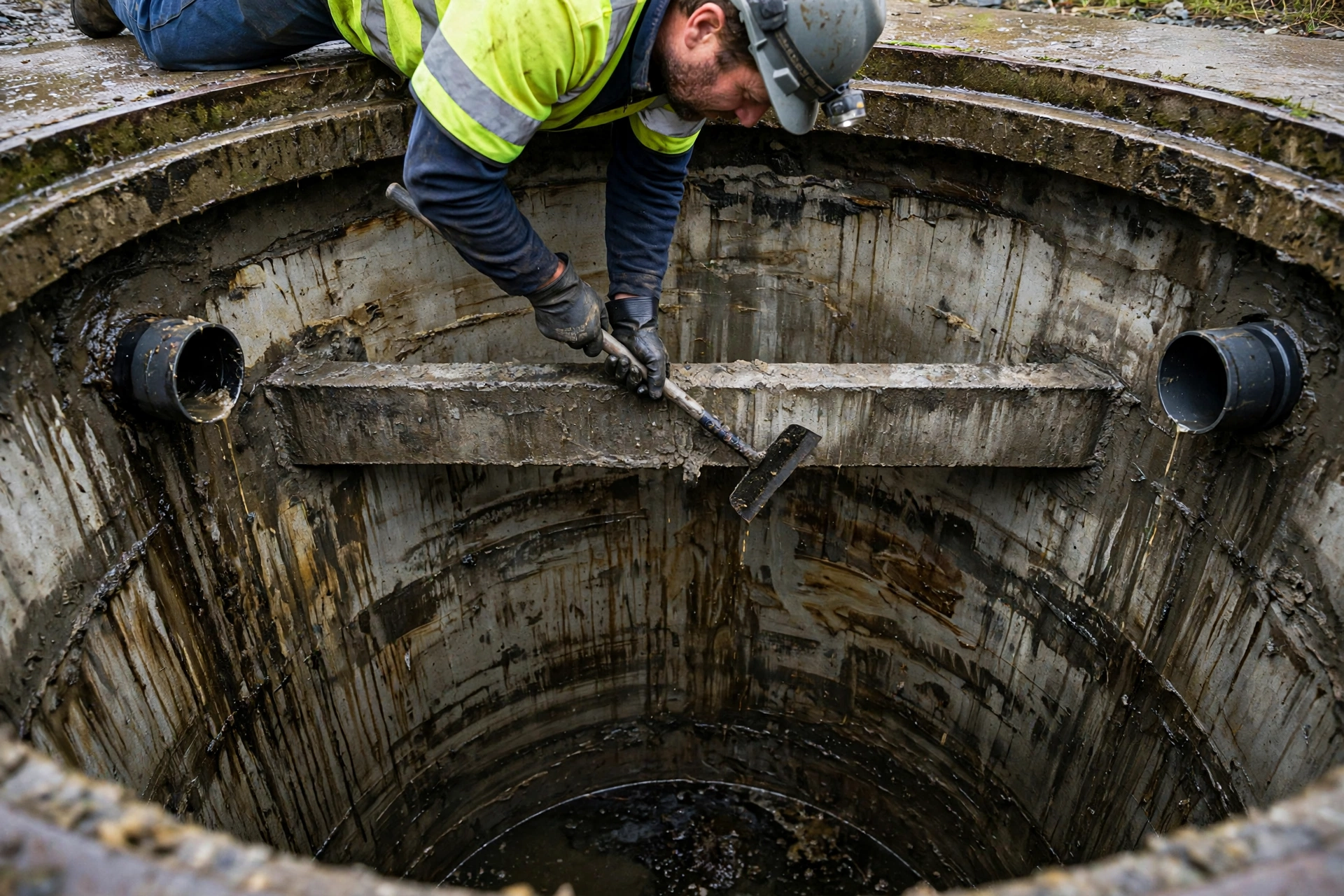
5. Scrape and clear. With the tank empty, the crew scrapes the interior walls and clears the baffles, inlet and outlet so water moves through as designed.
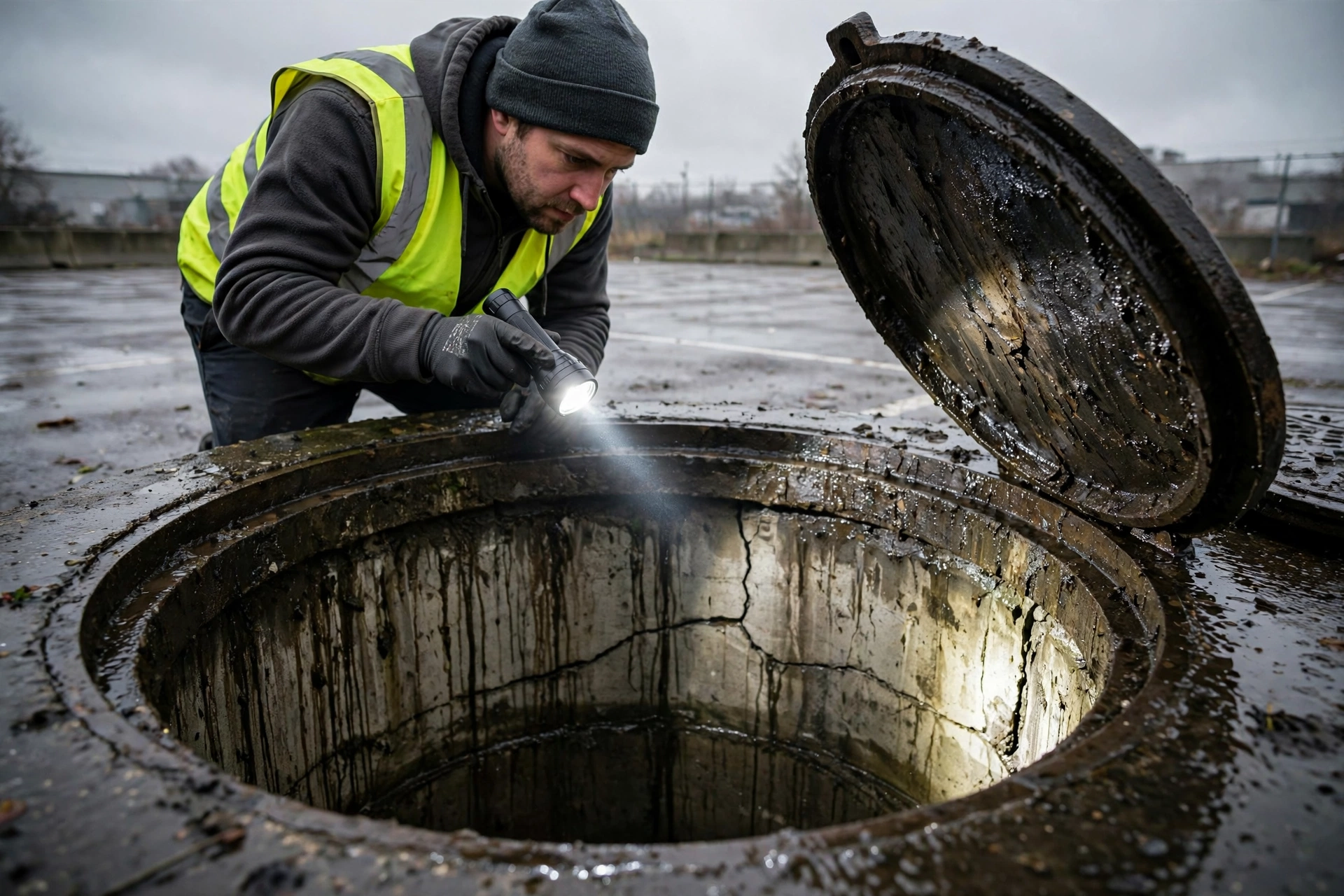
6. Inspect the parts. An empty tank is the one time you can see its condition. The crew checks the baffles, lid, inlet and outlet and notes anything cracked, loose or worn.
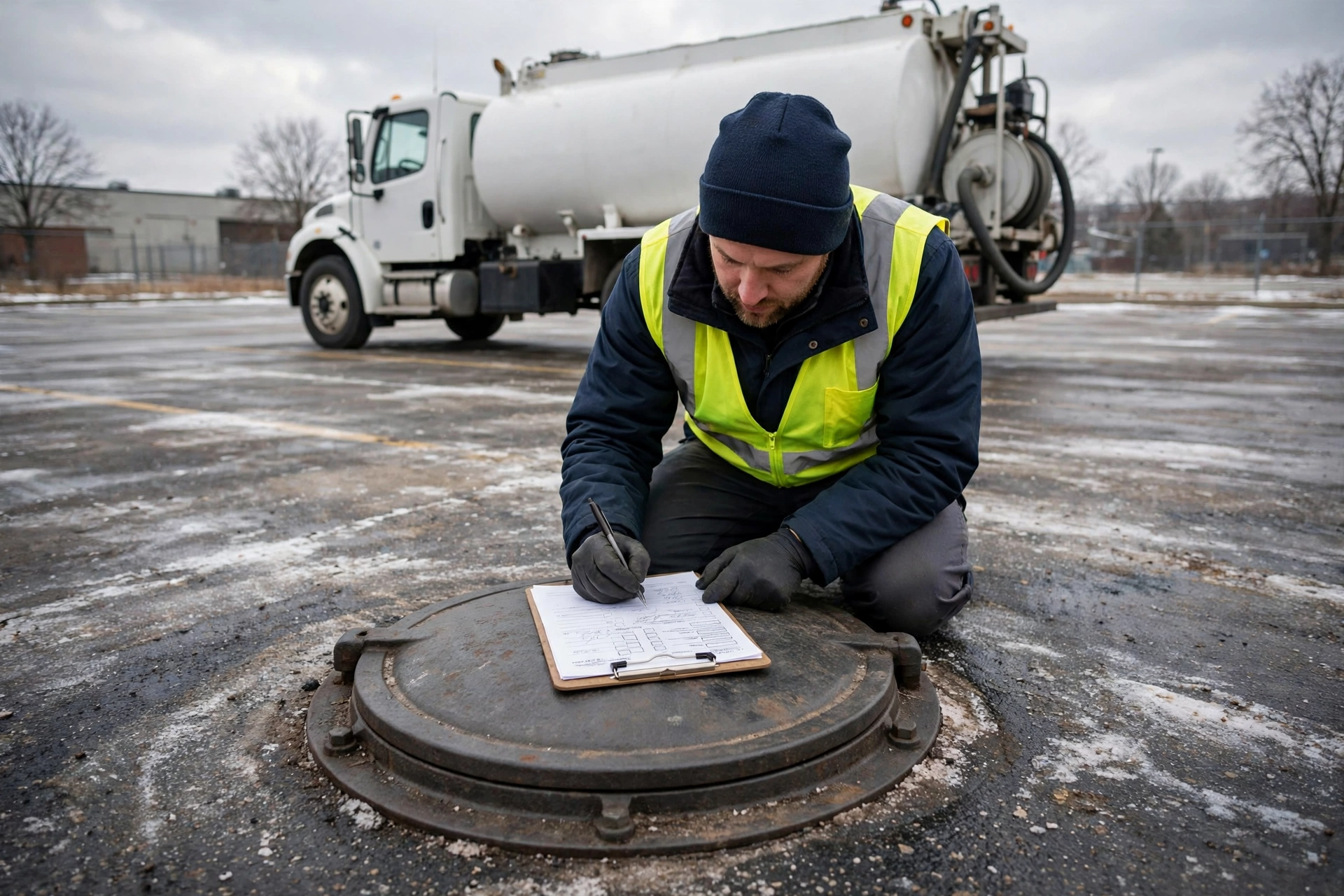
7. Close up and document. The lid goes back and the area is left clean. The crew completes the shipping document and the service record before leaving. You get your copies.
What each visit includes, documents and leaves with you
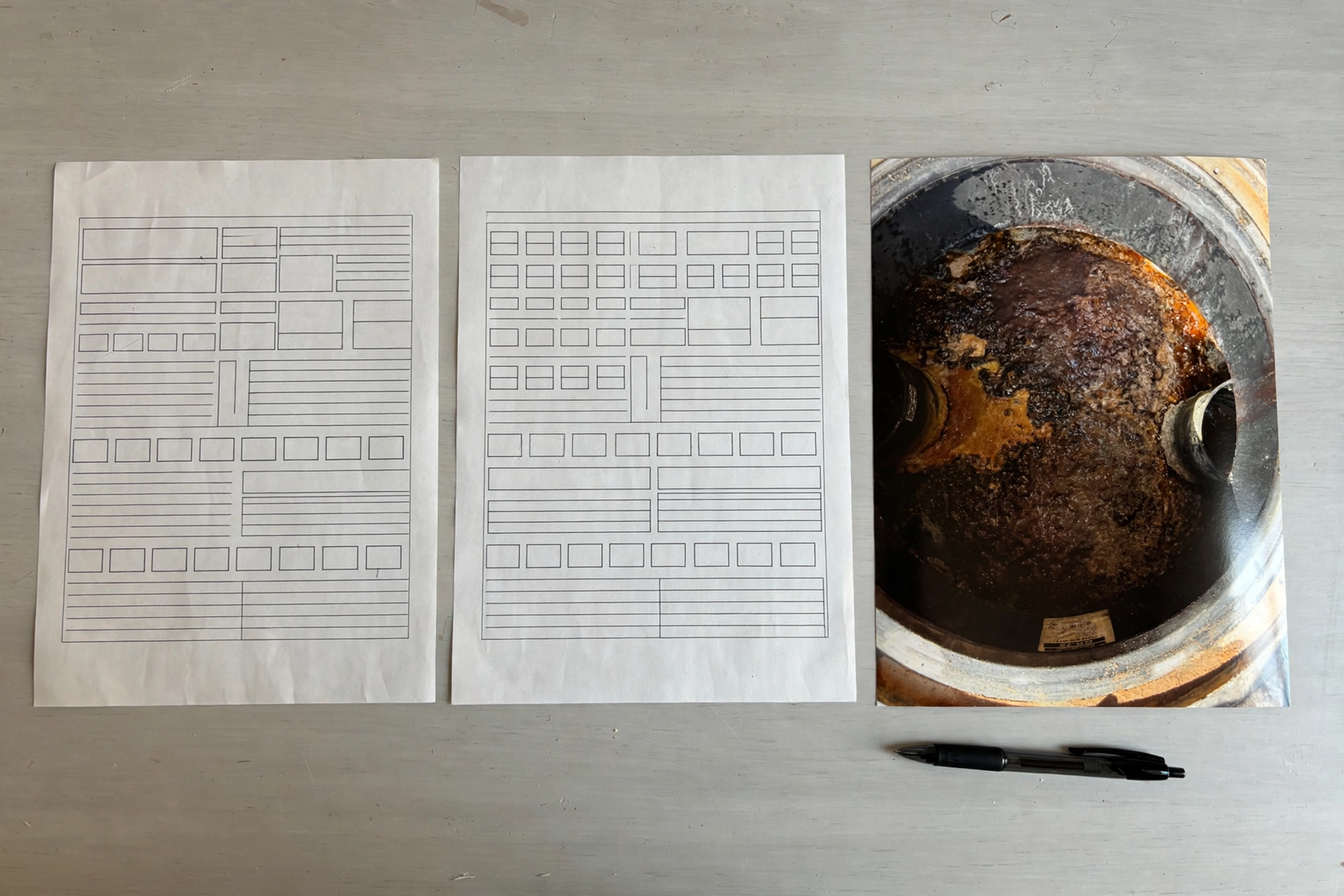
The visit includes
- Full pump-out of the grease cap, liquid and settled solids
- Scraping of the interior walls
- Clearing of baffles, inlet and outlet
- A check of the lid, baffles and connections
- Hauling and disposal of the waste
The crew documents
- The grease and solids reading against capacity
- The condition of the baffles, lid and connections
- Anything that needs repair
- The date and the unit serviced
- The shipping document for the load
You keep
- A service record for the visit
- Your copy of the shipping document
- Your notes on the next suggested date
That is your FOG compliance documentation. The sewer authority can ask for records of cleaning and maintenance, and the state expects you to hold your own copies of the shipping paperwork. A binder of these, in date order, answers both.
Featured job: a school cafeteria interceptor in Dearborn
Chapter 1: The first call
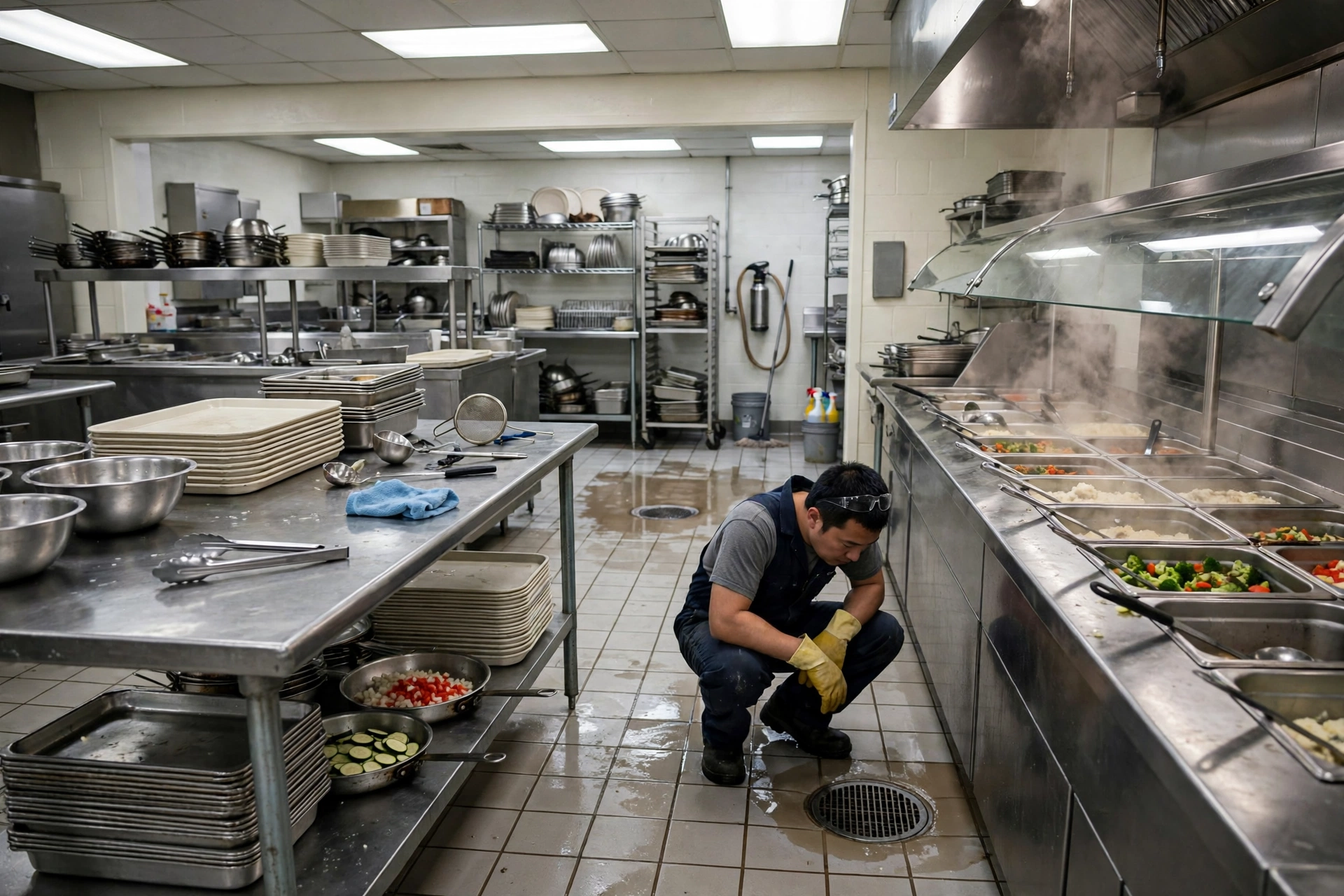
The facilities manager for a school cafeteria in Dearborn called about drains that ran slow after every lunch period and a smell near the service lot. The kitchen feeds a large number of students each day, and the interceptor outside served the whole kitchen. Nobody on staff could say when it had last been pumped. The manager asked what a first full pump-out would cost. We told them large exterior interceptors run $500 to $1,000 or more, set by the tank's capacity and the volume of waste inside, and that we would confirm the figure once the crew had seen the lid.
Chapter 2: What the crew found
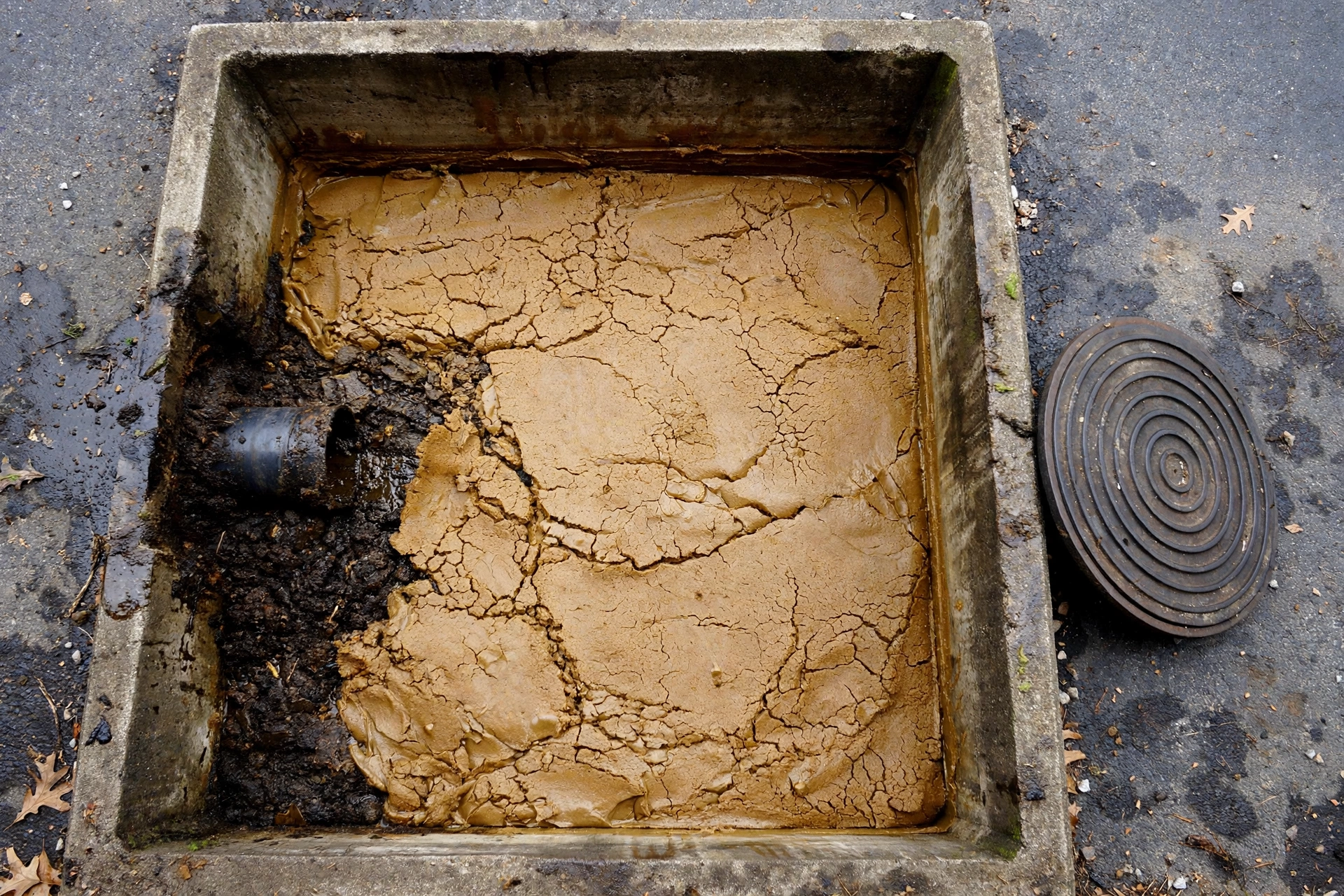
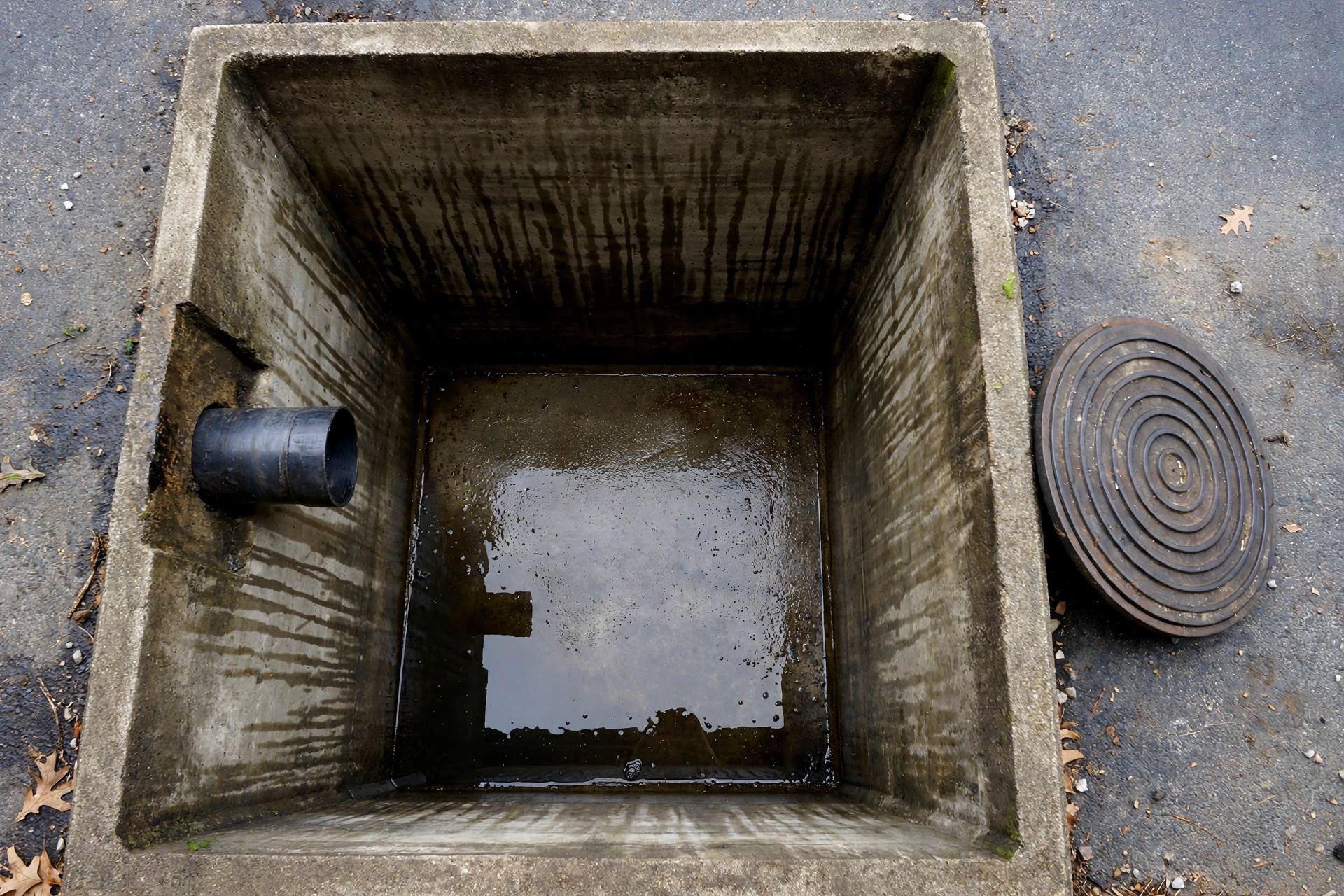
When the crew lifted the lid, the grease cap was thick and the solids below it had built up well past the quarter mark that the trade uses as its signal to pump. The outlet side had started to restrict, which explained the slow drains. The plumbing inside the kitchen was sound. The tank had simply never been on a schedule.
Chapter 3: The pump-out
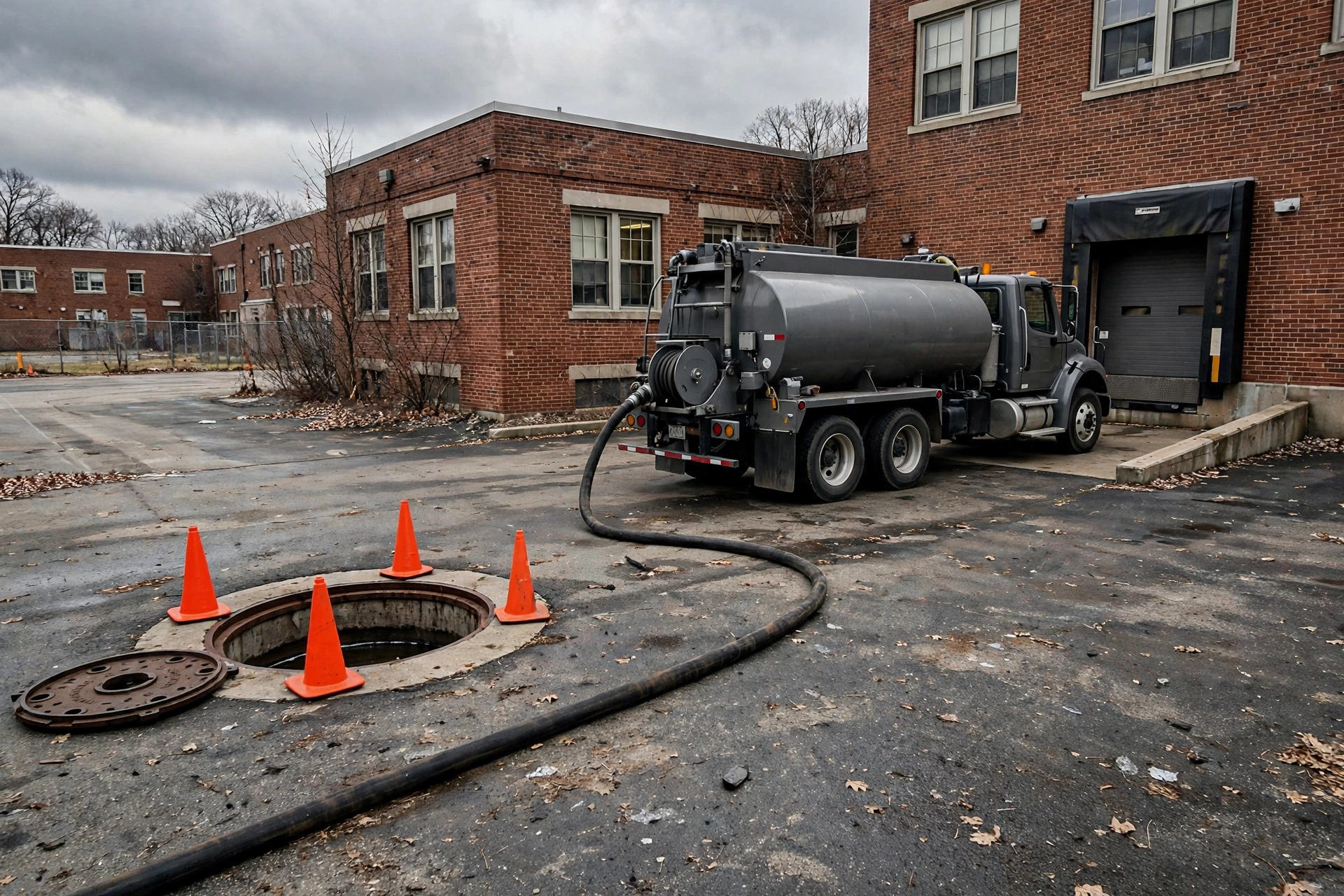
The crew pumped the liquid, grease and solids out, scraped the walls, cleared the baffles and the outlet, and checked the lid and connections. Trap waste is a liquid industrial by-product under Michigan's Part 121, so it left on a shipping document for the load, and the school kept its copy. The drains ran clear before the crew packed up.
Chapter 4: The schedule and the file
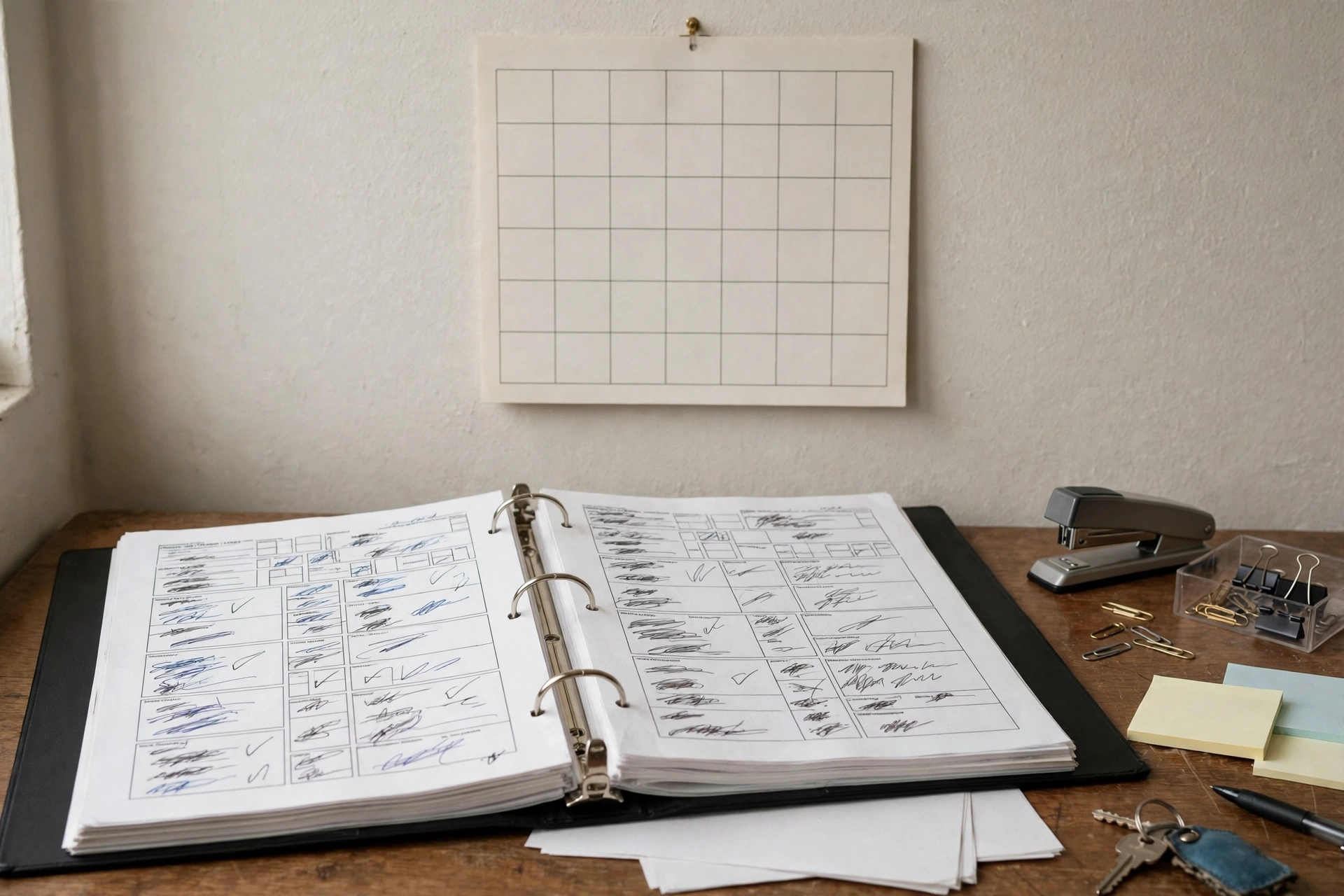
Dearborn's code has no fixed pumping interval for kitchens, and the regional sewer authority's rules ask for regular cleaning at the owner's expense, with records produced on demand. So the schedule came from the kitchen itself. The crew recorded how full the tank was on arrival, and the manager and the crew set recurring visits to follow that fill rate and the school's calendar. The file now holds each service record and each shipping document copy, ready for any request.
Where interceptor work comes from
Most of our exterior interceptor work is for businesses whose kitchens are built around a large underground unit: chain restaurants, hotels and institutional kitchens. In Dearborn that includes the chain corridors. Around us it includes Allen Park's Fairlane Green area, the Eureka Road corridor in Southgate and the airport hotel row on Merriman Road in Romulus. Chain operators often want scheduled, documented service so each location's records look the same. A smaller independent with an indoor trap has a different job, and our interior trap cleaning covers that.
Send us your details
Call (313) 351-8079, or send the form below. Only your name and phone number are required. Everything else is optional, and a consent box has to be checked before you send it. The form asks for your name, your phone number, the kitchen's location, what the interceptor serves, when it was last pumped and what you have noticed.
The more details you give, the better we are able to help you.
- Name (required)
- Phone (required)
- Kitchen location (optional)
- What the interceptor serves (optional)
- Last pump-out, if known (optional)
- What you have noticed (optional)
- Consent to be contacted about this request (required checkbox)
Questions
Does Dearborn require me to pump my interceptor on a set schedule?
No. Dearborn has no FOG ordinance, so there is no fixed pumping interval in the city code. The sewer authority's rules require that interceptors be regularly cleaned at your expense and that you keep records. They do not set a number of days.
What rules do apply?
Dearborn's code limits grease in discharge to 1,500 mg/L as a 24-hour average and prohibits grease that obstructs flow. The Great Lakes Water Authority's pretreatment rules call for interceptors where it deems them necessary, regularly cleaned and maintained by the user, with records available on request. Michigan's Part 121 governs how the waste is hauled.
How do I know when my interceptor needs pumping?
The trade's working benchmark is to pump when grease and settled solids reach about a quarter of the unit's capacity. It is a scheduling guide used in the trade, not a Dearborn rule. We measure the tank at each visit so your next date follows your actual fill rate.
How often do kitchens pump their interceptors?
It depends on volume. High-volume kitchens often run every 4 to 6 weeks, moderate kitchens somewhere between monthly and quarterly, and low-volume kitchens every 3 to 6 months. Those are the frequencies kitchens actually run. They are not requirements.
What does interceptor pumping cost?
Large exterior interceptors: $500 to $1,000 or more, by capacity and waste volume. Access to the unit also affects the work.
Is disposal included in the price?
Yes. Hauling and disposal of the waste are part of the price.
What is a shipping document, and can I see it?
Under Michigan's Part 121, each shipment of grease trap waste moves on a shipping document. You can ask to see it, and we give you your copy at the visit. The transporter keeps its papers for three years, and you should keep yours.
Can my septic hauler pump my interceptor?
Not on a septage license alone. A septage license does not cover grease trap waste. The hauler has to be registered and permitted to move this liquid industrial by-product. Ask to see the shipping document either way.
What records should I keep?
Keep your service records and your copies of the shipping documents, in date order. The sewer authority may ask for records of inspection, cleaning and maintenance. Wayne County's food inspections look at the food side of the kitchen, but a clean record of interceptor service shows the kitchen is run properly.
What if my kitchen is backing up right now?
Call (313) 351-8079 and say it is a backup. Emergency call-out is one and a half to two times the standard service price.
Does line jetting cost extra?
Line jetting is priced with the service visit it rides with. We can tell you the figure when we know what the line needs.
Does winter change how often I should pump?
It changes how closely you should watch. Grease that stays semi-liquid in warm weather thickens as it cools, and hot water cooling in the interceptor drops its grease to the top, where deep cold can freeze it. Check the unit more often in winter, not less.
Do you take used cooking oil?
Yes. Used cooking oil collection: no charge for clean oil.
What is the difference between an interior trap and an exterior interceptor?
An interior trap is a small unit inside or under the kitchen's fixtures. An exterior interceptor is a large underground tank outside the building. This page covers the exterior interceptor. Interior trap cleaning is its own service, with its own prices.