Dearborn Grease Trap does grease trap cleaning for the diners, cafés and small restaurants of Wayne, working out of our Dearborn base about 22 minutes up the road. A trap that has filled with grease and solids tells you in plain ways: a slow drain at the dish sink, a sour smell near the floor drain, a backup at the worst hour of a Saturday. Most of that can be headed off with a visit on a schedule that fits how your kitchen cooks.
This page covers how we work in Wayne, what the work costs, what the paperwork looks like, and one job from a downtown Wayne kitchen told start to finish.
Call before the next backup
If your trap is due, or you are not sure whether it is, call (313) 351-8079. Tell us what kind of kitchen you run and what you are seeing, and we will say what the visit involves and how the price is set. You can also use the form at the bottom of this page.
Wayne's kitchens and why this is the work here
Downtown Wayne is built around Michigan Avenue, where a cluster of small diners and cafés sits close together. These are kitchens that run breakfast and lunch grills, soup pots, fryers and a busy dish station on a narrow footprint. Kitchens that size usually drain through a small indoor trap, under a sink or set in the floor, rather than a large buried interceptor. That is why interior trap cleaning is the core of our work for Wayne.
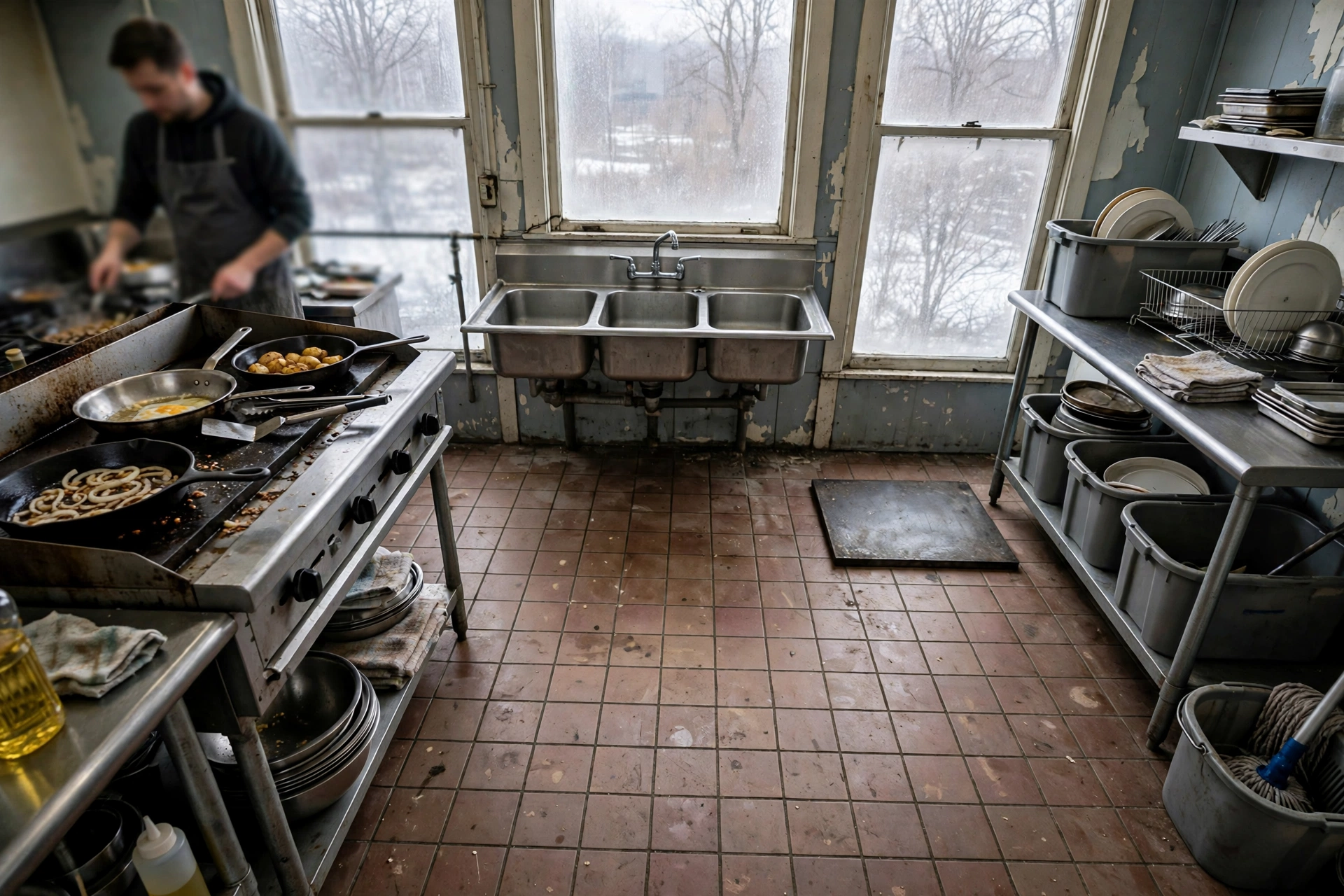
Small traps fill faster than owners expect. A trap holds only so much, and a busy griddle and a steady stream of dishwater fill it quickly. The smaller the trap, the less room there is before grease and solids start moving on down the line. Cleaning it on a schedule costs far less than clearing a backed-up line in the middle of service.
What governs grease in a Wayne kitchen
Here is how the rules actually stack up, because a lot of what circulates online is wrong.
- Dearborn has no FOG ordinance. Its code has no trap-sizing table, no fixed pumping interval and no city manifest rule. What it does have is a limit on grease discharge: fats, oil and grease above 1,500 mg/L (a 24-hour average of samples) are prohibited. We work from Dearborn, so that is the code we know.
- Sewer authority rules. In our area, the regional sewer authority's pretreatment rules call for interceptors where the authority deems them necessary, cleaned and maintained regularly at the owner's expense, with records kept and produced on demand. Those rules set no fixed interval. The duty is regular cleaning, proven by records. Wayne's own sewer rules are the city's and its authority's to set, and we do not quote them here. Ask the city or your sewer authority which apply to your building.
- Michigan's Part 121. Grease trap clean-out residue is a regulated liquid industrial by-product. It may be hauled only by a registered, permitted transporter, on a shipping document for each shipment, with papers kept three years. The kitchen that generates the waste must use a registered transporter and keep its own copies. A septage license does not cover this waste.
- The food side. Wayne County Environmental Health licenses and inspects food-service facilities in the county outside Detroit. Licenses renew April 30 each year, and most establishments receive two routine evaluations a year. Clean, current service records are what you want in the drawer when anyone asks about upkeep.
The old trade rule, to pump when grease and solids together reach about a quarter of the trap's capacity, is a scheduling benchmark used across the trade. It is not a law in Dearborn, in Wayne or in our rules above. We teach it because it works.
How a visit runs in a Wayne kitchen
1. Plan the visit. When you call we ask about the trap's size and location, how much you fry, and your service hours, so the work is planned around the kitchen. 2. Open and measure. We lift the lid and check how much grease and solids have built up against the trap's capacity. 3. Pump and scrape. The grease cap, liquid and settled sludge come out. The inside walls get scraped. 4. Clear and inspect. We clear the baffles and check the inlet, outlet and lid for wear. 5. Haul and document. The waste leaves with us on a shipping document, handled under Michigan's Part 121 rules. 6. Leave the paperwork. You keep a service record for the visit.
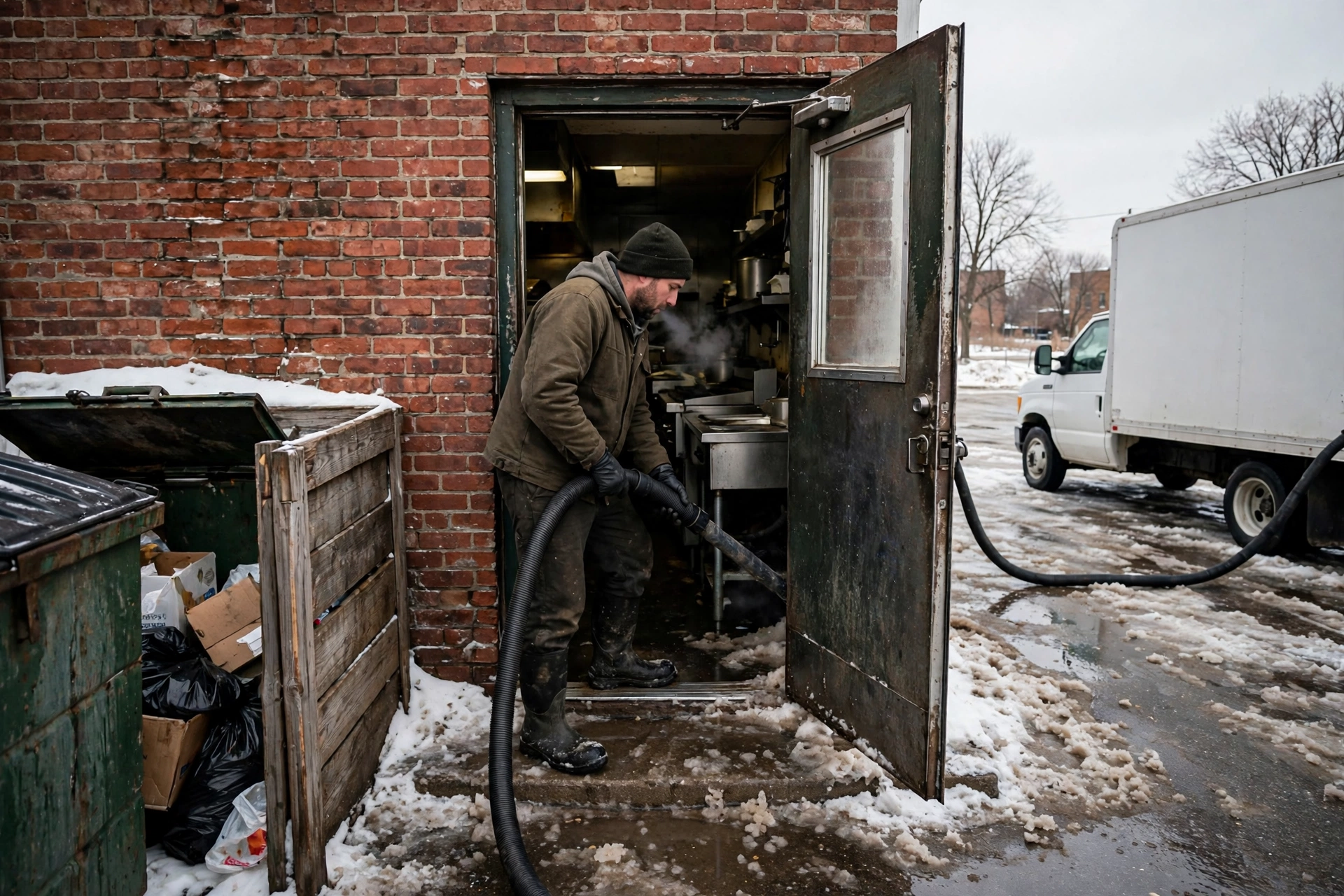
What the visit includes: pump-out of the grease cap, liquid and sludge, scraping of the interior, clearing and inspection of the baffles, and a check of the trap's condition. What the crew documents: the visit, the condition of the trap, and the waste leaving on its shipping document. What you keep: the service record and your copy of the shipping document, ready for an inspector or the sewer authority on request.
If your building also has a large exterior interceptor, we pump and clean that too. If a line needs jetting, it is priced with the service visit it rides with.
What it costs
These are our prices.
| Service | Price |
|---|---|
| Interior grease trap cleaning, small indoor traps | $150 to $350 |
| Medium traps | $300 to $600 |
| Large exterior interceptors | $500 to $1,000 or more, by capacity and waste volume |
| Emergency call-out | One and a half to two times the standard service price |
| Used cooking oil collection | No charge for clean oil |
| Line jetting | Priced with the service visit it rides with |
Where a job lands within a range depends on the trap's capacity, how hard it is to reach, and how much waste is in it. A trap in a basement or at the end of a long hose run costs more than one under a sink by the back door. Disposal of the waste is part of the quote, not an add-on.
Call about your trap
If your trap is on its way to full, or you would rather put the work on a schedule, call (313) 351-8079. We will talk through your kitchen and give you a price based on its size, access and waste volume. The form below works too.
Featured job: a downtown Wayne diner with a slow dish-sink drain
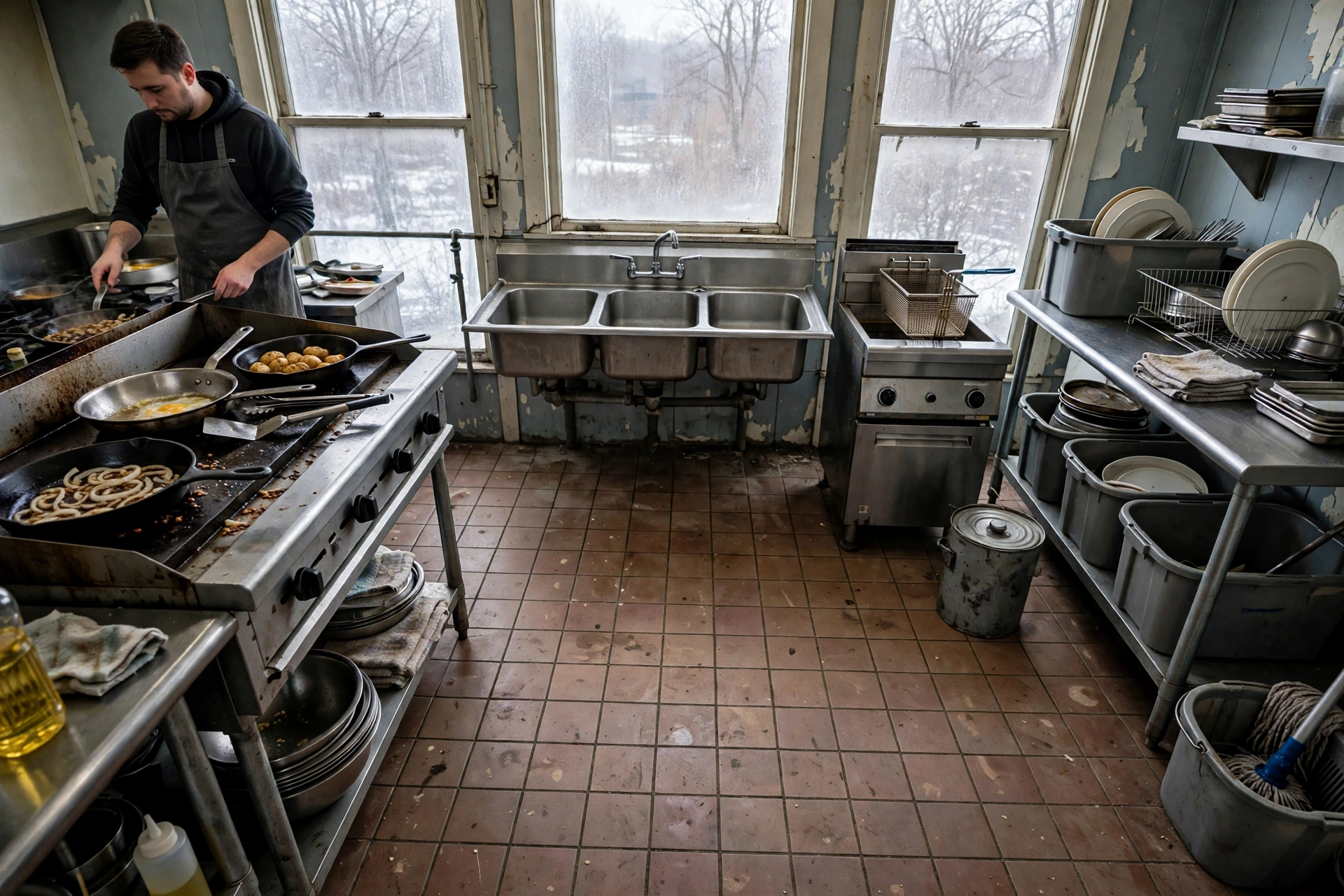
The kitchen in this job is a small diner on Michigan Avenue in downtown Wayne. It serves breakfast and lunch, with a flat-top, a fryer and a three-bay dish sink. The owner had run the place for a long stretch without a regular trap visit. Nothing had backed up yet.
Chapter 1: The warning signs
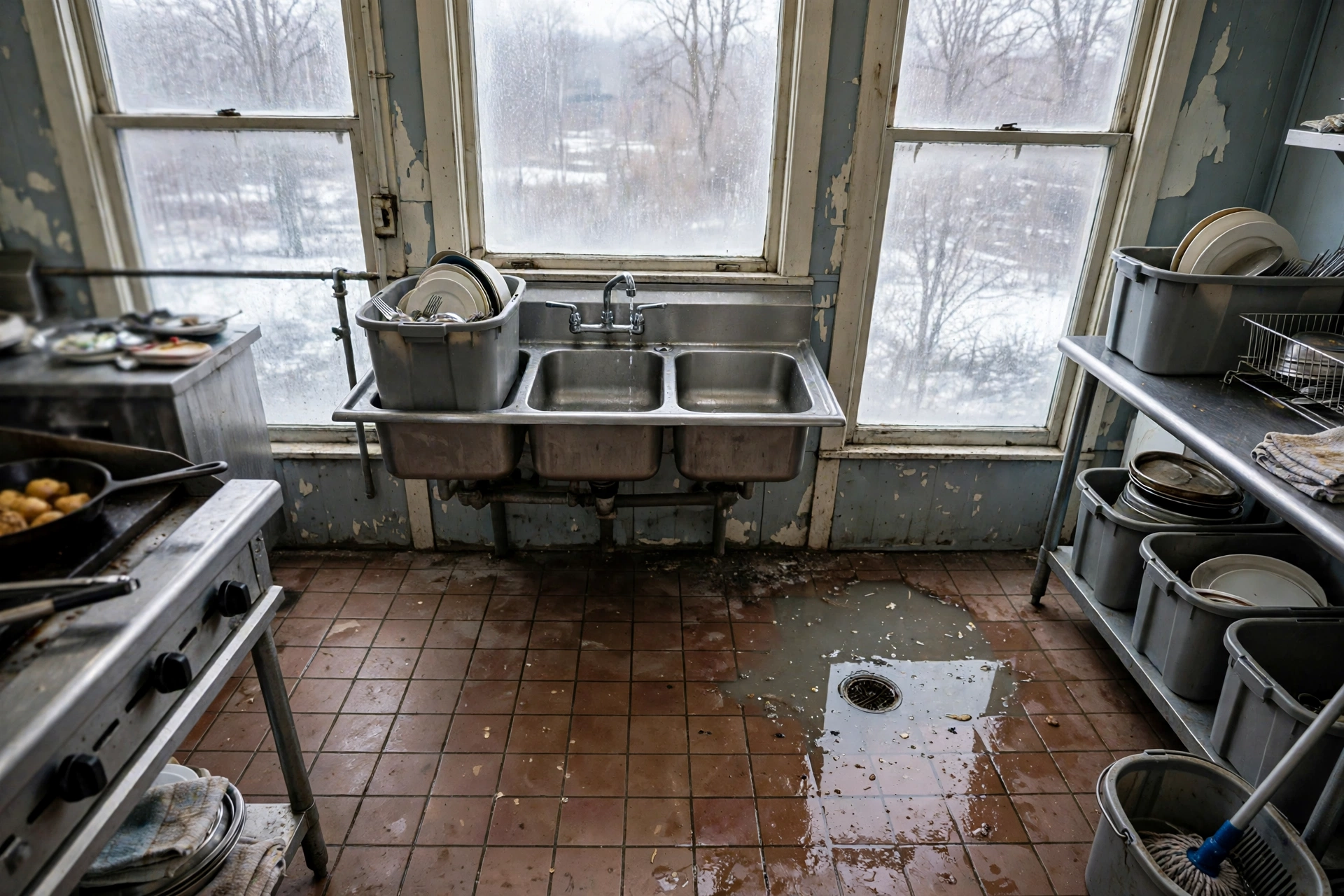
The first sign was the dish sink, which drained a little slower each week. Then a sour smell started rising from the floor drain beside it, strongest after the lunch rush when the dish machine ran hardest. The owner called us before it turned into a backup.
Chapter 2: Lid off
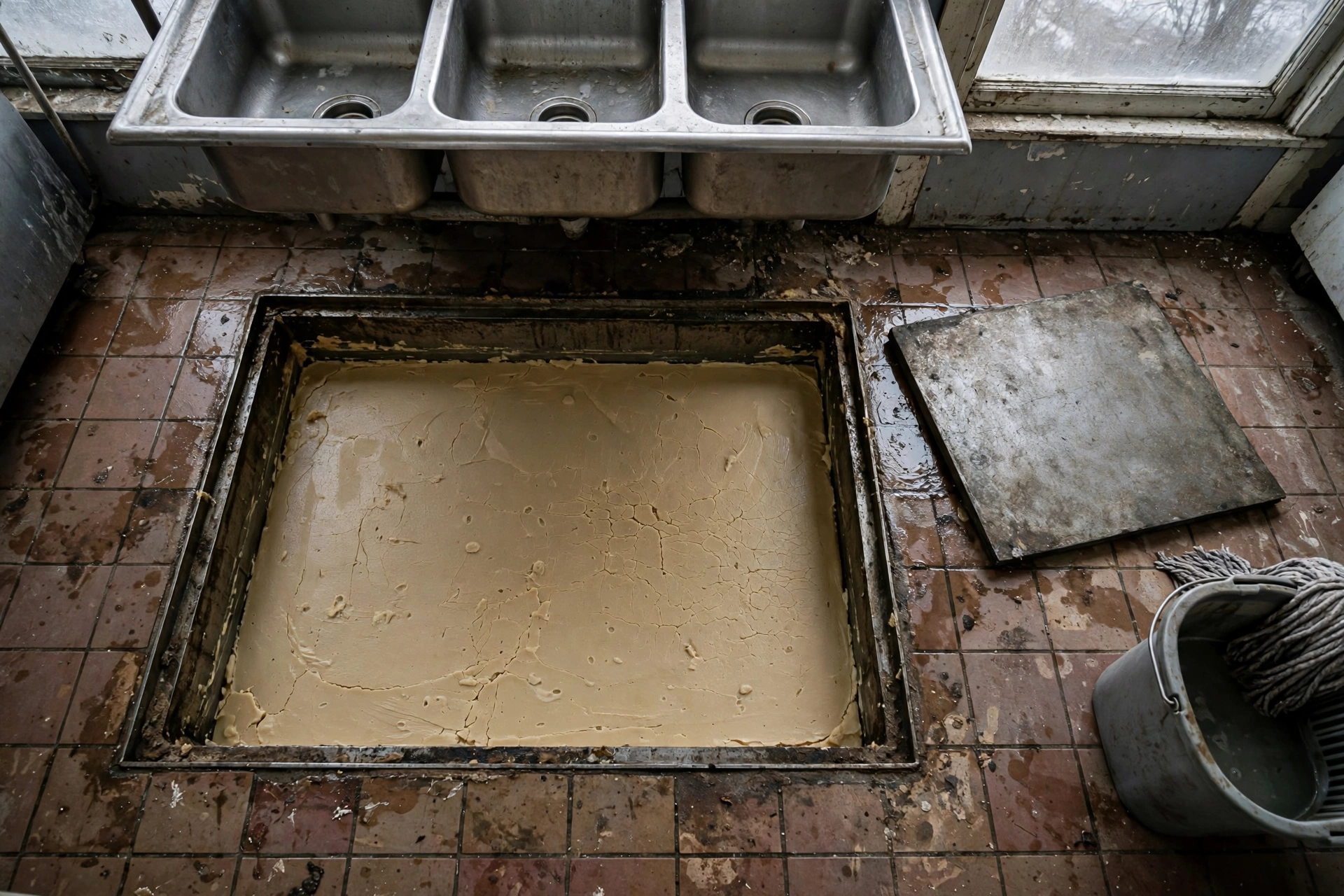
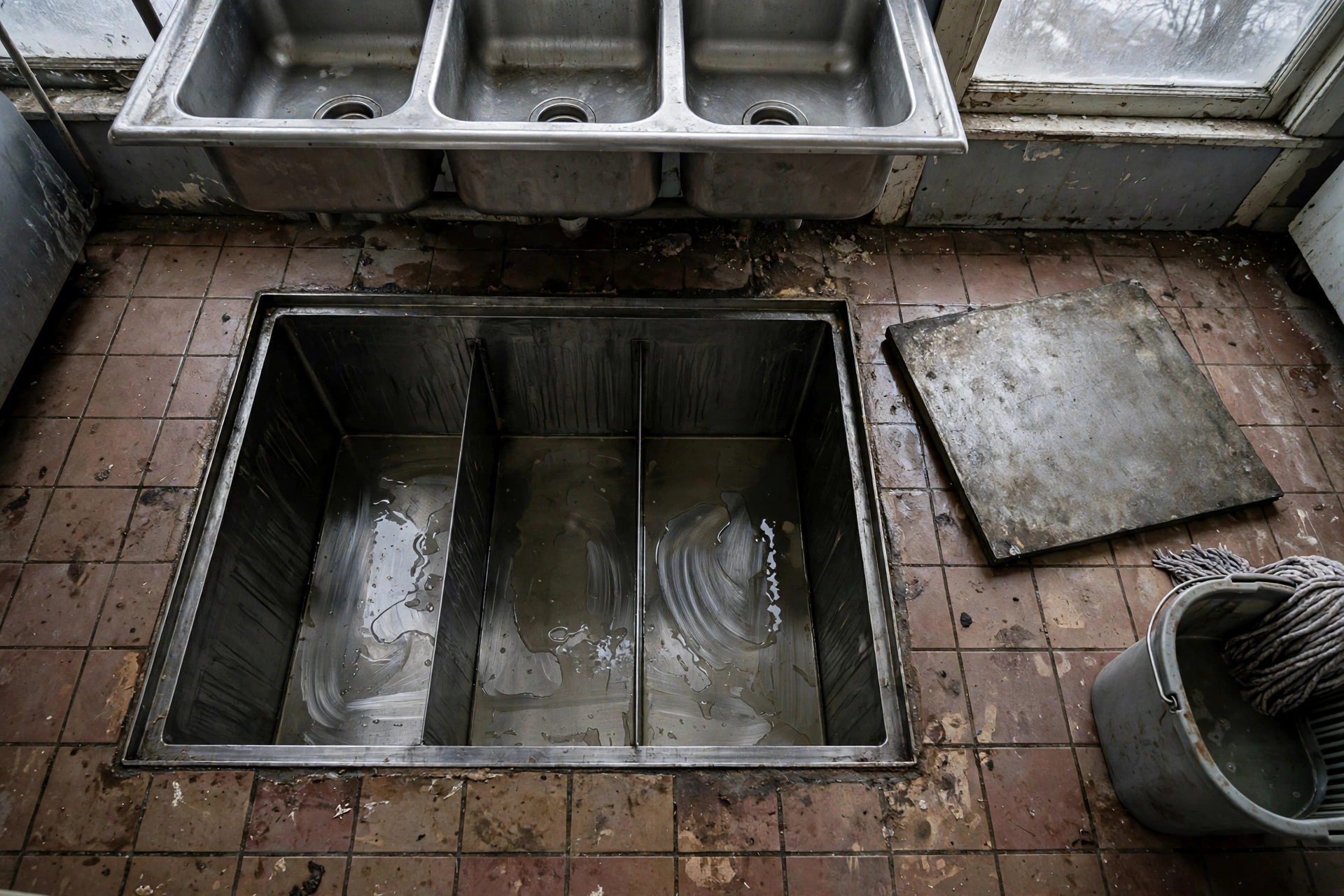
We asked what the kitchen cooked and how long the lunch rush ran, then went to the trap, a small indoor unit in the floor near the sink. With the lid off, the grease cap sat thick across the top, with settled solids beneath it. The unit was well past the point where the trade would have pumped it. In the trade, that point is about a quarter of capacity.
Chapter 3: The clean-out
We pumped out the cap, the liquid and the sludge, scraped the walls, and cleared the baffles. The baffles and fittings checked out sound. The service sat in the small-trap range of $150 to $350, set by the trap's size and easy access beside the dish sink. The waste left on a shipping document.
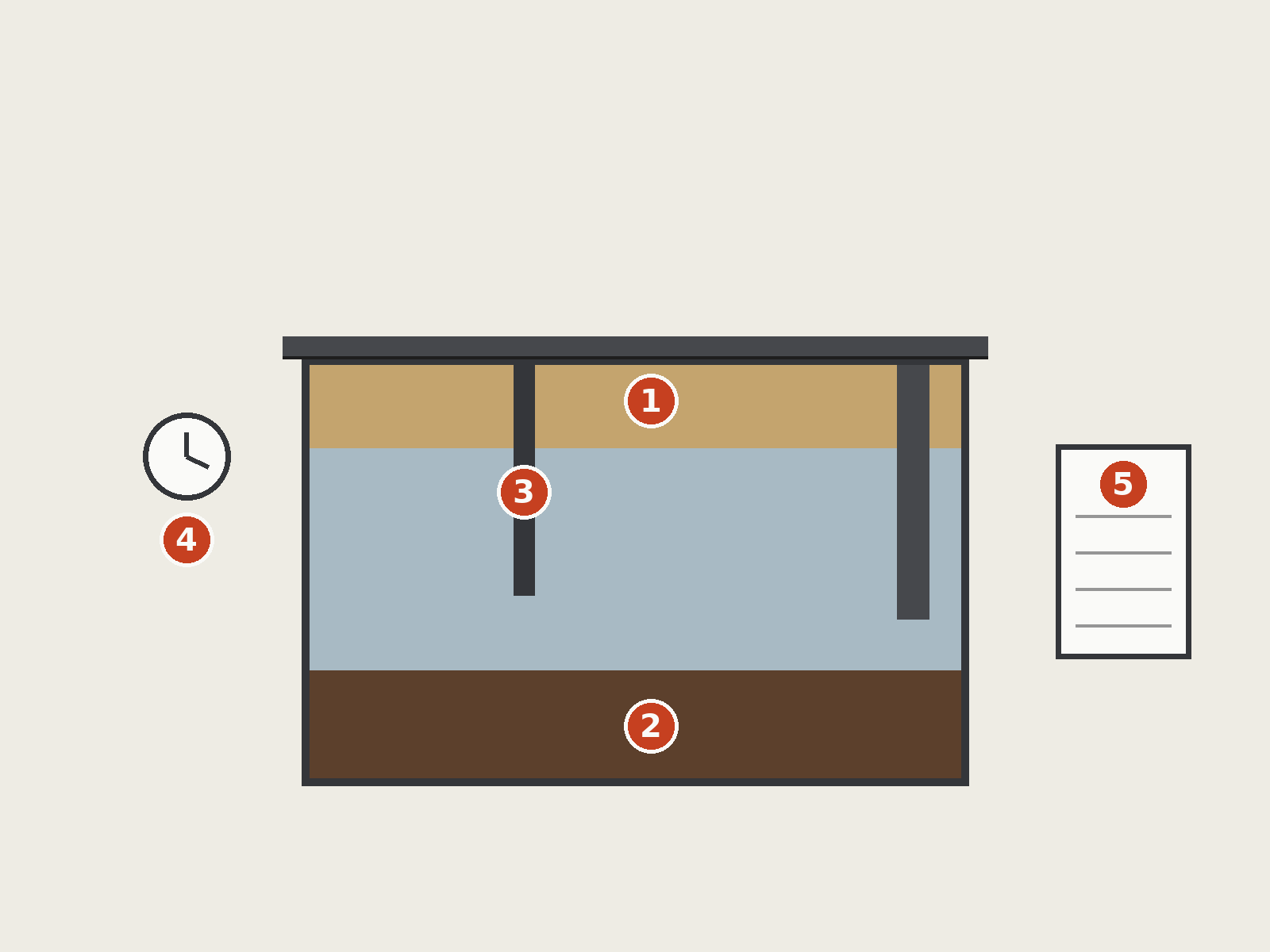
Grease cap and
settled solids layers: the trade pumps when grease and solids together reach about a quarter of the trap's capacity, a scheduling benchmark and not Dearborn law.
Baffles: cleared and inspected on every visit.
Frequency: high-volume kitchens commonly run every 4 to 6 weeks, low-volume kitchens every 3 to 6 months, as working practice and not a requirement.
Waste outlet: clean-out residue moves on a shipping document under Michigan Part 121, with papers kept three years. No fixed interval appears anywhere in the figure.
Chapter 4: The schedule and the paperwork
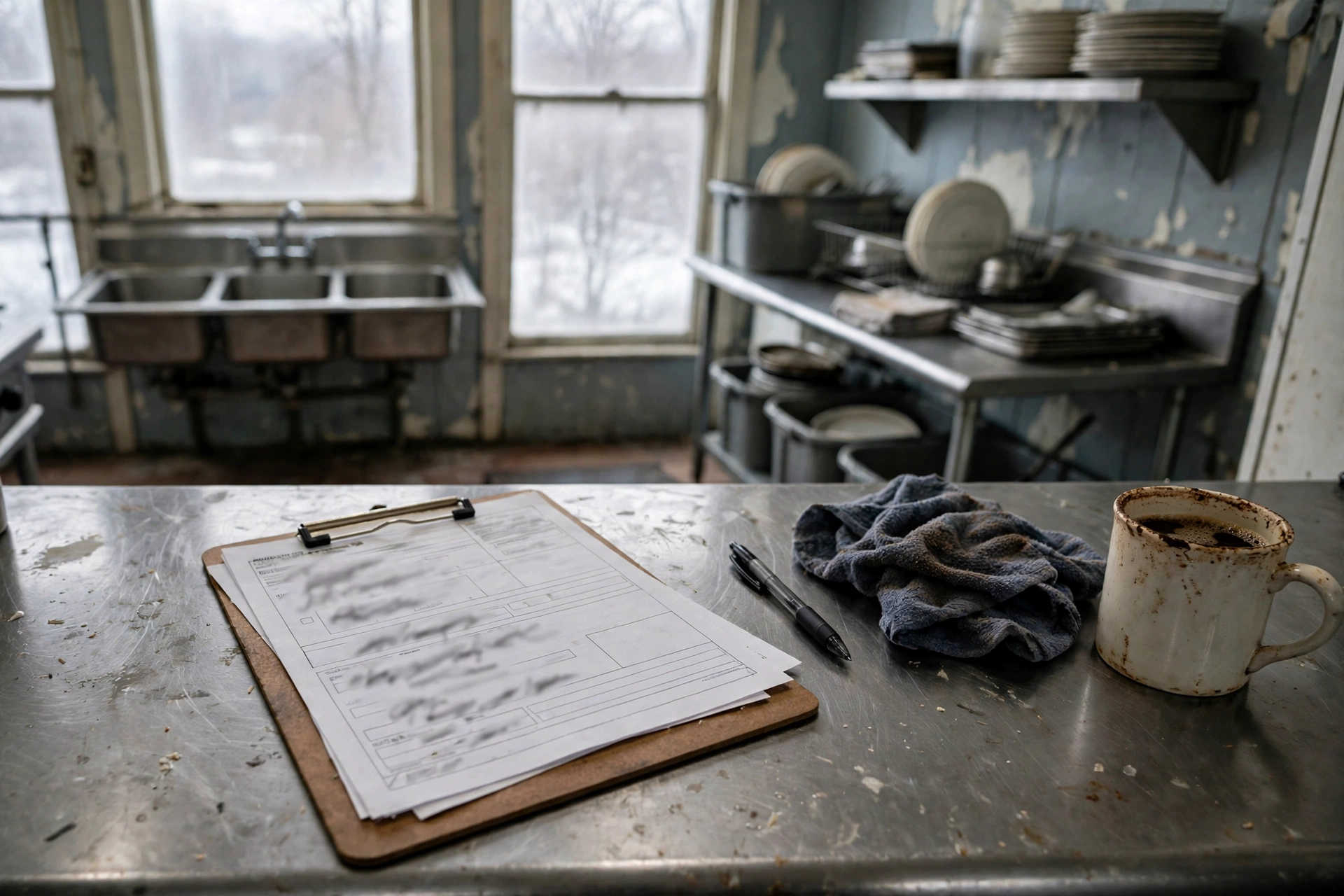
The owner kept the service record and the shipping-document copy. We talked through how fast the trap had filled. A kitchen of that size and menu falls toward the low-volume end of what kitchens run, so a visit every few months was a sensible starting point, to be adjusted by what we find when the lid comes off. The owner now calls on that schedule rather than when the sink complains.
When to call
Call (313) 351-8079 when you see any of these:
The dish sink or a floor drain drains slowly, or a sour smell rises from it after a rush.
You cannot remember when the trap was last cleaned, or the service record is missing.
A health or sewer authority notice mentions upkeep or records.
You are opening a new kitchen or taking over one and want a baseline visit.
Grease or water is already backing up. Emergency call-out is one and a half to two times the standard service price.
If your fryer oil is ready to go, we collect clean used cooking oil at no charge.
Book your Wayne trap visit
Call (313) 351-8079, or send the form. The form takes your name and phone number (both required) and a few optional details: your kitchen type, the trap's location, and what you have noticed. A consent box is required. The more details you give, the better we are able to help you.
Questions
How often should a Wayne kitchen have its grease trap cleaned?
No local rule hands you a number. The trade's working benchmark is to pump when grease and solids reach about a quarter of the trap's capacity. In practice, high-volume kitchens run every 4 to 6 weeks, moderate ones monthly to quarterly, and low-volume ones every 3 to 6 months. Those are what kitchens actually run, not requirements.
Does Dearborn or Wayne require a pumping every 90 days?
Dearborn has no FOG ordinance, so no fixed interval, trap-sizing table or city manifest rule exists there. Some other communities run set programs, but those belong to them. For Wayne's own rules, ask the city or your sewer authority.
What does a visit cost?
Small indoor traps run $150 to $350. Medium traps run $300 to $600. Large exterior interceptors run $500 to $1,000 or more, by capacity and waste volume. Where a job lands depends on capacity, access and waste volume.
What is the 25 percent rule?
It is the trade's scheduling benchmark: pump when grease and solids together reach about a quarter of the trap's capacity. It is not a law. It keeps the trap working before grease passes through to your line.
What rules cover the waste we pull out?
Michigan's Part 121 treats trap clean-out residue as a liquid industrial by-product. It must be hauled by a registered, permitted transporter on a shipping document, with papers kept three years. The kitchen must use a registered transporter and keep its own copies.
What paperwork do we keep?
A service record for the visit and your copy of the shipping document. The regional sewer authority's rules allow it to ask for records of inspection, cleaning and maintenance, so keep them where you can find them.
Do you work around our service hours?
Tell us your hours when you call, and we plan the visit around them. Work happens at the trap, not across the whole kitchen.
What if the trap has already backed up?
Call (313) 351-8079 right away. Emergency call-out is one and a half to two times the standard service price.
Do you pump exterior interceptors as well as indoor traps?
Yes. Large exterior interceptors are priced at $500 to $1,000 or more, by capacity and waste volume.
What does line jetting cost?
It is priced with the service visit it rides with, so there is no standalone price. Call (313) 351-8079 and we will say what it adds to your job.
What happens to our used cooking oil?
We collect clean used cooking oil at no charge.
Does winter change anything?
One Dearborn-serving provider's published guidance says grease that stays loose in warm weather congeals as it gets cold, so traps need more frequent checking in winter, not less. The same guidance notes oil can freeze in outdoor collection bins, and the working fix is a bin swap, where an empty bin is delivered and the full one carried away. No local authority publishes winter rules for this trade.
Does the county inspector look at my trap?
Wayne County Environmental Health licenses and inspects food-service facilities, and most establishments get two routine evaluations a year. We do not speak for what an inspector will check. Current service records show your kitchen is keeping up.