Dearborn Grease Trap does grease trap cleaning for Trenton kitchens from our base in Dearborn, and the work suits the town. Fort Street and West Jefferson carry family restaurants that have stood for decades, with fryers that run steady and owners who know their kitchens well enough to hear a drain going wrong. A visit cleans the trap, and the used cooking oil leaves with us on the same stop, at no charge for clean oil.
Call about your Trenton kitchen
If a drain is running slow, a smell is coming off the trap, or you want a cleaning schedule so neither happens, call (313) 351-8079. Tell us what the kitchen fries, how many days a week it runs, and whether the trap sits under a sink or outside in the ground. That is enough to start.
What Trenton's kitchens are like
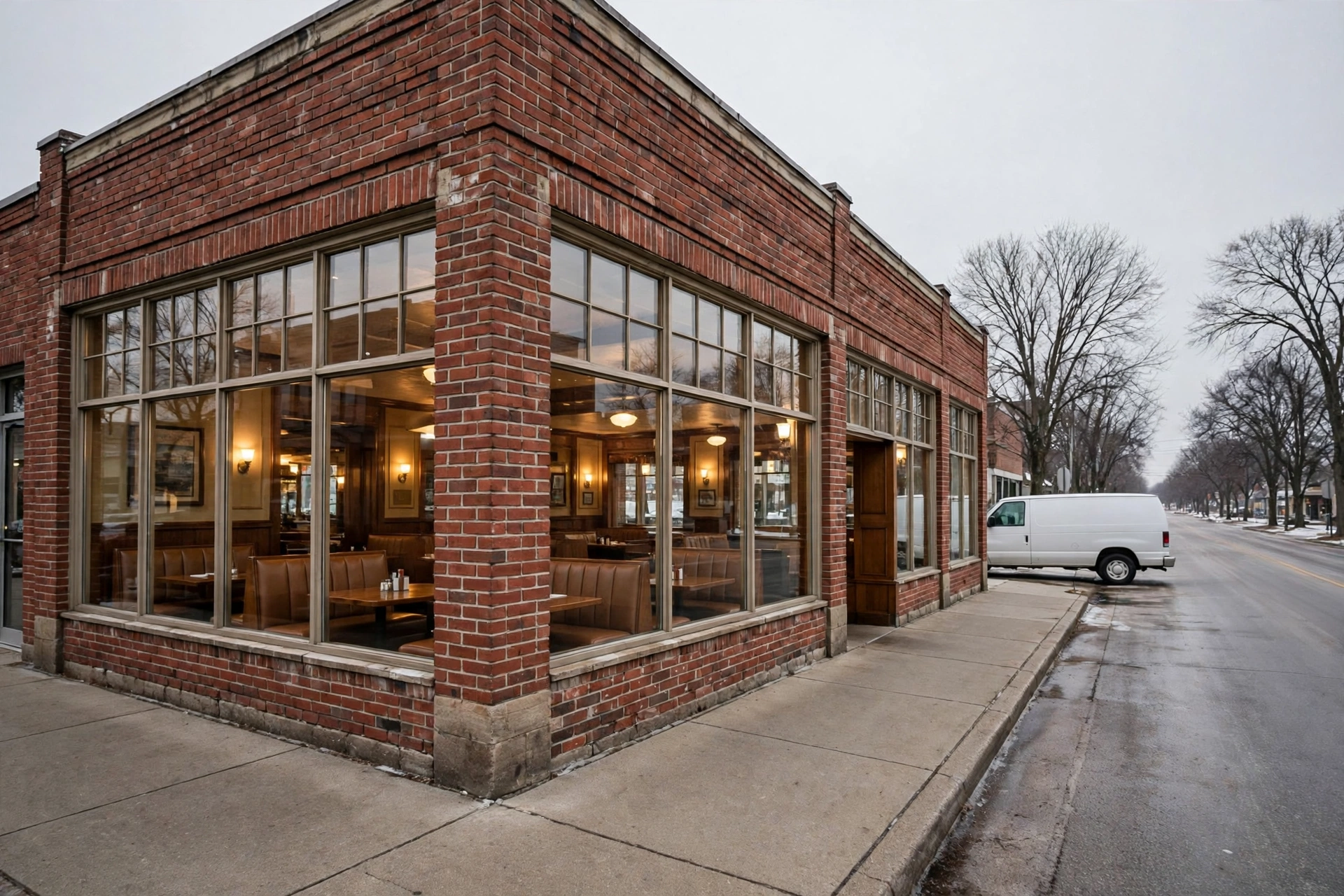
Trenton's restaurant ground is family places on Fort Street and West Jefferson, many of them open for decades under the same owners. That history shapes the work. A kitchen that has fried the same menu for years has a steady fat load, and that load shows up in two places: the fryer oil that gets replaced, and the grease that rides down the drain into the trap.
That is why we pair the two jobs. The oil and the trap waste come from the same fryer line, so one crew handles both in one stop. The trap is cleaned out and the spent oil container is collected or swapped. Used cooking oil collection costs nothing for clean oil, so the oil side usually offsets some of the effort of the trap side rather than adding to it. Keep the oil clean in its container and there is no charge.
Some Trenton kitchens run a small indoor trap under a prep or dish sink. Others, with larger menus or older buildings, have an exterior interceptor in the ground. We clean both, and the price follows which one you have.
What governs a trap, and what does not
Here is how the rules sit, so you know what you are being asked to do and by whom.
- The waste is state-regulated. Michigan's Part 121 treats grease trap clean-out residue as a liquid industrial by-product. It may be hauled only by a registered and permitted transporter, on a shipping document for each shipment, with papers kept three years. The restaurant must use a registered transporter and keep its own copies. A septage licence does not cover this waste. This applies to a Trenton kitchen the same as any other in Michigan.
- The sewer side is local. Your own city and the authority that treats its sewage set the discharge rules for your building. We have not set out Trenton's rules on this page. If you hold a notice from your sewer authority, read it, and call us with it.
- At our base in Dearborn, there is no FOG ordinance. Nothing in the city code fixes a pumping interval, a trap size or a manifest rule. The city's code limits grease discharge at 1,500 mg/L, and the regional sewer authority's rules call for regular cleaning at the owner's expense, with records kept and shown on request. They set no fixed interval.
- The quarter rule is a trade benchmark, not a law. Trap operators schedule a pump-out when grease and solids together reach about a quarter of the trap's capacity. Working kitchens run busy fryers every 4 to 6 weeks and low-volume kitchens every 3 to 6 months. Those are habits that follow how fast a trap fills, not requirements from anyone.
How the service runs for a Trenton kitchen
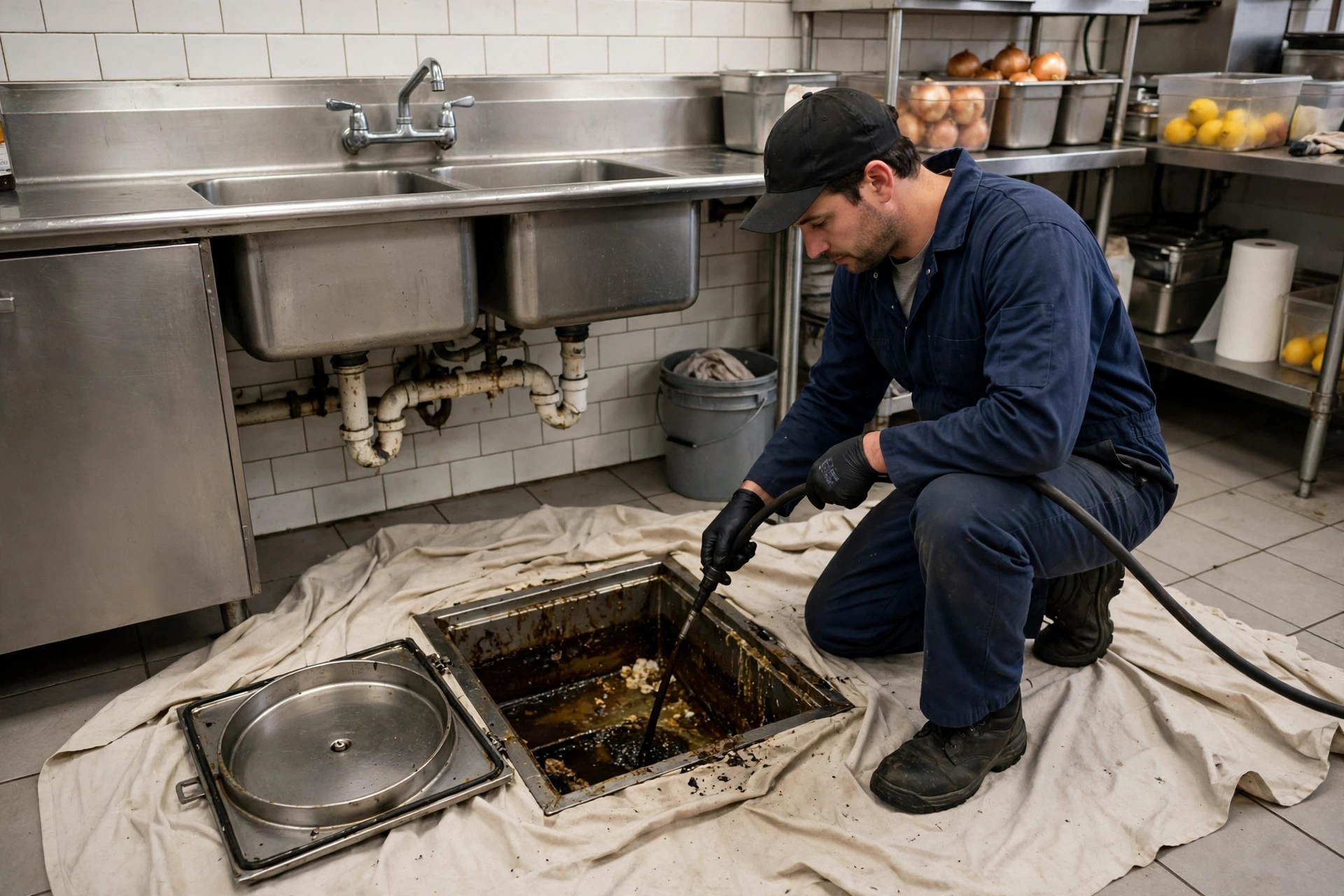
1. The call. We ask about the menu, the fryer count, the kind of trap and what has been happening. 2. The reading. The crew opens the trap and measures the grease and solids against the quarter benchmark, so the visit starts from facts about your trap and not a guess. 3. The clean-out. The grease cap, liquid and sludge come out. The interior is scraped, the baffles are cleared and checked, and the lid, inlet and outlet are looked over. 4. The oil. The used oil container is collected, or swapped for an empty one. 5. The paperwork. You get the shipping document and the service record for the visit. 6. The schedule. The next visit is set by how fast your trap filled, not by a calendar we invented.
What the visit includes: a full pump-out of the trap or interceptor, interior scraping, baffle clearing and inspection, a component check, and used cooking oil collection.
What the crew documents: the depth reading against the quarter benchmark, the condition of the baffles and fittings, and the shipping document for the waste taken away.
What you keep: your copy of the shipping document and a service record you can show an inspector or sewer authority on request.
Line jetting can ride with a visit when a drain needs it. It is priced with the service visit it rides with.
Winter in Trenton
Trade guidance for Michigan winters is to check traps more often in cold weather, not less. Fat that stays loose in summer congeals as temperatures drop, and grease cooling in an interceptor settles at the top, where deep cold can freeze it. Used oil also stiffens in outdoor bins, so the fix is a bin swap: an empty one delivered, the full one carried away.
What it costs
These are our prices.
| Service | Price |
|---|---|
| Small indoor traps | $150 to $350 |
| Medium traps | $300 to $600 |
| Large exterior interceptors | $500 to $1,000 or more, by capacity and waste volume |
| Emergency call-out | one and a half to two times the standard service price |
| Used cooking oil collection | no charge for clean oil |
| Line jetting | priced with the service visit it rides with |
Disposal is part of the visit, not an extra line. What sets your price is the capacity of the unit, how hard it is to reach, and how much waste comes out of it.
Ready to set up service?
If you know what you need, call (313) 351-8079. If you are unsure whether you have a trap or an interceptor, or how often it should go, describe the kitchen and we will work it out with you.
Featured job: a West Jefferson family restaurant, one cold month
Chapter 1: The call
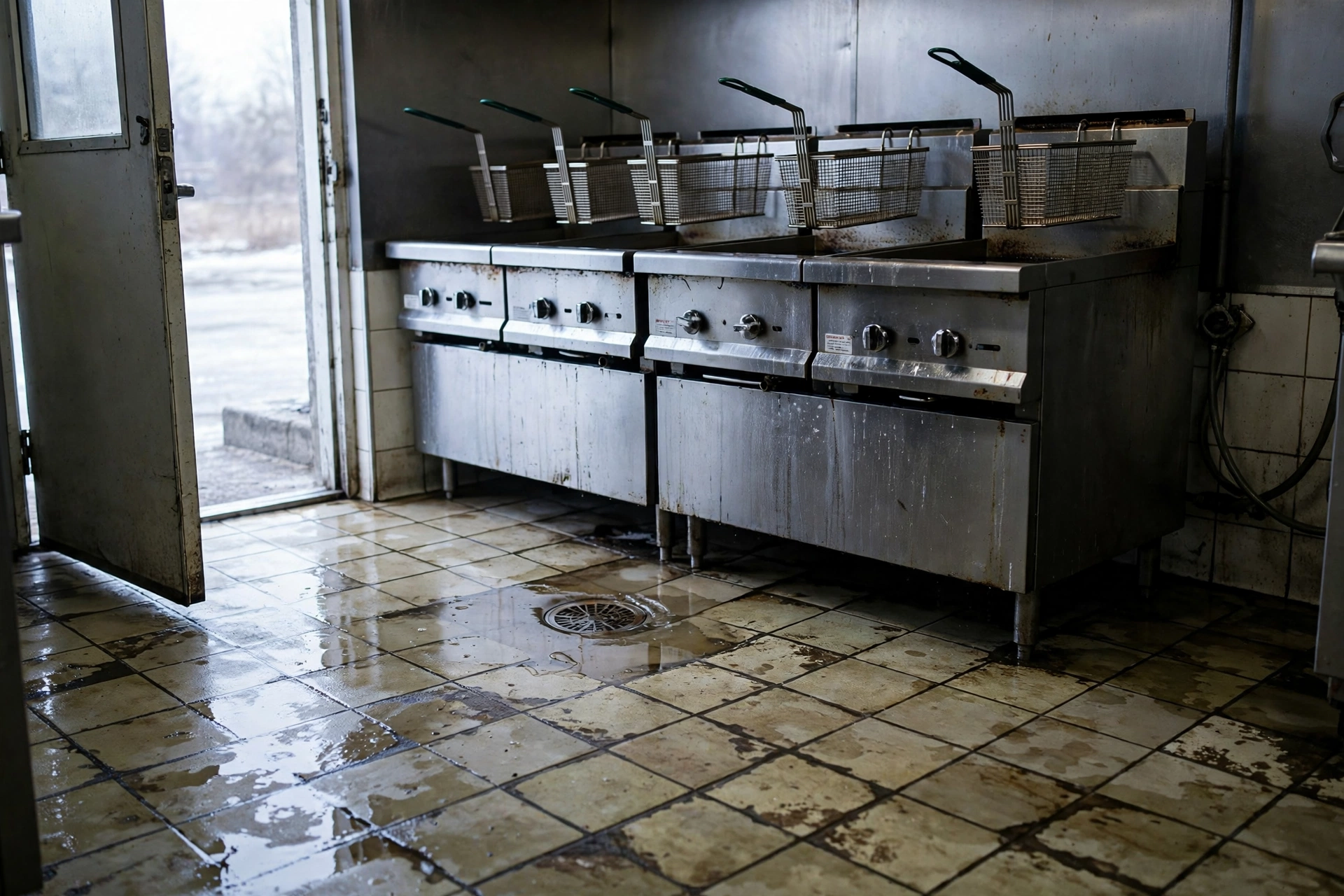
A family restaurant on West Jefferson had served the same neighborhood for decades. In a cold month the owner called about two things. The floor drain behind the fryers was draining slowly, and a smell came up near the back sink. The outdoor oil bin had also gone stiff, and the oil in it would barely pour. Nothing had backed up yet, and the owner wanted to keep it that way.
Chapter 2: The trap
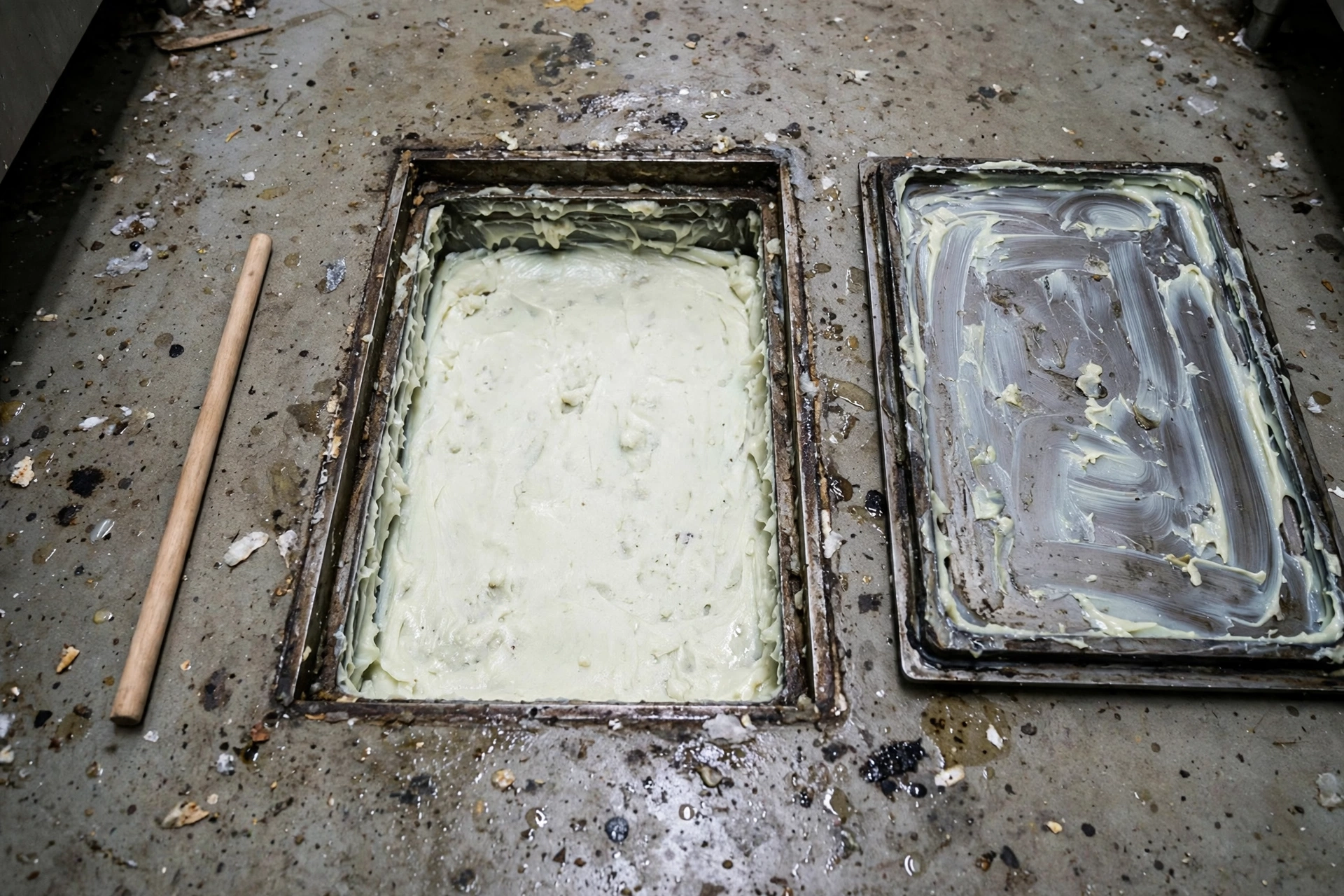
The crew found a medium trap under the dish area, and it was heavy. The cap was thick, the sludge underneath was deep, and the cold had firmed it all. They measured it against the quarter benchmark, and the trap was past it. The owner had not been wrong to worry.
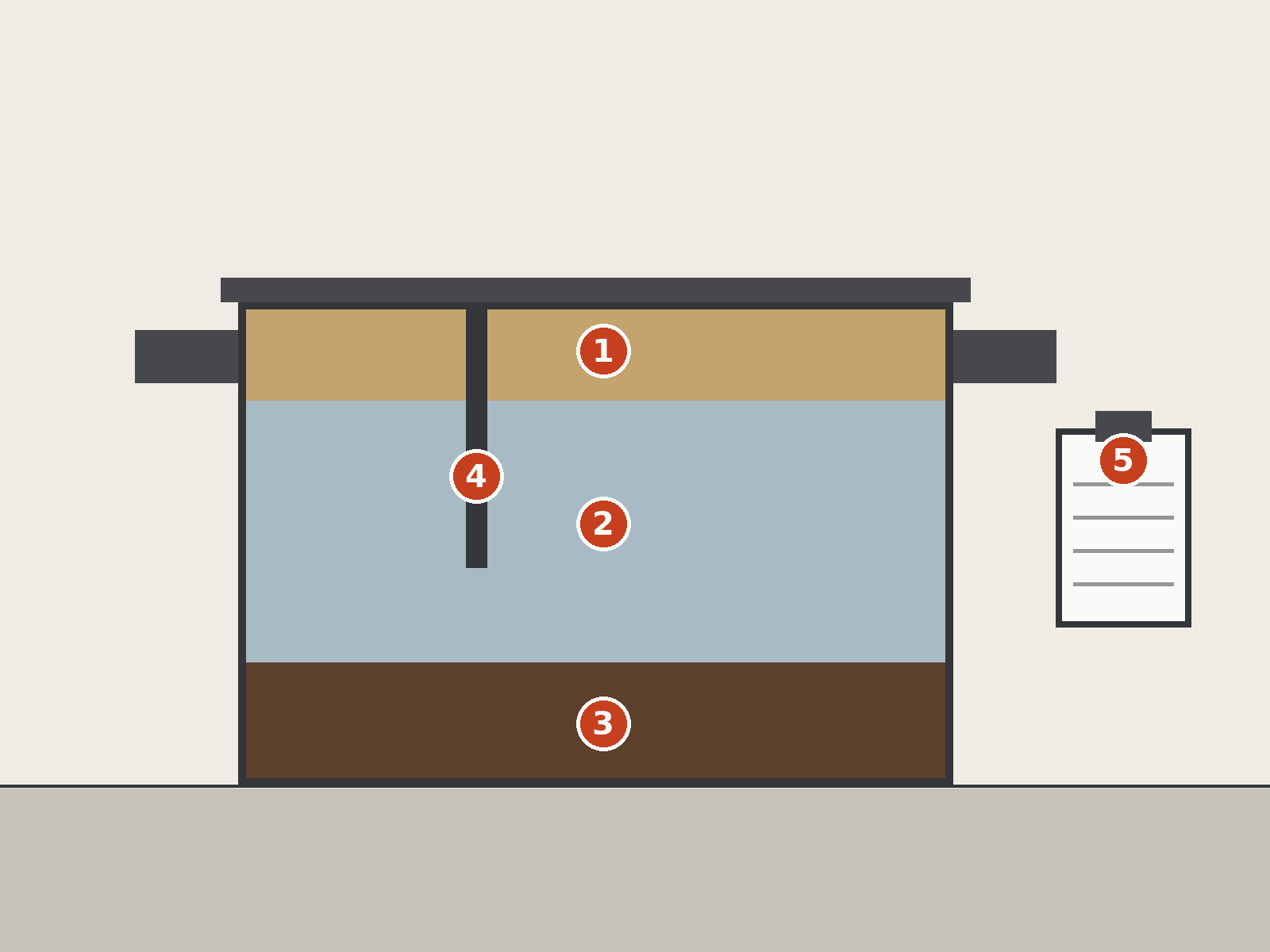
The grease cap: fat floats and forms a cap at the top. Winter cold makes it firmer, which is why traps need checking more often in cold months.
The liquid layer: the water between cap and sludge. The quarter benchmark counts the cap and the sludge together against the unit's capacity.
The sludge layer: solids settle to the bottom. When grease and solids together reach about a quarter of capacity, the trade schedules a pump-out. That is a benchmark, not a law.
The baffles: they hold the fat back from the outlet. The crew clears and inspects them on every visit.
The paper trail: trap residue is a liquid industrial by-product under Michigan's Part 121. It leaves on a shipping document, with a registered transporter, and the restaurant keeps its copy.
Chapter 3: The clean-out and the bin swap
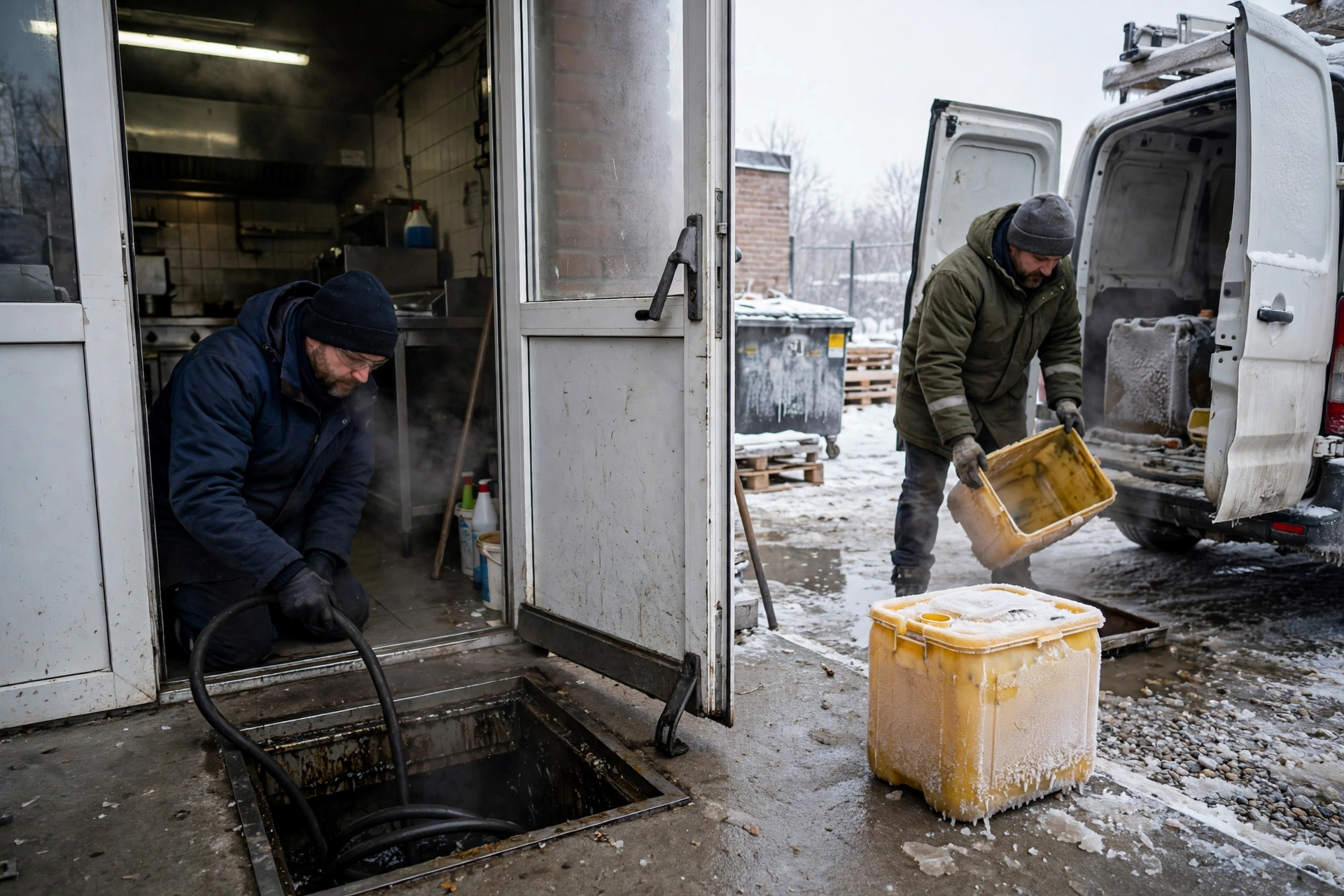
The crew pumped out the cap, liquid and sludge, scraped the interior, and cleared the baffles. They checked the lid and fittings and found nothing needing repair. Outside, they carried off the stiff bin and set an empty one in its place, which is the working fix when oil freezes in the cold. The oil was clean, so there was no charge for taking it. For the medium trap, the price was within $300 to $600.
Chapter 4: The record and the schedule
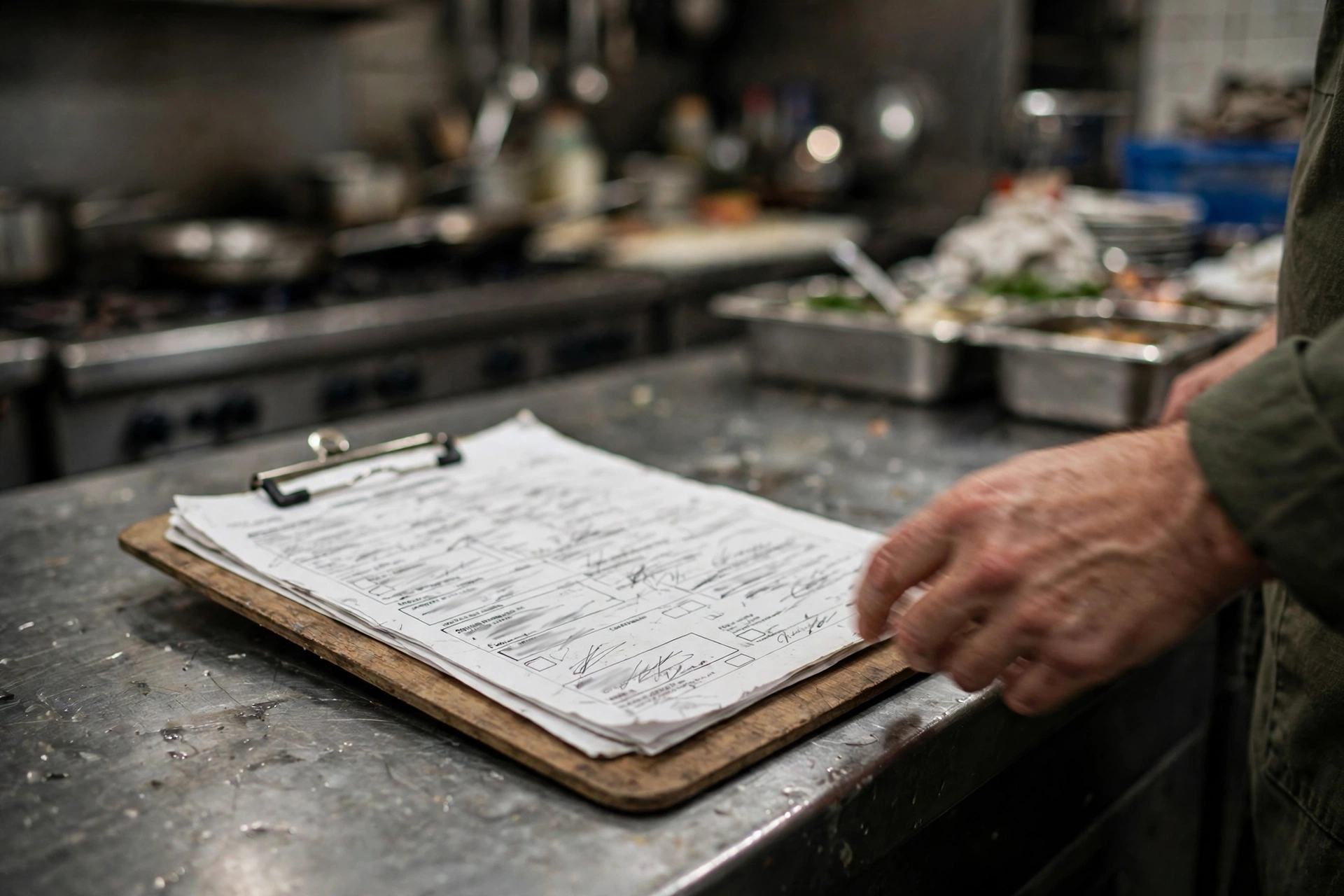
Before leaving, the crew handed over the shipping document and the service record. The owner now had the depth reading, the baffle notes and the paperwork for the waste, all in one place and ready for any inspector who asked. The next visit was set by how fast that trap had filled, with a note to look sooner through the cold months. The drain ran clear that night.
When to call
A floor drain or sink is slow, or water is standing where it should not.
There is a smell near the trap, the dish area or the back drain.
A backup has started. Emergency call-out is one and a half to two times the standard service price.
You have a sewer authority notice or an inspection coming and want records in order.
The oil bin is full, stiff or overdue.
You want a standing schedule so the trap never gets to a backup.
Send us the details
Call (313) 351-8079, or use the form below. It asks for your name and phone number, and both are required. Everything else is optional: kitchen type, trap or interceptor, what you have noticed, and when you are open. A consent box is required before it sends. The more details you give, the better we are able to help you.
Questions
Do you serve Trenton kitchens?
Yes. We serve restaurants and commercial kitchens in Trenton from our base in Dearborn. Call (313) 351-8079 to talk through your kitchen.
How often should a Trenton restaurant have its grease trap cleaned?
The trade's working benchmark is to pump when grease and solids reach about a quarter of the trap's capacity. Busy fryer kitchens often run every 4 to 6 weeks. Low-volume kitchens often run every 3 to 6 months. Those are what kitchens actually run, not rules, and your own trap's fill rate sets your schedule.
Is there a rule that sets how often I must pump?
Not one we can point to as a fixed interval. Dearborn, our home city, has no FOG ordinance, and the regional sewer authority's rules there call for regular cleaning with records kept but set no interval. For Trenton's own sewer rules, ask the city or read any notice you have received.
What law governs the waste after it leaves my kitchen?
Michigan's Part 121 treats trap clean-out residue as a liquid industrial by-product. It must be hauled by a registered and permitted transporter on a shipping document for each shipment. Papers are kept three years, and you keep your own copies.
What does a visit cost?
Small indoor traps run $150 to $350. Medium traps run $300 to $600. Large exterior interceptors run $500 to $1,000 or more, by capacity and waste volume. Capacity, access and the amount of waste set where your trap lands.
What does used cooking oil collection cost?
There is no charge for clean oil. Keep it clean in its container.
Can you clean the trap and collect the oil in one visit?
Yes. We pair them because the oil and the trap grease come off the same fryer line. One crew handles both in one stop.
What paperwork do I get?
You get the shipping document for the waste and a service record for the visit. Both are yours to keep, and either can be shown to an inspector or sewer authority on request.
Do winters change anything?
Trade guidance says check traps more often in winter. Fat congeals in the cold, and grease cooling in an interceptor can freeze at the top. Used oil stiffens in outdoor bins, so we swap bins, leaving an empty one and taking the full one.
How do I know if I have a trap or an interceptor?
A small trap usually sits indoors, often under a sink. An interceptor is a larger tank, usually in the ground outside. If you cannot tell, describe the layout when you call and we will sort it out. The price follows which one you have.
What if my drain is already backing up?
Call right away. Emergency call-out is one and a half to two times the standard service price.
Do you do line jetting?
Yes, when a drain needs it. It is priced with the service visit it rides with.
How do I start scheduled service?
Call (313) 351-8079 or send the form. Tell us the menu, the fryer count and the trap type. After the first visits, we set the schedule from how fast your trap fills.