Romulus kitchens that sit on exterior tanks need grease interceptor pumping on a schedule that matches how hard the kitchen works, and that is the job Dearborn Grease Trap does for them. The hotels along Merriman Road near the airport feed breakfast, banquet and room service from the same line, and a backup in that line cannot wait for a convenient morning. Our crews come out from Dearborn, pump the interceptor, clean the interior, check the parts, and leave you the paperwork that shows it was done and where the waste went.
Talk to us before the backup, or during it
If you run a kitchen in Romulus and want to set up scheduled service, or you have a slow drain and a smell you do not like, call (313) 351-8079. Tell us what kind of kitchen it is and what the tank looks like from the lot. We will tell you what the visit involves and how the price is set.
What Romulus kitchens are like
The ground around the DTW hotel row is institutional cooking. Full-service hotel kitchens, banquet halls, restaurants attached to lobbies and late-night room service all send grease down the same drains, often through one large exterior interceptor behind the building. Volume swings with flight delays, conference weekends and wedding blocks, and a kitchen that was easy on the tank last month can be hard on it this month.
That is why interceptor work fits Romulus. A large in-ground tank holds a lot, but it fills on the kitchen's schedule, not the calendar's. When it fills past the point where grease and solids can settle and separate, the next stop is the building's own lines.
What governs this work
Here is where things stand, laid out plainly, because a lot of websites get it wrong.
- There is no Dearborn FOG ordinance with a fixed interval, trap-sizing table or manifest rule, and we will not tell you there is one. Dearborn's own code limits grease discharge to 1,500 mg/L. Beyond that, the regional sewer authority's pretreatment rules say interceptors go in where required and must be regularly cleaned and maintained at the owner's expense, with records kept and produced on demand. Those rules set no fixed interval.
- Your own Romulus requirements are a separate question. This page does not lay out Romulus's local rules or tell you which sewer authority takes your kitchen's discharge. Ask your city or the authority that bills your sewer service, and ask us to work to what they require.
- Michigan's Part 121 governs the waste once it leaves the tank. Grease trap clean-out residue is a liquid industrial by-product. It may only be hauled by a registered, permitted transporter, on a shipping document for each shipment. Transporters keep those papers three years, and the kitchen, as the generator, must use a registered transporter and keep its own copies. A septage license does not cover this waste.
- The quarter rule is trade practice, not law. The working benchmark is to pump when grease and solids together reach about a quarter of the trap's capacity. Neighboring municipalities have written it into their own programs, but it is not a Romulus or Dearborn rule.
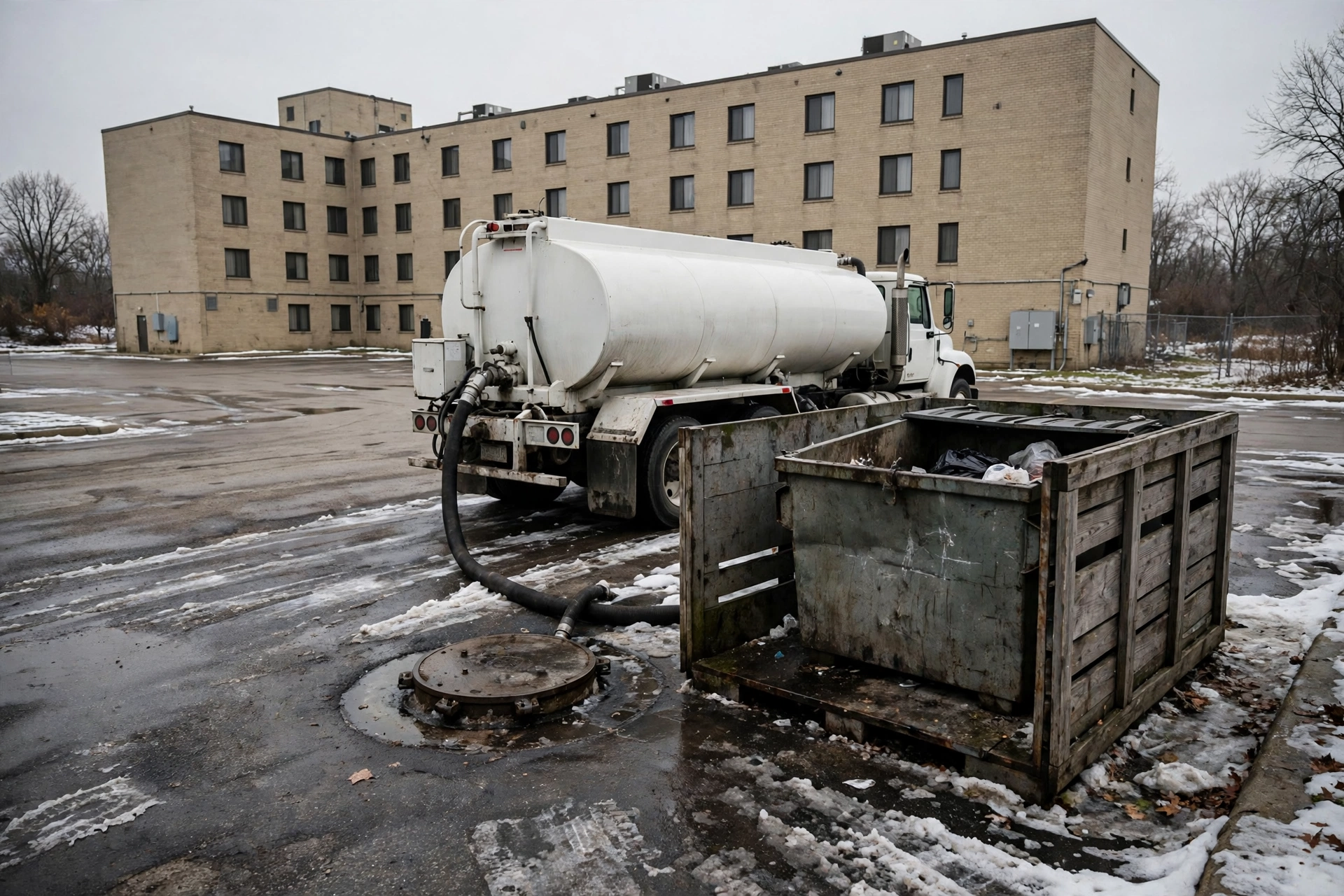
Featured job: a hotel kitchen on Merriman Road
Chapter 1: A slow drain before a full house
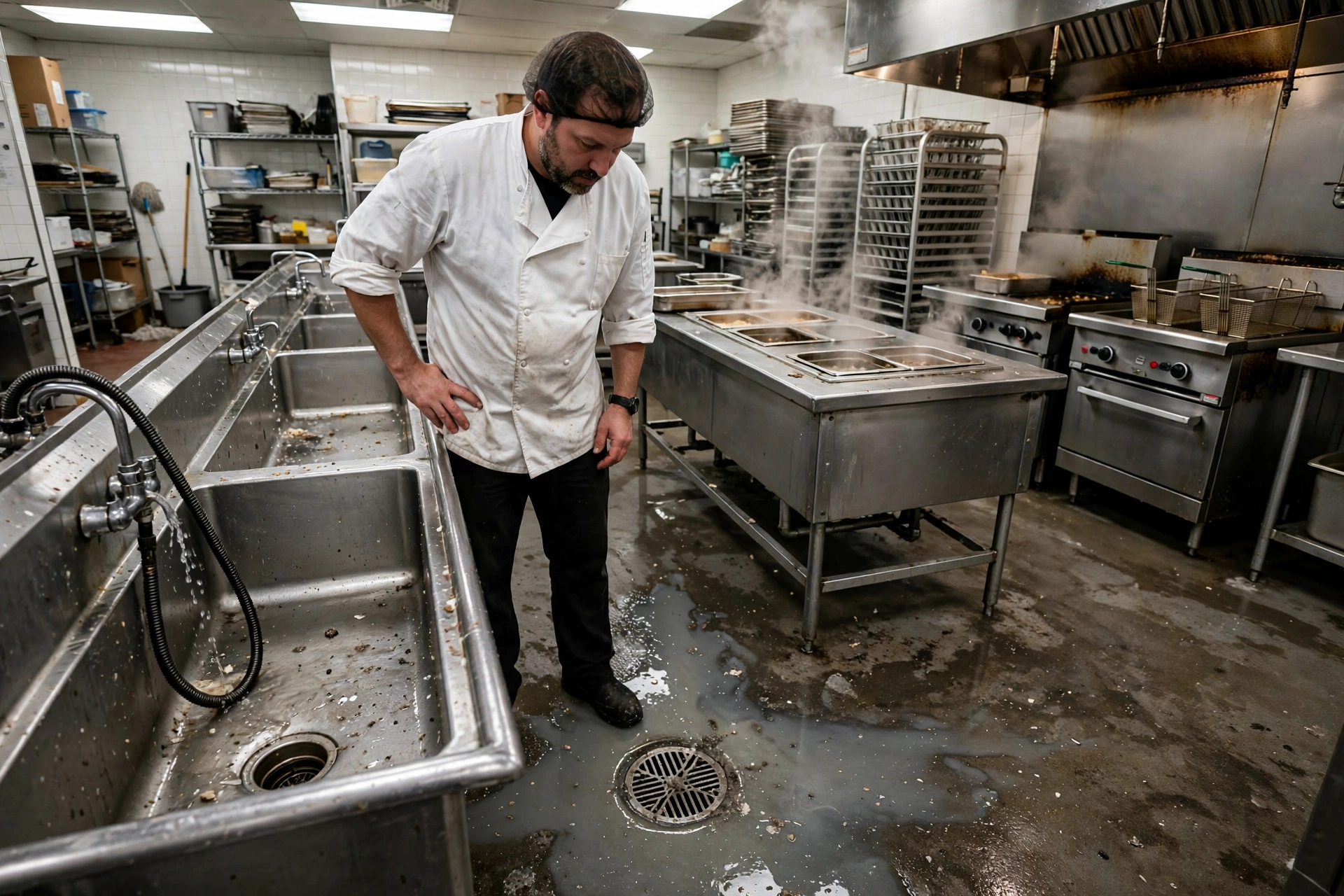
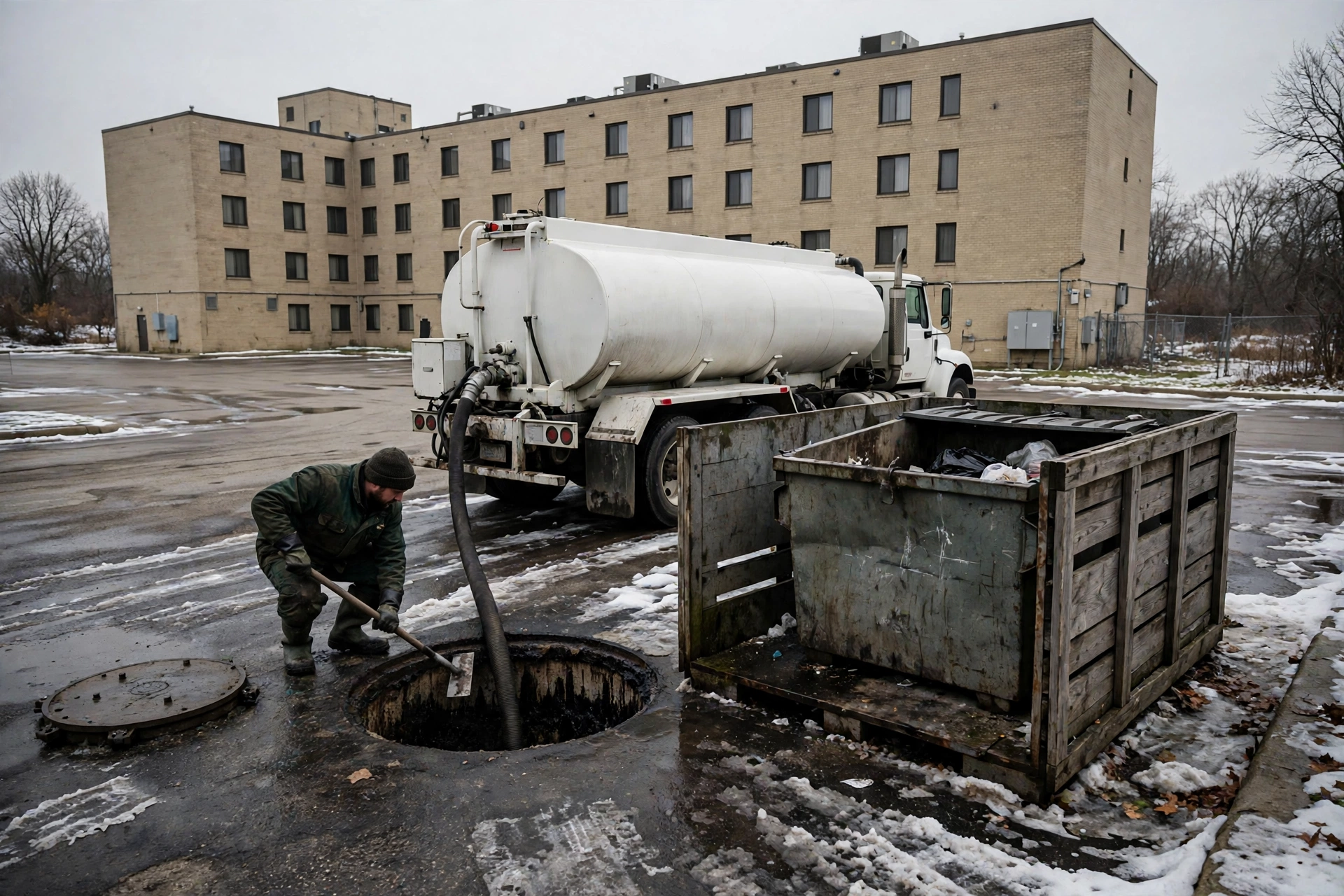
A full-service hotel kitchen on Merriman Road ran breakfast service, room service and a banquet hall off one exterior interceptor in the back lot. The kitchen manager called us after the dish pit drain started draining slowly and a sour smell came up from the floor drain near the fryers. A large banquet block was checking in within the week.
Chapter 2: Opening the tank
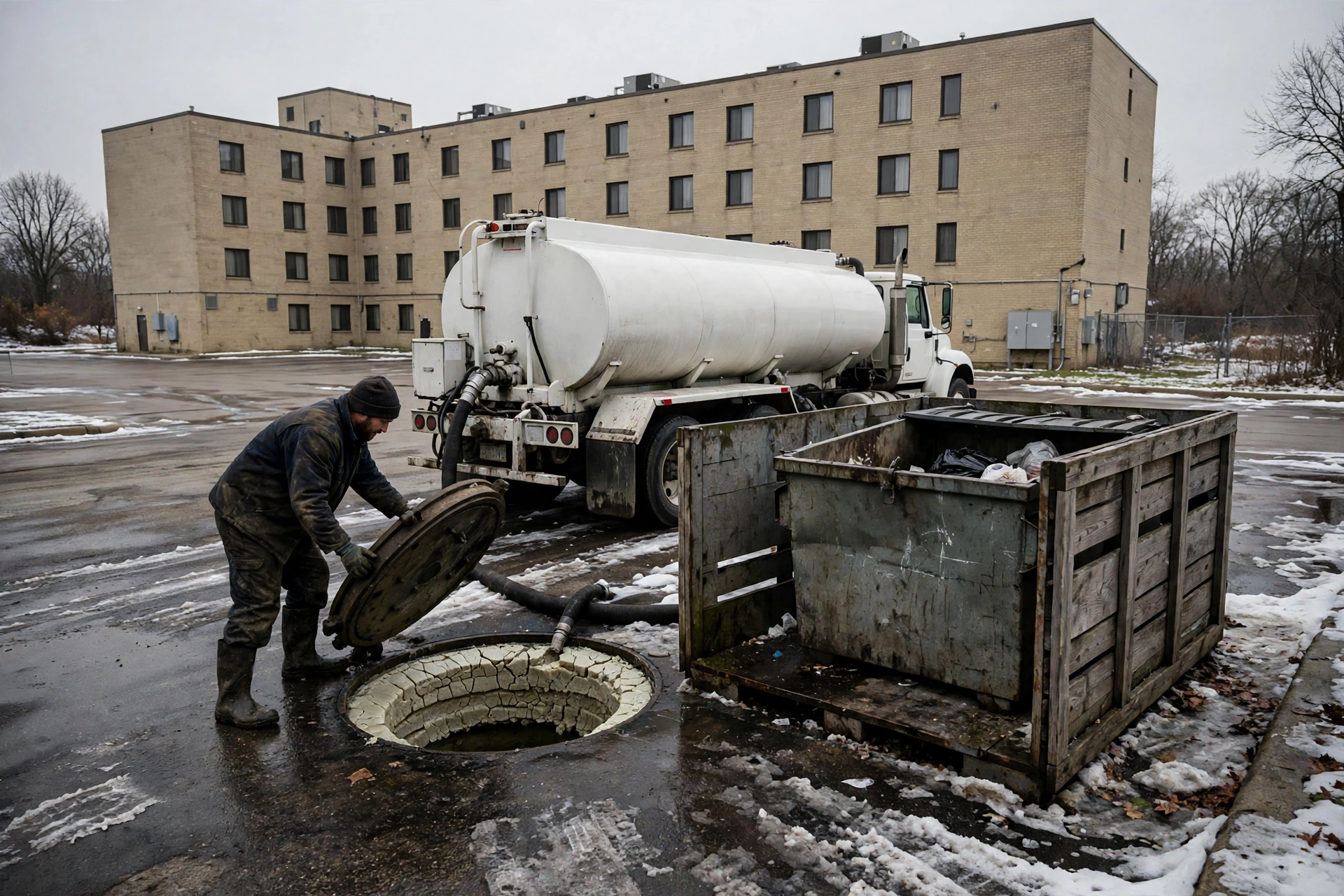
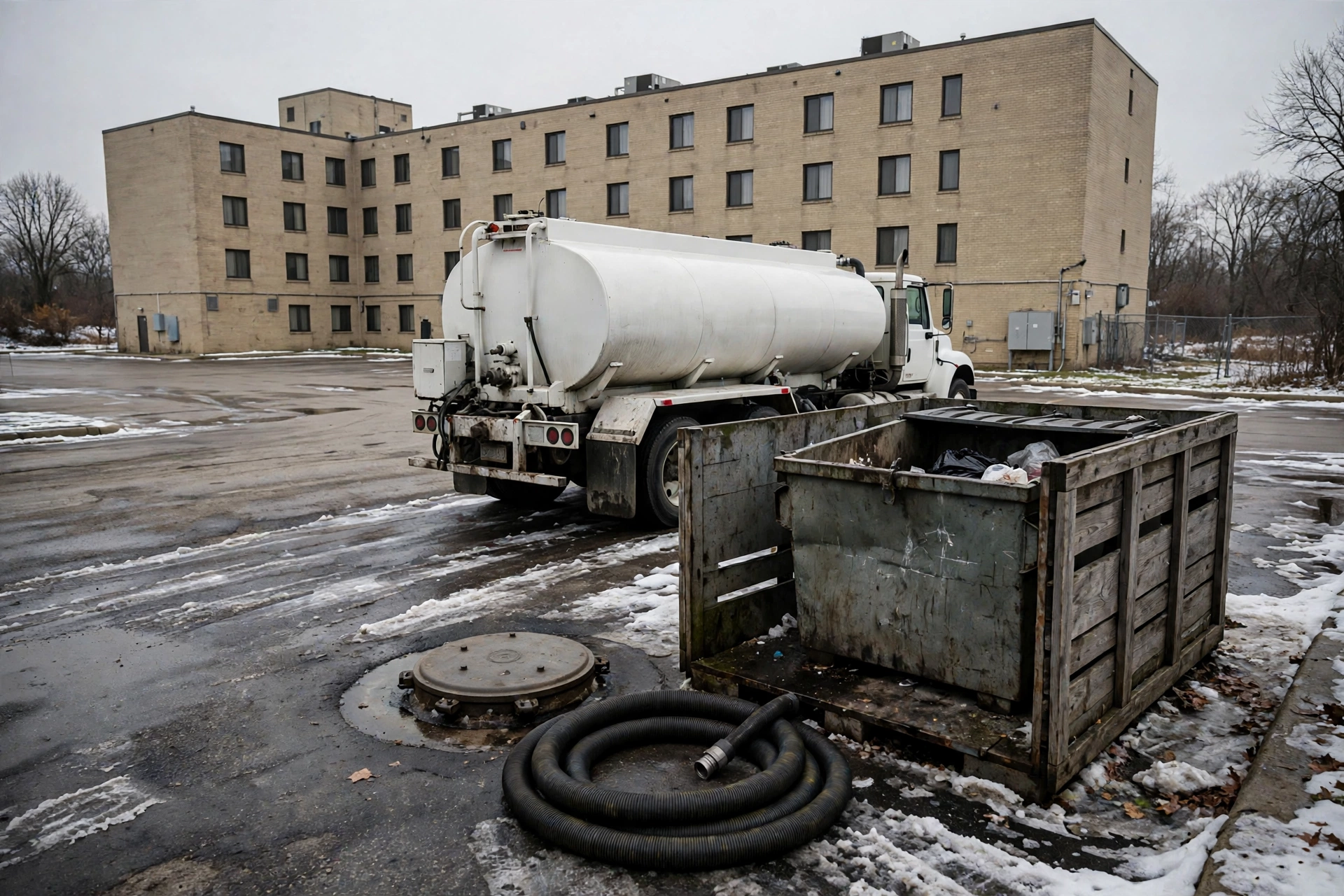
Our crew parked the truck at the back of the lot, away from the loading door, and lifted the lid. The grease cap was thick and hard, and the solids below it sat deep in the chamber. By the trade's working benchmark of about a quarter of capacity, this tank was well past due. The kitchen's schedule had been set for a quiet season, and the banquet calendar had outrun it.
Chapter 3: Pumping, scraping and checking the parts
We pumped out the cap, the liquid and the sludge, scraped the walls and cleared the baffles. Then we checked the inlet, outlet, baffles and lid for wear. Because the line to the dish pit was slow, we jetted it as part of the same visit. The crew noted the condition of every part on the service record. The grease interceptor pumping at a large exterior tank falls in the range of $500 to $1,000 or more, by capacity and waste volume, and the jetting was priced with the visit it rode on.
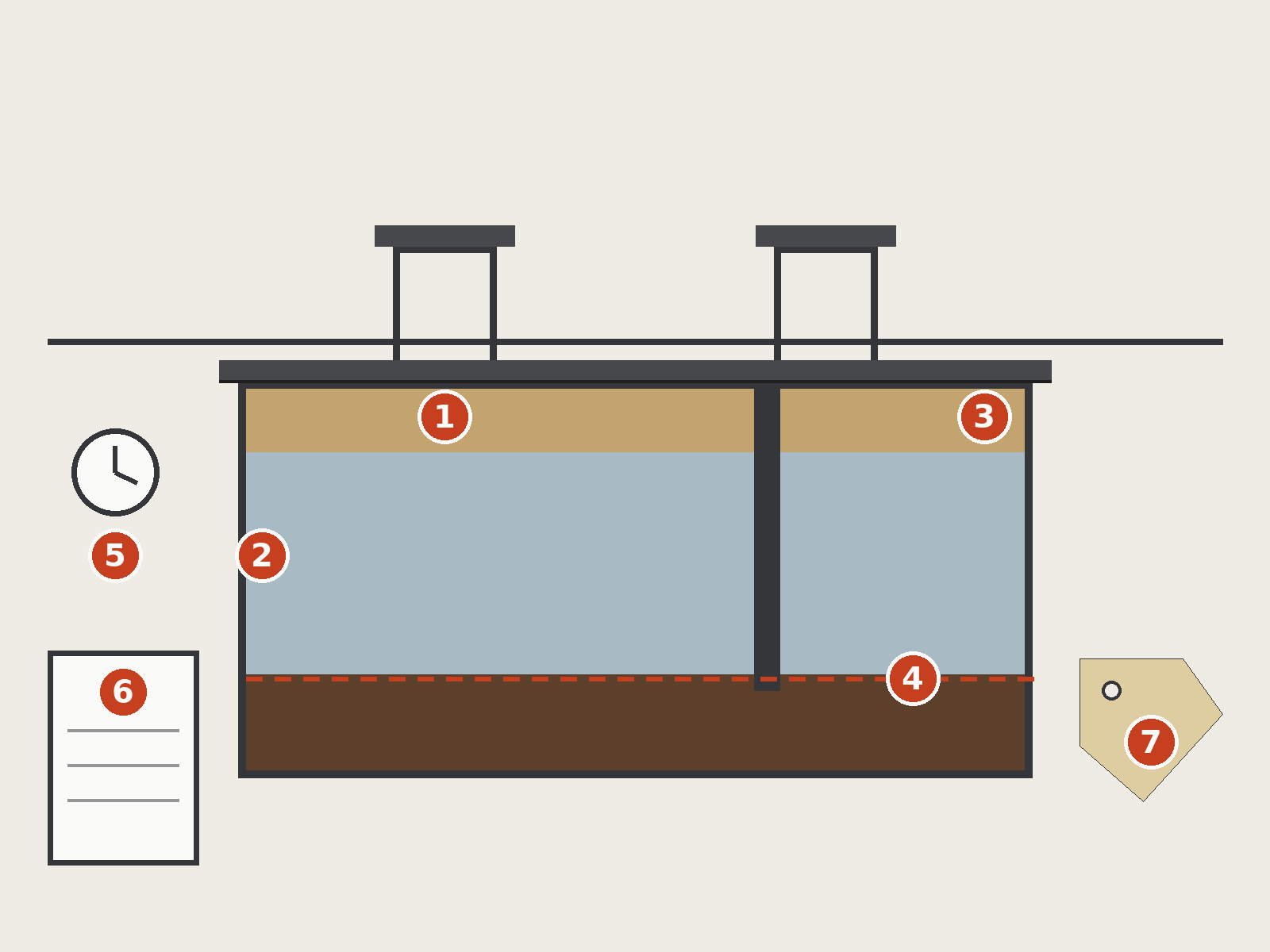
Grease cap, liquid and sludge are all pumped out, not just the top layer.
Interior walls are scraped and the baffles are cleared and inspected.
Inlet, outlet, baffles and lid are checked for condition and noted on the record.
The quarter rule: pump when grease and solids reach about a quarter of the trap's capacity. It is trade practice, not law.
Working frequencies kitchens actually run: high-volume every 4 to 6 weeks, low-volume every 3 to 6 months.
Part 121: the waste is a liquid industrial by-product, hauled by a registered transporter on a shipping document, with papers kept three years and the kitchen keeping its own copies.
Price: large exterior interceptors $500 to $1,000 or more, by capacity and waste volume.
Chapter 4: Paperwork and a new schedule
Before the truck left, the manager had a service record listing what was done and the condition of the parts, plus the shipping document for the load. We sat down with her and went over the kitchen's volume, noted the banquet calendar, and set the next visits on a tighter cycle. The floor drain by the fryers ran clear and the smell was gone.

How the service runs for a Romulus kitchen
1. You call (313) 351-8079. We ask about the kitchen, the tank, what you have noticed and when. 2. We set the visit. For a scheduled program we work out a cycle from your volume and the quarter benchmark. For a backup, we treat it as an emergency call-out. 3. The crew pumps and cleans. Cap, liquid and sludge out, walls scraped, baffles cleared and inspected, parts checked. Interior trap cleaning is done the same way for small indoor traps. 4. We jet the line if it needs it. Jetting is priced with the visit it rides with. 5. The waste leaves on a shipping document. It goes with a registered, permitted transporter, in line with Part 121. 6. You keep the records. A service record for the visit and your copy of the shipping document stay with you, ready if the sewer authority asks for them.
Prices
| Service | Price |
|---|---|
| Interior grease trap cleaning, small indoor traps | $150 to $350 |
| Medium traps | $300 to $600 |
| Large exterior interceptors | $500 to $1,000 or more, by capacity and waste volume |
| Emergency call-out | One and a half to two times the standard service price |
| Used cooking oil collection | No charge for clean oil |
| Line jetting | Priced with the service visit it rides with |
For most Romulus hotel and chain kitchens, the large exterior interceptor price applies. Where a restaurant also has small indoor traps, those are priced at the interior rates above.
When to call
Floor drains are slow or the kitchen smells sour near the drains.
A big event or a season of heavier covers is coming, and the tank has not been pumped.
You cannot remember the last service, or the record is missing.
The sewer authority has asked for cleaning records and you cannot produce them.
Grease is coming up in a drain. That is an emergency call-out.
Book Romulus service
Call (313) 351-8079, or send the form below. Name and phone are required. Everything else is optional. A consent box is required.
The more details you give, the better we are able to help you.
Questions
Does Romulus or Dearborn have a rule that says how often a grease interceptor must be pumped?
Dearborn has no FOG ordinance with a fixed interval, sizing table or manifest rule. The regional sewer authority's pretreatment rules require regular cleaning at the owner's expense, with records, but set no fixed interval. This page does not set out Romulus's local rules, so ask your city or sewer provider what applies to your building.
How do I know when my interceptor needs pumping?
The trade's working benchmark is to pump when grease and solids together reach about a quarter of the trap's capacity. It is a scheduling guide, not a legal requirement.
How often do kitchens actually run service?
High-volume kitchens usually run every 4 to 6 weeks. Low-volume kitchens run every 3 to 6 months. Moderate kitchens fall between, monthly to quarterly. These are working habits, not rules.
What does a large exterior interceptor cost to pump?
$500 to $1,000 or more, by capacity and waste volume.
What if I have small indoor traps as well?
Small indoor traps are $150 to $350. Medium traps are $300 to $600.
What does an emergency call-out cost?
One and a half to two times the standard service price.
What does the crew do during a pumping visit?
They pump out the grease cap, liquid and sludge, scrape the interior, clear and inspect the baffles, and check the condition of the parts.
What paperwork do I get?
A service record for the visit and your copy of the shipping document for the load. Keep both on file so you can produce them if the sewer authority asks.
Where does the waste go?
Trap waste is a liquid industrial by-product under Michigan's Part 121. It may only be hauled by a registered, permitted transporter on a shipping document. Transporters keep their papers three years, and the kitchen keeps its own copies.
Can I use a septage hauler instead?
No. A septage license does not cover grease trap waste.
Do you handle used cooking oil?
Yes. Collection of clean oil is no charge.
Do you jet lines?
Yes. Jetting is priced with the service visit it rides with, so we quote it when we know what the visit involves.
Does winter change how often I should check the tank?
One Dearborn-serving provider's published guidance says cold makes grease congeal and can freeze at the top of an interceptor, so tanks need more frequent checking in winter, not less. The same guidance says used oil can freeze in outdoor bins and suggests swapping a full bin for an empty one. We pass that along as that provider's guidance, not as a local rule.
Will pumping close my kitchen?
Scheduled work happens at the tank, usually in the rear lot. Talk to us when you call about the best timing around your service.