Riverview kitchens and the work that keeps them running
Dearborn Grease Trap handles grease trap cleaning for Riverview kitchens from our base in Dearborn, and the work centers on the Fort Street strip of coney islands and diners. Those kitchens fry, grill and wash dishes all day, and nearly all of them run a small indoor trap rather than a large exterior interceptor. When that trap fills past the point where it can hold grease back, the grease moves down the line, and the first sign is usually a slow floor drain or a smell near the dish pit. This page explains what we do about that, how the visit is priced, and what you keep afterward.
Call before the drain slows down
If you are setting up scheduled service, or you already have a smell, a slow drain or a notice in hand, call (313) 351-8079. Tell us what the kitchen cooks and where the trap sits, and we will work out the visit with you.
Why interior trap work is the work in Riverview
Fort Street's kitchens are small, busy and mostly independent. A coney island runs a flat-top, a fryer and a steady stream of dishes. A diner adds breakfast and lunch on top of that. All of it sends fats and oils into a trap that was sized for a compact kitchen, and a compact trap fills quickly under that load.
The trade has a simple way to schedule the work. Crews pump when grease and solids together reach about a quarter of the trap's capacity. That is a scheduling benchmark that the trade uses, not a rule of law. How fast a kitchen reaches that quarter depends on its menu, its covers and how many shifts it runs. In practice, high-volume kitchens end up on a cycle of about every 4 to 6 weeks, while low-volume kitchens run every 3 to 6 months. Those are the cycles kitchens actually keep, not requirements.
What governs the waste
Michigan's Part 121 rules treat grease trap clean-out residue as a liquid industrial by-product. It may be hauled only by a registered and permitted transporter, on a shipping document for each shipment. The kitchen must use such a transporter and keep its own copies. A septage hauler's license does not cover this waste.
The rules for what you may discharge to the sewer are set by your own city and its sewer authority. We have not read Riverview's sewer code for this page, so ask the city what it asks of food-service users. The sewer authority rules we did review for Dearborn require regular cleaning at the owner's expense and records produced on request. They set no fixed interval. Because the interval is not fixed anywhere in those rules, the records you keep are what show you have been cleaning regularly.
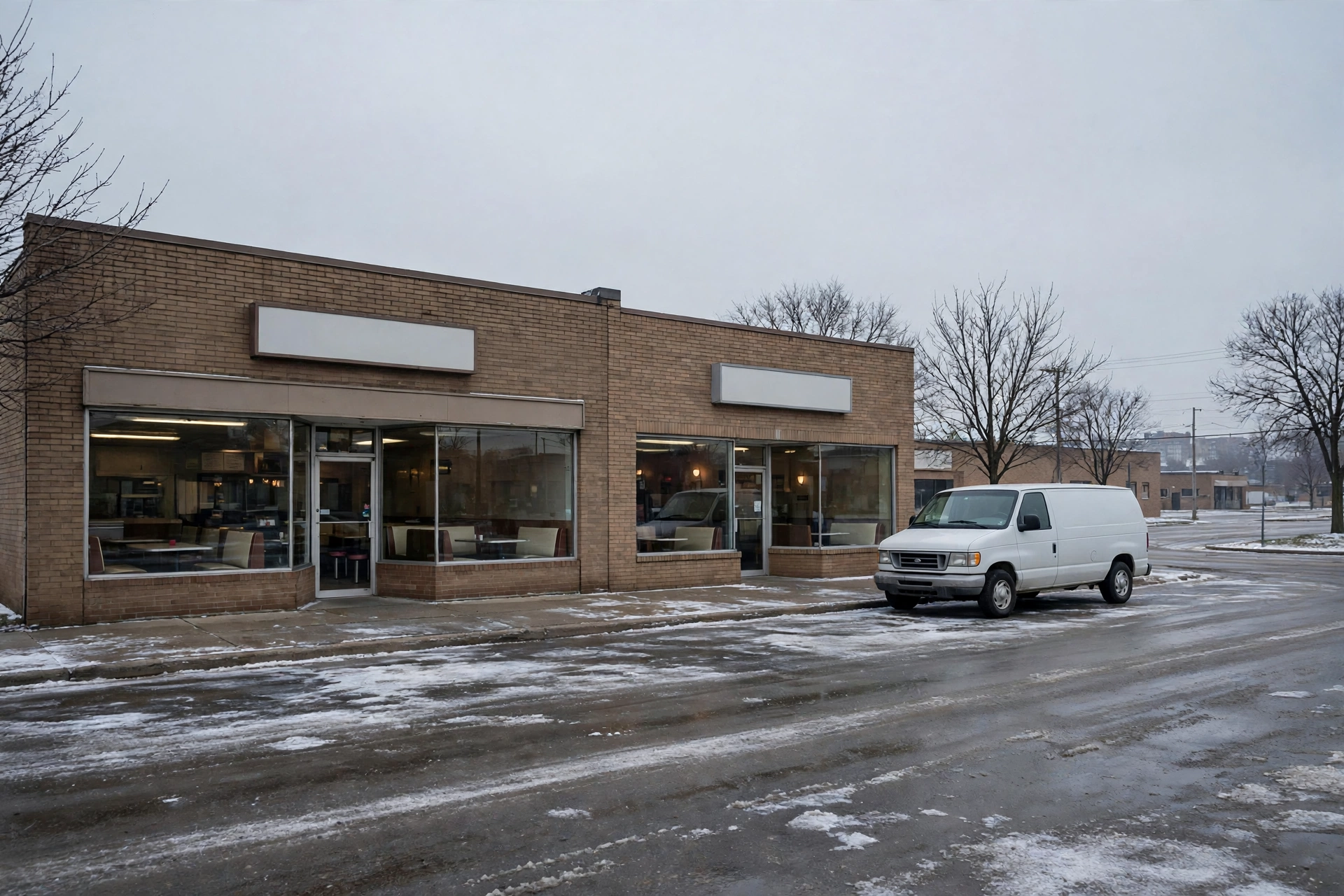
Featured job: a Fort Street coney island
Chapter 1: The slow drain
The kitchen manager at a counter-service coney island on Fort Street called after a week of small warnings. The floor drain beside the dish pit emptied slowly. A sour smell rose from it when the fryer went on. Nobody had pulled the trap lid in a long while, because the kitchen was busy and nothing had actually backed up yet.
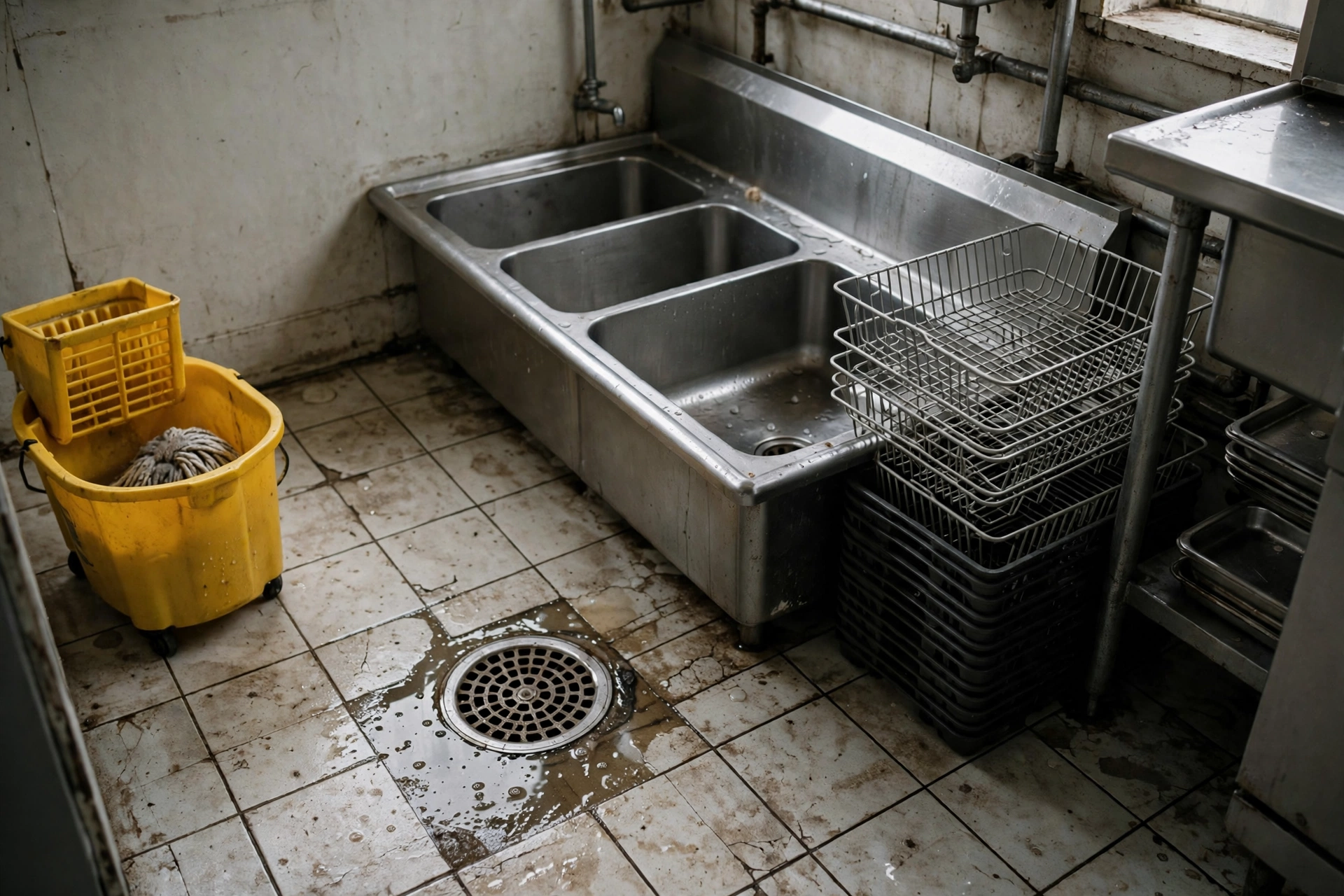
Chapter 2: Opening the trap
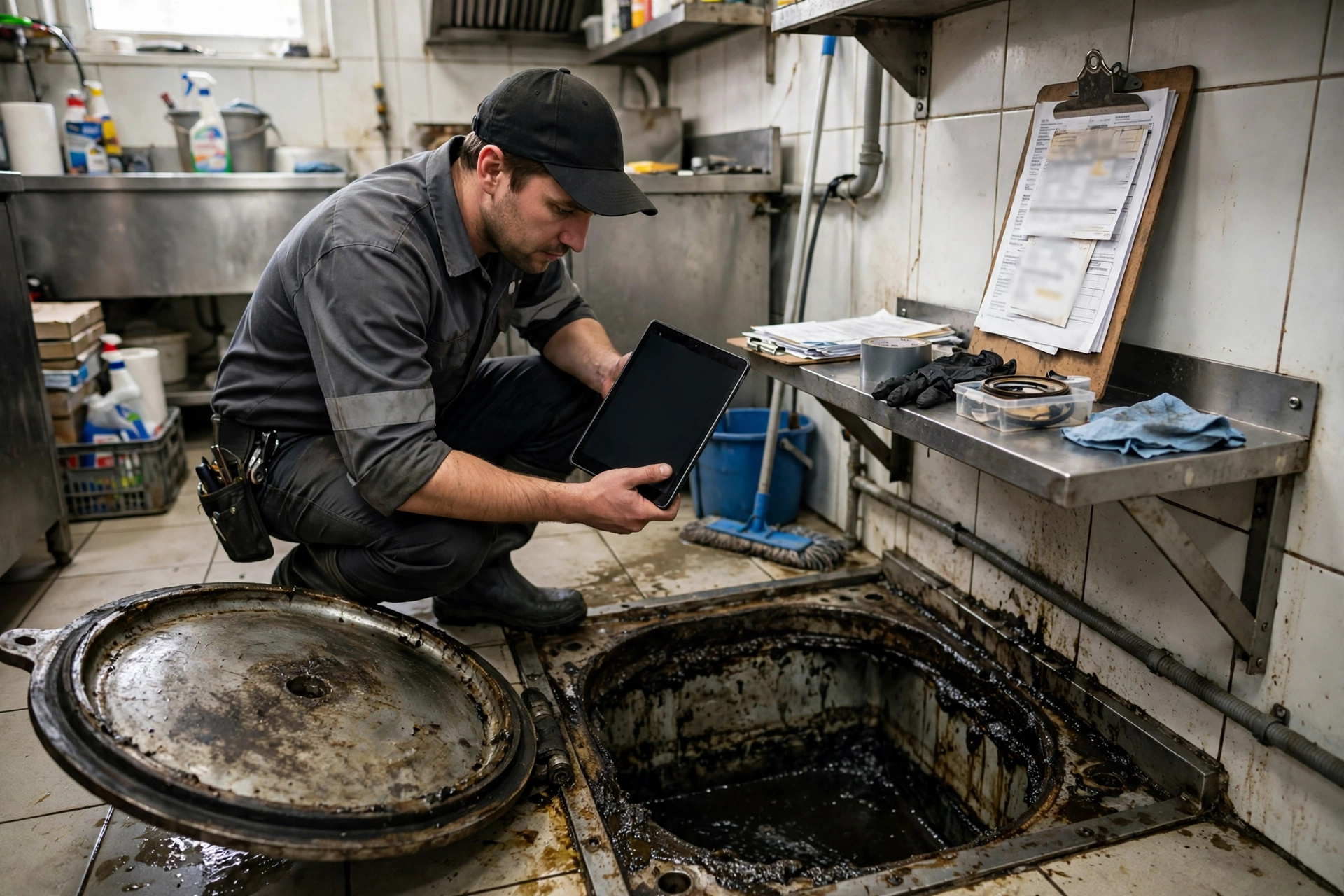
Our crew arrived, laid down floor protection and lifted the lid on the indoor trap. A thick grease cap sat on top, with a layer of settled solids underneath, and the two together stood well past the quarter mark. The inlet and outlet were still clear, so the line itself had not yet clogged. That was the good news, because the fix was a pump-out and a scrape, and the kitchen did not need a repair.
Use the figure below to see what the crew sees when the lid comes off.
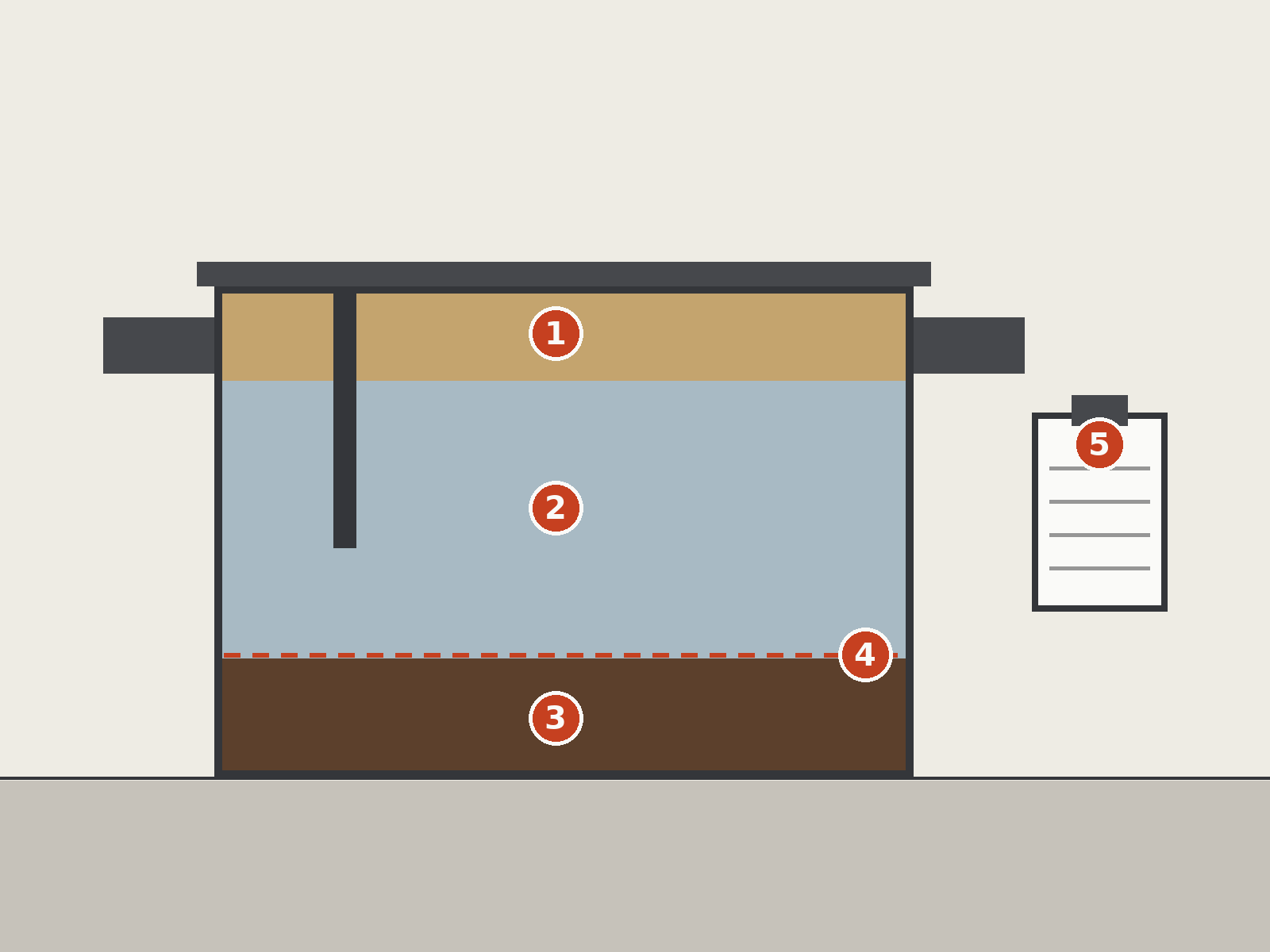
Grease cap: fats and oils float to the top and form a layer
Liquid middle: water passes through between the inlet and outlet baffles
Settled solids: food solids sink to the bottom
The quarter benchmark: the trade pumps when grease and solids together reach about a quarter of the trap's capacity, a scheduling benchmark and not law
The paperwork: each haul moves on a shipping document under Michigan's Part 121, and the kitchen keeps its own copy. No gallons, no dollar amounts, no intervals beyond the working ranges named on this page.
Chapter 3: The pump-out and the paperwork
The crew pumped out the grease cap, liquid and solids, scraped the walls and cleared the baffles. They then looked over the lid, the baffles and the inlet and outlet for wear, and refitted the lid. The work went on around the kitchen's service, with the crew staying at the trap and out of the cook line. The waste left on a registered transporter's truck on a shipping document, and the manager kept a copy along with the service record. Because the trap was small and indoors, the visit was priced as small-trap work, $150 to $350.
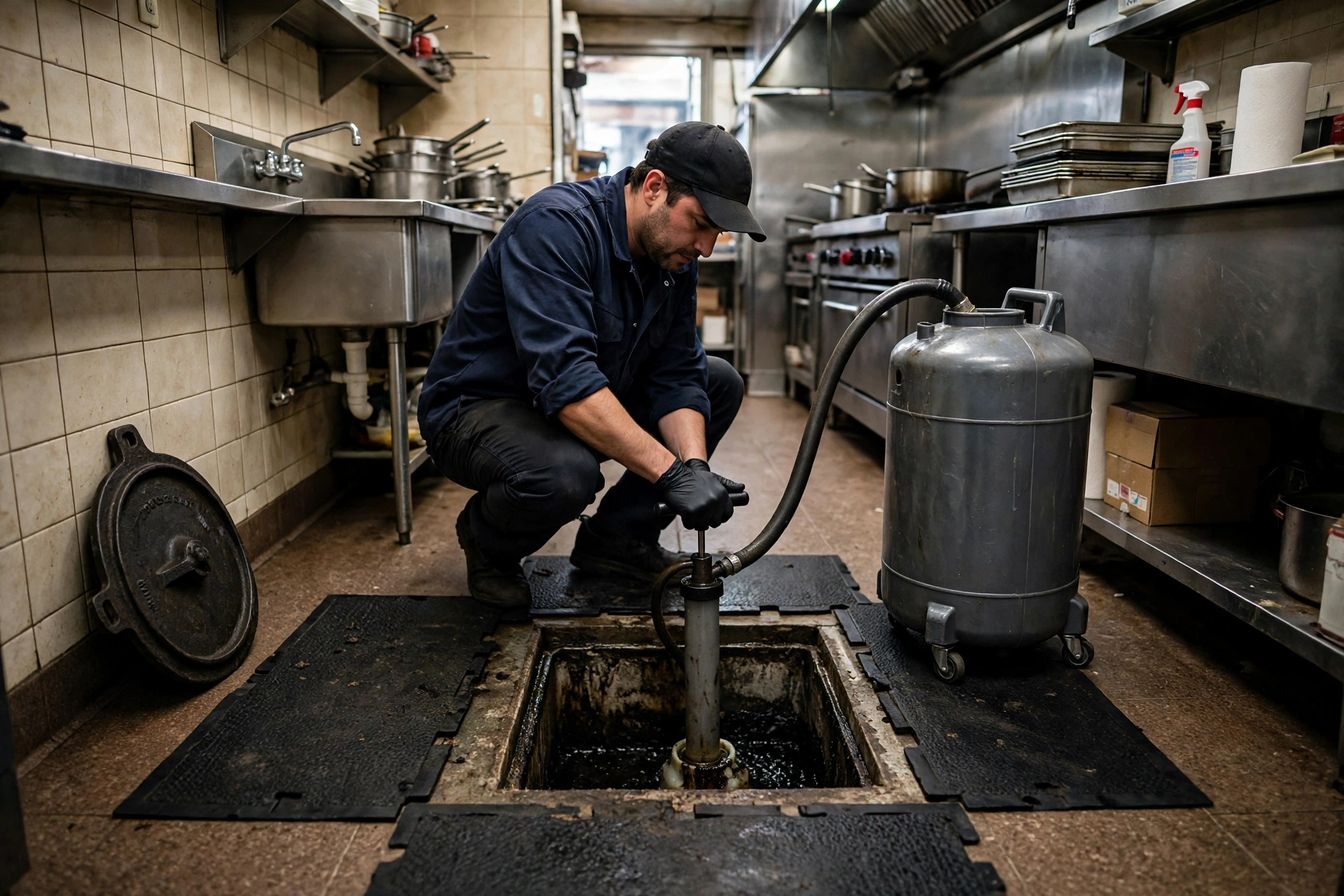
Chapter 4: Setting the cycle
Before leaving, the crew and the manager talked through how fast the trap had filled. A kitchen with a flat-top, a fryer and constant dishwashing sits near the busy end of the working range, where high-volume kitchens run every 4 to 6 weeks. The manager put the coney island on a recurring visit at the short end of that range. Each visit's record then shows how full the trap was on arrival, and the cycle can lengthen if the trap is arriving at a quarter slowly. The drain cleared and the smell went with it. The manager now has a file of service records to hand over if anyone asks.

Ready to put your kitchen on a cycle?
Whether your trap is already slow or you want it checked on a schedule before it gets there, call (313) 351-8079. We will talk through your menu, your trap and your access, and set the visit from there.
How the service runs for a Riverview kitchen
1. Call and describe the kitchen. Tell us what you cook, where the trap sits and how it behaves. 2. We plan the visit. Trap size, access and waste volume set the price and the best time to be in your space. 3. Crew protects the work area and opens the trap. We note the grease cap and solids against the quarter benchmark. 4. Pump-out, scrape and baffle check. The cap, liquid and solids come out, the walls are scraped and the baffles are cleared and inspected. 5. Condition check and line jetting if needed. We look over the lid, baffles, inlet and outlet. If the line needs jetting, it is priced with the visit it rides with. 6. Waste leaves on a shipping document. It goes with a registered transporter, as Part 121 requires. 7. You receive your records and a cycle recommendation.
What every visit includes, documents and leaves with you
- The visit includes: pump-out of grease, liquid and solids, interior scraping, baffles cleared and inspected, a condition check of the trap's components, and compliant disposal.
- The crew documents: the state of the trap on arrival, how full it was against the quarter benchmark, what was removed and any wear found.
- You keep: a service record and your copy of the shipping document, ready to show to an inspector or the sewer authority on request.
What it costs
These are our prices.
| Service | Price |
|---|---|
| Interior grease trap cleaning, small indoor traps | $150 to $350 |
| Interior grease trap cleaning, medium traps | $300 to $600 |
| Large exterior interceptors | $500 to $1,000 or more, by capacity and waste volume |
| Emergency call-out | One and a half to two times the standard service price |
| Used cooking oil collection | No charge for clean oil |
| Line jetting | Priced with the service visit it rides with |
Most Fort Street kitchens fall into the small and medium rows. Where your trap lands depends on its capacity, how hard it is to reach and how much waste comes out. A trap that is tight to reach costs more to service than one with open access. A kitchen that keeps its trap near the quarter mark pays for a lighter pump-out than one that lets it run.
When to call
The floor drain or a sink near the dish pit drains slowly.
A sour or rancid smell rises from the drain when the fryer or flat-top runs.
The sewer authority or an inspector has asked for cleaning and maintenance records, and you have none.
You have never opened the trap, or you cannot remember when it was last pumped.
The kitchen is adding a fryer, longer hours or a second shift.
It is winter. Trade guidance from a Dearborn-area provider says traps need more frequent checking in cold weather, not less, because grease congeals as the temperature drops.
A backup is happening now. Call for an emergency call-out, priced at one and a half to two times the standard service price.
Book your Riverview trap service
Call (313) 351-8079 or send the form below. Name and phone are required, and everything else is optional. A consent box is required.
The more details you give, the better we are able to help you.
Questions
Does Riverview or Dearborn set a fixed pumping interval for my trap?
Not in anything we have read for Dearborn. Dearborn's code limits grease discharge to 1,500 mg/L, and the regional sewer authority's rules require regular cleaning and records but set no fixed interval. We have not read Riverview's own sewer code, so ask your city what it expects. Whatever the answer, the records you keep are how you show regular cleaning.
How often should a Riverview kitchen have its trap cleaned?
The trade pumps when grease and solids reach about a quarter of the trap's capacity. That benchmark is trade practice, not law. In practice, high-volume kitchens run every 4 to 6 weeks and low-volume kitchens every 3 to 6 months. Your own menu and volume decide where you land.
How much does interior grease trap cleaning cost?
Small indoor traps are $150 to $350. Medium traps are $300 to $600. Capacity, access and the volume of waste set where a job falls in the range.
What if my kitchen has a large exterior interceptor instead?
Large exterior interceptors are $500 to $1,000 or more, by capacity and waste volume. Most small Fort Street kitchens run indoor traps, but we pump exterior interceptors too.
How can I tell whether I have a full trap or a bigger plumbing problem?
A slow floor drain and a sour smell near the dish pit often point to a full trap. A trap that has been pumped and still backs up points further down the line. We open the trap first and note what we find. Line jetting is available and is priced with the visit it rides with.
What happens to the waste you take out?
It moves on a shipping document to a registered transporter. Michigan's Part 121 treats trap clean-out residue as a liquid industrial by-product, and a septage license does not cover it.
Can my regular septic hauler pump my grease trap?
Not under that license alone. Michigan requires a transporter registered and permitted for liquid industrial by-product. Ask any hauler for their registration before you hire them.
What records will I have afterward?
A service record for the visit and your copy of the shipping document. Michigan's rules have the hauler keep shipping papers three years and the kitchen keep its own copies, so file them where you can find them.
Will cleaning the trap shut my kitchen down?
The work happens at the trap, which keeps the crew out of your cook line. We plan the visit around how your kitchen runs when you call. Tell us your busy hours and we will plan around them.
Do you take my used cooking oil?
Yes. Collection of clean oil is no charge. It can ride along with trap service for kitchens that fry heavily.
Is winter harder on my trap?
Trade guidance from a provider that serves Dearborn says it is. Grease that stays loose in warm weather congeals as it gets colder, and can form a solid mass. Checking the trap more often in winter is the sound approach. Outdoor oil bins can freeze too, and the working fix is a bin swap.
What if I have an emergency backup?
Call (313) 351-8079. Emergency call-out is priced at one and a half to two times the standard service price.
I got a notice from the sewer authority. What should I do?
Call us with the notice in hand. The authority's rules require regular cleaning at your expense and records on request. If your records are thin, we can start your service record with the next visit and set a cycle that fits your kitchen.