Fryers, smoke and a trap under the line
Dearborn Grease Trap works with the fry shops, barbecue counters and diners of River Rouge, and the part of that work most kitchens notice first is used cooking oil collection, paired with cleaning the grease trap that sits under the line. Our crews come from Dearborn, about 13 minutes up the road. The two jobs belong together because they are the same problem at two ends: oil that leaves the fryer in a sealed container is oil that never reaches your drain, and a trap that is cleaned on a sensible schedule keeps what does reach the drain from building into a backup.
Call us before the smell starts
If you are setting up a standing schedule, or something already smells wrong, call (313) 351-8079. Tell us what kind of kitchen you run and where the trap and the oil bin sit, and we will tell you what the work involves and what it costs.
What River Rouge kitchens are like
River Rouge's cooking is concentrated along West Jefferson: fry shops, barbecue, and diners. Fryer-heavy menus put oil into the building every day, and plates, pots and floor drains send grease down the line behind it. Most kitchens of this size run a small indoor trap, not a large exterior interceptor, so the work is usually close quarters: a lid under a prep sink or beside the dish station, a back door, and an oil bin out by the dumpster.
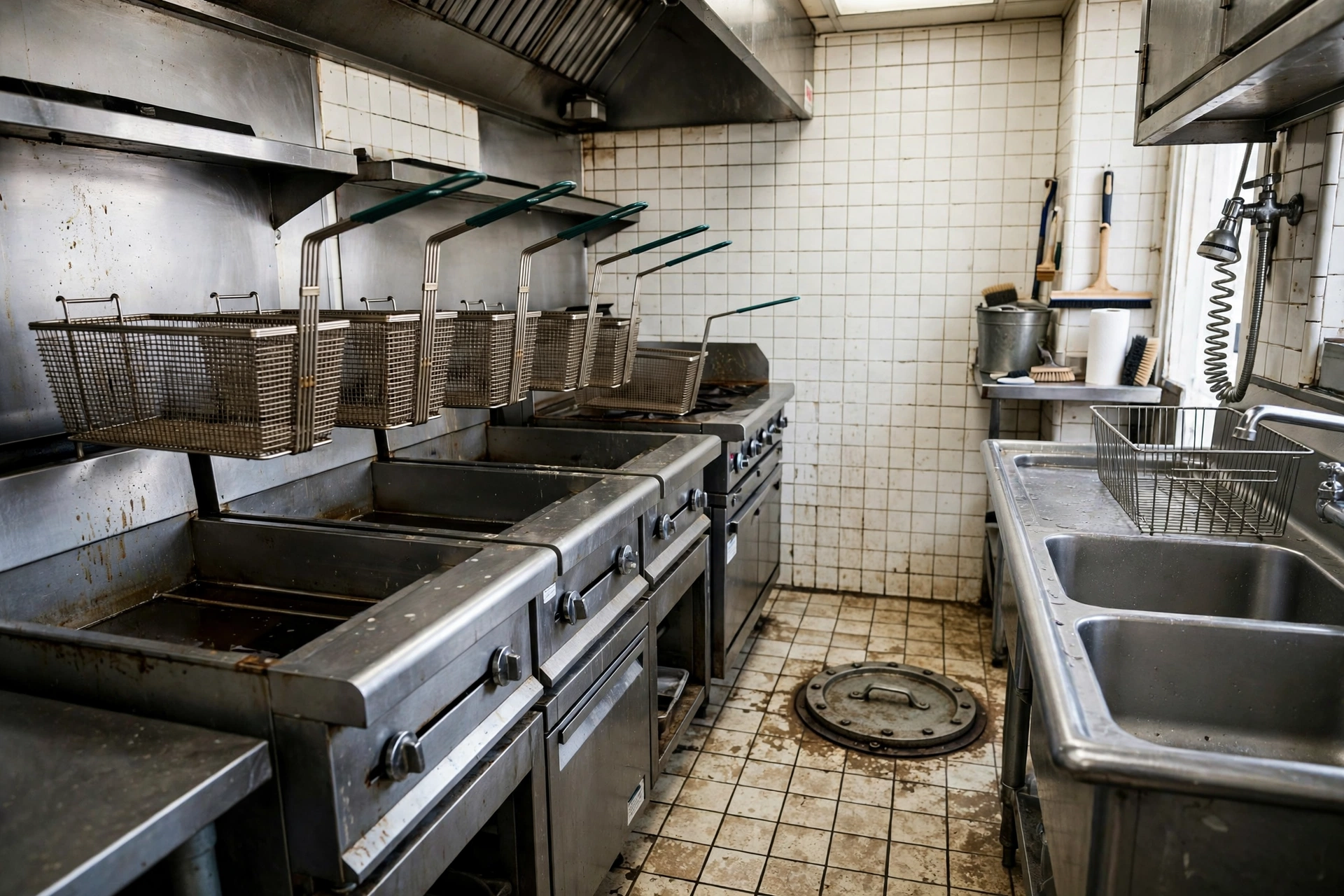
That is why the oil and the trap are one visit's worth of thinking. A fryer shop that sends its oil out cleanly has less to fight in the trap. A trap that is checked on schedule tells you early when the kitchen's load has changed.
What governs this work
Here is what we can say with confidence, and what we cannot.
- Dearborn has no FOG ordinance with a trap-sizing table, a fixed pumping interval or a city manifest rule. Dearborn's code does prohibit grease that obstructs flow and sets a limit of 1,500 mg/L on grease discharge. We have not read River Rouge's own sewer code for this page, so ask your city and your sewer authority what applies to your building.
- Regional sewer authority rules, as written for Dearborn's system, require interceptors where the authority deems them necessary, regular cleaning and maintenance at the owner's expense, and records kept and produced on demand. They set no fixed interval.
- Michigan's Part 121 governs the waste after it leaves your kitchen. Trap clean-out residue is a regulated liquid industrial by-product. It has to be hauled by a registered, permitted transporter, on a shipping document for each shipment, and you keep your own copies.
On timing, the trade works from one benchmark: pump when grease and solids reach about a quarter of the trap's capacity. It is a scheduling habit, not a law. Kitchens that run hard fryers often land on a visit every 4 to 6 weeks. Low-volume kitchens often run every 3 to 6 months. Those are what kitchens actually run, not requirements.
Featured job: a fry and barbecue counter on West Jefferson
Chapter 1: The bin that would not pour
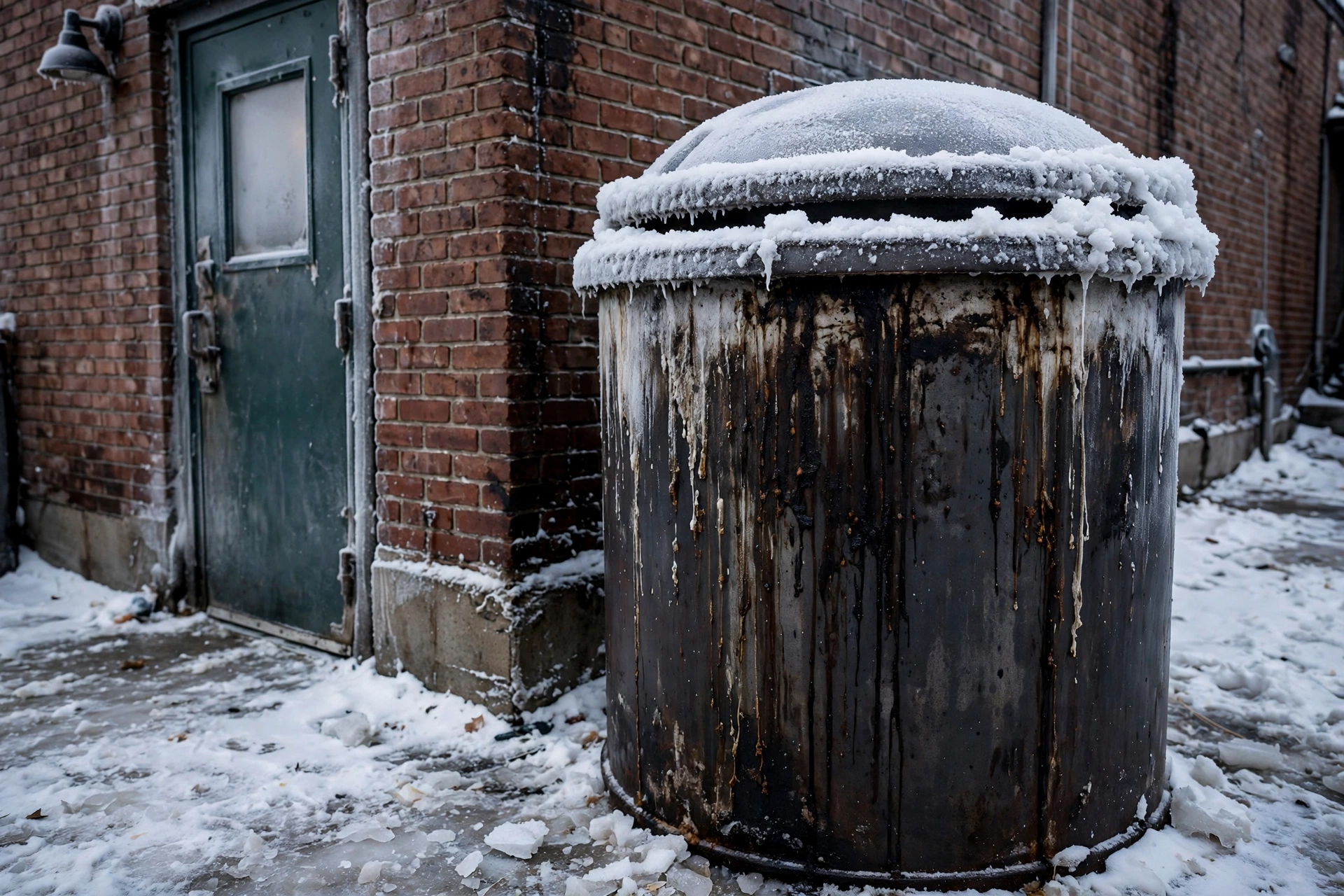
A cold snap had settled on River Rouge. The kitchen manager at a small fish, chicken and barbecue counter on West Jefferson went out to the back door and found the used-oil bin stiff. The oil inside had thickened to a solid, and the pickup hose could not draw from it. Inside, the dish-station floor drain was slow, and there was a sour smell near the trap.
Chapter 2: One call, two problems
She called (313) 351-8079 and described both. We asked what she was seeing, where the trap was, and where the bin sat, and we planned one visit. The oil problem and the drain problem were connected, since a kitchen that cannot get oil out the back door starts looking for somewhere else to put it. We also told her plainly what the visit would cost. Cleaning a small indoor trap is $150 to $350. Collecting clean used oil carries no charge.
Chapter 3: The swap and the pump-out
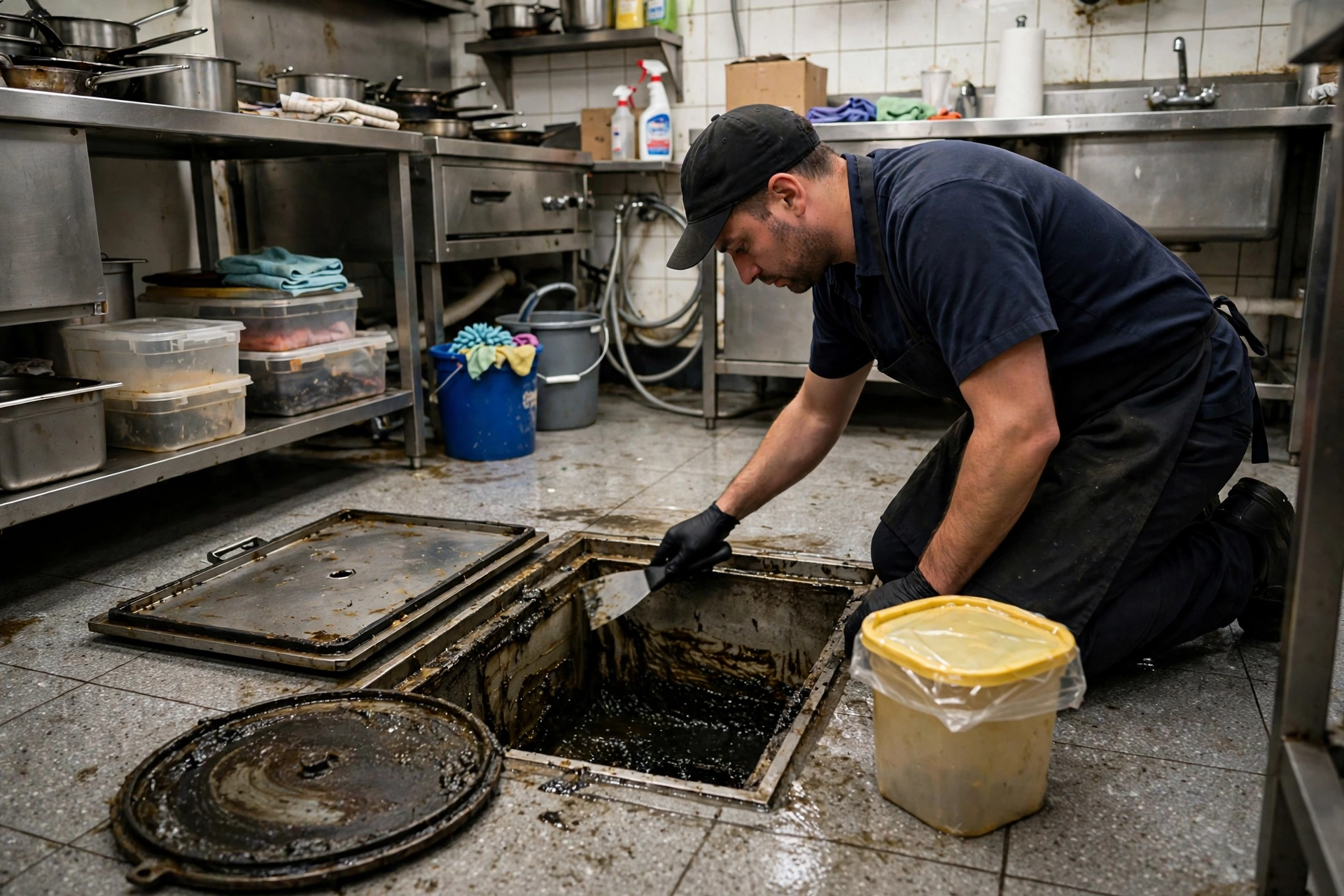
The crew delivered an empty bin and carried the full one away. Swapping the bin is the working fix for frozen oil, and it is a trade practice, not a promise that the cold will not return. Then they opened the trap, took out the grease cap, liquid and sludge, scraped the interior, cleared the baffles and checked the components. The slow drain cleared, and the smell went with the sludge.
Chapter 4: Paper and a schedule
Before leaving, the crew wrote up the visit: the work done, what was found in the trap, and the waste shipping document for the load. The manager kept her copies, as the state rule says the generator should. Then we talked about frequency. With a fryer-heavy menu and winter coming on, we set the trap on a short check cycle. In winter, traps need more frequent checking, not less, because grease that stays soft in warm weather congeals as it cools.

Talk it through with a crew
If you recognize your own back door in that story, call (313) 351-8079. We will ask a few plain questions, tell you what we would do, and give you the price for it.
How the service runs for a River Rouge kitchen
1. The call. You tell us what you run, where the trap is and where the oil bin sits. 2. The oil. We set up sealed containers sized to your kitchen and collect on a schedule. Clean oil carries no charge. In cold weather, the working fix for a frozen bin is a swap. 3. The trap. The grease cap, liquid and sludge come out, the interior is scraped, baffles are cleared and inspected, and components are checked. 4. The line. If water is slow even after the trap is clean, we can jet the line. Jetting is priced with the service visit it rides with. 5. The paper. You get a service record and the waste shipping document. 6. The schedule. We set a frequency from how fast your trap fills, using the quarter benchmark.
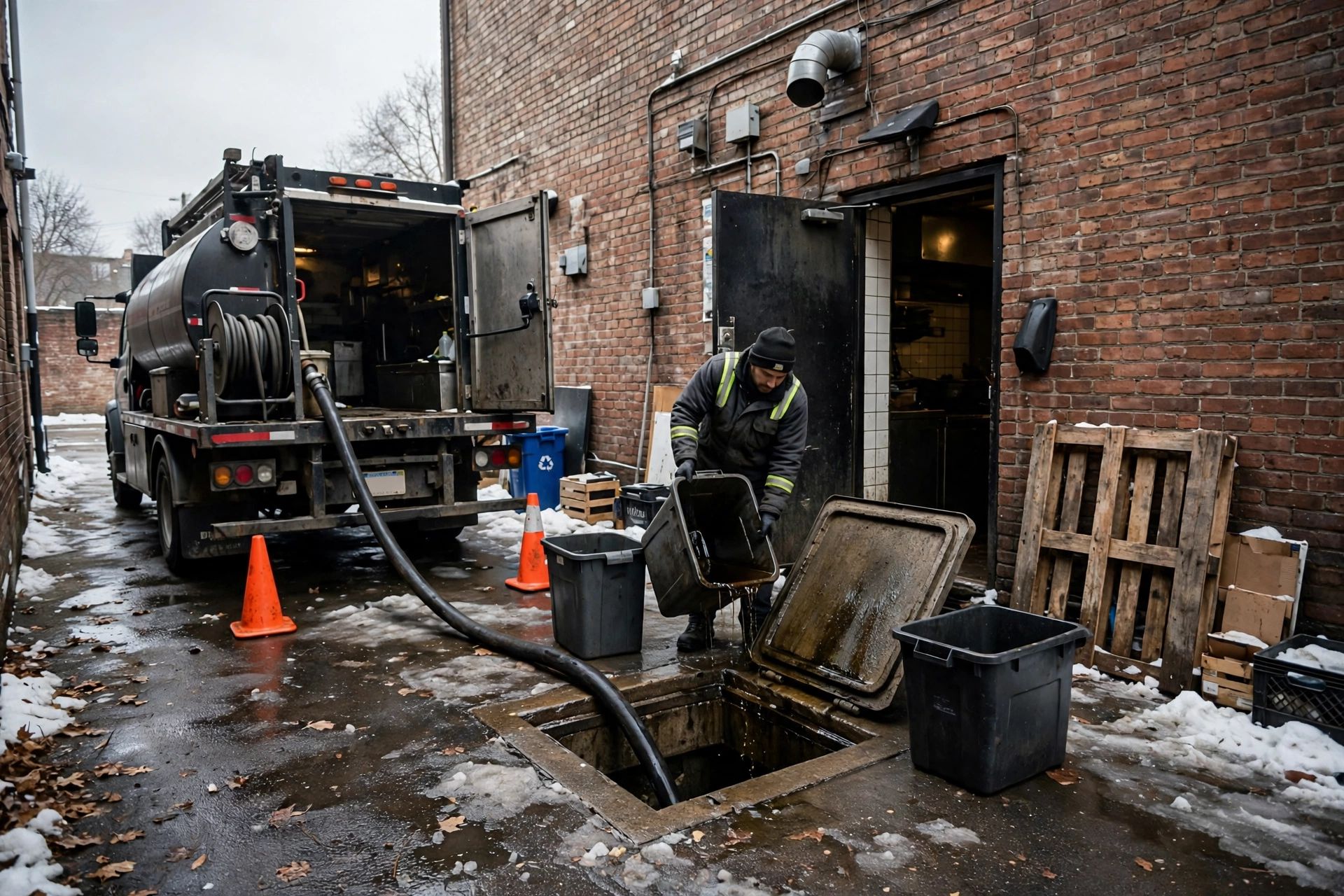
What the visit includes: pump-out of the trap, interior scraping, baffle clearing and inspection, a component check, and oil collection where it is scheduled. What the crew documents: the work done, the condition of the trap and its parts, and the waste shipping document. What you keep: your service record and shipping document copies, filed and ready if the sewer authority or an inspector asks.
Prices
| Service | Price |
|---|---|
| Interior grease trap cleaning, small indoor traps | $150 to $350 |
| Medium traps | $300 to $600 |
| Large exterior interceptors | $500 to $1,000 or more, by capacity and waste volume |
| Emergency call-out | One and a half to two times the standard service price |
| Used cooking oil collection | No charge for clean oil |
| Line jetting | Priced with the service visit it rides with |
The price is set by the trap's capacity, how hard it is to reach, and how much waste comes out. Basement, underground and long hose runs take more work. Most River Rouge kitchens run small indoor traps.
When to call
The drain is slow, gurgling, or smells sour near the trap.
The oil bin is frozen, overfull, or leaking.
You are opening a kitchen and want a schedule from day one.
A sewer authority notice or inspector has asked for your cleaning records.
A backup has already started. Emergency call-out is one and a half to two times the standard service price.
Set up service for your kitchen
Fill in the form below, or call (313) 351-8079. Name and phone are required. Everything else is optional, and a consent box is required. The more details you give, the better we are able to help you.

Questions
How often should a River Rouge kitchen have its trap cleaned?
It depends on how fast the trap fills. The trade pumps when grease and solids reach about a quarter of the trap's capacity. Heavy fryer kitchens often run every 4 to 6 weeks, and low-volume kitchens often run every 3 to 6 months. These are working habits, not rules.
Is there a legal pumping interval?
Dearborn has no FOG ordinance with a fixed interval, and the regional sewer rules we read set none either, only regular cleaning with records. We have not read River Rouge's own sewer code for this page, so confirm with your city and sewer authority.
What does used cooking oil collection cost?
Clean oil is collected at no charge.
What counts as clean oil?
Oil kept in its own sealed container, not mixed with other waste. If what is in the bin is not clean oil, we tell you at the bin.
What does cleaning a trap cost?
Small indoor traps are $150 to $350. Medium traps are $300 to $600. Large exterior interceptors are $500 to $1,000 or more, by capacity and waste volume.
What decides the price?
Capacity, access, and waste volume. A trap in a basement or at the end of a long hose run takes more work than one by the back door.
What does an emergency call-out cost?
One and a half to two times the standard service price.
Our oil bin freezes in winter. What do we do?
The working fix is a bin swap: we deliver an empty bin and carry the full one away. Traps also need checking more often in winter, because grease that stays soft in warm weather congeals as it cools.
Can we pour fryer oil down the drain?
No. Oil that goes down the drain can solidify inside the pipes. In Dearborn, the city's code prohibits grease that obstructs flow and caps grease discharge at 1,500 mg/L. Put the oil in a sealed container and call us for collection.
What paperwork do we get?
A service record and the waste shipping document. Under Michigan's Part 121, trap residue is a liquid industrial by-product that moves on a shipping document, and the kitchen keeps its own copies.
Do you jet lines too?
Yes. Jetting is priced with the service visit it rides with.
Do you work outside Dearborn?
Yes. River Rouge is about 13 minutes from our Dearborn base, and used-oil collection with trap cleaning is the service that fits its kitchens best.