Dearborn Grease Trap comes out from Dearborn to Oak Park kitchens for grease trap cleaning: the small indoor traps under prep sinks and dish lines in the independent restaurants along Nine Mile, Greenfield and Coolidge. If your trap is slow, smelling, or simply overdue, the work is a full pump-out and scrape, a look at the baffles, and a record of the visit left with you. The rest of this page covers what Oak Park kitchens run, how we work, what it costs, and when to pick up the phone.
Call us about your Oak Park kitchen
Tell us what you have: a trap under the sink, a slow drain, a notice in the mail, or a kitchen that has never had a schedule. Call (313) 351-8079 and we will work out the trap size, the access and the right visit. The form at the bottom of this page does the same job.
Oak Park's kitchens and why this is the work there
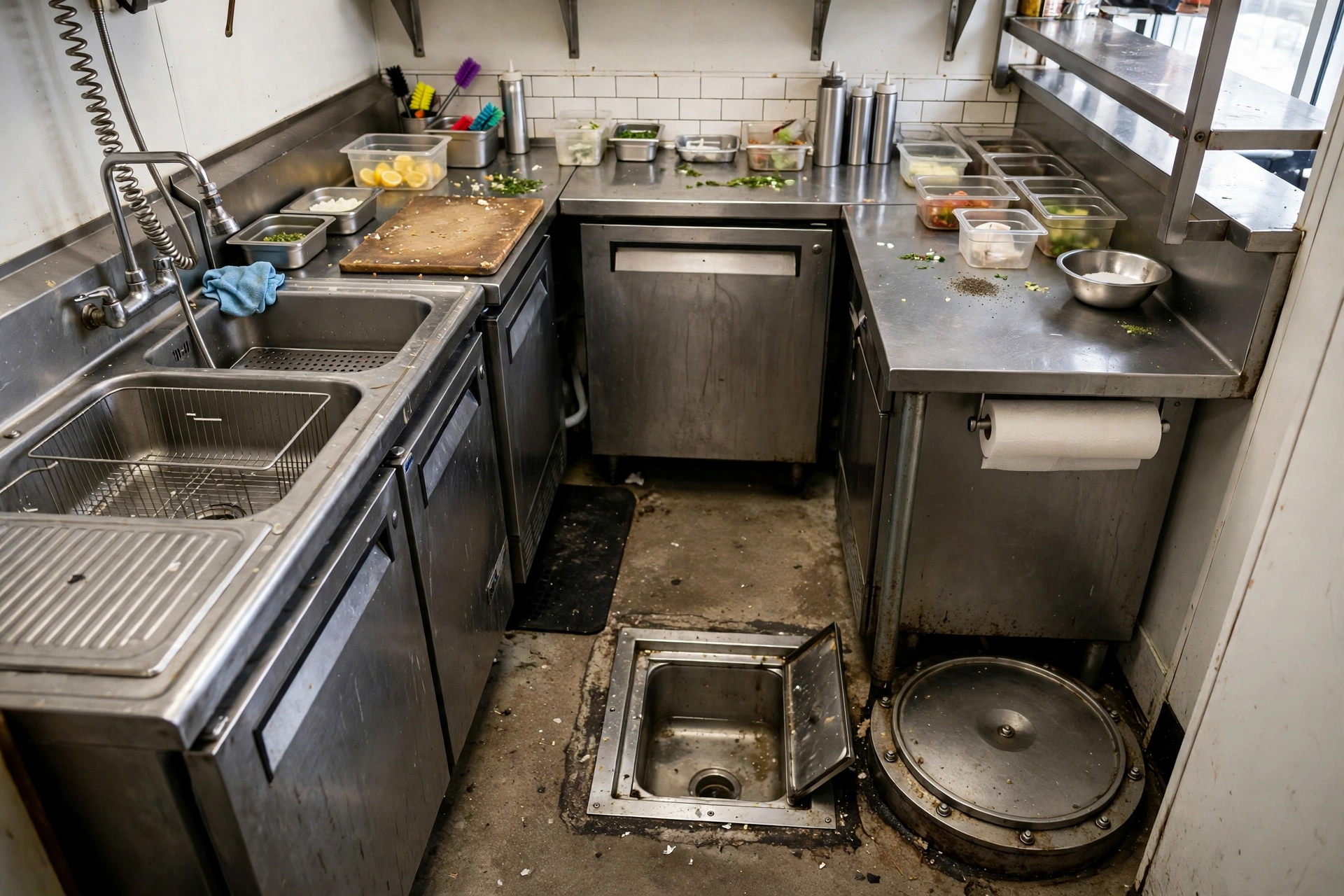
Oak Park has about 26 restaurants, mostly independent, spread over Nine Mile, Greenfield and Coolidge. These are not big-box pads with exterior in-ground tanks. They are storefront kitchens with a compact trap near the fryer line, the three-compartment sink or the dish station. Small traps fill fast, because there is little room between the cap of grease on top and the solids settling below.
That is why interior trap cleaning is the work in this town. A small indoor trap does not give you warning. It holds a modest volume, so a busy fryer and a full dinner service can push it past the point where it does its job. When that happens the grease travels on to your building's drain line, and that is where backups and smells begin.
What actually governs your trap
Be clear on one point first: Dearborn has no FOG ordinance. There is no trap-sizing table, no fixed pumping interval and no city manifest rule in the Dearborn code, and we do not hand you one as law. Dearborn's own code does set a limit on grease discharge, 1,500 mg/L, and the regional sewer authority's pretreatment rules call for interceptors where required, regular cleaning at the owner's expense, and records produced on request, with no fixed interval.
Oak Park is a separate city, and the sewer rules that apply to your building are the ones your own sewer system sets. This page does not carry them. If you have a notice from the city or the sewer authority, read what it asks for and call us with it. We will tell you what the visit can document.
What does apply across Michigan is Part 121. Trap clean-out residue is a liquid industrial by-product. It has to be hauled by a registered transporter on a shipping document, and the kitchen keeps its copy.
When to pump: the trade's working rule
The trade schedules by one benchmark: pump when grease and solids together reach about a quarter of the trap's capacity. It is a scheduling rule that working crews use, not a legal requirement. What kitchens actually run follows from it:
- High-volume kitchens, heavy on fryers and covers: every 4 to 6 weeks.
- Moderate kitchens: monthly to quarterly.
- Low-volume kitchens: every 3 to 6 months.
Those are what kitchens run, not requirements. We set your interval from what we find in your trap on the first visits, then adjust.
Featured job: a neighborhood grill on Greenfield
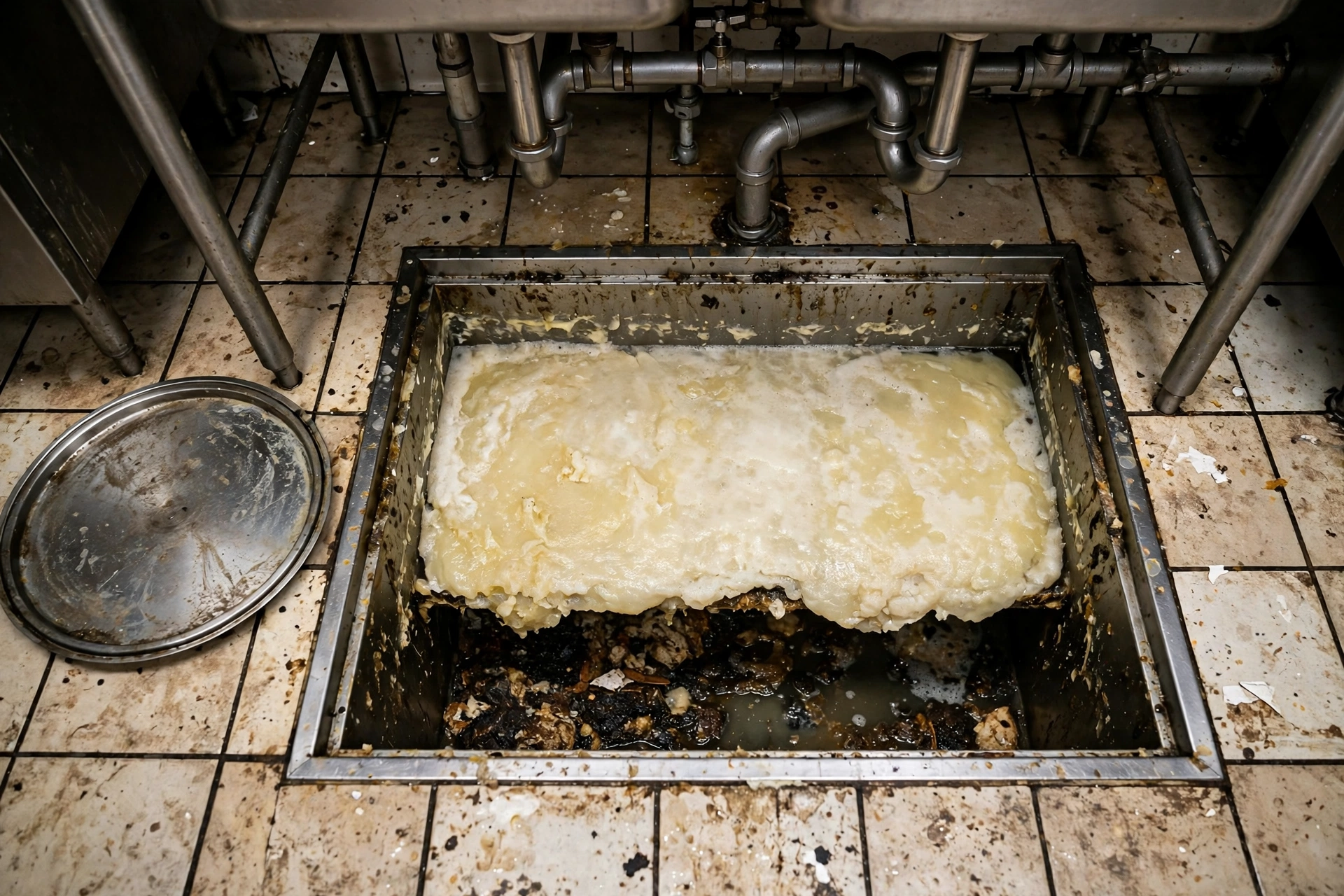
A family-run grill on Greenfield cooked charcoal plates and fried sides on a short line. Its small indoor trap sat under the dish station. The cook noticed the pass-through sink draining slowly after the lunch rush, and a sour smell had started to follow the floor drain after close.
Chapter one: the slow drain
The owner had been pouring hot water down the sink and hoping. The trap had not been opened in a long while, and nobody on staff knew how full it was.
Chapter two: the clean-out
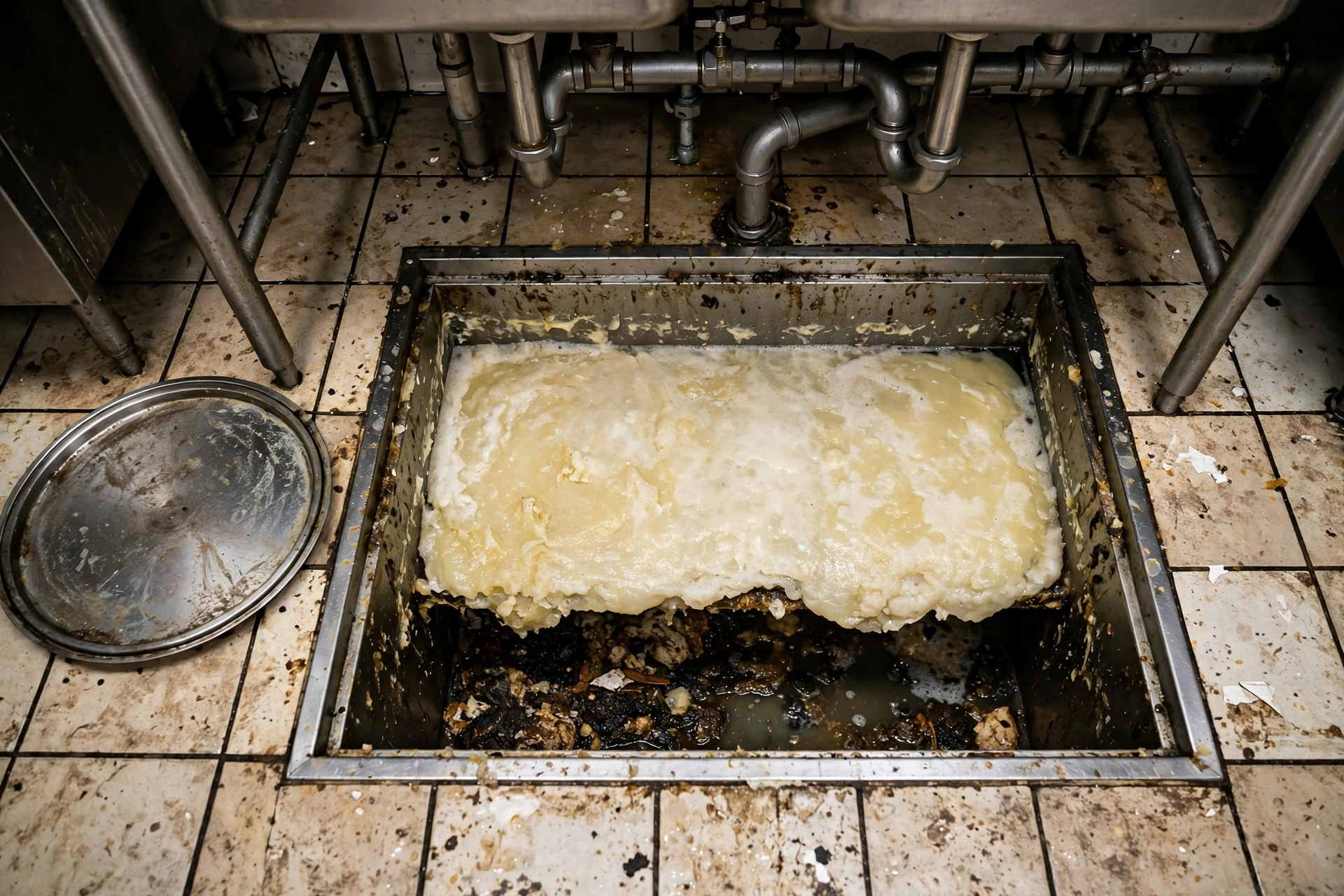
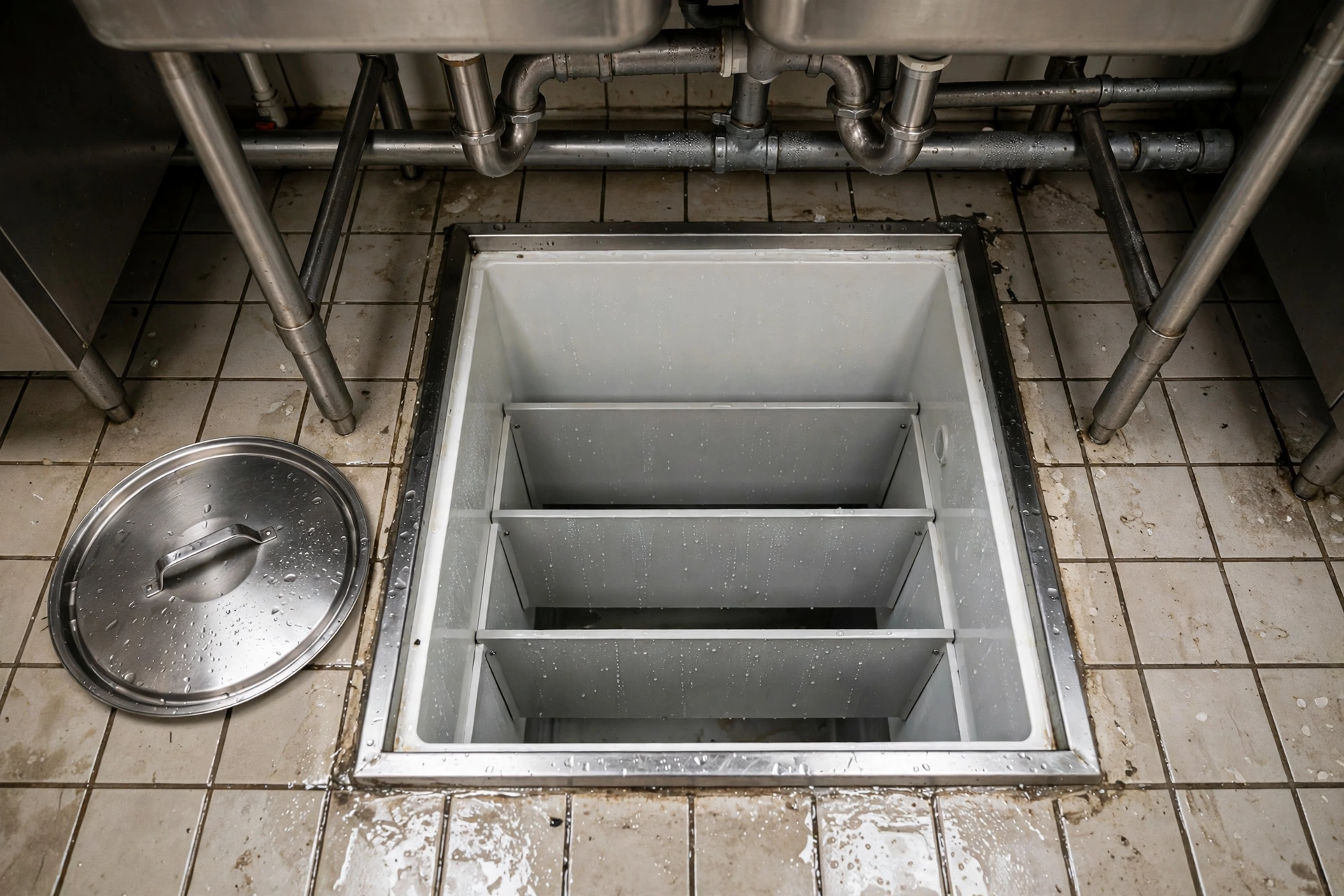
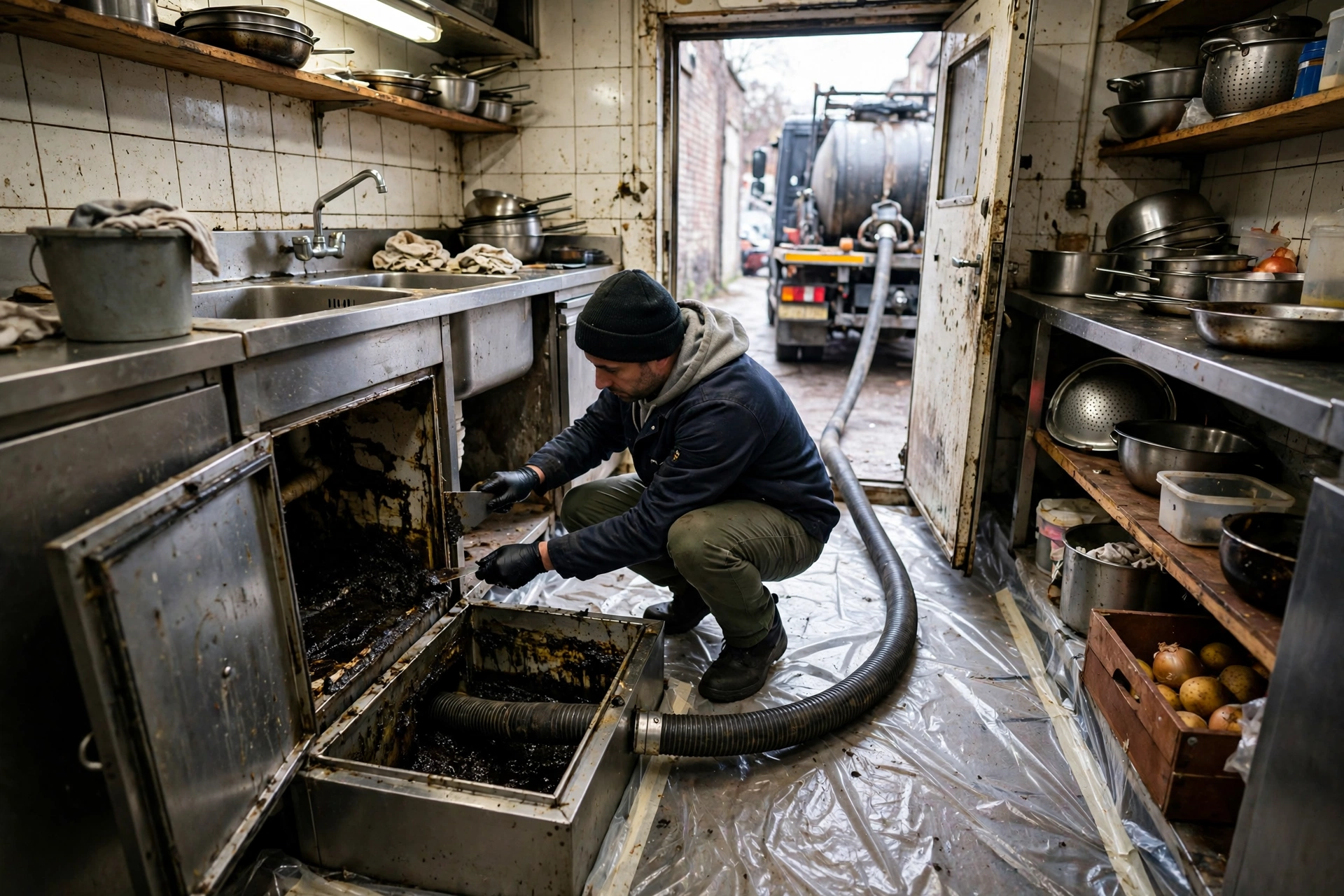
The crew set down floor protection, lifted the lid and measured the cap and the solids. They pumped out the grease, liquid and sludge, scraped the walls and cleared the baffles, then checked the lid, gasket and fittings. The waste went into the truck, not the drain, and the shipping paperwork was started before the crew left the kitchen.
the trade's pump-at-about-a-quarter-of-capacity benchmark, labeled as trade practice and not law
the working frequencies, 4 to 6 weeks for high-volume, 3 to 6 months for low-volume, labeled as what kitchens run
the Part 121 point that trap residue is a liquid industrial by-product moved on a shipping document
the price band for small indoor traps, $150 to $350, and for medium traps, $300 to $600.
Chapter three: the schedule
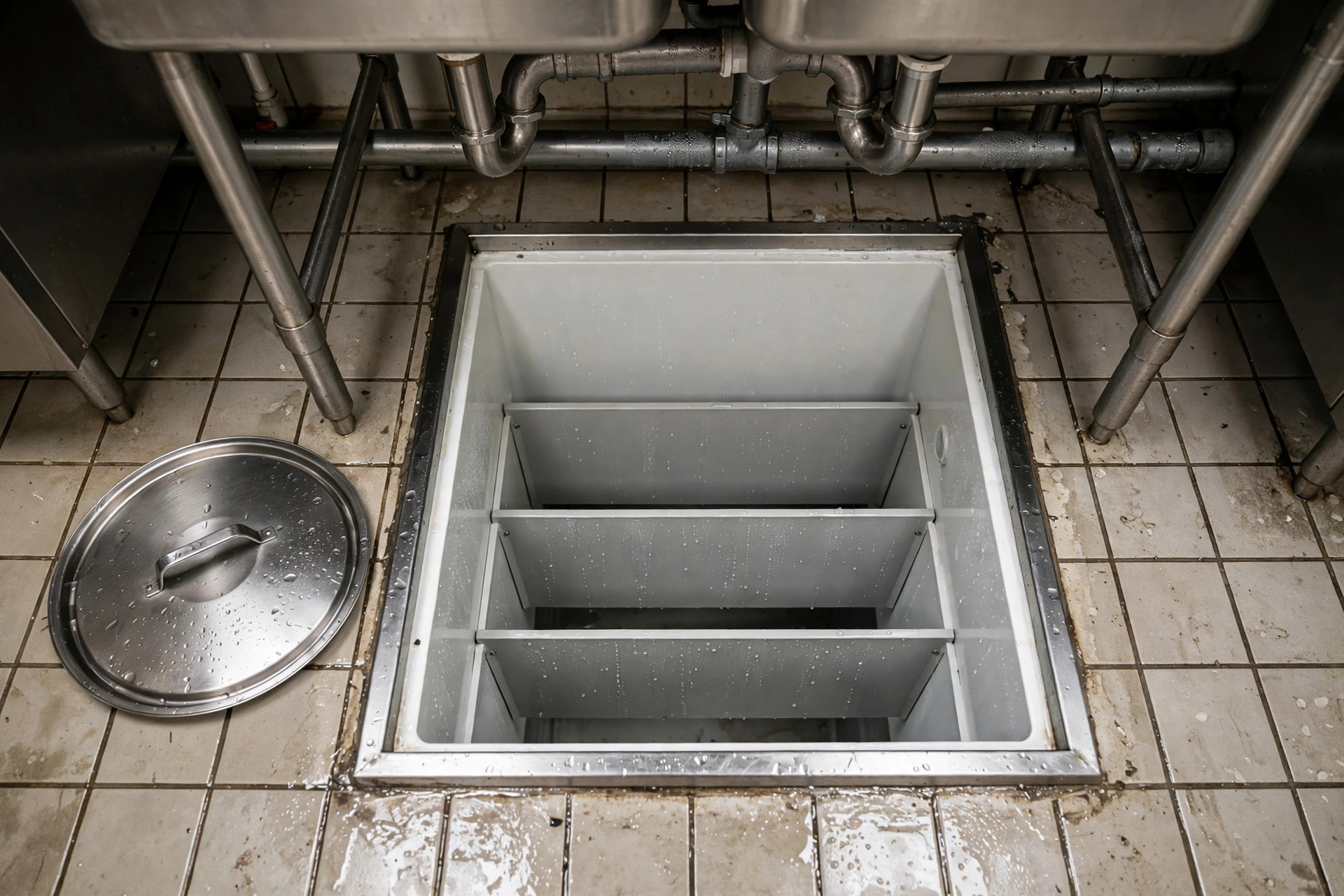
The trap came out clean, baffles clear, lid sealing. The owner got the service record for the visit and a first interval to try, set from what the crew had found. That interval is the owner's to adjust. The drain ran fast again at the next lunch rush, and the smell at the floor drain was gone.
Mid-page invitation
If your kitchen looks like that grill's did, the next step is a short phone call. Call (313) 351-8079 and tell us what the trap is doing. We will help you decide between a one-time clean-out and a standing schedule.
How the visit runs in an Oak Park kitchen
We schedule around your service so the kitchen stays open. The visit includes:
- A full pump-out of grease, liquid and sludge.
- Scraping of the trap interior and clearing of the baffles.
- A check of the lid, gasket, inlet, outlet and fittings.
- Hauling of the waste off site on its shipping document.
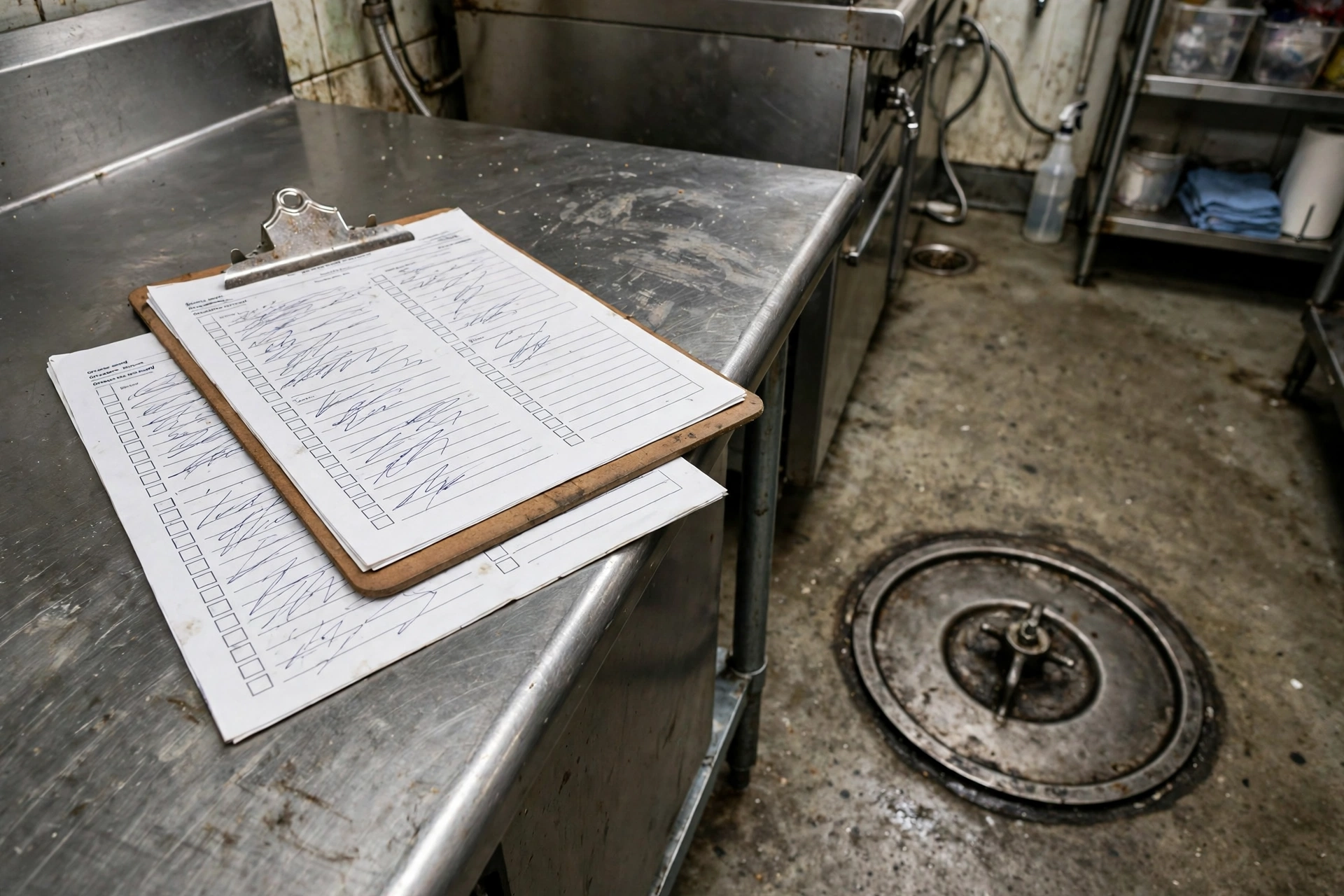
The crew documents what they found: the state of the trap, the condition of its parts, and the date of service. You keep the service record and your copy of the paperwork for your files, ready if an inspector or sewer authority asks for records.
Pricing
These are our prices for interior work:
| Service | Price |
|---|---|
| Interior grease trap cleaning, small indoor traps | $150 to $350 |
| Medium traps | $300 to $600 |
| Large exterior interceptors | $500 to $1,000 or more, by capacity and waste volume |
| Emergency call-out | one and a half to two times the standard service price |
| Used cooking oil collection | no charge for clean oil |
Where a kitchen falls inside a band depends on the trap's capacity, how hard it is to reach, and how much waste is in it. Line jetting is priced with the service visit it rides with.
When to call
The sink drains slowly after a rush.
A sour smell rises from the floor drain or the trap.
You cannot remember the last time the trap was opened.
You have a notice from a sewer authority or a health inspection finding.
You are opening a kitchen and want a schedule set from day one.
A backup has started, which is an emergency call-out.
Questions
Does Oak Park have a rule on how often I must pump my trap?
This page does not carry one, and we will not state one. Dearborn has no FOG ordinance with a fixed interval. For your building, read the rules of your own sewer system and any notice you have received. Call us and we will go through it with you.
How often should a small indoor trap be cleaned?
The trade pumps when grease and solids reach about a quarter of the trap's capacity. In practice, high-volume kitchens run every 4 to 6 weeks and low-volume kitchens every 3 to 6 months. These are working frequencies, not requirements.
What does grease trap cleaning cost?
Small indoor traps are $150 to $350. Medium traps are $300 to $600. Large exterior interceptors are $500 to $1,000 or more, by capacity and waste volume. Your price within a band depends on capacity, access and waste volume.
Is there an extra charge for emergencies?
An emergency call-out is one and a half to two times the standard service price.
What is included in a visit?
A full pump-out, scraping, baffle clearing, a check of the trap's parts, and hauling of the waste. You also receive the service record and your copy of the paperwork.
Where does the waste go?
Trap residue is a liquid industrial by-product under Michigan's Part 121. It has to be moved by a registered transporter on a shipping document for each shipment. It is never poured down a drain.
Do I need to keep records?
Sewer authorities in this region can ask for records of cleaning and maintenance. Keeping each service record and shipping paperwork puts you in a position to answer.
Can you clean the trap without closing my kitchen?
We plan the visit around your service. Tell us your slow hours when you call.
Do you collect used cooking oil?
Yes. There is no charge for clean oil.
Does winter change anything?
One Dearborn-serving provider's published guidance says grease stays semi-liquid in warm weather, congeals as it cools, and can freeze at the top of a trap in deep cold, so traps need checking more often in winter, not less. Outdoor oil bins can also freeze, and the fix is a bin swap. This is one provider's guidance, not a local rule.
Can you jet my kitchen drain line?
Yes. Jetting is priced with the service visit it rides with.
What if I have an exterior interceptor instead of an indoor trap?
Large exterior interceptors are $500 to $1,000 or more, by capacity and waste volume. Call and describe the unit.
Final invitation
Call (313) 351-8079, or send the form below. We read every submission and call you back.
- Name (required)
- Phone (required)
- Kitchen type and what the trap is doing (optional)
- Best time to call (optional)
- Consent box, required: you agree to be contacted by Dearborn Grease Trap about your request.
The more details you give, the better we are able to help you.