Dearborn Grease Trap brings grease trap cleaning to Northville restaurants from our base in Dearborn, a drive of about 30 minutes off-peak and longer at rush hour. A kitchen on a historic downtown row usually runs a small indoor trap under a sink or along a prep wall, and that trap needs to be emptied, scraped and checked on a schedule that fits the kitchen. We set that schedule with you from how fast your trap fills. We do not pretend a city rule sets it for you.
Call us about your Northville kitchen
If you have a slow drain, a smell near the trap, or a notice in hand, call (313) 351-8079. If you are setting up service before any of that happens, call for that too. Tell us what the trap looks like and where it sits, and we will tell you what the visit involves and what it costs.
What Northville's kitchens are like
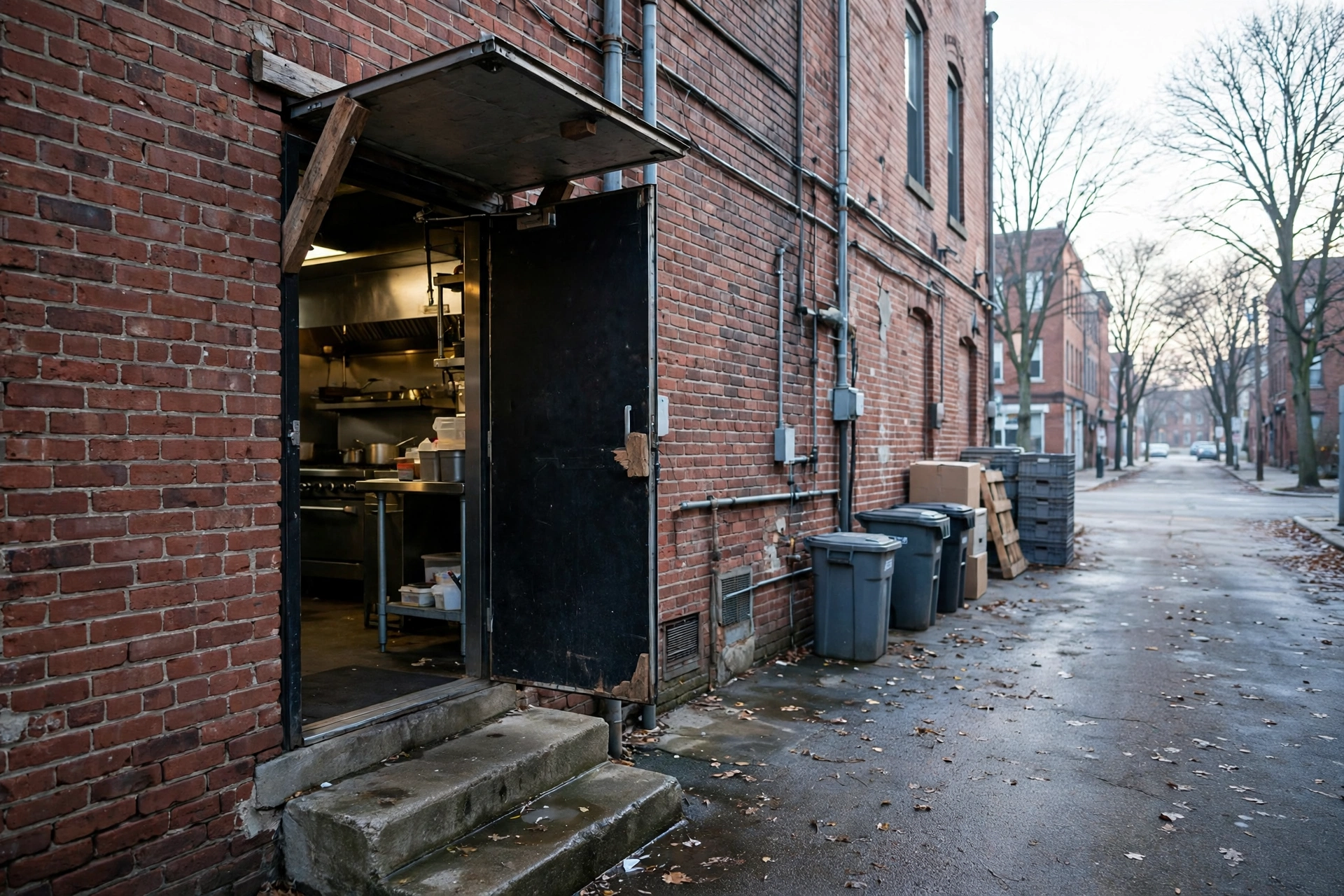
Northville's dining is concentrated in its historic downtown, a restaurant row in a walkable center. Compared with a chain corridor, these are mostly compact kitchens. Space is tight, the trap is indoors, and access often means moving a rack or lifting a floor panel. That is why interior trap cleaning is the work we match to this town. An exterior interceptor is a different job, and we price it separately if your building has one.
Small kitchens have little room for error. A trap that is overdue can push grease into the line and cause a backup in the middle of a dinner service. A short, planned visit on a quiet morning is a much better way to find out the trap is full.
What governs a trap in Northville
There is no fixed pumping interval in what we have reviewed, and we will not quote one for Northville. We have not found a Northville sewer rule to cite, and we do not describe one that we have not read. Ask your city office or your landlord which rules cover your building's discharge.
Here is what we can teach with confidence.
- Dearborn's own code limits grease in the discharge to 1,500 mg/L. That is a Dearborn limit, and we mention it because it is the rule our base city works under. It is not a statement about Northville.
- Regional sewer authority rules in our home area require interceptors where the authority deems them necessary, cleaned regularly at the owner's expense, with records kept and produced on demand. They set no fixed interval either. The duty is regular cleaning, proven by records.
- Michigan's Part 121 covers the waste itself. Trap clean-out residue is a liquid industrial by-product. It may be hauled only by a registered and permitted transporter, on a shipping document for each shipment, and the restaurant keeps its own copies. A septage hauler's license does not cover it.
So the records matter more than any calendar. That is why every visit leaves you with paper.
How often a Northville kitchen should schedule
The trade's working rule is to pump when grease and solids reach about a quarter of the trap's capacity. It is a scheduling benchmark that crews use. It is not law, in Northville or anywhere else.
What kitchens actually run follows from that benchmark. High-volume kitchens with heavy frying often go every 4 to 6 weeks. Moderate kitchens run monthly to quarterly. Low-volume kitchens often go every 3 to 6 months. Those are working frequencies, not requirements. We start where your kitchen sits, check the trap at each visit, and adjust.
Featured job: a downtown Northville dining room
This is the story of a restaurant on Northville's downtown row, a dining room with a busy fryer line and a small indoor trap.
Chapter 1: The call
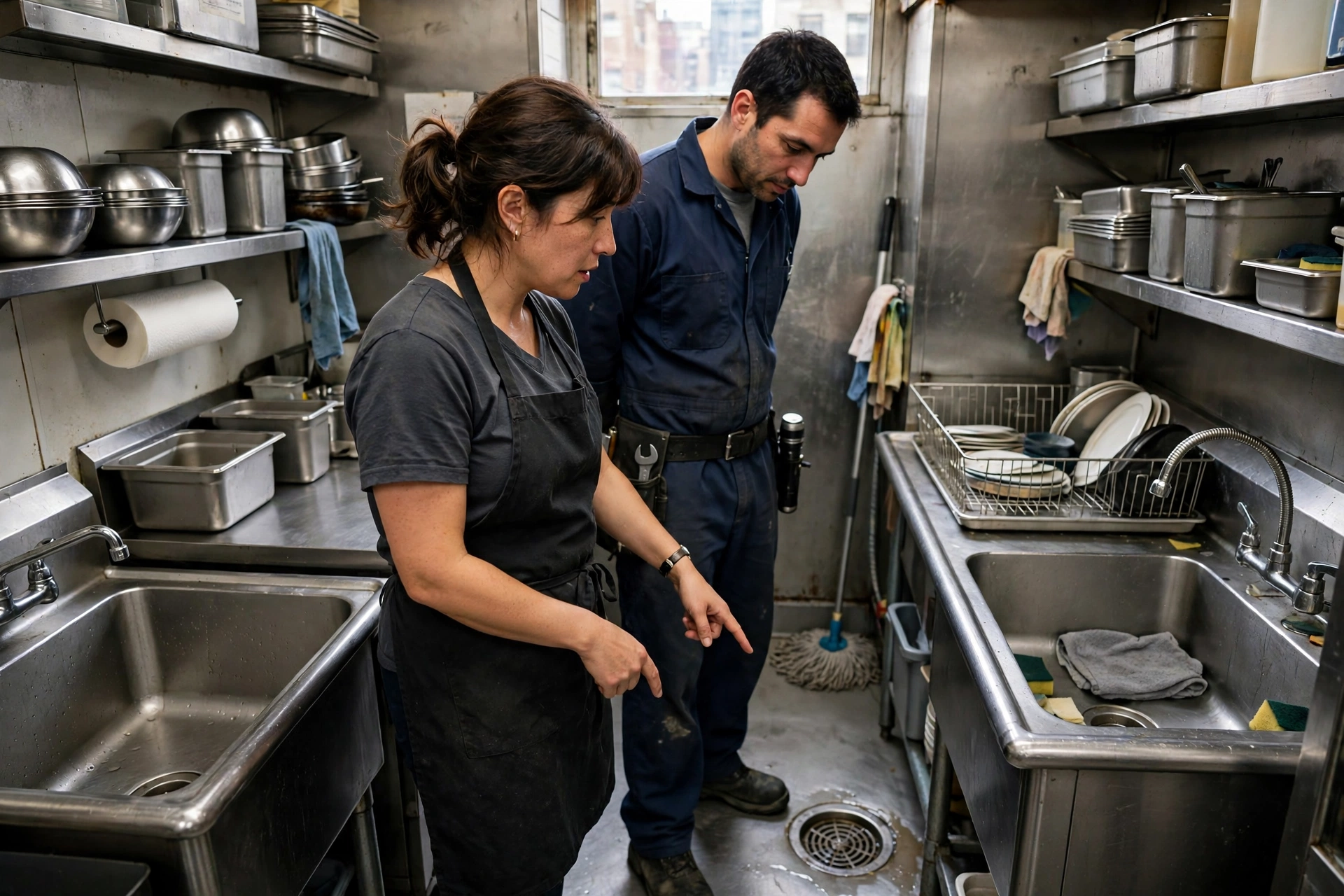
The kitchen manager called on a Monday. The floor drain beside the dish station was slow after the weekend, and a sour smell hung around the prep area by midafternoon. Nobody could say when the trap had last been emptied. We asked where it sat, how big it looked, and how the kitchen ran. A small indoor trap, a fryer line and a full weekend of covers made an overdue trap the likely cause.
Chapter 2: Opening the trap
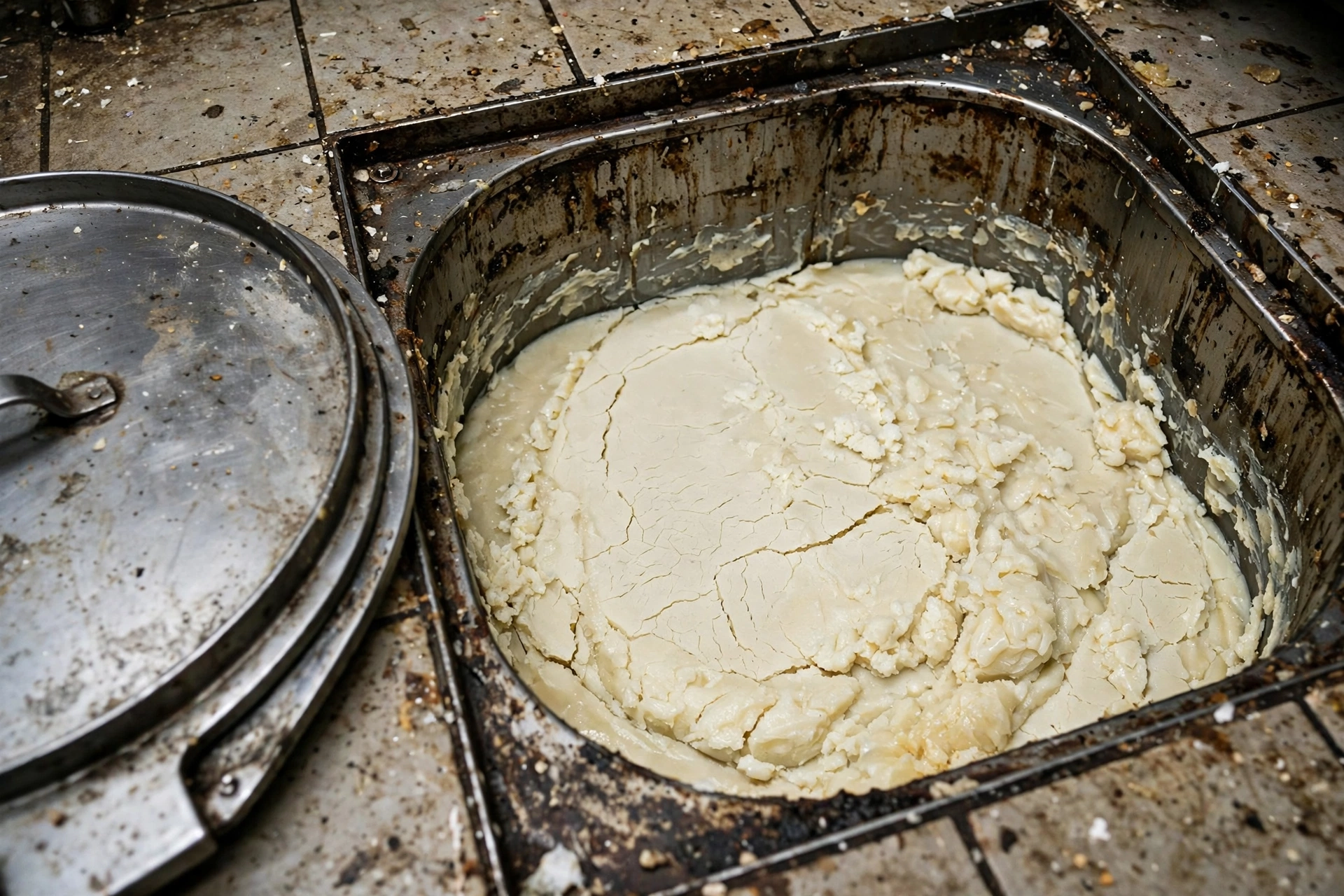
The crew arrived before prep started and cleared a path to the trap. The lid came off and showed a thick grease cap over dark liquid, with solids settled below. By the trade's quarter-capacity benchmark, the trap was well past due. We showed the manager the cap and what lay beneath it before touching anything, since that view explains the smell and the slow drain better than we can.
Chapter 3: The clean-out
The crew removed the grease cap, the liquid and the sludge, then scraped the interior walls clean. They cleared the baffles and checked them, then looked over the lid, inlet and outlet for wear. The slow drain ran freely once the trap was empty. Tap each point on the figure below to see what the crew did at that stage.
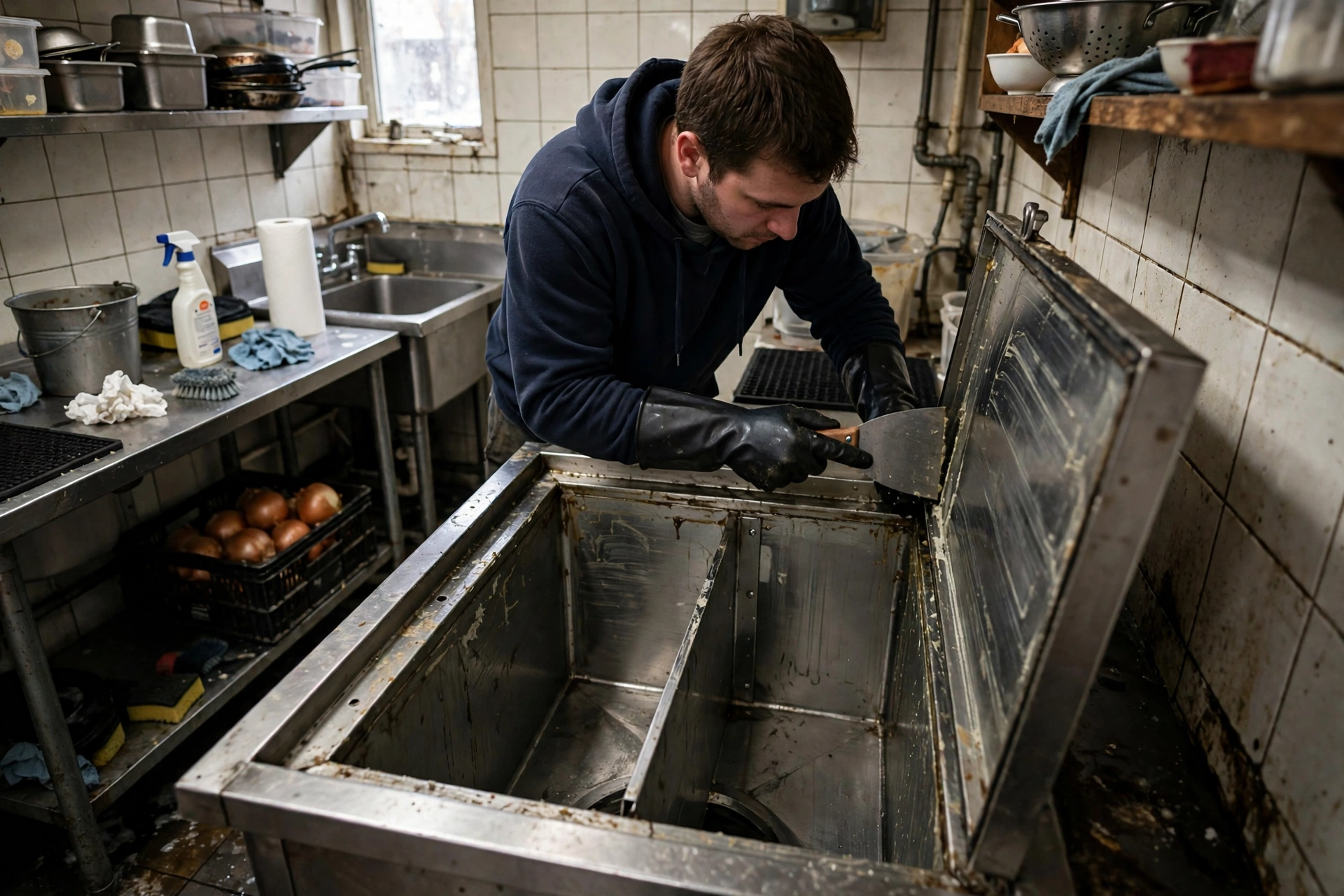
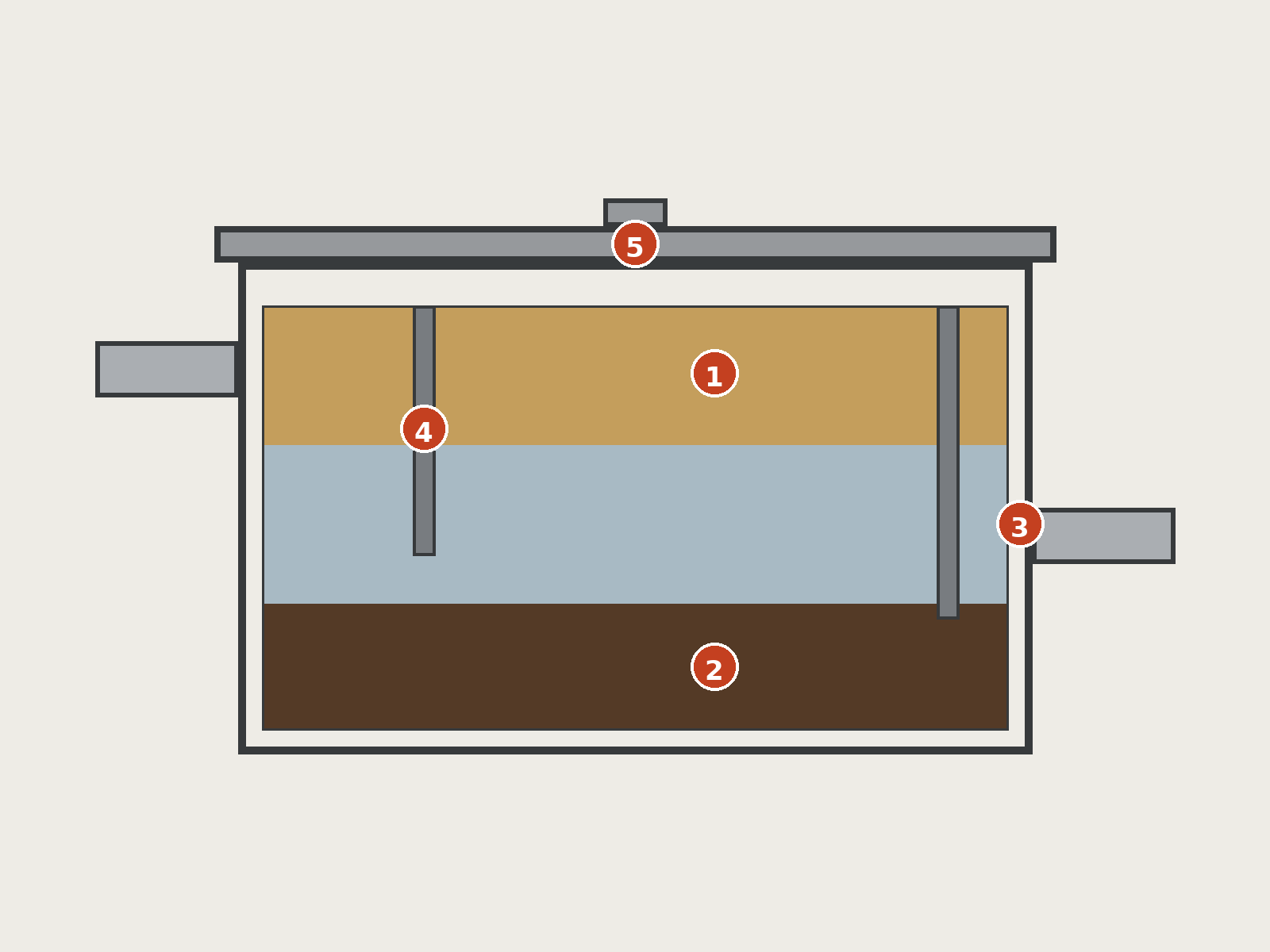
Grease cap: floats on top and is removed first, with the liquid and sludge.
Sludge layer: settles below and comes out in the same pump-out.
Walls: the interior is scraped, not just pumped.
Baffles: cleared and inspected so the trap separates properly.
Components: lid, inlet and outlet are checked for condition.
The quarter-capacity benchmark: when grease and solids reach about a quarter of capacity, the trade pumps. It is a benchmark, not law.
Records: the crew writes up the visit and a shipping document is issued, because the waste is a liquid industrial by-product under Michigan's Part 121.
Chapter 4: The paperwork and the plan
Before leaving, the crew wrote up the visit and left the manager with a service record and a shipping document for the hauled waste. The job was priced in our small indoor range, $150 to $350, with the final number set by trap capacity, access and waste volume. Then we talked schedule. The kitchen fries heavily and the trap had filled fast, so we set the next visit well inside what the trap had just shown and agreed to adjust after checking it again. The records go in a binder behind the office door, ready for anyone who asks for them.
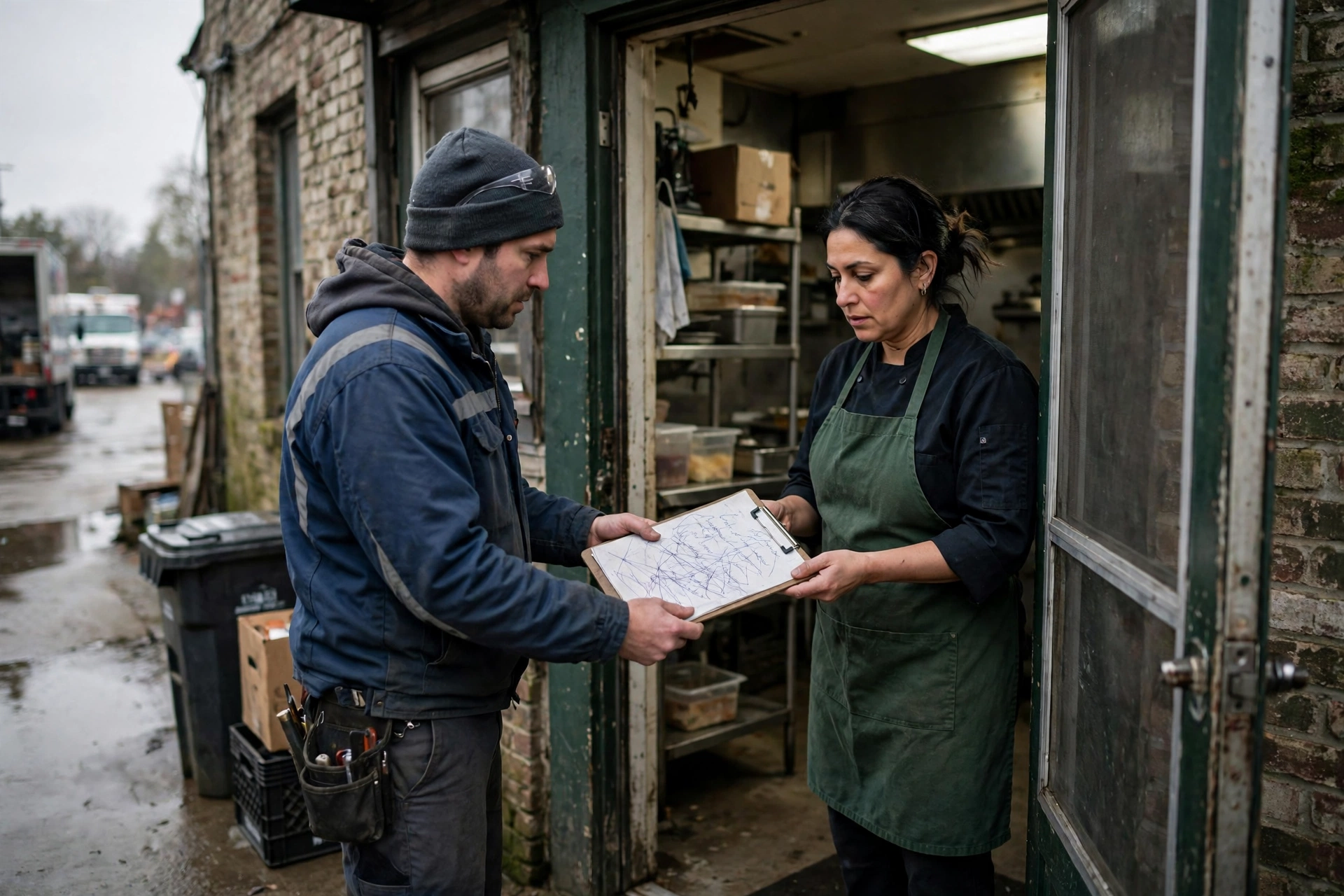
Mid-page invitation: tell us about your trap
If your kitchen sounds like this one, call (313) 351-8079. A short description of the trap and the menu is enough for us to talk through the visit and the schedule.
How the service runs for a Northville kitchen
Each visit follows the same sequence, and you can watch any step.
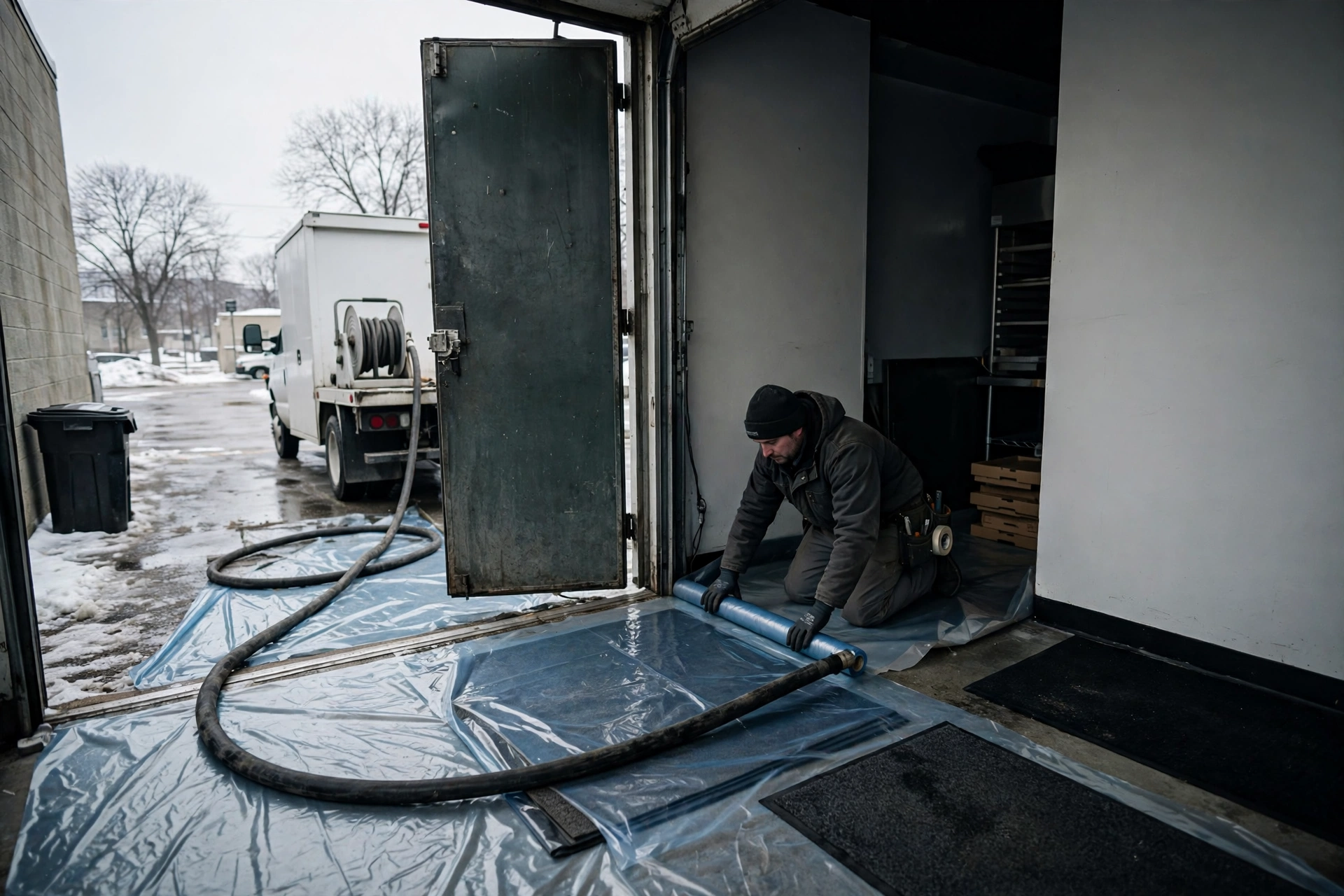
1. We confirm the trap's location, size and access, and agree a time that stays out of your service hours. 2. The crew protects the floor and opens the trap. 3. Grease cap, liquid and sludge are removed, and the interior is scraped. 4. Baffles are cleared and inspected, and the lid, inlet and outlet are checked. 5. The waste leaves on a shipping document, as Part 121 requires. 6. You receive the service record and the plan for the next visit.
What the visit includes: full pump-out of the trap, interior scraping, baffle clearing and inspection, and a component check. What the crew documents: the condition of the trap and its parts, what was removed, and the shipping document for the waste. What you keep: the service record and shipping document, to show an inspector or a regulator who asks.
If a drain line needs jetting, we price it with the service visit it rides with. We do not publish a separate jetting price.
What it costs
These are our prices.
| Service | Price |
|---|---|
| Interior grease trap cleaning, small indoor traps | $150 to $350 |
| Medium traps | $300 to $600 |
| Large exterior interceptors | $500 to $1,000 or more, by capacity and waste volume |
| Emergency call-out | one and a half to two times the standard service price |
| Used cooking oil collection | no charge for clean oil |
For a Northville kitchen with a small indoor trap, the first line is the one you will see. Three things set where a job lands: the trap's capacity, how hard it is to reach, and how much waste comes out.
When to call
The floor drain is slow or gurgles, or a sour smell rises near the trap.
You cannot remember when the trap was last emptied.
An inspection or a notice is coming, and your records have gaps.
You are opening a kitchen, or changing the menu toward more frying.
Winter is arriving. Trade guidance from a provider serving our area says grease that stays soft in warm weather can congeal as temperatures drop, so traps need more frequent checking in winter, not less.
For a backup in the middle of service, call and say so. Emergency call-out is priced at one and a half to two times the standard service price.
Used cooking oil
If you fry, we collect used cooking oil at no charge when the oil is clean. A cleaner oil stream is also good for your trap. Ask us about it when you call. In winter, oil can freeze in an outdoor bin, and the fix is a bin swap, with an empty bin delivered and the full one carried away.
Questions
Is there a Northville ordinance that tells me how often to clean my trap?
We have not found one and will not quote one. Ask your city office or landlord what covers your building. We schedule by how fast your trap fills.
What is the quarter-capacity rule?
It is the trade's working benchmark. When grease and solids together reach about a quarter of the trap's capacity, the trap should be pumped. It is a scheduling guide, not law.
How often do kitchens actually run service?
High-volume kitchens often go every 4 to 6 weeks. Moderate kitchens run monthly to quarterly. Low-volume kitchens often go every 3 to 6 months. These are working frequencies, not requirements.
How much does grease trap cleaning cost?
Interior cleaning of small indoor traps is $150 to $350. Medium traps are $300 to $600. Large exterior interceptors are $500 to $1,000 or more, by capacity and waste volume.
What sets the price of my visit?
Capacity, access and waste volume. A trap that is hard to reach, or one holding a lot of waste, sits higher in its range.
What happens to the waste?
It is a liquid industrial by-product under Michigan's Part 121. It moves on a shipping document, and you keep your copies.
What records do I get?
A service record covering the visit and a shipping document for the waste. Keep them where you can produce them if an inspector asks.
Do you do emergency visits in Northville?
Yes. Call (313) 351-8079. Emergency call-out is priced at one and a half to two times the standard service price.
How far is Northville from you?
We work from Dearborn. The drive is about 30 minutes off-peak and longer at rush hour, so we plan visits around that and talk through timing with you when you call.
Do you jet drain lines?
Yes. Line jetting is priced with the service visit it rides with, so there is no separate jetting price.
Will you take my used cooking oil?
Yes, at no charge when the oil is clean.
Do I need an interceptor or a trap?
Whether a building needs an interceptor depends on the rules that apply to its sewer connection, which is a question for your city or sewer authority. We service both indoor traps and exterior interceptors.
Does winter change my schedule?
Trade guidance says traps need more frequent checking in winter. Cold can congeal grease and, in deep cold, freeze it near the top of an exterior unit. Tell us if your kitchen has noticed slower drains as it gets cold.
Final invitation: book your Northville visit
Call (313) 351-8079, or send the form below. Name and phone are required. Everything else is optional, and a consent box is required before sending.
The more details you give, the better we are able to help you.