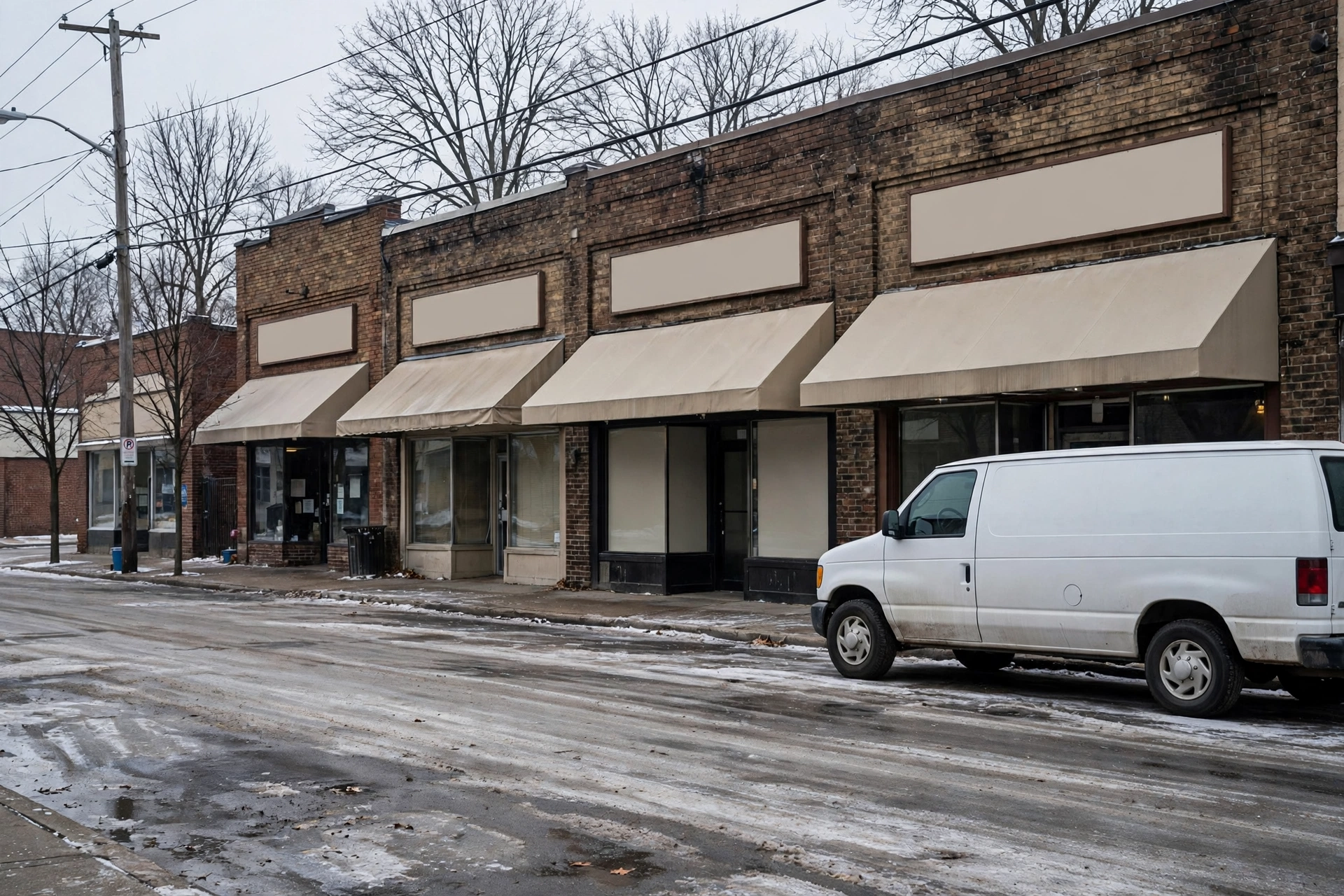
Dearborn Grease Trap handles grease trap cleaning for the small kitchens along Melvindale's Oakwood Boulevard and the side streets around it. Most of them are family-run places: Polish kitchens, coney islands and halal grills that run a small indoor trap under a sink or beside a prep line, not a big buried interceptor. Those traps fill quietly, and the first sign is usually a slow drain or a smell at closing. If you are reading this because of one of those signs, or because you want service on a schedule so you never see them, you are in the right place.
Call us about your Melvindale kitchen
If your trap has not been opened in a while, or you are not sure what is in it, call (313) 351-8079. Tell us what kind of kitchen you run and where the trap sits. We will tell you what the visit involves and which price band applies. The form at the bottom of this page works too.
Why interior trap cleaning is the work in Melvindale
A small kitchen sends all of its dishwater, pot-sink water and mop water through one trap. Fat cools and floats in the trap, and food solids settle to the bottom. When the trap is full, the next load goes down the line. That is how a backup starts, and it is the reason a trap has to be emptied and scraped, not just topped up with enzymes or hot water.
Melvindale's independents tend to share a few traits:
- Compact kitchens, so the trap is often tucked under a sink or in a floor recess with little room to work.
- Steady daily frying and grilling, which keeps fat moving into the trap.
- Owners who are also the cooks, with little time to chase a service schedule.
- Small indoor traps, not exterior interceptors, so the work is mostly interior pump-out and scrape-down.
If your building does have an exterior interceptor, we pump those too. Large exterior interceptors are $500 to $1,000 or more, by capacity and waste volume.
What actually governs your trap
Dearborn has no FOG ordinance. There is no trap-sizing table, no fixed pumping interval and no city manifest rule. Here is what does apply.
- Dearborn's code, Chapter 19, section 19-145: grease that obstructs flow is a prohibited discharge, and fats, oil and grease above 1,500 mg/L (a 24-hour average of samples) are prohibited.
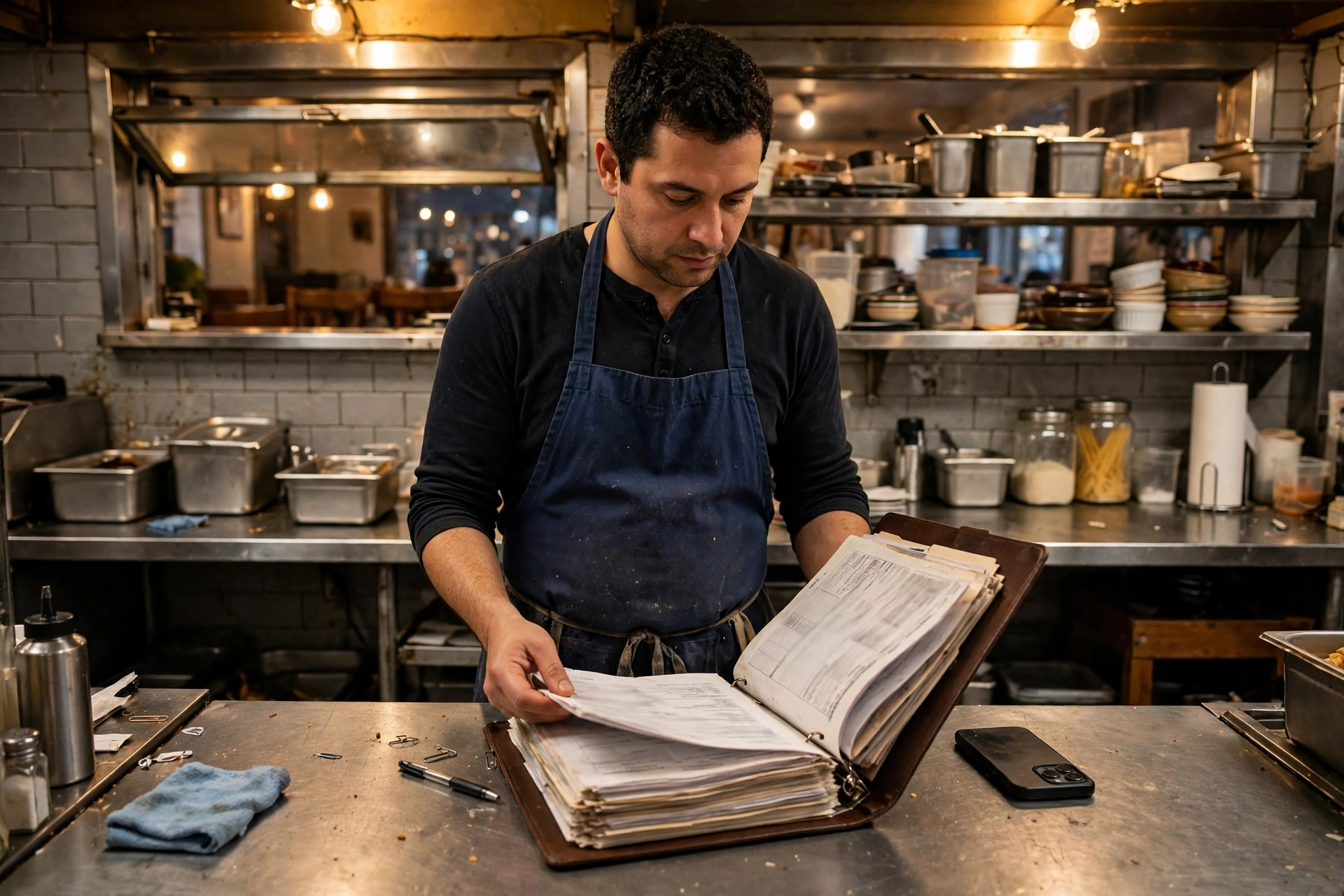
- The Great Lakes Water Authority's pretreatment rules: where the authority deems it necessary, interceptors must be provided, and they must be regularly inspected, cleaned and repaired by the user at the user's expense. The authority may ask for records of inspection, cleaning and maintenance. The rules set no fixed interval. The duty is regular cleaning, shown by records.
- Michigan's Part 121: trap clean-out residue is a liquid industrial by-product. It may be hauled only by a registered and permitted transporter, on a shipping document for each shipment, and the restaurant keeps its own copies.
This page speaks for Dearborn's code and those regional and state rules. For anything specific to Melvindale's own sewer connection, check with the city.
How we decide when to clean
The trade's working rule is to pump when grease and solids together reach about a quarter of the trap's capacity. That is a scheduling benchmark kitchens use. It is not law. What kitchens actually run depends on volume: high-volume kitchens often go every 4 to 6 weeks, and low-volume kitchens every 3 to 6 months. Your own fryer load, cover count and shifts decide where you land.
How the service runs for a Melvindale kitchen
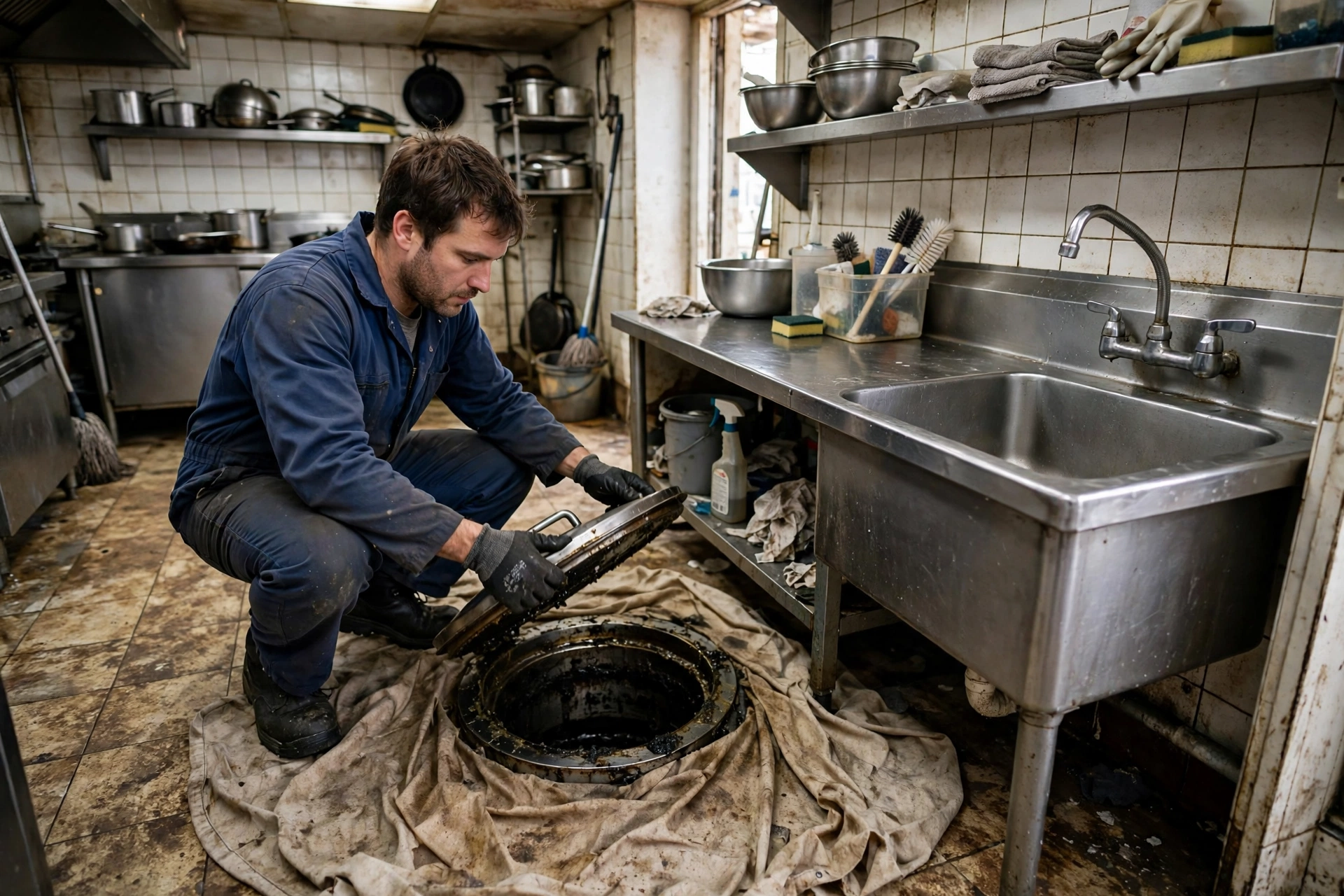
1. We look first. The crew opens the trap and checks how much grease and solids are in it against the quarter-capacity benchmark. 2. We pump it out. The grease cap, liquid and sludge come out, and the interior is scraped. 3. We check the parts. Baffles are cleared and inspected, and the condition of the lid, inlet and outlet is noted. 4. We document it. You receive a service record for your files, and the waste leaves on a shipping document as Part 121 requires. 5. We set the schedule. Based on what we found, we suggest a rhythm that fits your kitchen. You decide.
If a drain line is slow even with a clean trap, line jetting can ride along with the visit. It is priced with the service visit it rides with. If you fry, we also collect used cooking oil. There is no charge for clean oil.
What it costs
| Service | Price |
|---|---|
| Interior grease trap cleaning, small indoor traps | $150 to $350 |
| Medium traps | $300 to $600 |
| Large exterior interceptors | $500 to $1,000 or more, by capacity and waste volume |
| Emergency call-out | One and a half to two times the standard service price |
| Used cooking oil collection | No charge for clean oil |
Within a band, the price follows trap capacity, how hard it is to reach, and how much waste comes out. A trap in a cramped floor recess costs more to work than one at a clear wall.
Featured job: the coney island on Oakwood
Chapter 1: The slow drain
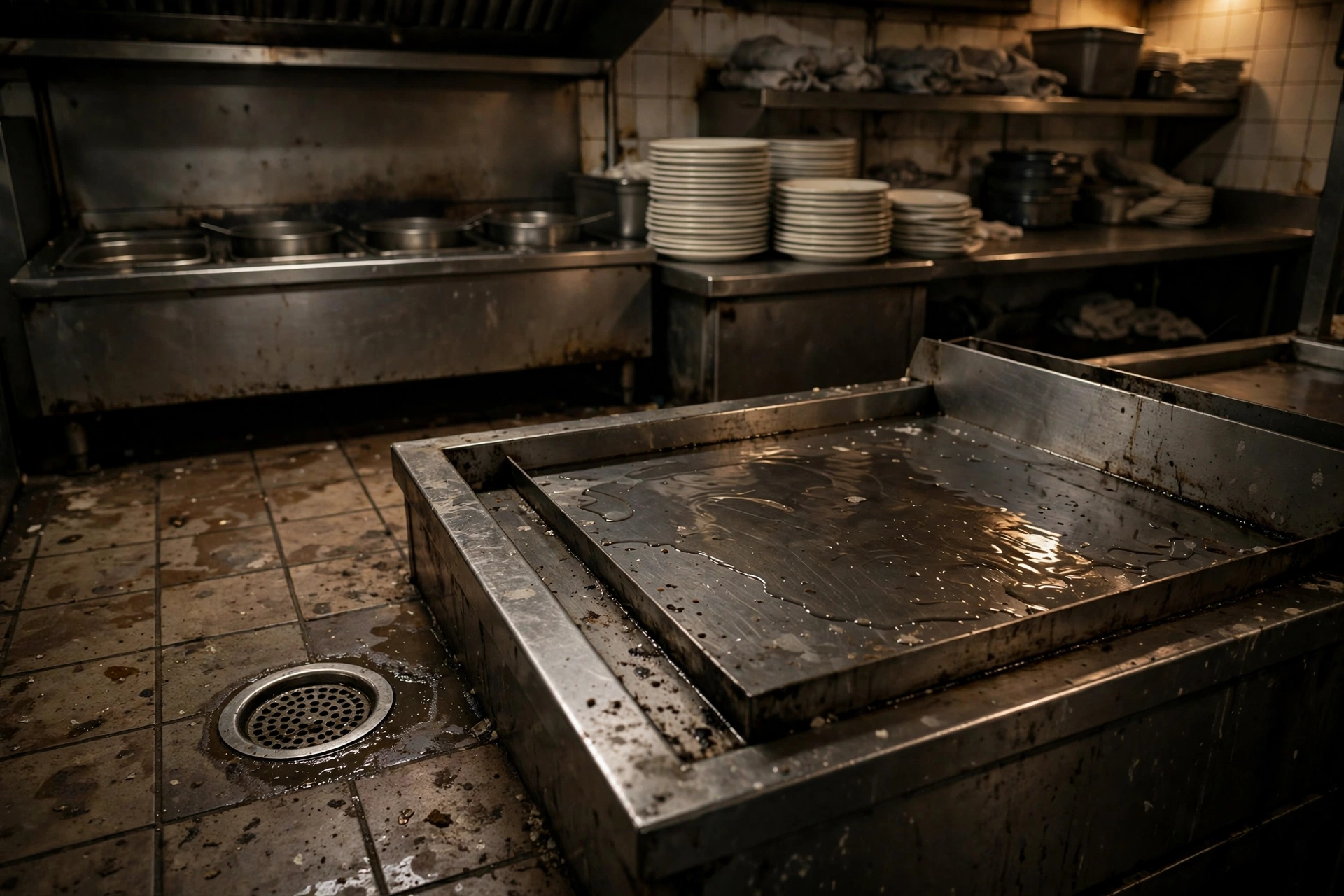
A family-run coney island on Oakwood Boulevard had no trap schedule. Someone called when the kitchen smelled. After a heavy weekend, the floor drain by the grill began to drain slowly, and by Monday the smell reached the dining room. The owner called us.
Chapter 2: What was in the trap
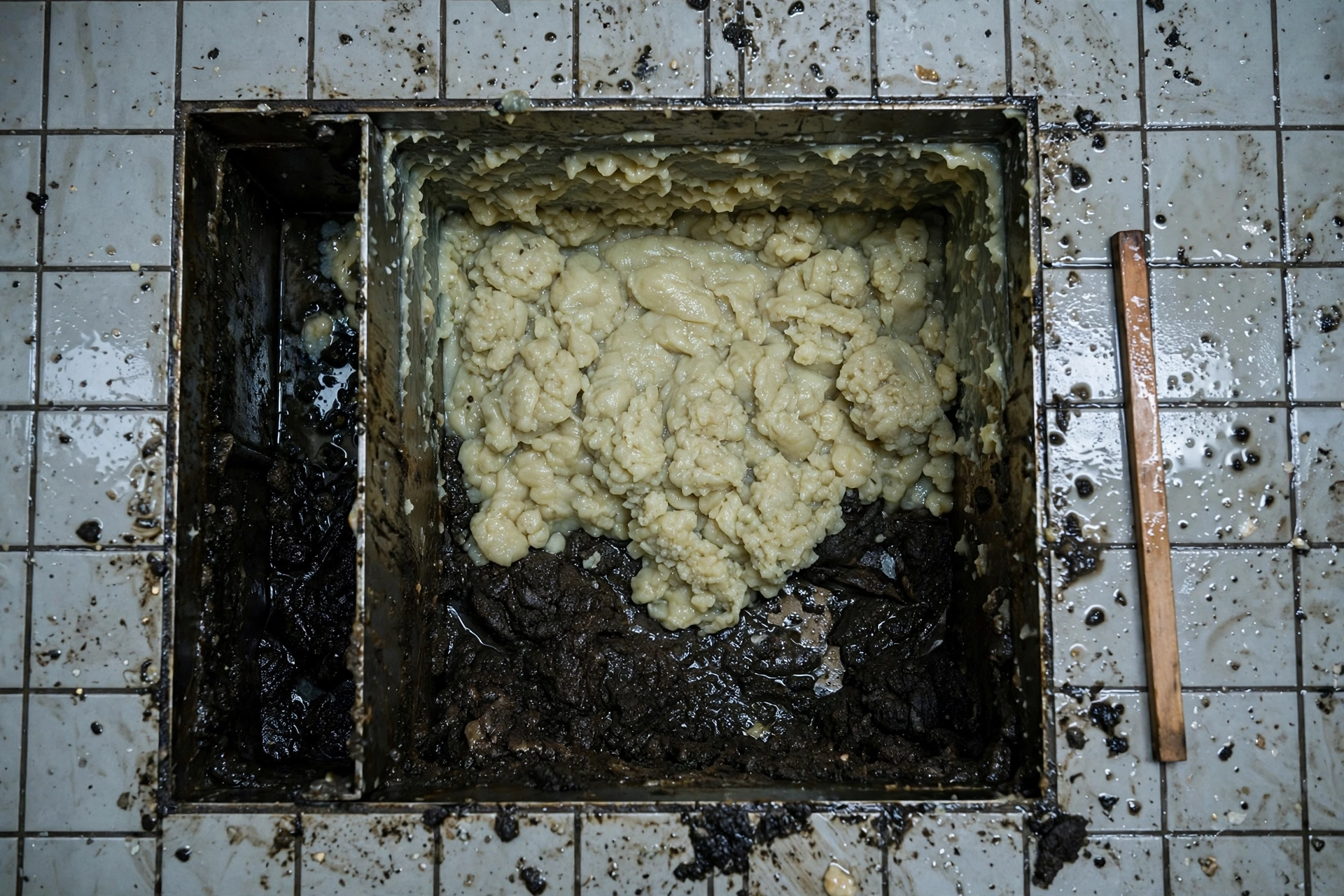
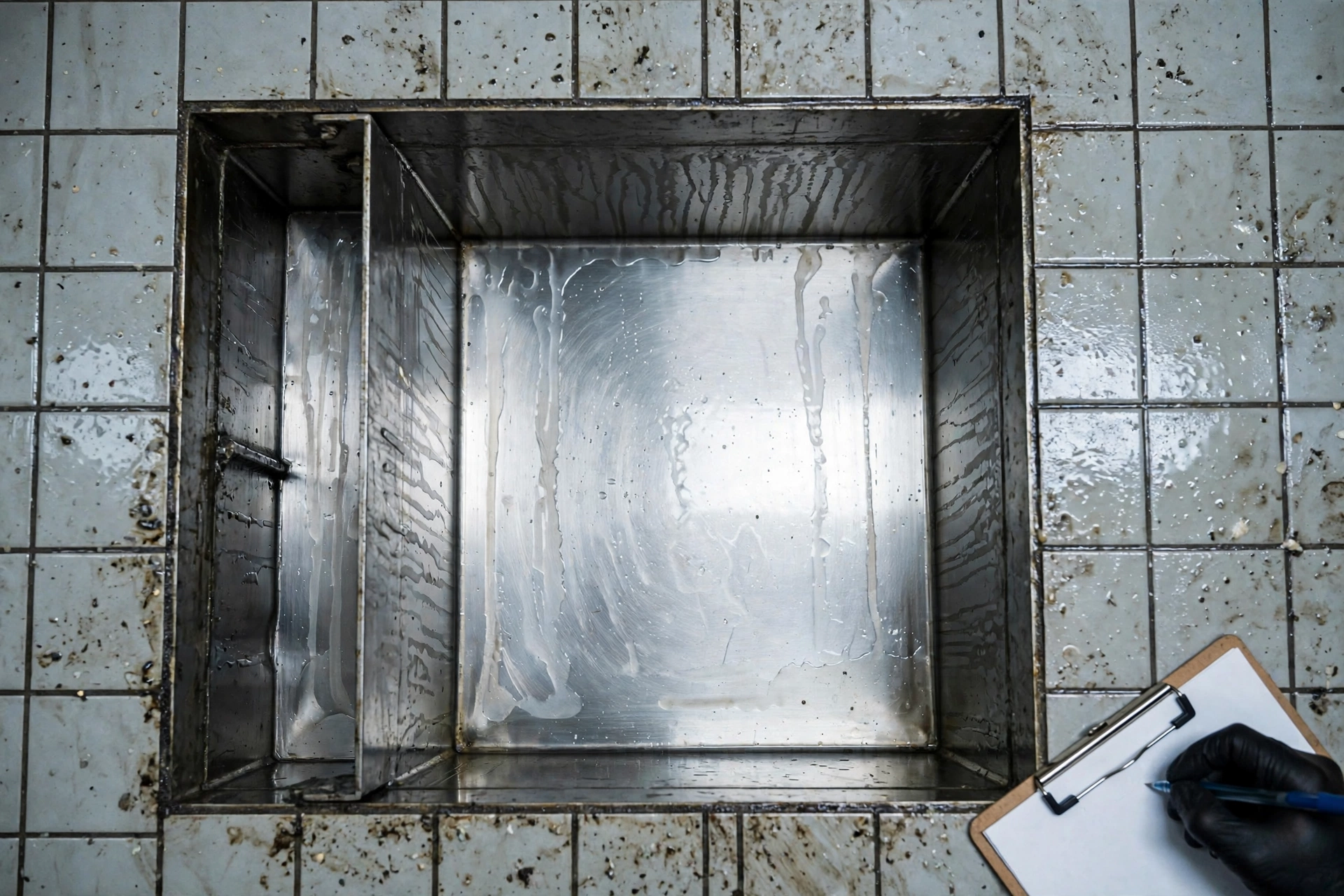
The trap sat in a tight spot beside the dish station. When the crew lifted the lid, the grease cap was thick and the solids underneath were deep. Together they stood well past the quarter-capacity mark, so the trap was long overdue by the trade's benchmark. Nothing about the condition broke a local rule. There is no local interval to break. But the kitchen had no records to show, which is exactly what a sewer authority could ask for.
Chapter 3: Cleaned, documented, scheduled
The crew pumped the trap out, scraped the interior and cleared the baffles. The floor drain ran clear. The cost fell in the small indoor trap band of $150 to $350, set by the trap's capacity, its tight access and the waste that came out. The owner kept the service record and the two of us talked through a rhythm that matched the fryer load. The kitchen now keeps its trap on a schedule, and the Monday smell has not come back.
When to call
The floor drain or sink is draining slowly, especially after a rush.
There is a sour or rancid smell at closing or near the trap.
You cannot remember when the trap was last emptied, or you have no record of it.
A sewer authority or health inspector has raised grease, or you want records ready before they do.
A backup has already happened. Emergency call-out is one and a half to two times the standard service price.
You are opening a kitchen and want service set up from the first week.
Winter
Winter calls for more checking, not less. Grease that stays semi-liquid in warm weather congeals as it gets colder and can form a solid mass. If you keep used oil in an outdoor bin, it can freeze, and the working fix is a bin swap: an empty bin comes in and the full one goes out. This is one Dearborn-serving provider's published guidance, passed on as practice, not as a rule.
Questions
Does Melvindale have its own grease trap law with a set pumping schedule?
This page does not speak for one. Dearborn has no FOG ordinance, no fixed interval and no manifest rule. For Melvindale's own sewer rules, check with the city. What we can say is that Michigan's Part 121 covers hauling the waste.
How often should a small Melvindale kitchen clean its trap?
It depends on how fast your trap fills. The trade pumps when grease and solids reach about a quarter of capacity. High-volume kitchens often run every 4 to 6 weeks, and low-volume kitchens every 3 to 6 months. These are working practices, not requirements.
What does cleaning a small indoor trap cost?
Small indoor traps are $150 to $350. Medium traps are $300 to $600. The price within a band follows capacity, access and waste volume.
Is there a flat price for the visit?
The bands above are our prices. We confirm which band your trap falls in when you call, and access and waste volume can move it within the band.
What if my kitchen has an outside interceptor?
We pump those too. Large exterior interceptors are $500 to $1,000 or more, by capacity and waste volume.
What do I get after the visit?
A service record. Under the sewer authority's pretreatment rules, records of inspection, cleaning and maintenance can be requested, so keep every one. The waste moves on a shipping document.
Who is allowed to haul trap waste in Michigan?
Part 121 treats it as a liquid industrial by-product. It must go with a transporter registered and permitted under state law, with a shipping document per shipment. A septage license does not cover it. You can ask any hauler for its paperwork.
What if I already have a backup?
Call right away. Emergency call-out is one and a half to two times the standard service price.
Can you jet a slow line?
Yes. Line jetting is priced with the service visit it rides with. Ask when you call and we will say how it fits your visit.
Do you take our used cooking oil?
Yes. There is no charge for clean oil.
Is the 25 percent rule the law?
No. It is the trade's scheduling benchmark. Your sewer authority's rule is regular cleaning at your expense, proven by records.
Do I have to close the kitchen?
Trap cleaning is done at the trap. We plan the visit with you around your service. We cannot promise a time before we have talked it through.
Will you keep emptying it for me on a schedule?
Yes. Scheduled maintenance with service records is part of what we do, and the rhythm follows your kitchen's load.
Call or send the form
Call (313) 351-8079, or fill in the short form below. Name and phone are required. Everything else is optional. A consent box is required before you send it.
The more details you give, the better we are able to help you.