Dearborn Grease Trap does grease trap cleaning for Lincoln Park restaurants from our base in Dearborn, about 14 minutes away. The taquerias and coney islands along Fort Street run small indoor traps, and in a kitchen that fries, grills and washes dishes all day those traps fill faster than most owners expect. If yours drains slowly, smells after the lunch rush, or is due for a visit before anyone asks to see your records, this page explains how the work runs, what it costs and when to pick up the phone.
We write for the person running the kitchen: the owner, the manager, the person who gets the call when the floor drain backs up. You will find the rules that apply and the ones that do not, our prices, and a full job told start to finish.
Call us before it backs up
If you already know you need a trap cleaned, call (313) 351-8079. Tell us what kind of kitchen you run, where the trap is, and what you are seeing. If you are not sure the trap is the problem, call anyway and we will work through the signs with you.
What Lincoln Park kitchens run on
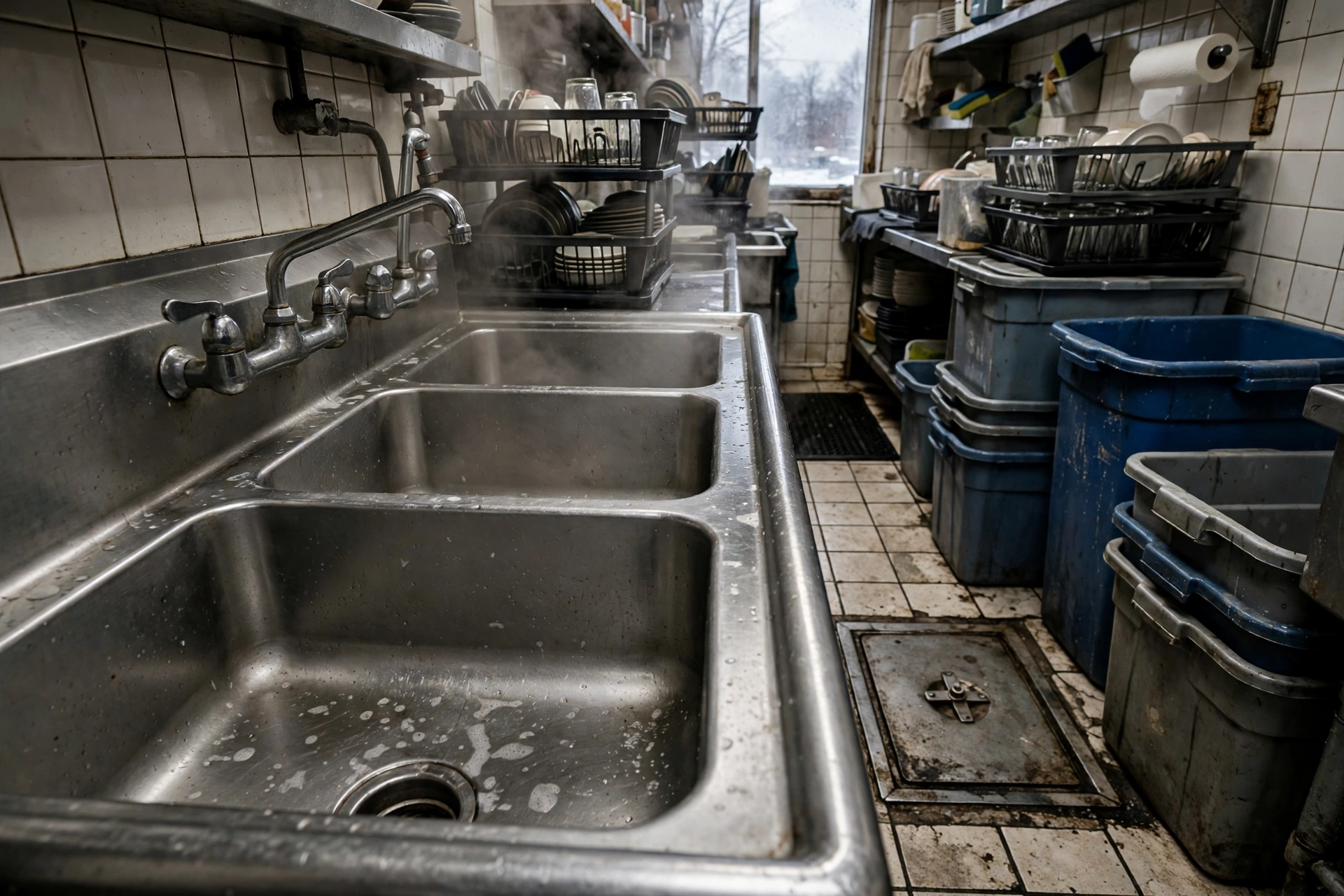
Fort Street carries a cluster of taquerias and coney islands, and the kitchens behind those counters tend to share a setup: a small trap indoors, close to the dish sink or the floor drain, working on a short cycle. These are not the large exterior interceptors you see behind chain restaurants. They are compact units that a crew can reach, open, empty and scrape clean in a single visit.
That is why interior trap cleaning is the work here. A small trap has little room to spare. A busy lunch and dinner service sends grease and food solids into it all day, and once it fills, the grease has nowhere to go but down the line toward your floor drain and the sewer.
What governs the work, and what does not
Here is what a kitchen owner needs to know, stated plainly.
- No Dearborn FOG ordinance sets a pumping interval. Dearborn's code has no trap-sizing table, no fixed cleaning schedule and no city manifest rule for restaurants. We do not quote a Lincoln Park schedule either, because we have no such rule to point to. Your city and your sewer authority are the places to ask what they require of your kitchen.
- Michigan's Part 121 governs the waste itself. Grease trap clean-out residue is a liquid industrial by-product. It may be hauled only by a registered, permitted transporter, on a shipping document for each shipment, and the restaurant must use such a transporter and keep its own copies. A septage license does not cover this waste.
- Wayne County handles the food side. The County Environmental Health Section licenses and inspects food-service facilities in Wayne County outside Detroit under the Michigan Food Law, and most establishments get two routine evaluations a year.
When to clean is a trade habit, not a law. Crews pump a trap when grease and solids together reach about a quarter of its capacity. Kitchens then settle on a rhythm. High-volume kitchens commonly run every 4 to 6 weeks. Moderate kitchens run monthly to quarterly. Low-volume kitchens run every 3 to 6 months. Those are what kitchens actually do, not requirements.
How a visit runs
Every visit follows the same sequence, so you know what is happening in your kitchen.
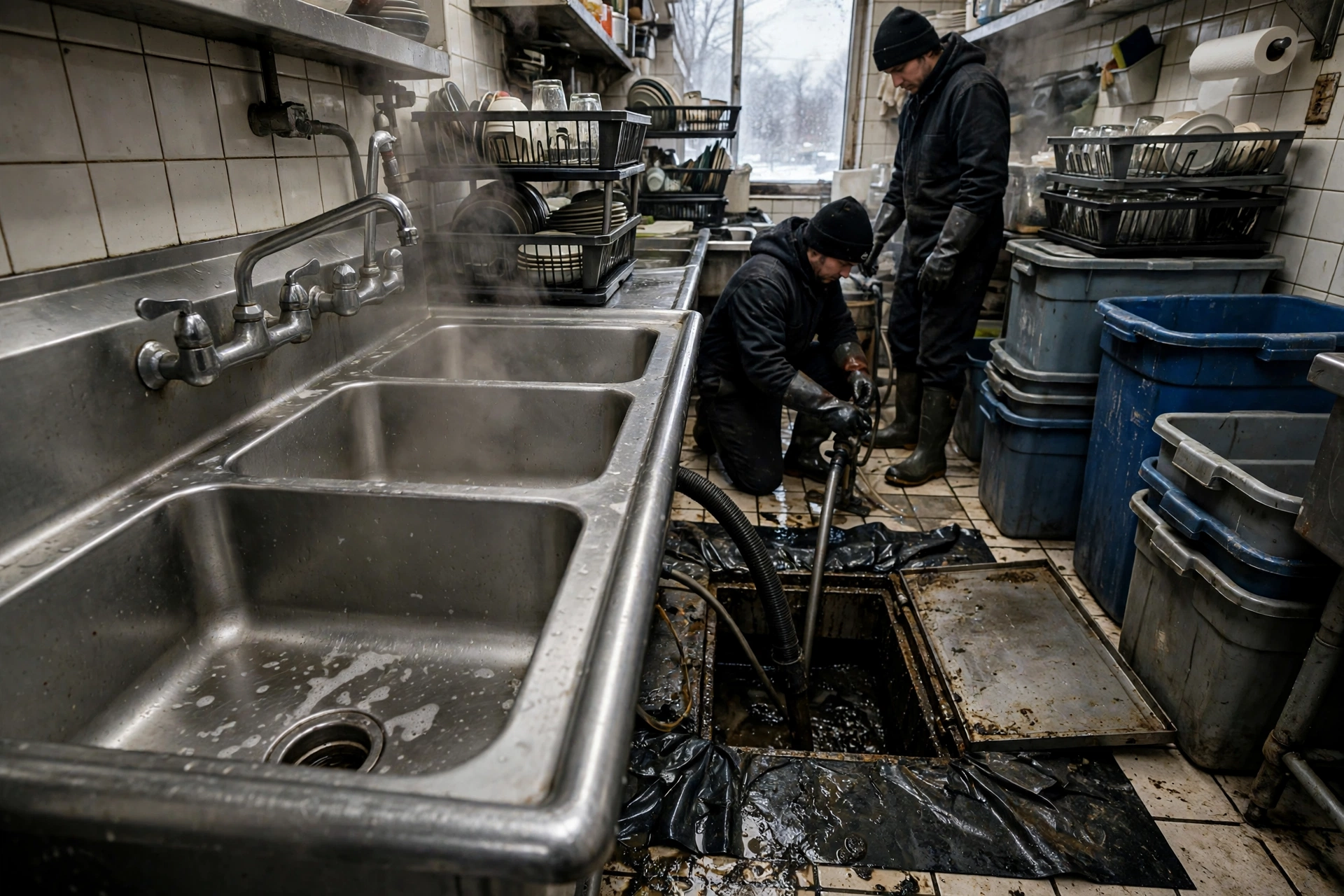
1. We confirm the trap's location and how the crew reaches it, and agree a quiet hour with you. 2. The crew opens the lid and checks the grease cap and solids against the quarter benchmark. 3. Liquid, grease and sludge come out, and the interior is scraped. 4. Baffles are cleared and inspected, and the condition of the trap's parts is checked. 5. The lid is reseated and the area is left clean. 6. You receive the paperwork for the visit.
What the visit includes
- Full pump-out of grease cap, liquid and sludge
- Interior scraped clean
- Baffles cleared and inspected
- Condition check of the trap's components
What the crew documents
- A service record for the visit
- The shipping document that moves the waste, as Part 121 requires
What you keep
- Your copy of the paperwork, filed and ready if an inspector or your sewer authority asks for it
- A clear picture of how fast your trap fills, to set your next visit
What it costs
These are our prices.
| Service | Price |
|---|---|
| Interior grease trap cleaning, small indoor traps | $150 to $350 |
| Medium traps | $300 to $600 |
| Large exterior interceptors | $500 to $1,000 or more, by capacity and waste volume |
| Emergency call-out | One and a half to two times the standard service price |
| Used cooking oil collection | No charge for clean oil |
Line jetting is priced with the service visit it rides with. Most Lincoln Park counter-service kitchens fall in the small indoor trap range. What moves a quote within a range is the capacity of the trap, how easy it is to reach, and how much waste is in it. A trap in a cramped corner behind equipment takes longer than one by the dish sink.
Ready to set up a schedule?
A standing visit costs less in worry than a backup costs in a lost lunch service. Call (313) 351-8079, tell us how busy the kitchen runs, and we will help you pick a rhythm from the working frequencies above.
Featured job: A Fort Street coney island
Chapter 1: The call
The kitchen manager at a coney island on Fort Street phoned us on a weekday morning. The floor drain by the dish station had started draining slowly, and after every lunch rush a smell hung near the floor. Nobody had cleaned the trap in longer than anyone could say. The manager had not tied the symptoms to it yet, and wanted to know what it would cost before anyone came.
We gave the small indoor trap range, $150 to $350, and explained that the quote narrows once the crew sees the trap and how it is reached.
Chapter 2: Opening the trap
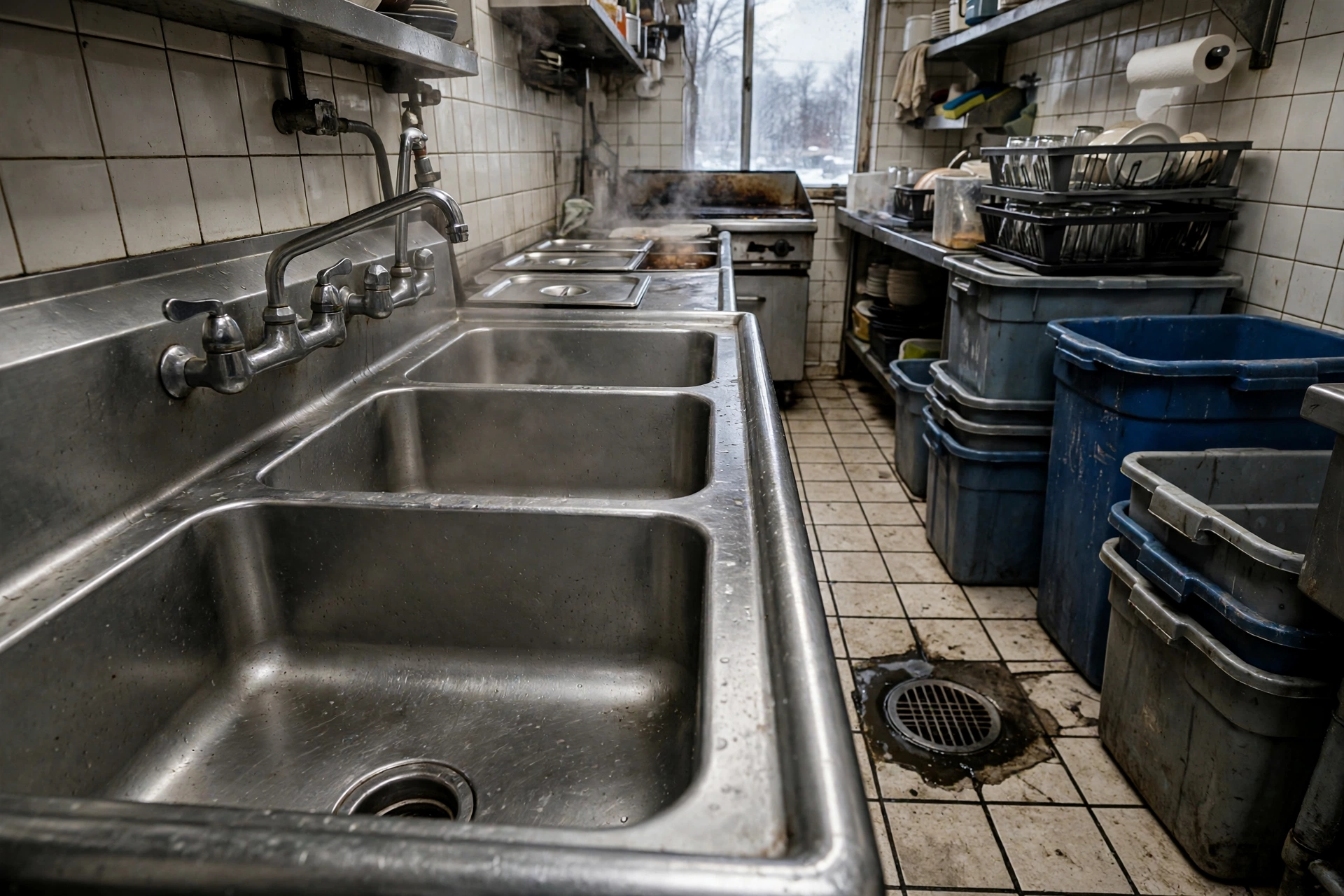
The crew lifted the lid and found a thick grease cap on top and a heavy layer of solids on the bottom. Measured against the quarter benchmark, the trap was well past the point where crews would normally pump. The grease had nowhere left to go but the line.
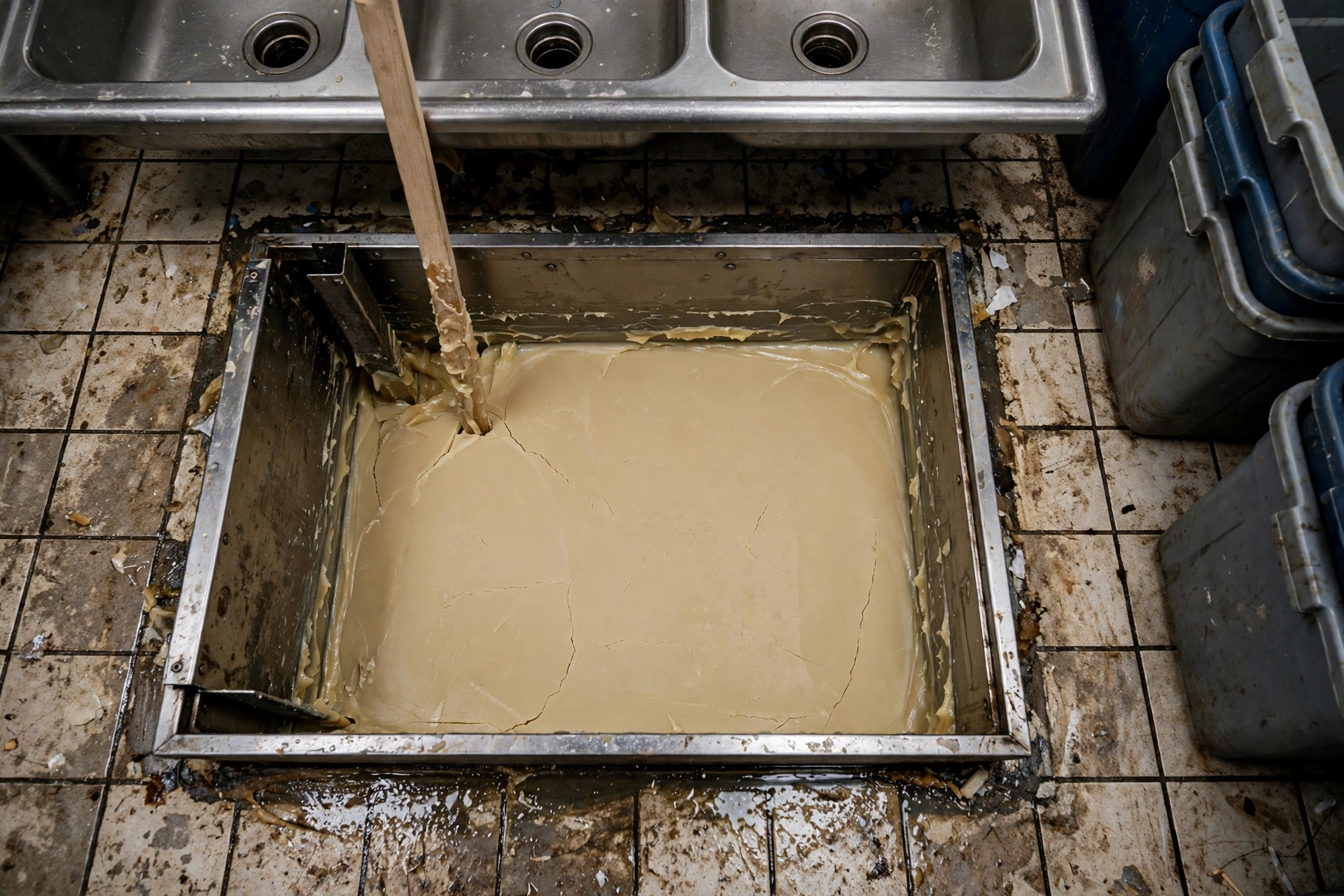
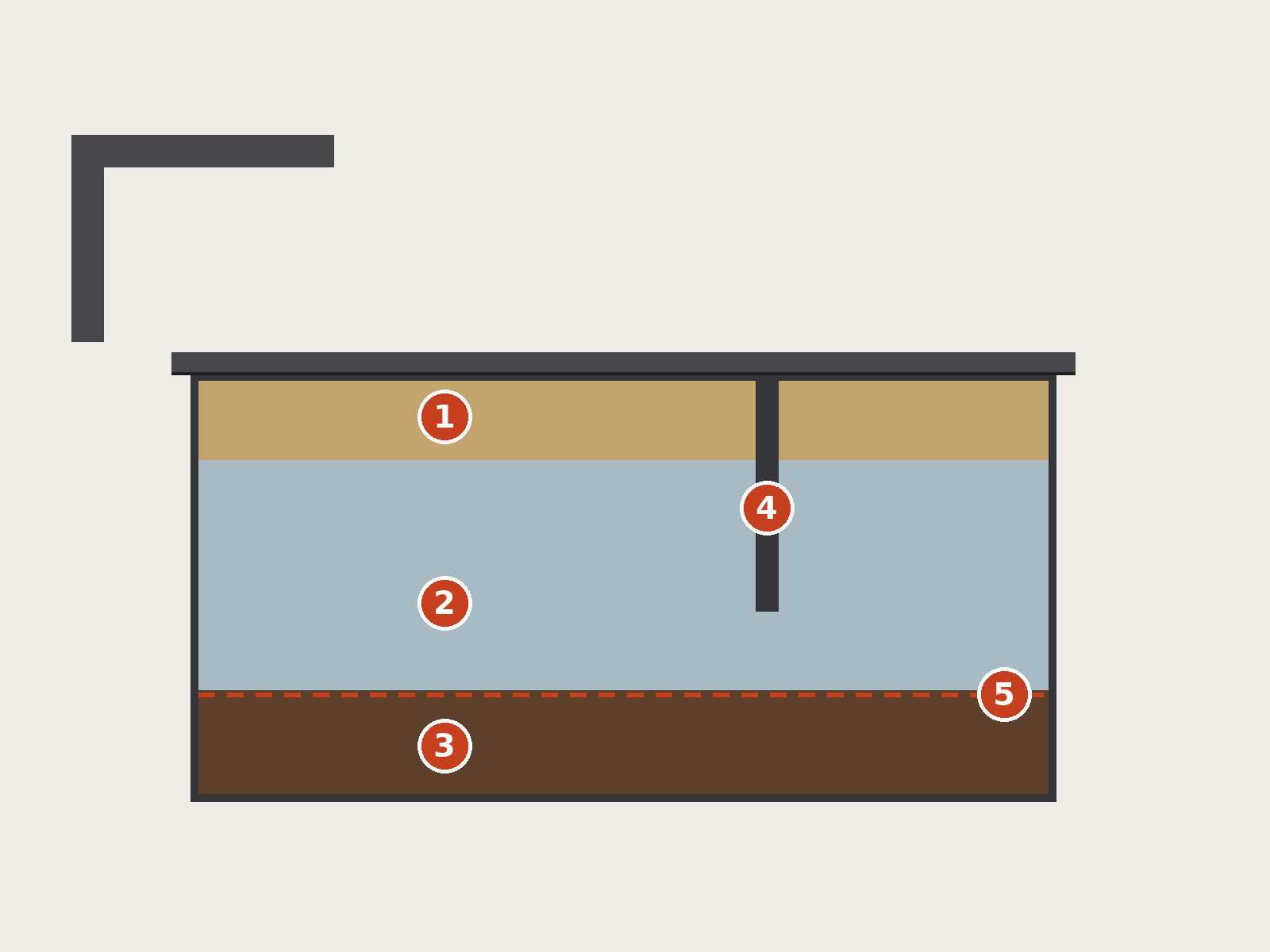
Crews pump when grease and solids together reach about a quarter of the trap's capacity. This is trade practice, not law.
Working frequencies: high-volume kitchens every 4 to 6 weeks, moderate monthly to quarterly, low-volume every 3 to 6 months. These are what kitchens run, not requirements.
Baffles are cleared and inspected on every visit, and the condition of the trap's components is checked.
Clean-out residue is a liquid industrial by-product under Michigan's Part 121 and moves only on a shipping document with a registered, permitted transporter.
Small indoor traps: $150 to $350. Medium traps: $300 to $600. No other figures appear. Dearborn has no FOG ordinance, and the figure says nothing about a local interval.
Chapter 3: Pump-out and paperwork
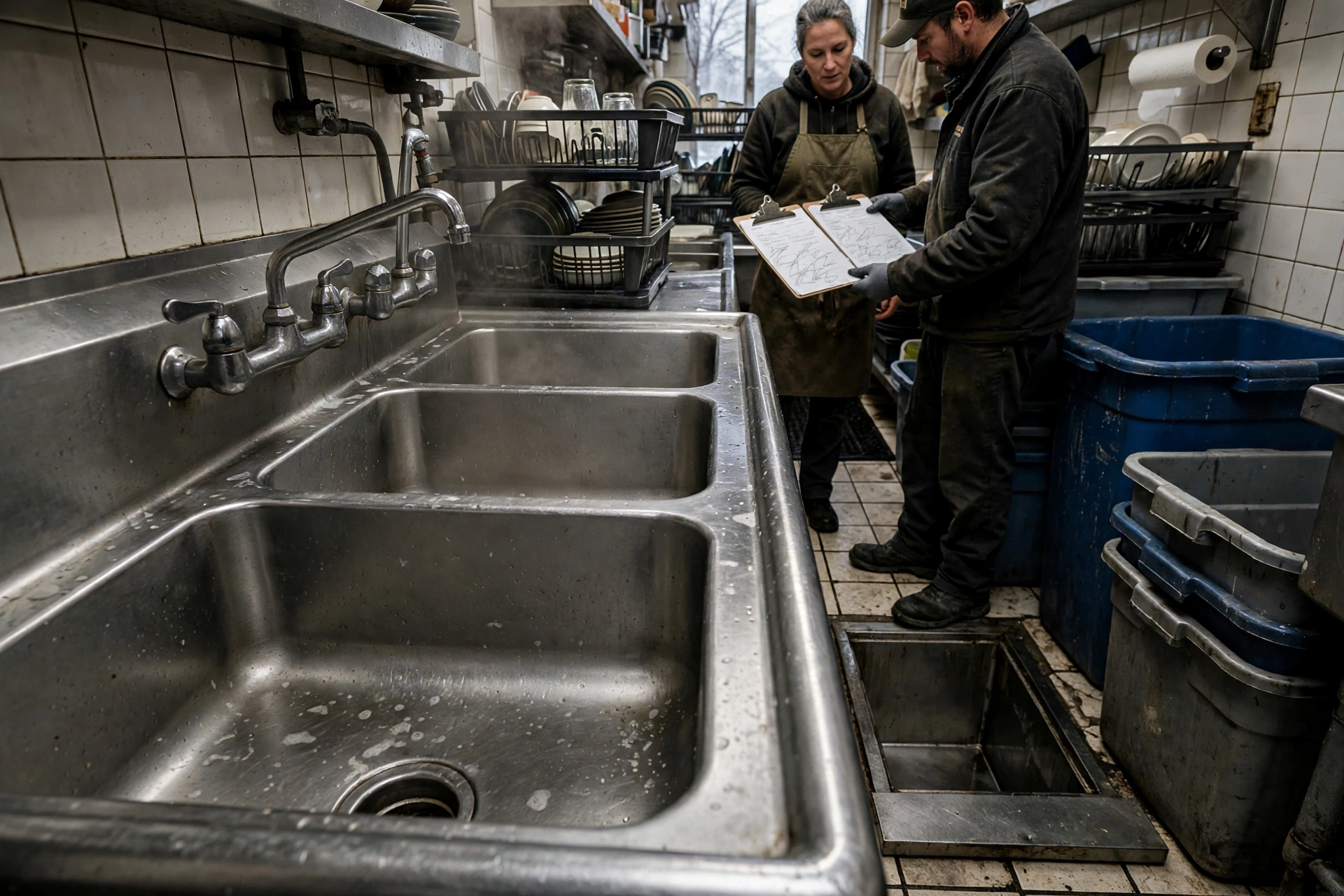
Liquid, grease and sludge came out and the interior was scraped to clean metal. The crew cleared the baffles, inspected them, and checked the trap's other parts. Nothing needed repair. The visit fell in the small indoor trap range, $150 to $350.
The waste left on a shipping document, and the manager received a copy along with the service record. Part 121 requires the restaurant to keep its own copies, so we handed them over in a folder the manager could file.
Chapter 4: The schedule after
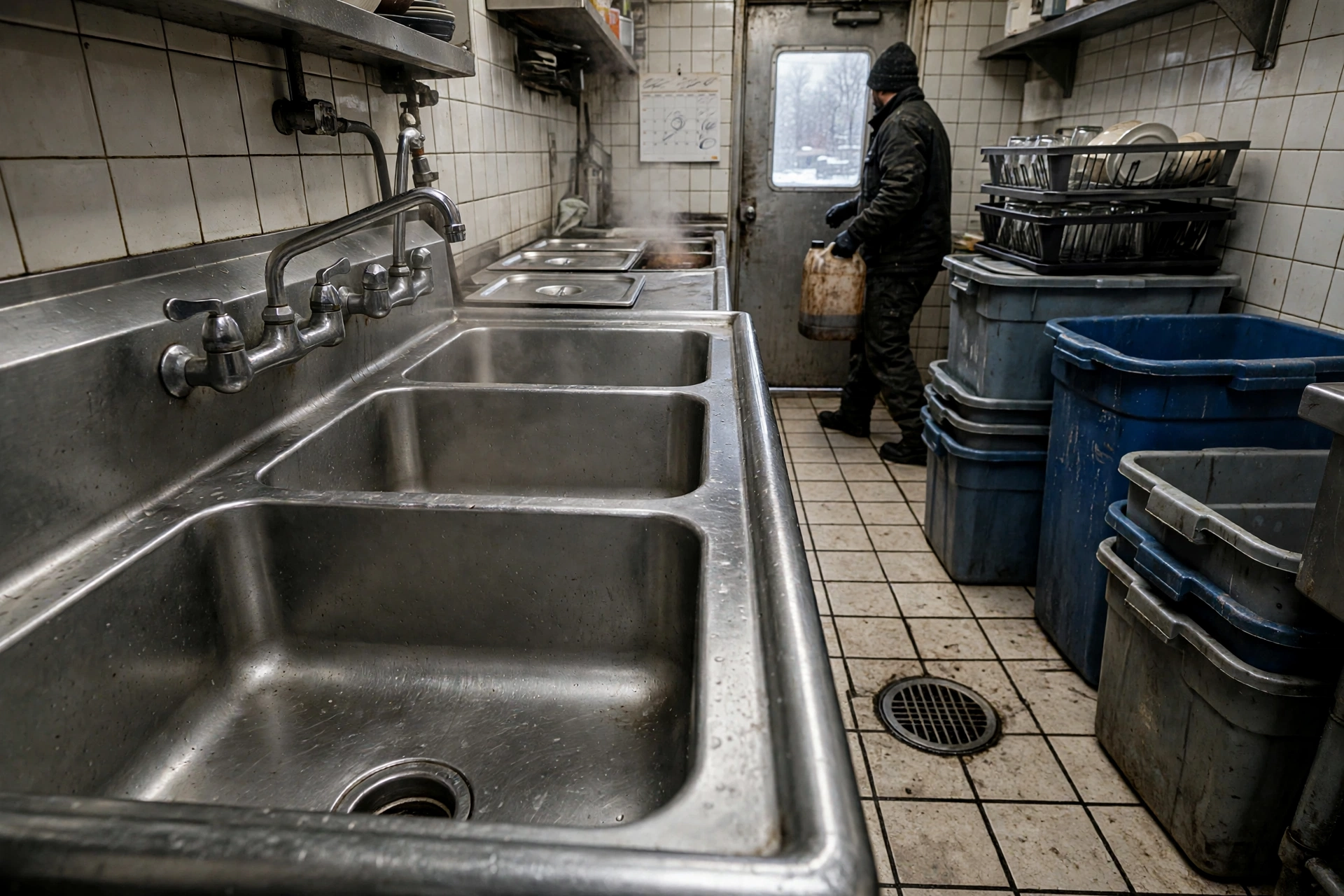
Before leaving, the crew and manager talked through how quickly the trap had filled. A coney island fries and washes all day, so it sits at the busy end of the range. The manager set a standing visit on a short cycle, in the range high-volume kitchens commonly run, 4 to 6 weeks. The fryers produced used oil too, and we told the manager clean oil is collected at no charge.
When to call
The floor drain is slow or standing water lingers after service.
A smell comes from the drain or trap area, especially after a rush.
The trap has not been opened in so long that nobody knows its state.
You want records in order before an inspection or a notice arrives.
A backup has started. Emergency call-out runs one and a half to two times the standard service price, and the sooner you call, the less the backup costs you.
Your menu or hours have changed and the trap is filling faster.
Questions
How do I know my trap needs cleaning?
Watch for slow drains, smells near the trap or floor drain, and standing water after busy periods. The trade benchmark is to clean when grease and solids reach about a quarter of the trap's capacity. If you cannot tell, we can open the trap and measure it.
How often should a Lincoln Park kitchen clean its trap?
No fixed interval applies that we can point to. Working practice is the guide: high-volume kitchens commonly run every 4 to 6 weeks, moderate kitchens monthly to quarterly, and low-volume kitchens every 3 to 6 months. The right rhythm is the one that keeps the trap under the quarter mark.
Does Dearborn or Lincoln Park set a pumping schedule?
Dearborn has no FOG ordinance, so there is no city-set trap size, interval or manifest rule there. We have no Lincoln Park rule to quote, so ask your city and your sewer authority what they require. Dearborn's own code limit on grease discharge, 1,500 mg/L, is Dearborn's rule and we do not present it as Lincoln Park's.
What law applies to the waste wherever my kitchen is?
Michigan's Part 121. Trap clean-out residue is a liquid industrial by-product. It moves only with a registered, permitted transporter, on a shipping document, and the restaurant keeps its own copies.
What does it cost?
Small indoor traps: $150 to $350. Medium traps: $300 to $600. Large exterior interceptors: $500 to $1,000 or more, by capacity and waste volume.
What sets the price within a range?
Trap capacity, how easy the trap is to reach, and how much waste is in it.
Will the visit shut my kitchen down?
The trap is indoors and the crew works at it directly. Tell us when you call which hours are quietest, and that goes into planning the visit.
What paperwork do I get?
A service record for the visit and your copy of the shipping document that moves the waste. File them where you can find them.
Do you collect used cooking oil?
Yes. Collection is at no charge for clean oil.
Do you jet lines?
Yes. Line jetting is priced with the service visit it rides with. Tell us about the slow line when you book.
What if the trap has already backed up?
Call (313) 351-8079. Emergency call-out is priced at one and a half to two times the standard service price.
Does winter change anything?
One Dearborn-serving provider's published guidance says grease that stays semi-liquid in warm weather can congeal as it gets cold, so traps need more frequent checking in winter. The same guidance says used oil can freeze in outdoor bins, and the working fix is a bin swap. We treat this as provider guidance, not a rule.
What should never go down the drain?
Oil poured into pipes can solidify inside them. Used oil belongs in a sealed container for collection.
Who inspects my kitchen?
Wayne County's Environmental Health Section licenses and inspects food-service facilities in the county outside Detroit, and most establishments receive two routine evaluations a year.
Book a visit
Call (313) 351-8079, or send the form below.
The form asks for your name and phone number, both required. Everything else is optional, including the kitchen's location, what you are seeing and how big the trap is. A consent box is required before you send it. The more details you give, the better we are able to help you.