Dearborn Grease Trap works with the fry shops, coney islands and carry-outs of Highland Park, and the work that fits those kitchens best is used cooking oil collection paired with regular trap cleaning. A kitchen that fries all day makes two kinds of waste, spent oil from the fryers and grease and solids that settle in the trap. We take both off your hands on one route, with paperwork for each. Highland Park sits about 22 to 27 minutes from our base in Dearborn, and the Woodward Avenue kitchens are the ones we plan the route around.
Talk to us about your kitchen
If you are dealing with a slow drain, a smell, a full oil bin or a notice, call (313) 351-8079 and tell us what the kitchen runs. If you are setting up service before any of that happens, the same call works. We will ask about your fryers, your trap and where your oil is stored, and give you a plain answer on price and schedule.
Highland Park's kitchens and why this is the work
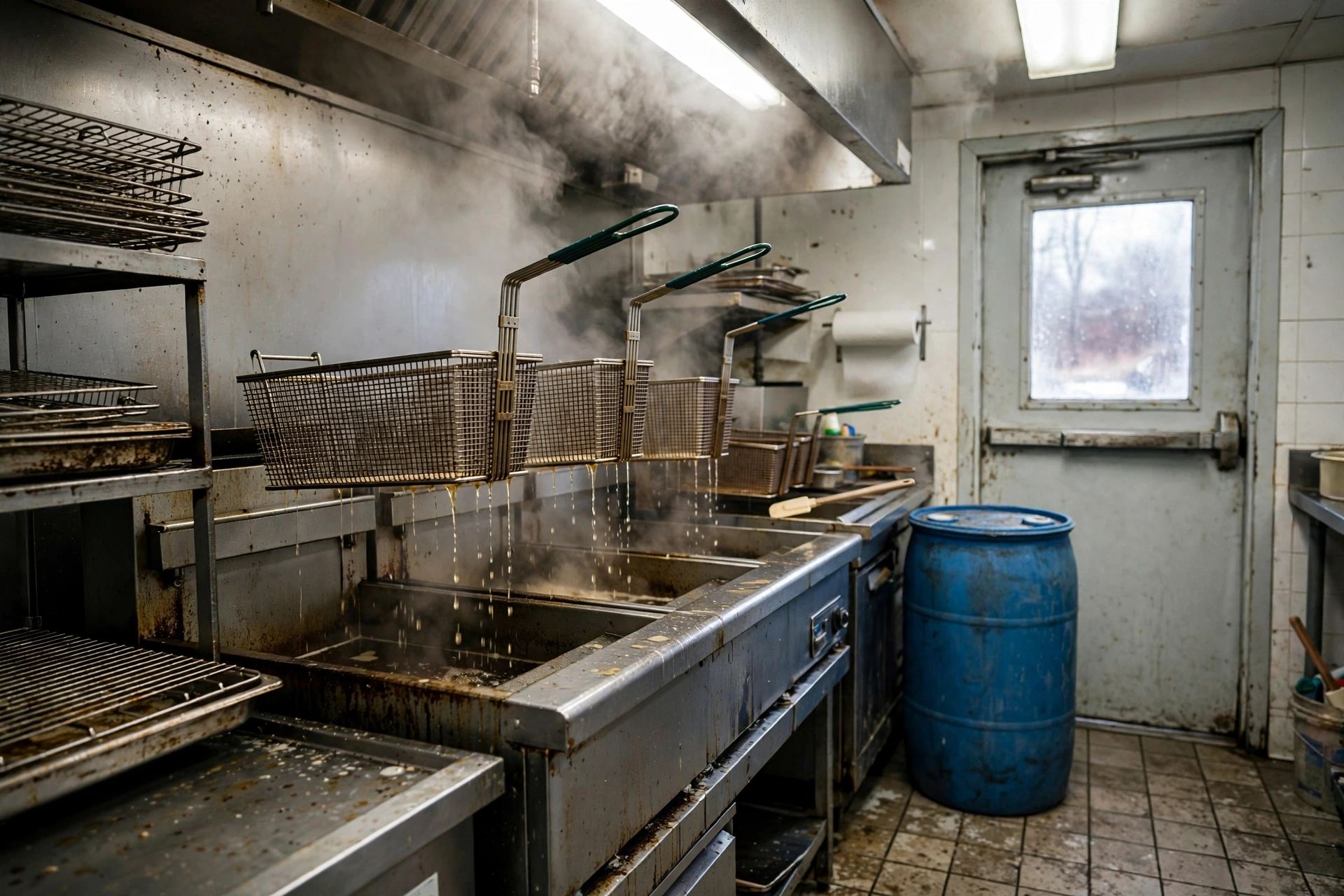
Woodward Avenue carries a run of carry-outs: soul food, fried fish, fried chicken and coney. These kitchens are fryer-heavy by menu. The fryers go through oil quickly, and everything that gets rinsed, scraped and mopped goes down a drain toward a trap that fills fast.
That is why we pair the two services. An oil bin that sits full or freezes outside, and a trap that is pushed past its limit, are the two most common causes of calls from kitchens like these. Handling them together means one visit pattern and one set of records.
What actually governs this work
Dearborn has no FOG ordinance. There is no trap-sizing table, no fixed pumping interval and no city manifest rule. Dearborn's own code does set a limit on grease discharge, 1,500 mg/L. That is Dearborn's limit, and this page does not claim it for Highland Park. We have not set out Highland Park's local sewer rules here, so ask your sewer authority what applies to your building. We can tell you what we see in the trap and what we record.
Two things hold across Michigan. Trap clean-out residue is a liquid industrial by-product under Part 121 of state law. It can only be hauled by a registered, permitted transporter, on a shipping document, and the restaurant keeps its own copies. A septage license does not cover it.
The trade's working rule is to pump when grease and solids reach about a quarter of the trap's capacity. That is a scheduling benchmark, not a legal requirement. Kitchens that fry heavily often run every 4 to 6 weeks. Low-volume kitchens often run every 3 to 6 months. Those are the schedules kitchens actually keep, not rules.
How the service runs for a Highland Park kitchen
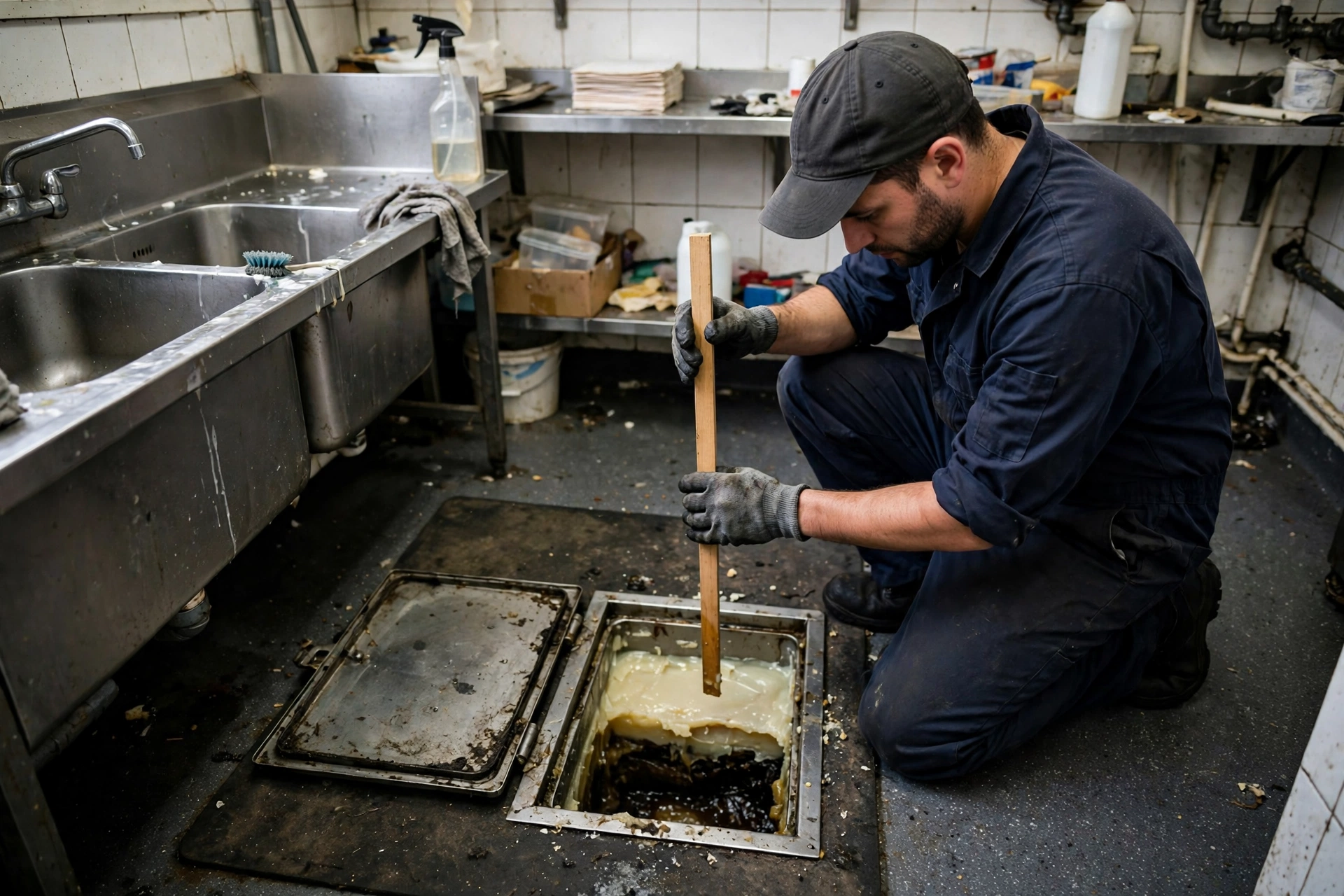
The visit goes in a set order. We open the trap and read how much grease and solids it holds against the quarter-full benchmark. We pump out the grease cap, the liquid and the sludge. We scrape the interior and clear and check the baffles. We look over the lid, inlet and outlet for wear. If the line is slow, we can jet it, priced with the service visit it rides with.
Used oil is handled on the same stop. Clean oil goes into sealed containers sized to your kitchen and is collected on a schedule.
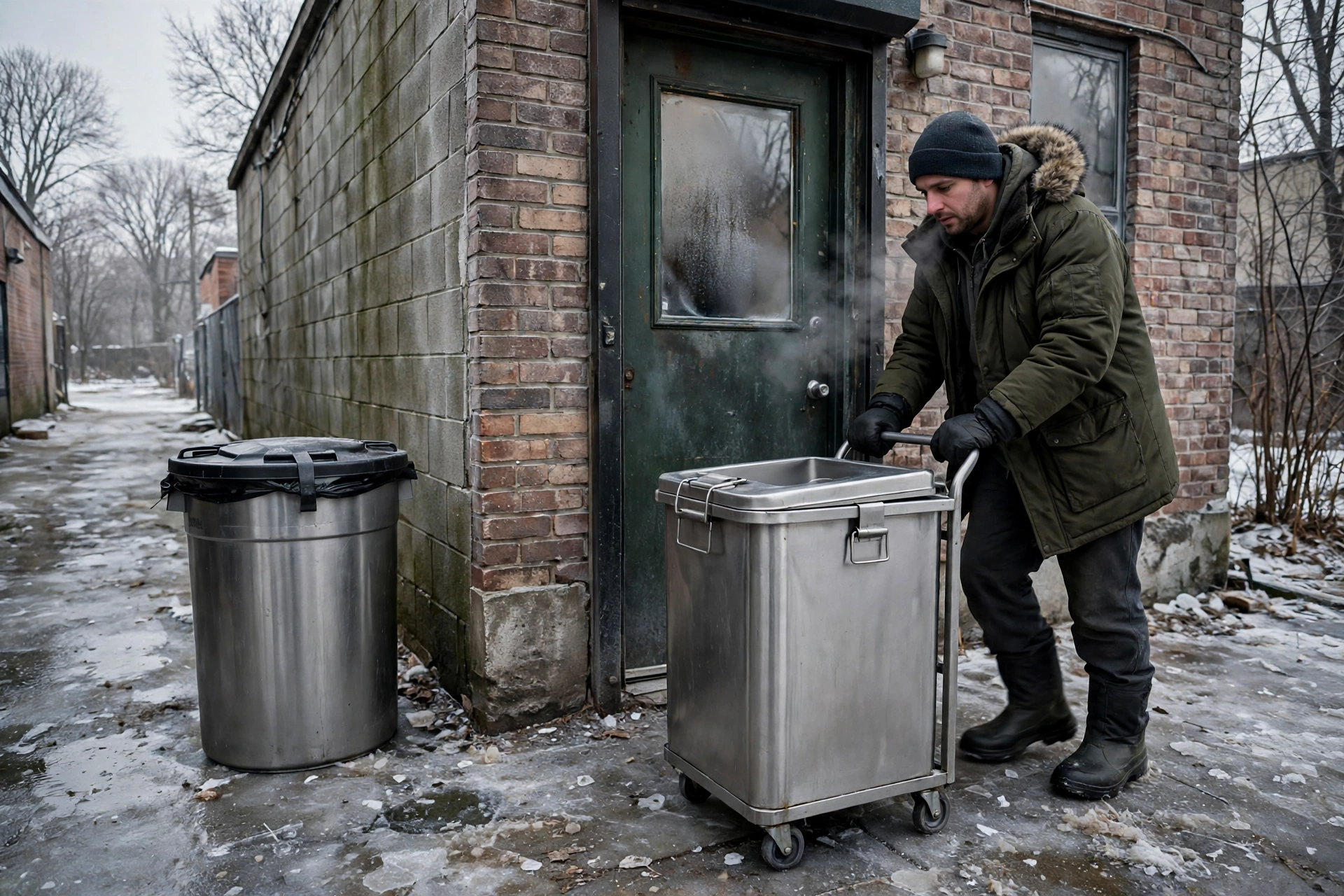
Winter changes the picture. Fat that stays semi-liquid in warm weather can congeal as it gets cold. Used oil can freeze in an outdoor bin, and the working fix is to deliver an empty bin and take the full one away. Provider guidance also says traps need checking more often in winter, not less.
What the visit includes: pump-out of the trap, interior scraping, baffle clearing and inspection, a component check, and collection of clean used oil. What the crew documents: the condition of the trap, what was removed, and the shipping document for the hauled waste. What you keep: a written service record for each visit, ready to show a sewer authority or inspector if one asks.
What it costs
| Service | Price |
|---|---|
| Interior grease trap cleaning, small indoor traps | $150 to $350 |
| Medium traps | $300 to $600 |
| Large exterior interceptors | $500 to $1,000 or more, by capacity and waste volume |
| Emergency call-out | One and a half to two times the standard service price |
| Used cooking oil collection | No charge for clean oil |
Line jetting is priced with the service visit it rides with, so we do not list a separate price. Disposal that follows the rules is part of the visit, not an add-on. The price turns on the size of the trap, how hard it is to reach, and how much waste comes out.
Ready to set it up?
Call (313) 351-8079 to get a Highland Park kitchen on a schedule. We will help you work out how often your trap needs service, and we will match the oil pickup to how fast your fryers turn over.
Featured job: a Woodward Avenue fish carry-out
Chapter 1: The cold week
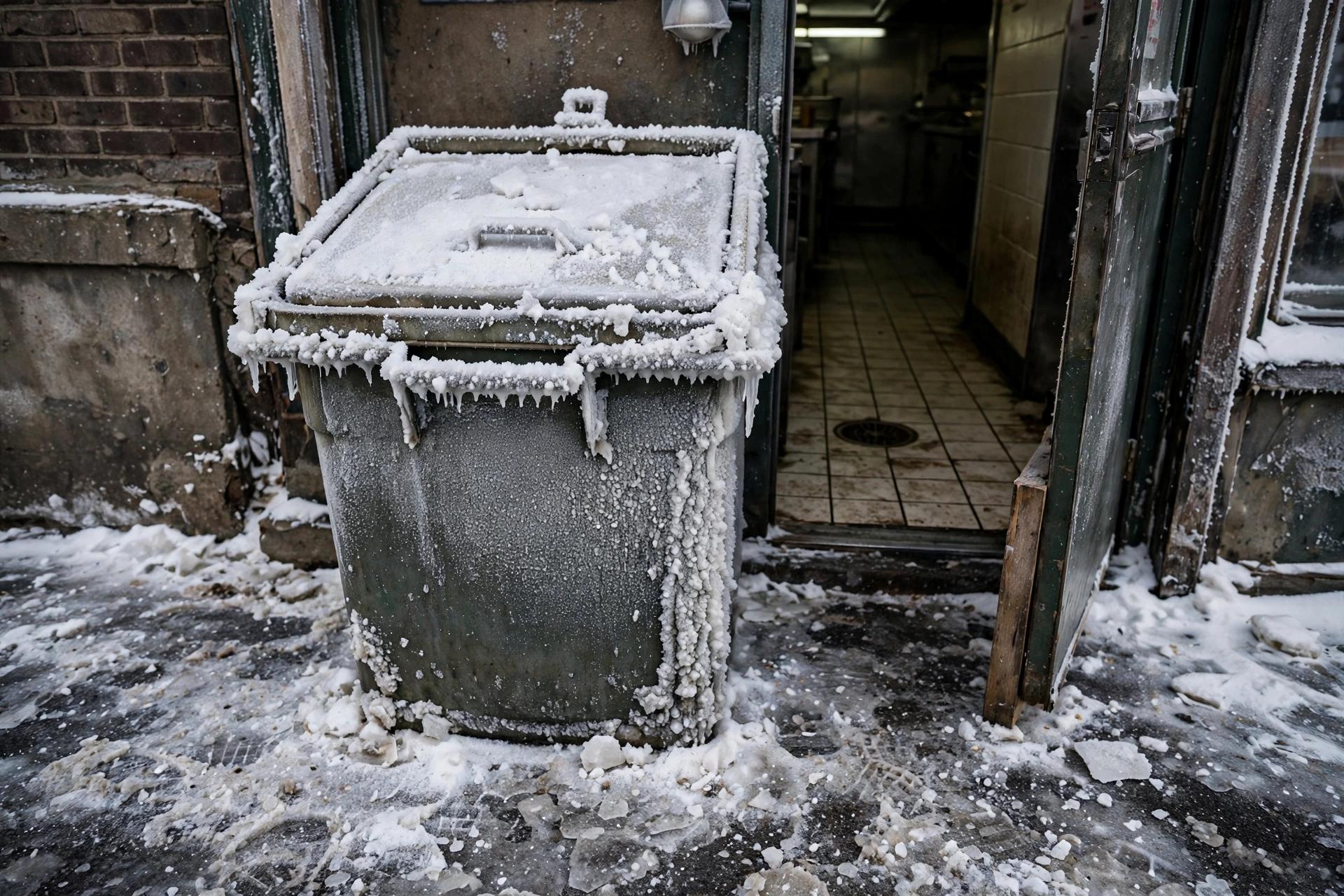
A fried-fish carry-out on Woodward Avenue called us in a cold week. The oil bin outside had frozen, so the cooks were storing spent oil in buckets by the fryers. Inside, the floor drain was draining slowly and there was a smell near the back sink. Nobody could say when the trap had last been cleaned.
Chapter 2: Opening the trap
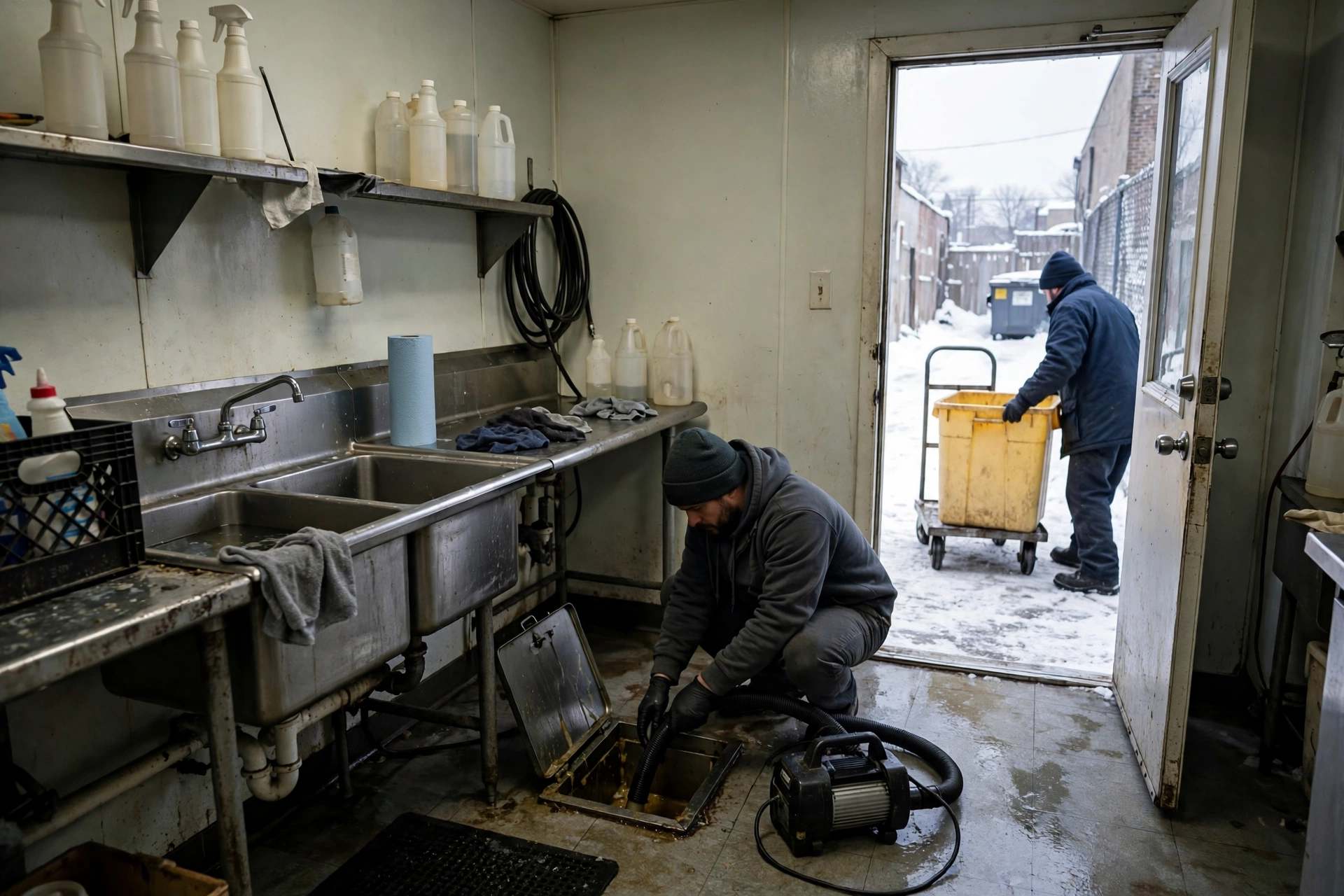
The trap was well past a quarter full. The crew pumped it, scraped the interior, cleared the baffles and checked the lid and fittings. Outside, an empty bin went in and the frozen one went out. The oil in the buckets went into sealed containers. A small indoor trap is priced at $150 to $350, and clean oil is collected at no charge.
Chapter 3: A schedule that fits the fryers
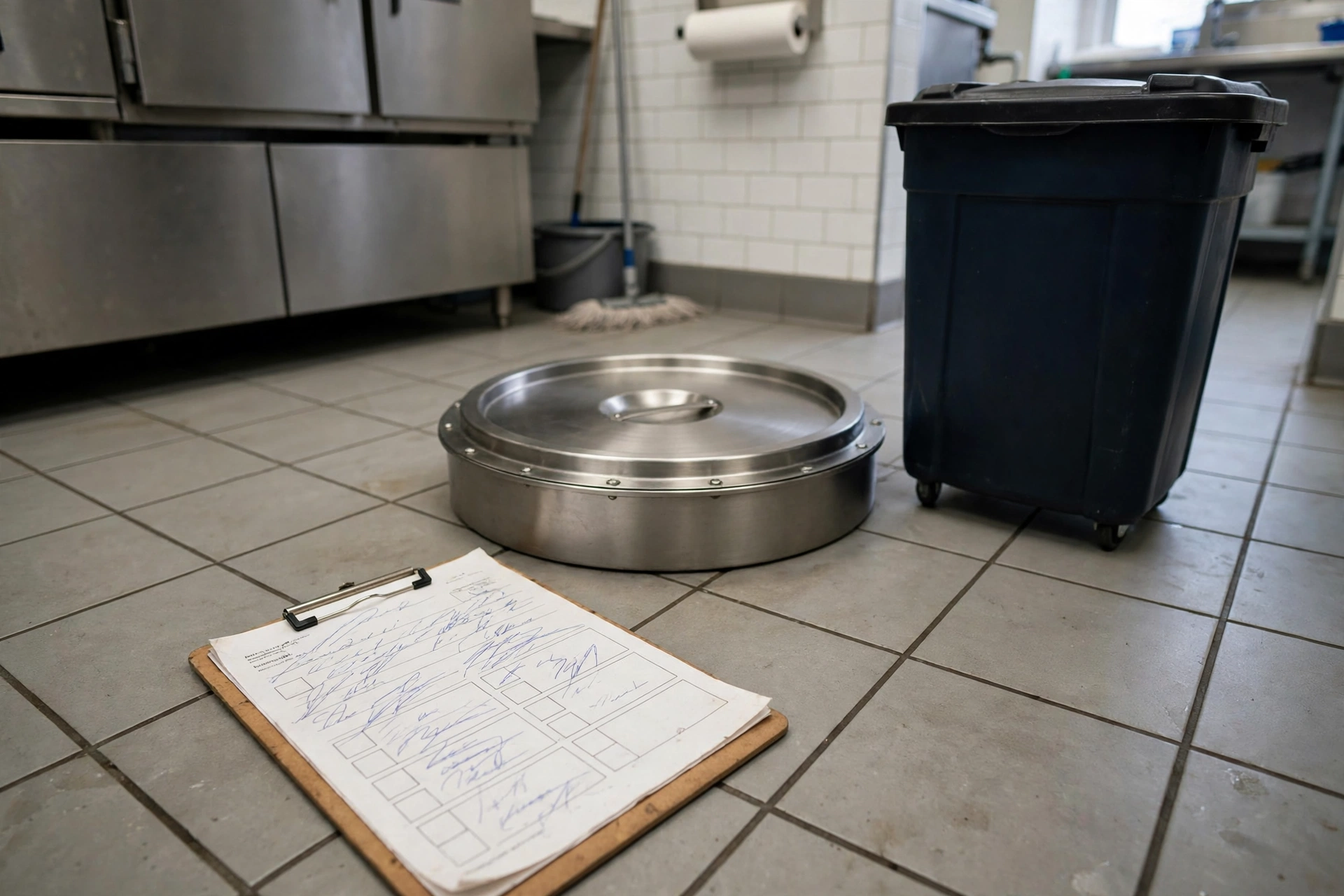
Before leaving, the crew gave the owner the service record and the shipping document for the hauled waste. A kitchen frying this heavily often runs on a 4 to 6 week cycle, so that became the starting schedule. The owner can adjust it by checking how full the trap is at each visit.
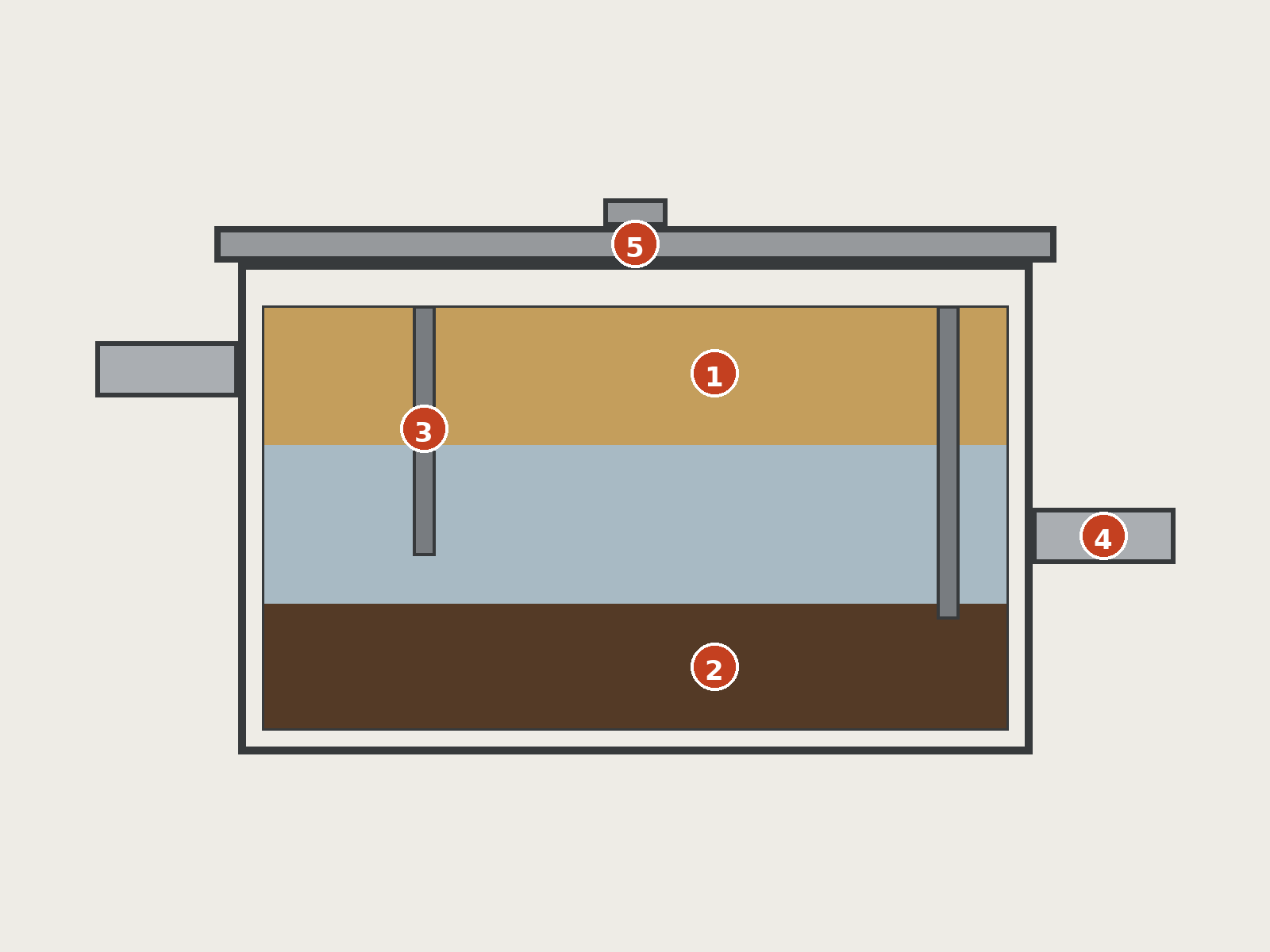
The grease cap at the top: the trade pumps when grease and solids reach about a quarter of the trap's capacity. This is a scheduling benchmark, not law.
The sludge at the bottom: solids settle here and count toward the same quarter.
The baffles: the crew clears and checks them at every pump-out.
The hauled waste: clean-out residue is a liquid industrial by-product under Michigan's Part 121 and travels on a shipping document with a registered transporter.
The bill: small indoor traps are $150 to $350; clean used oil is collected at no charge.
When to call
Call when the floor drain runs slowly, when there is a smell near the trap or back sinks, or when the oil bin is full, frozen or overflowing. Call when you have received a notice or expect an inspection, or when you cannot say when the trap was last cleaned. Call when you are opening a kitchen or changing the menu and want service set up before the first backup. Emergency call-outs run one and a half to two times the standard service price.
Send us the details
Fill in the form below, or call (313) 351-8079. Name and phone are required, and everything else is optional. A consent box is required before you send it. The more details you give, the better we are able to help you.
Tell us what the kitchen fries, what size and where the trap is, and how the oil is stored now.
Questions
Do you handle both the trap and the used oil in Highland Park?
Yes. Highland Park is a good fit for pairing the two, and we collect oil on the same stop as the trap cleaning.
What does used cooking oil collection cost?
Clean oil is collected at no charge. If your oil is mixed with water or other waste, call and describe it so we can tell you what to expect.
How much does trap cleaning cost?
Small indoor traps are $150 to $350, medium traps $300 to $600, and large exterior interceptors $500 to $1,000 or more, by capacity and waste volume. The price depends on trap size, access and waste volume.
How often should I have the trap pumped?
The trade pumps when grease and solids reach about a quarter of the trap's capacity. Heavy fryer kitchens often run every 4 to 6 weeks and low-volume kitchens every 3 to 6 months. Those are working schedules, not legal requirements.
Is there a Highland Park rule that sets how often I must pump?
We do not state one here. Dearborn has no FOG ordinance with a fixed interval, and we have not set out Highland Park's local rules. Ask your sewer authority what applies to your building.
What paperwork do I get?
A written service record for each visit and a shipping document for the hauled waste. Under Michigan's Part 121 you keep copies of the shipping documents.
Why does the waste need a shipping document?
Trap clean-out residue is a liquid industrial by-product under Part 121. It can only be hauled by a registered, permitted transporter, on a shipping document. A septage license does not cover it.
What happens to my oil bin when it freezes?
We do a bin swap. We bring an empty bin and take the full one away.
Do traps need more attention in winter?
Provider guidance says yes. Fat can congeal as it cools, and deep cold can freeze grease sitting in a trap, so checking more often is wise.
Can you jet a slow line?
Yes. Jetting is priced with the service visit it rides with.
What if the trap is backing up right now?
Call (313) 351-8079. Emergency call-out is one and a half to two times the standard service price.
Do I have to close the kitchen?
Tell us your slow hours when you call and we will plan the stop around them.
Do you serve outside Highland Park?
Yes. Dearborn and the surrounding towns are on our route.