Dearborn Grease Trap handles grease trap cleaning for the restaurants along Joseph Campau Avenue and the side streets around it in Hamtramck, where small kitchens turn out a lot of food from very little floor space. If your sink is draining slowly, the back of the kitchen smells, or a notice has landed on the counter, the trap under your line is the first place to look. We pump it out, scrape it, check it, and leave you a record of what we found.
Call us about your Hamtramck kitchen
If you already know the trap is overdue, or you are not sure and want someone to look, call (313) 351-8079. Tell us what kind of kitchen you run, where the trap sits, and what you have noticed. We will tell you what the visit involves and what it costs before anyone shows up.
Hamtramck's kitchens and why this is the work here
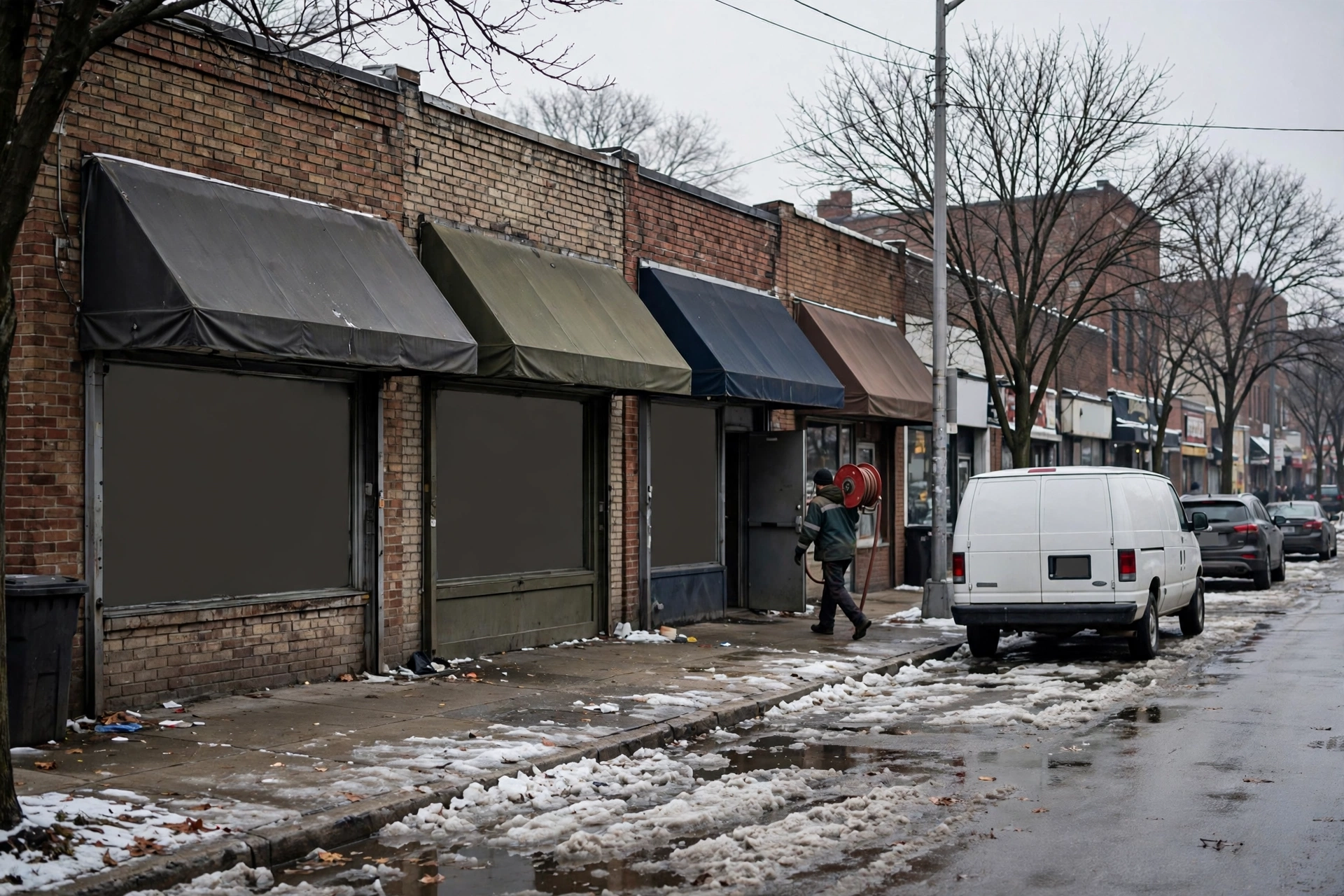
Joseph Campau Avenue is one of the densest international restaurant strips in Michigan. Polish, Bangladeshi and Yemeni kitchens sit close together, and many of them are small rooms with a full menu and a steady lunch and dinner trade. Small kitchens with high volume tend to have small indoor traps, often under a prep sink or a three-compartment sink, and those traps fill quickly because the same few drains carry all the fryer, griddle and dish-pit grease.
That is why interior trap cleaning is the main work in Hamtramck. A small trap holds little, so a busy line can fill it well before anyone sees a problem. Where a kitchen does have a larger exterior interceptor, we pump and clean that as well, and the prices for it are below.
What governs your trap, and what does not
Michigan's Part 121 rules cover the waste itself. Grease trap clean-out residue is a regulated liquid industrial by-product. It may be hauled only by a registered and permitted transporter, on a shipping document for each shipment, and the restaurant as the generator keeps its own copies. We work to that on every visit, and the paperwork goes with you.
Beyond that, we will be straight about what we do not say. Dearborn has no fixed pumping interval, sizing table or manifest rule in its code, and nothing we work from sets one for Hamtramck either. The sewer authority rules we work from ask for interceptors to be regularly cleaned and maintained at the owner's expense, with records kept and produced on request. They do not name a number of days. Dearborn's own 1,500 mg/L limit on grease discharge is Dearborn's code, not Hamtramck's. If you have received a notice that cites a Hamtramck rule, send us the wording and we will work to it.
What most kitchens use for scheduling is a trade benchmark, not a law. Pump when grease and solids together reach about a quarter of the trap's capacity. Kitchens that run hard commonly end up cleaning every 4 to 6 weeks, and low-volume kitchens every 3 to 6 months. Those are the schedules kitchens actually run, and we set yours from how fast your trap fills.
Featured job: a small Yemeni kitchen on Joseph Campau Avenue
Chapter 1: The slow sink
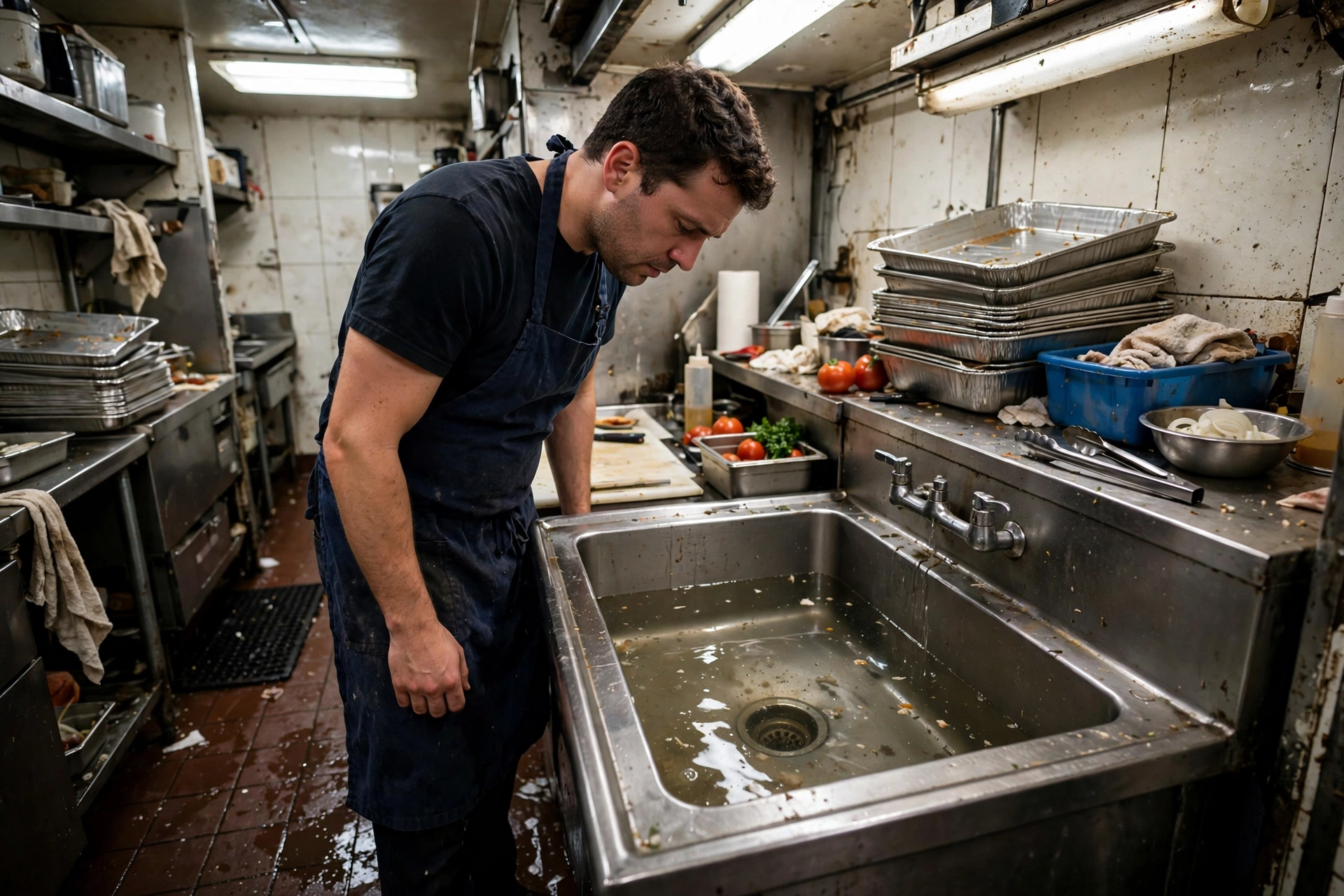
A Yemeni restaurant on Joseph Campau Avenue called on a weekday morning. The prep sink in the back was draining slowly, and by the end of each lunch rush there was a sour smell near the dish pit. The cook said the line was busy from open to close, and no one could recall when the trap had last been opened.
Chapter 2: Finding the trap
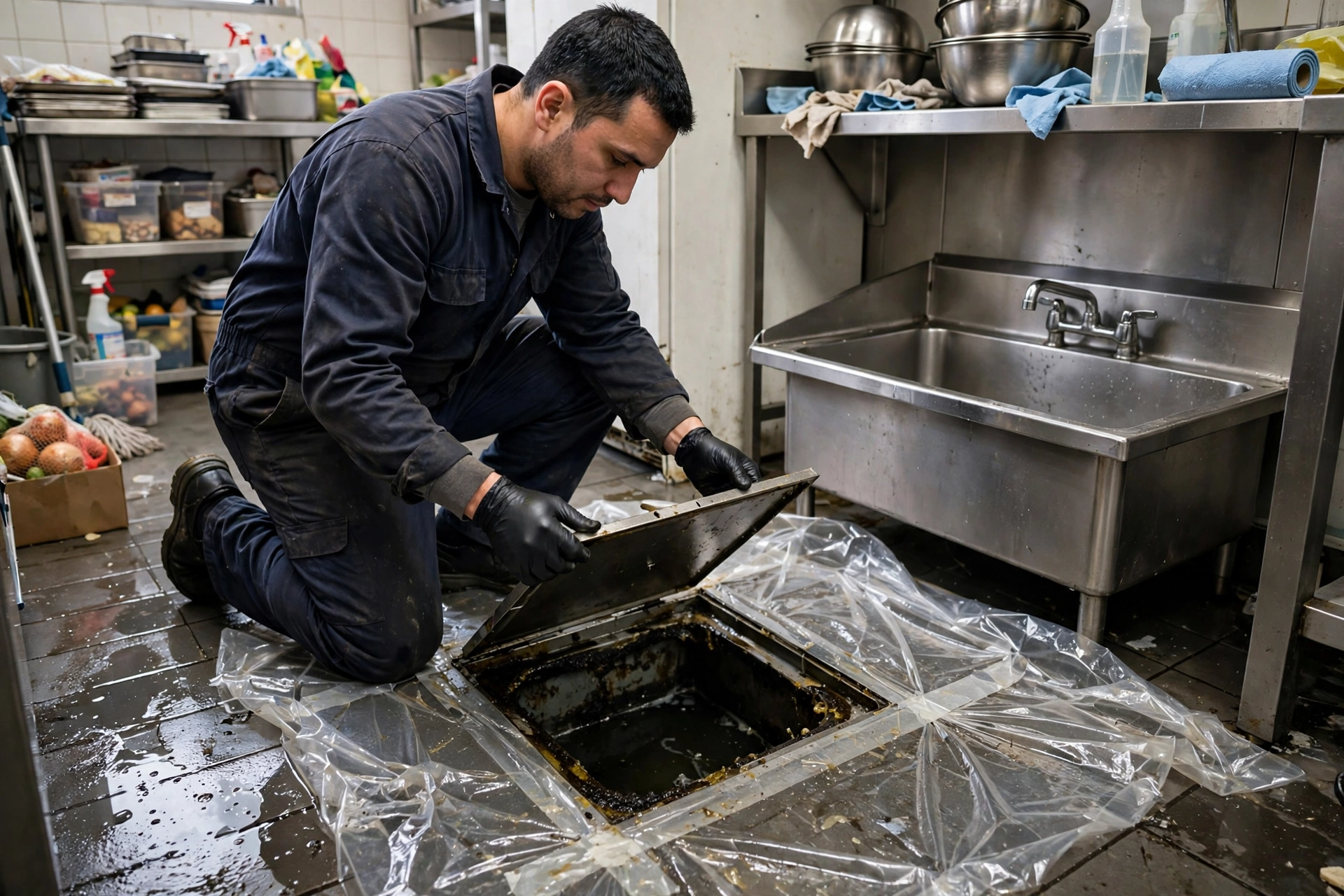
The trap was a small indoor unit under the floor near the sink, covered by a plate that had not been lifted in a long while. We asked about the menu first, since heavy frying and a long grill line fill a trap faster. Then we moved the dry goods nearby and opened the lid.
Chapter 3: The clean-out
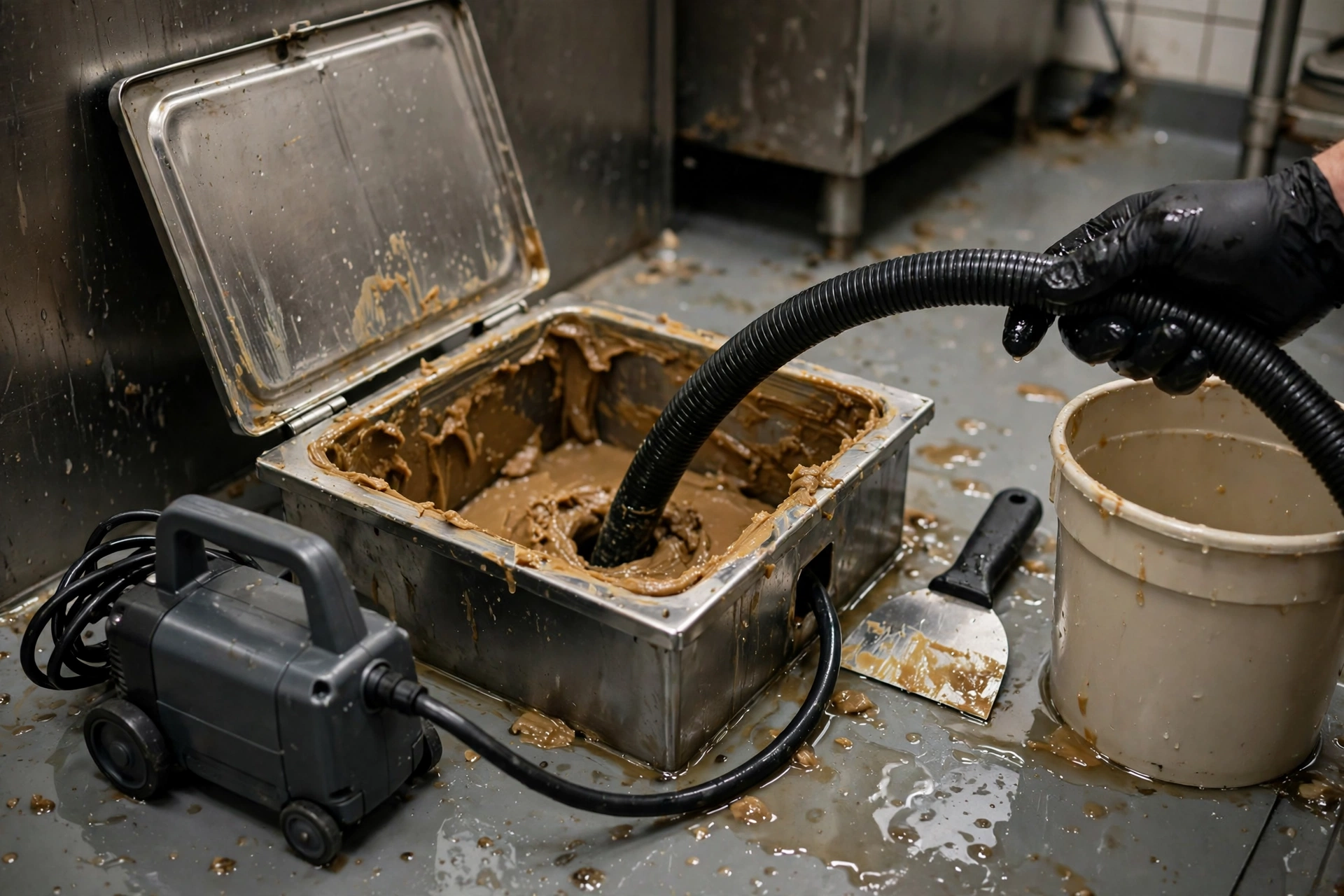
Under the lid, a thick cap of grease sat on top, with a dense layer of solids below it. We pumped out the grease, the liquid and the solids, scraped the interior walls, cleared the baffles, and looked over the lid, inlet and outlet for wear. The residue went into our sealed tank for hauling on a shipping document. The floor was wiped down and the lid reseated.
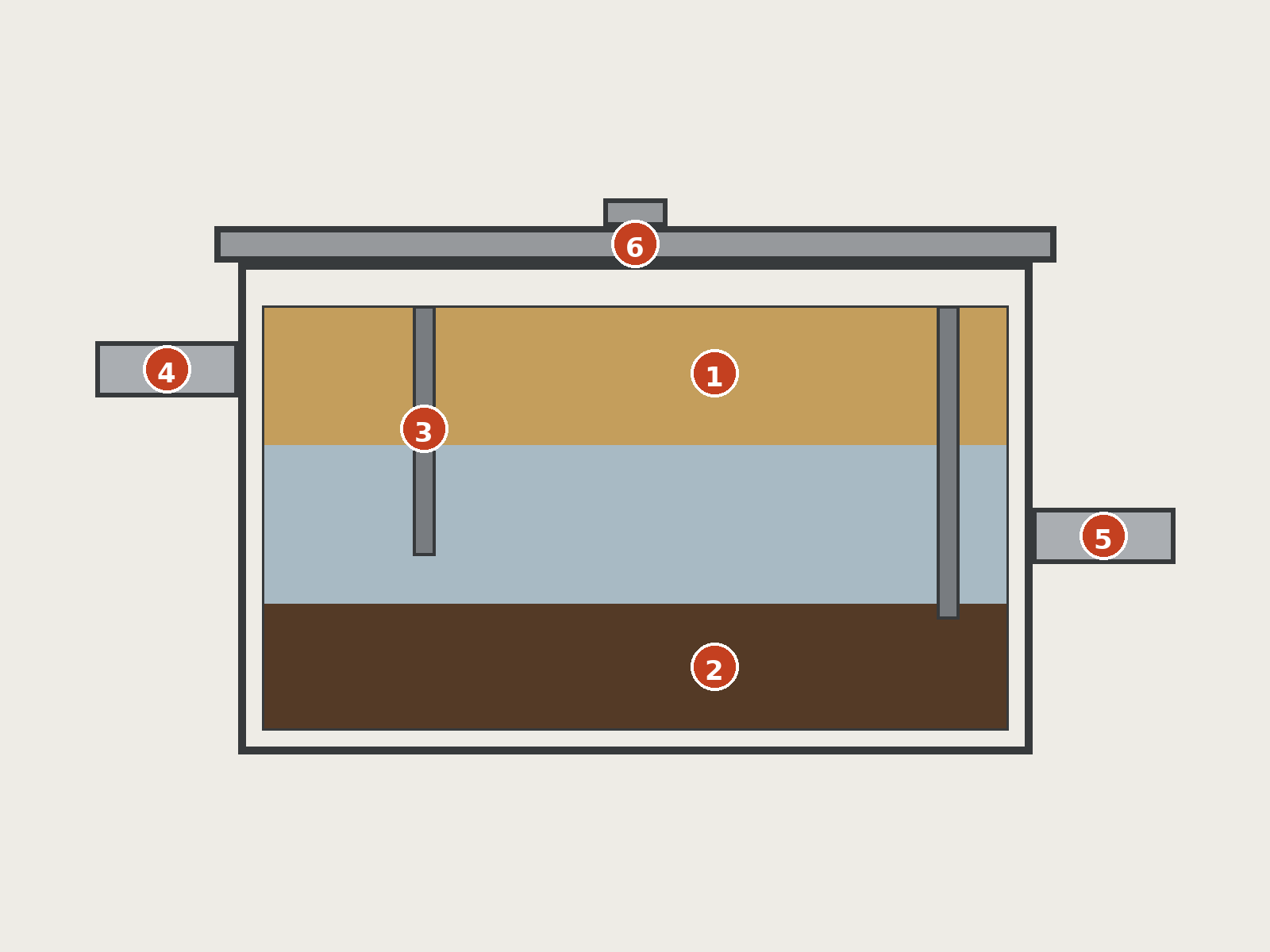
Grease cap: the layer that floats on top and is the first thing pumped out.
Solids layer: the sludge that settles to the bottom and counts toward how full the trap is.
Baffle: the inner wall that holds grease back from the outlet, checked for damage at every visit.
Inlet and outlet: where wastewater enters and leaves, checked for wear and blockage.
The quarter mark: the trade's working benchmark is to pump when grease and solids together reach about a quarter of the trap's capacity, a scheduling habit and not a law.
Where the residue goes: grease trap residue is a liquid industrial by-product under Michigan's Part 121, hauled by a registered transporter on a shipping document, with the restaurant keeping its own copies.
Chapter 4: What stayed with the kitchen
The visit was priced within our small indoor trap range of $150 to $350. The owner kept the service record showing what was removed and what was checked, along with the shipping paperwork copy. Because the kitchen runs a full line all day, we set the next visit by how fast the trap fills, using the quarter mark and the working range of every 4 to 6 weeks for high-volume kitchens as the starting point. The sink drained clean, and the smell was gone by the next service.
Call now to schedule your trap
If the story sounds like your back sink, call (313) 351-8079. A short description of your kitchen and where the trap sits is enough to start.
How the service runs for a Hamtramck kitchen
1. You call and describe the kitchen, the trap and what you have noticed. 2. We agree on a visit that works around your service hours so the kitchen is not closed for it. 3. The crew opens the trap, pumps out the grease, liquid and solids, scrapes the interior and clears the baffles. 4. We check the lid, inlet, outlet and baffles for wear and note anything that needs repair. 5. The residue is hauled by a registered transporter on a shipping document. 6. You keep the service record and your copy of the paperwork. 7. We suggest a schedule based on how fast your trap fills, and set up recurring visits if you want them.
Line jetting, when a drain needs it, is priced with the service visit it rides with. Clean used cooking oil collection is at no charge.
Pricing
These are our prices for the work. Compliant hauling of the waste is part of the visit.
| Service | Price |
|---|---|
| Interior grease trap cleaning, small indoor traps | $150 to $350 |
| Medium traps | $300 to $600 |
| Large exterior interceptors | $500 to $1,000 or more, by capacity and waste volume |
| Emergency call-out | One and a half to two times the standard service price |
| Used cooking oil collection | No charge for clean oil |
Line jetting is priced with the service visit it rides with.
When to call
Call when the sink drains slowly, when the smell comes back soon after cleaning, when a backup has already started, or when you cannot say when the trap was last cleaned. Call before a busy season or an inspection if you are unsure of your records. If the kitchen is backing up now, say so, and we will treat it as an emergency call-out.
Book your visit
Fill in the form and we will call you back, or call (313) 351-8079. Name and phone are required. Everything else is optional, and a consent box must be checked before you send it. The more details you give, the better we are able to help you.
Questions
How often should a Hamtramck restaurant have its grease trap cleaned?
There is no fixed interval in the rules we work from, so it depends on how fast your trap fills. The trade benchmark is to pump when grease and solids reach about a quarter of the trap's capacity. High-volume kitchens commonly run every 4 to 6 weeks and low-volume kitchens every 3 to 6 months.
Is the quarter rule the law in Hamtramck?
No. It is a scheduling benchmark used across the trade. We teach it as practice, not as a legal requirement.
Does Dearborn's grease limit apply to my Hamtramck kitchen?
Dearborn's code limit of 1,500 mg/L on grease discharge is Dearborn's own. We do not quote Hamtramck's local code here, so if you have a notice that cites one, send us the wording.
Does Dearborn have a grease ordinance with a pumping schedule?
No. Dearborn has no FOG ordinance with a trap-sizing table, a fixed pumping interval or a manifest rule. Be wary of any site that says otherwise.
What do the sewer authority's rules ask of me?
Where interceptors are required, the rules we work from say they must be regularly cleaned and maintained at the owner's expense, and records must be kept and produced on request. They set no fixed number of days.
What does a visit cost?
Interior grease trap cleaning on small indoor traps is $150 to $350, and medium traps are $300 to $600. Large exterior interceptors are $500 to $1,000 or more, by capacity and waste volume. Capacity, access and waste volume decide where in a range your job falls.
What does an emergency call-out cost?
One and a half to two times the standard service price.
What paperwork do I get?
A service record of what was removed and checked, and your copy of the shipping document for the hauled residue. Michigan's Part 121 has the restaurant keep its own copies, and we hand them over at the end of the visit.
Who hauls the waste?
A registered and permitted transporter. Grease trap residue is a liquid industrial by-product under Part 121, and a septage license does not cover it.
Do you collect used cooking oil?
Yes. Collection of clean oil is at no charge. In winter, oil can freeze in outdoor bins, and the fix is a bin swap, an empty bin delivered and the full one carried away.
Does cold weather change how often the trap needs attention?
Provider guidance is that grease congeals as temperatures drop, so traps need checking more often in winter, not less. We do not have Hamtramck-specific winter rules to quote.
Can you clean the trap without closing my kitchen?
We plan the visit around your service hours, and for small indoor traps the work is done at the trap itself. Tell us your busiest hours when you call.
What if I have a larger exterior interceptor?
We pump and clean those too. The price is $500 to $1,000 or more, by capacity and waste volume.
Do you jet lines?
Yes. Line jetting is priced with the service visit it rides with, so we quote it when we know what the drain needs.