In Grosse Ile, grease trap maintenance is a scheduling problem more than a cleaning problem. Dearborn Grease Trap runs it as a routed round, so a kitchen on Macomb Street is visited on a set spacing instead of whenever a drain slows down or a smell reaches the dining room. The crew comes to your kitchen, cleans the trap or interceptor, hauls the waste away under the state's paperwork rules, and leaves you a record of what it found.
Call about a Grosse Ile round
If you run a kitchen on the island and you are cleaning your trap only when something goes wrong, call (313) 351-8079. Tell us what kind of trap you have and how hard the kitchen fries, and we will tell you what a standing visit would look like.
Grosse Ile's kitchens, and why a routed round fits them
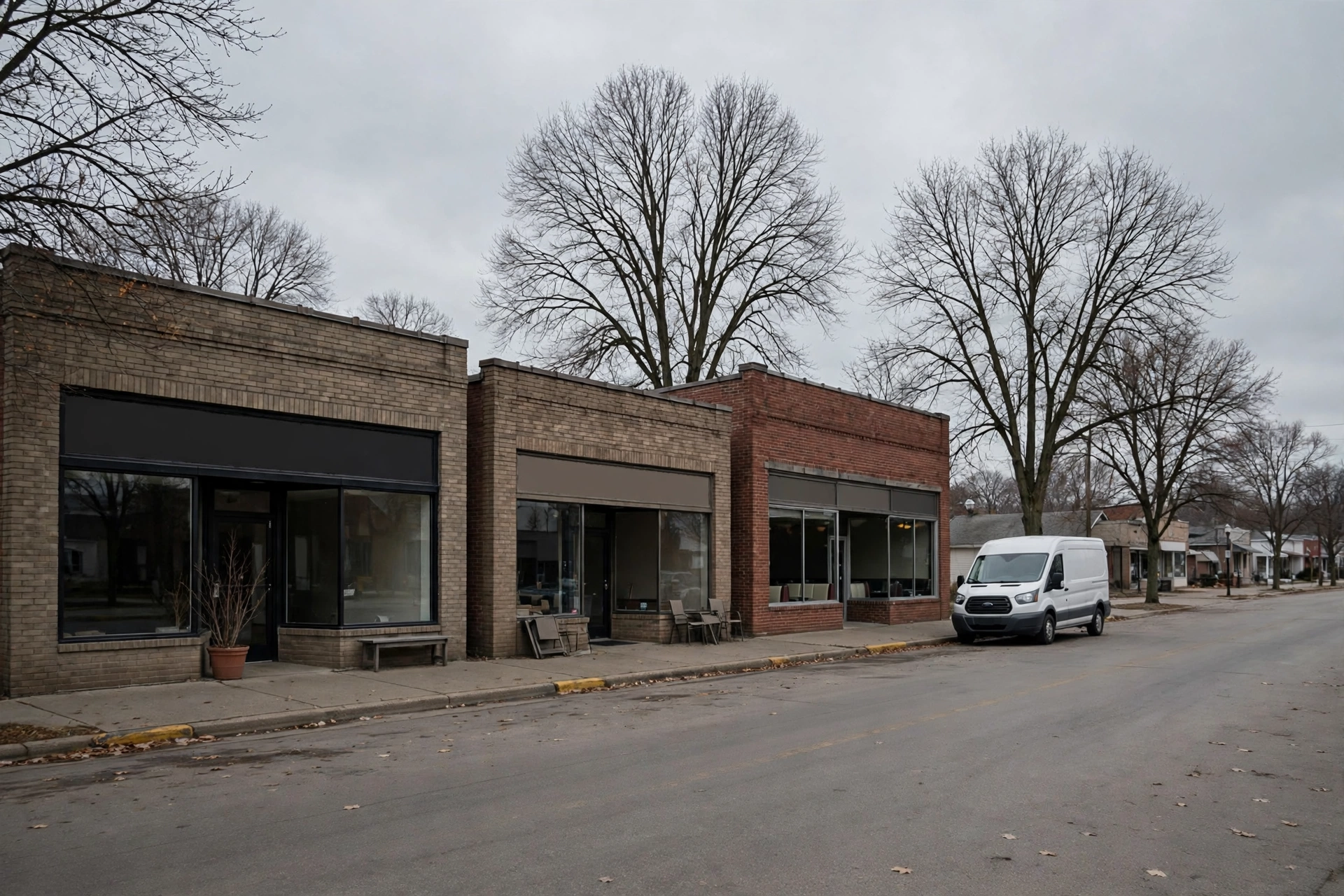
Grosse Ile is a thin market for our trade, and we say so plainly. The township's restaurants gather along Macomb Street, a short run of independent kitchens rather than a corridor of chains. It does not support a truck sent out for one stop at a time. What it supports is a bundled visit: one trip, several kitchens, each on its own spacing.
That is why scheduled service is the right fit here. A standing round keeps the drive from becoming the cost of the job. It also gives a small kitchen what a large one gets by default, a person who checks the trap on a calendar. Most small independents run small indoor traps, and those are the ones that get forgotten until the floor drain talks back.
What governs your trap, and what does not
Here is how the rules stack up, so you know what is law and what is habit.
- Dearborn has no FOG ordinance. There is no sizing table, fixed pumping interval or city manifest rule. Dearborn's code sets a limit on grease discharge of 1,500 mg/L, and that is a Dearborn rule for Dearborn's sewer.
- Grosse Ile's own sewer rules are not ours to quote. We have not read your sewer authority's terms, so we will not tell you what they say. If your building has received a notice, bring it, and we will work from the notice itself.
- Michigan's Part 121 governs the waste. Clean-out residue from a grease trap is a liquid industrial by-product. It may be hauled only by a registered and permitted transporter, on a shipping document for each shipment. The kitchen keeps its own copies. A septage license does not cover this waste.
- The quarter rule is a trade benchmark. Pumping when grease and solids reach about a quarter of the trap's capacity is how the trade schedules work. It is not a law, in Grosse Ile or anywhere else we serve.
- Frequencies are what kitchens run, not requirements. High-volume kitchens commonly run every 4 to 6 weeks. Low-volume kitchens commonly run every 3 to 6 months. Yours depends on what your trap shows.
Featured job: a Macomb Street diner and the trap under the dish station
Chapter one: the weekend smell
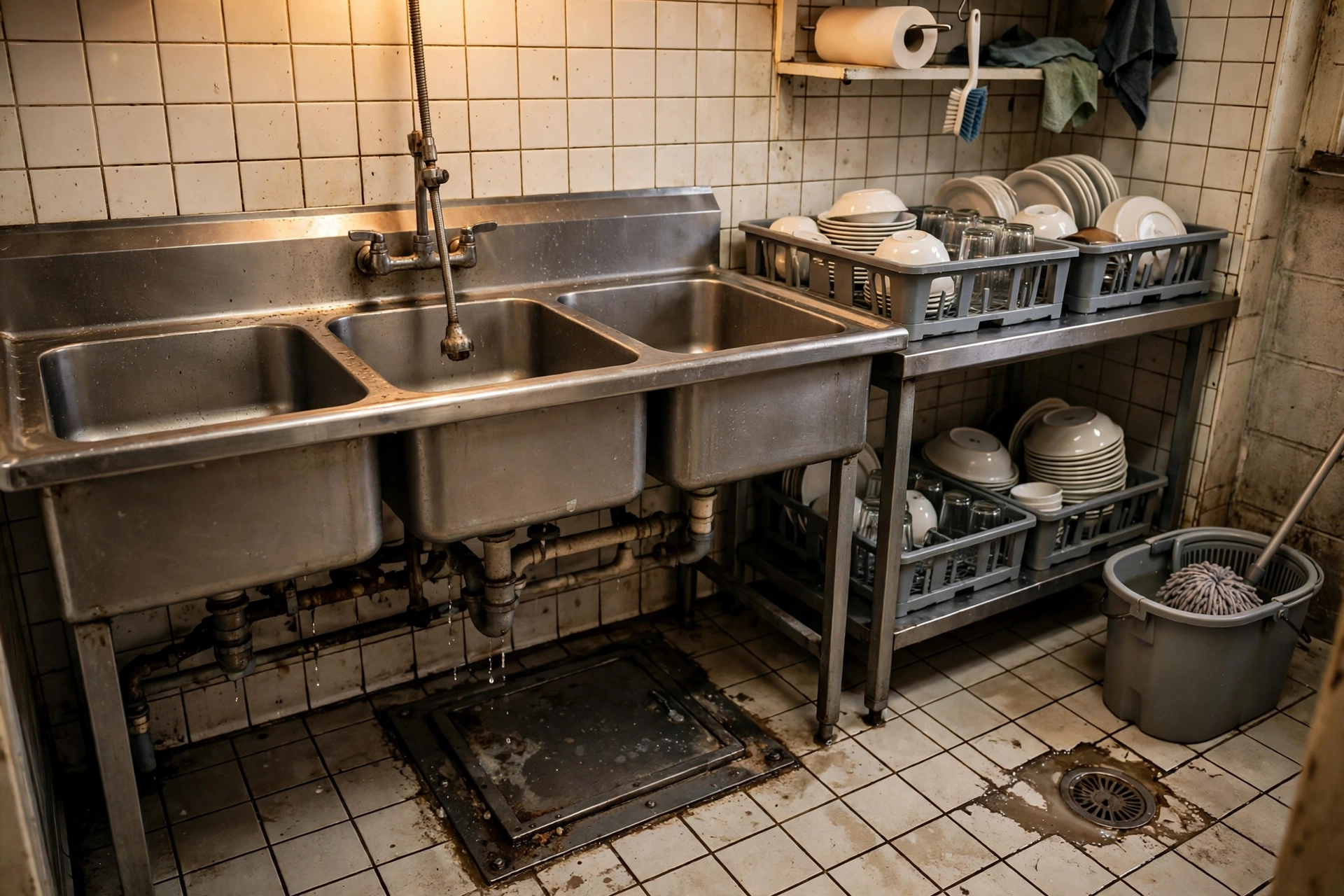
A family diner on Macomb Street fried most of its menu and ran its heaviest shift on weekend mornings. The kitchen had a small indoor trap, and nobody could say when it was last opened. On a busy Saturday the floor drain at the dish station started to run slow and a sour smell came up into the prep area. The owner called the number on our site before the lunch rush.
Chapter two: what the lid showed
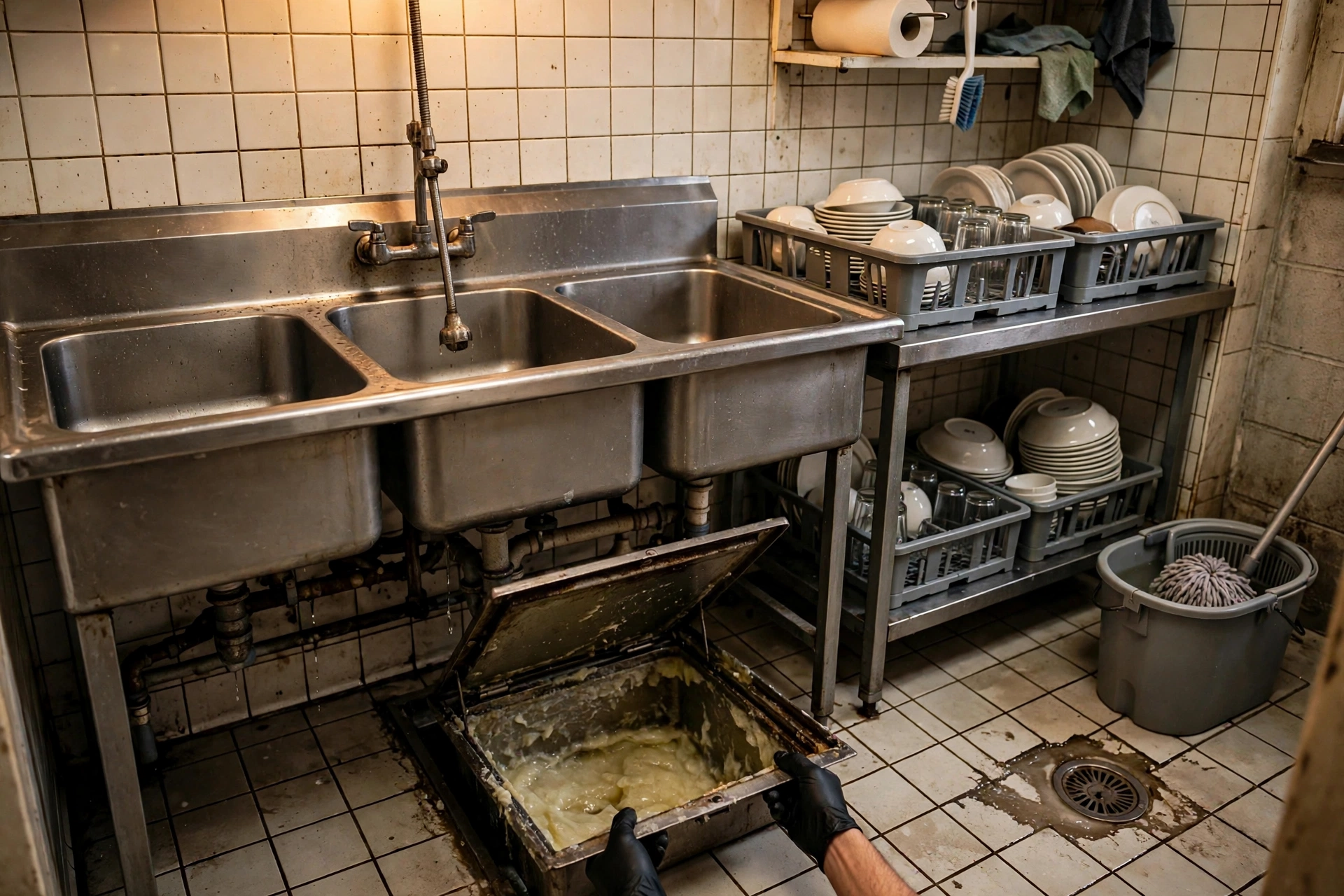
The crew opened the trap and measured. Grease sat in a hard cap at the top, and solids had built up from the bottom well past the quarter mark the trade uses to schedule pumping. Nothing was broken. The trap had simply gone far too long between visits for the fryer load it served. This is the usual story with small indoor traps in busy kitchens.
Chapter three: the pump-out
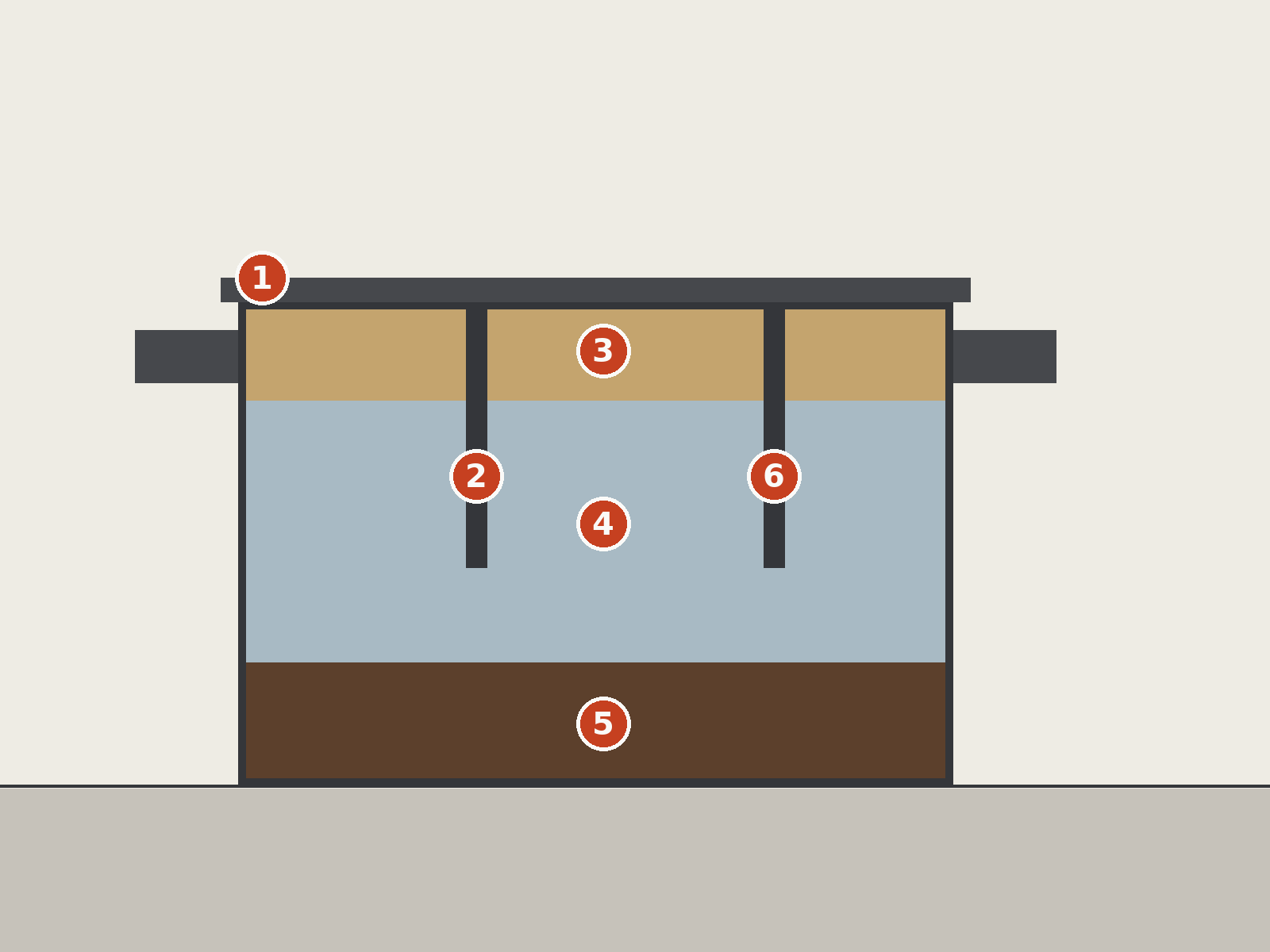
Lid: the lid comes off at every visit so the crew can measure before anything is pumped.
Inlet and outlet baffles: the crew clears and inspects them, because a damaged baffle lets grease pass through.
Grease cap and settled solids: the trade pumps when these together reach about a quarter of the trap's capacity. This is a scheduling benchmark, not law, and Dearborn has no FOG ordinance setting any interval.
Liquid middle: it comes out with the rest, and the interior is scraped.
Waste leaving the building: trap clean-out is a liquid industrial by-product under Michigan's Part 121. It leaves on a shipping document with a registered transporter, and the kitchen keeps its own copies.
Price: small indoor traps: $150 to $350.
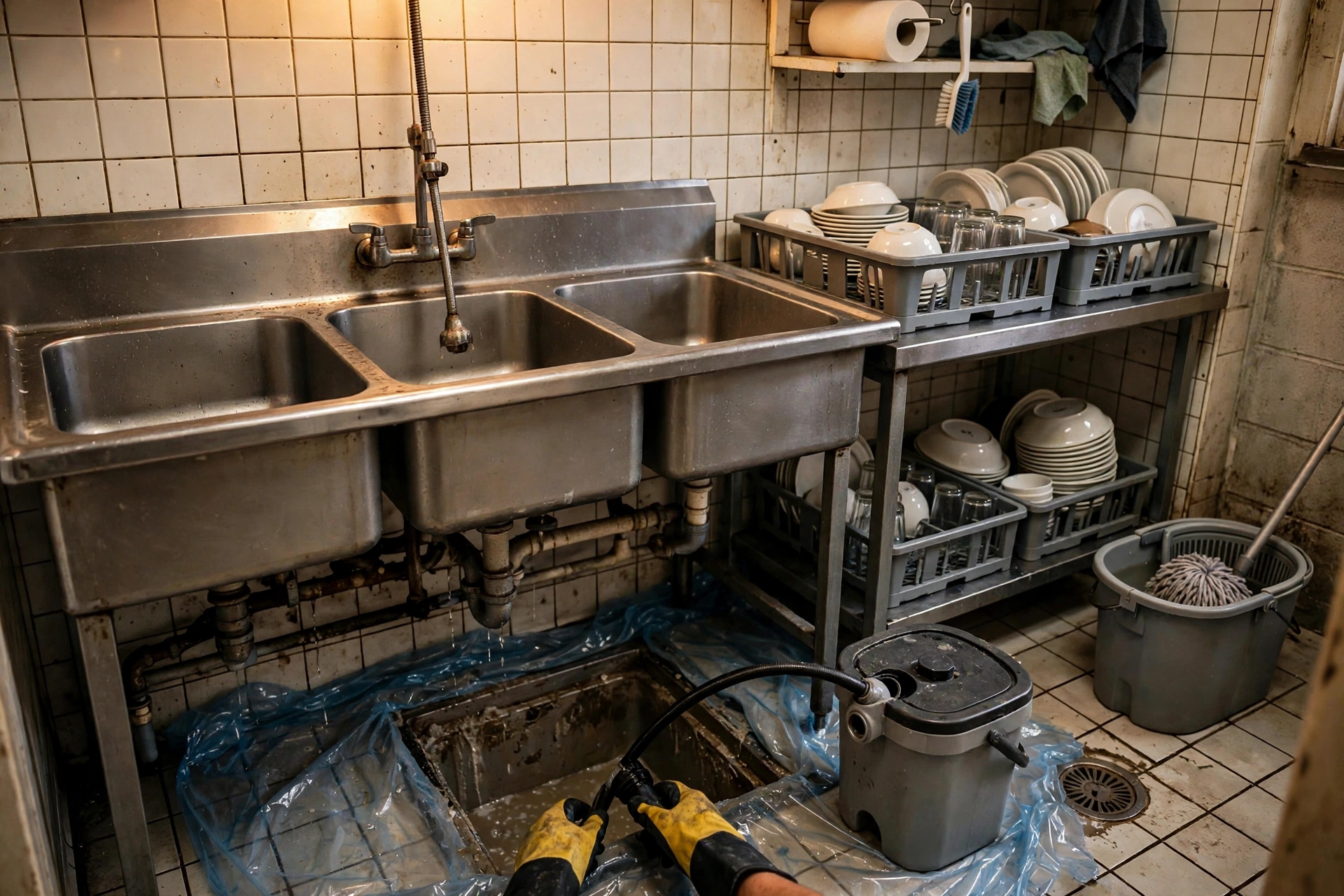
The crew pumped the cap, the liquid and the solids into a sealed container, scraped the interior and cleared the baffles. They checked the lid and the fittings and wrote down what they saw. The shipping document for the waste went in the diner's file. The small indoor trap price applied: small indoor traps, $150 to $350.
Chapter four: a spacing instead of a scare
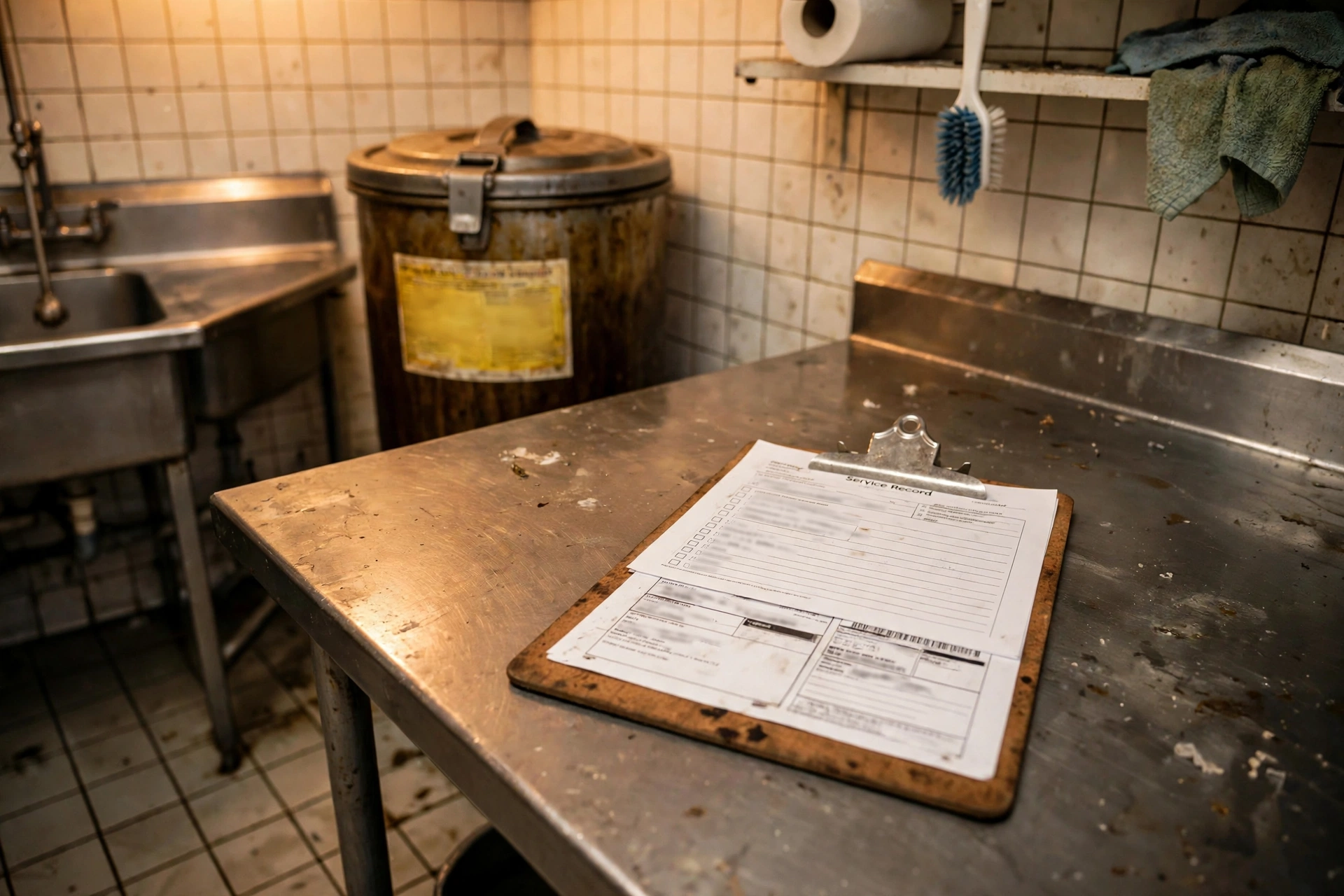
Afterward the crew did not leave it at "call us when it smells." They set a standing visit and read the trap at each one. The first visits showed how fast this particular trap filled, and the spacing settled from there. It landed where busy small kitchens commonly land, short of the quarterly end and well inside what the frying load demanded. The diner's used cooking oil moved to scheduled pickup on the same round, at no charge for clean oil. The diner now sits on the Macomb Street round with its records in order.
Call about your own kitchen
Read the story and recognize your own back of house? Call (313) 351-8079 and we will talk through your trap, your frying load and a spacing that fits. If you would rather write, the form is at the bottom of this page.
How the service runs for a Grosse Ile kitchen
The work goes in a set order. You can plan around it.
1. We set the first visit. You tell us what kind of trap you have, where it is, and how hard the kitchen fries. If you already know the capacity, tell us. 2. The crew opens and measures. Before anything is pumped, they read the trap against the quarter benchmark. 3. They pump and clean. Cap, liquid and solids come out, the interior is scraped, and baffles and fittings are checked. 4. They haul the waste legally. It leaves under a Part 121 shipping document for each shipment, with a registered transporter. 5. They document the visit. You get a service record and your copy of the shipping paperwork. 6. We set the spacing. After the first readings, the round settles at a spacing that matches your kitchen.
What a visit includes, what the crew documents, and what you keep
- Includes: pump-out of grease, liquid and solids, interior scraping, baffle clearing and inspection, a check of the fittings, and hauling of the waste.
- Documents: the condition of the trap and its parts, what the crew found at the quarter measurement, and the shipping document.
- You keep: the service record and your copies of the shipping paperwork, ready for any inspector or sewer authority who asks for records.
Line jetting and used cooking oil
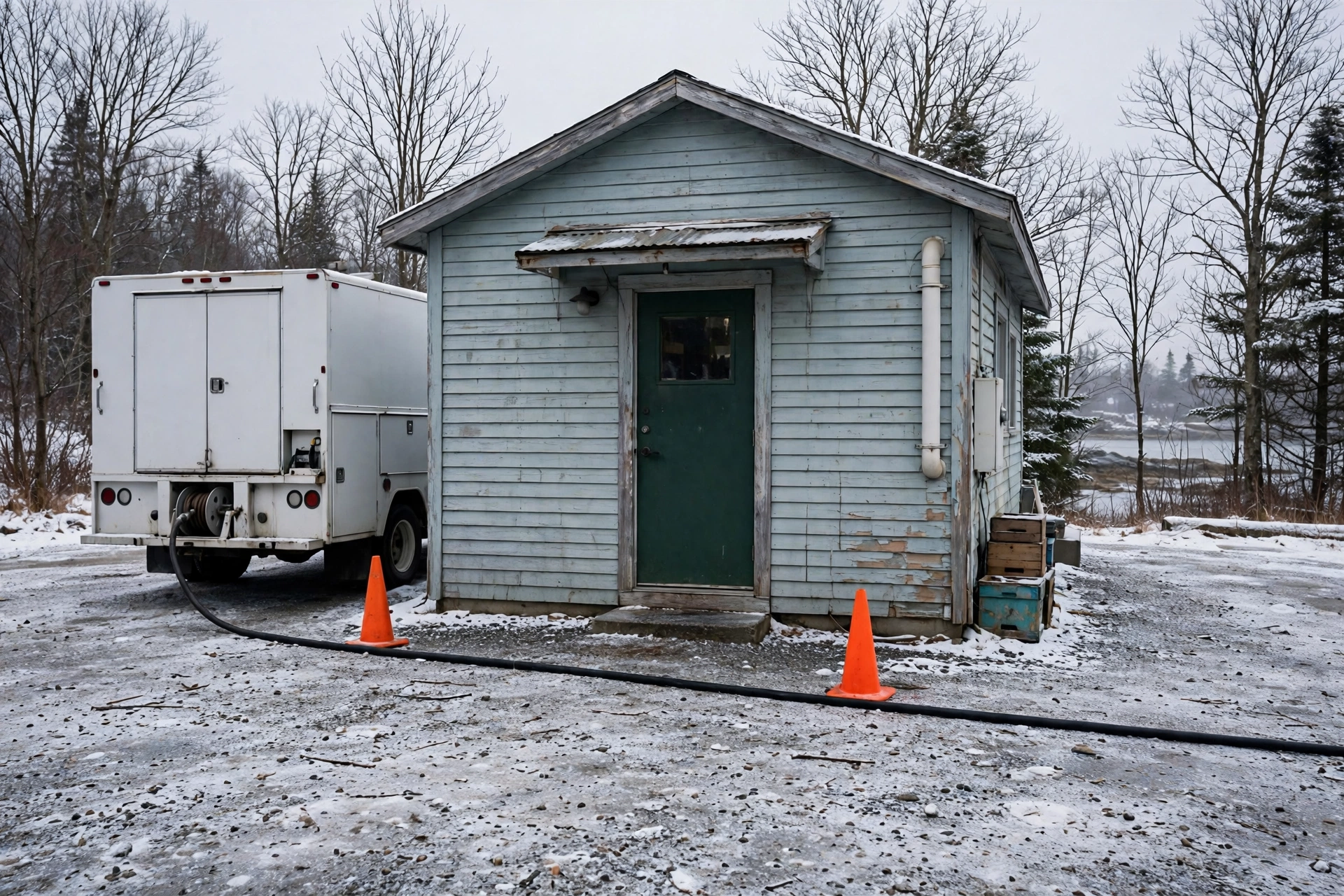
Line jetting rides with a service visit and is priced with the visit it rides with. Used cooking oil collection is no charge for clean oil. In winter, an outdoor oil bin can freeze. The working fix is a bin swap, an empty bin delivered and the full one carried away.
Pricing
Every kitchen on the round pays the price for its own trap. These are our prices.
| Service | Price |
|---|---|
| Interior grease trap cleaning, small indoor traps | $150 to $350 |
| Medium traps | $300 to $600 |
| Large exterior interceptors | $500 to $1,000 or more, by capacity and waste volume |
| Emergency call-out | one and a half to two times the standard service price |
| Used cooking oil collection | no charge for clean oil |
Within these ranges, your price turns on the trap's capacity, how easy it is to reach, and how much waste comes out. A trap in a basement or at the end of a long hose run takes more time than one by the back door.
When to call
Call to set up a standing visit before anything goes wrong. Call sooner for any of these:
A floor drain at the dish station that runs slow or stands.
A sour smell near the trap or the prep sink.
A notice from a sewer authority or a health inspector.
A fryer-heavy menu change, or a new season of heavier trade.
A backup. That is an emergency call-out, priced at one and a half to two times the standard service price.
Ready to set up your round
Call (313) 351-8079, or send the form below. Name and phone are required. Everything else is optional. A consent box is required before you send it.
The more details you give, the better we are able to help you.
Useful details: the kind of trap, where it sits, how hard the kitchen fries, and any notice you have received.
Questions
Do you really come out to Grosse Ile for one trap?
We work Grosse Ile as a routed round, bundling Macomb Street kitchens into one trip. Call and tell us where you are and we will say how your kitchen fits.
Does Grosse Ile have a rule on how often I must pump my trap?
We have not read your sewer authority's terms and will not quote them. Dearborn has no FOG ordinance, no fixed interval and no sizing table, and none of that is Grosse Ile's law either. If you have a notice, bring it to us.
What is the quarter rule?
It is the trade's benchmark for scheduling: pump when grease and solids together reach about a quarter of the trap's capacity. It is trade practice, not law.
How often do kitchens actually run service?
High-volume kitchens commonly run every 4 to 6 weeks. Low-volume kitchens commonly run every 3 to 6 months. Those are working frequencies, not requirements. Your trap's own readings set yours.
What does a small indoor trap cost?
Small indoor traps: $150 to $350. Medium traps: $300 to $600.
What if I have an exterior interceptor?
Large exterior interceptors: $500 to $1,000 or more, by capacity and waste volume. Interceptor work is priced by those two things.
What happens to the waste?
It is a liquid industrial by-product under Michigan's Part 121. It must leave with a registered and permitted transporter, on a shipping document for each shipment. You keep your own copies. A septage license does not cover it.
What paperwork do I get?
A service record and your copy of the shipping document each visit. Keep them where you can produce them on request.
What does an emergency call-out cost?
One and a half to two times the standard service price.
Do you take used cooking oil?
Yes. Collection is no charge for clean oil. We schedule pickups on the same round.
Does winter change anything?
A Dearborn-serving provider's published guidance says grease congeals as temperatures drop, so traps need more frequent checking in winter, not less. Used oil can freeze in outdoor bins, and a bin swap fixes that. Do not pour oil down a drain.
Can you jet my lines?
Yes. Line jetting is priced with the service visit it rides with.