Ferndale kitchens and the work that keeps them running
Dearborn Grease Trap comes to Ferndale for grease trap cleaning, and the used cooking oil that leaves with the crew is part of the same visit. The restaurants around Nine Mile and Woodward are almost all independents, and most of them fry, sauté and sling pans hard through a dinner rush. That is the load a trap feels first. We are based in Dearborn, and Ferndale is roughly a 21 to 23 minute drive from our yard. We plan routes so Ferndale kitchens are on a schedule, not on a scramble.
Talk to us first
If you have a smell, a slow floor drain, or a notice in your hand, call (313) 351-8079. If you are setting up service before any of that happens, call for that too. Tell us what kind of trap you have, where it sits, and how hard the kitchen fries. That is enough to start.
What Ferndale's kitchens are like
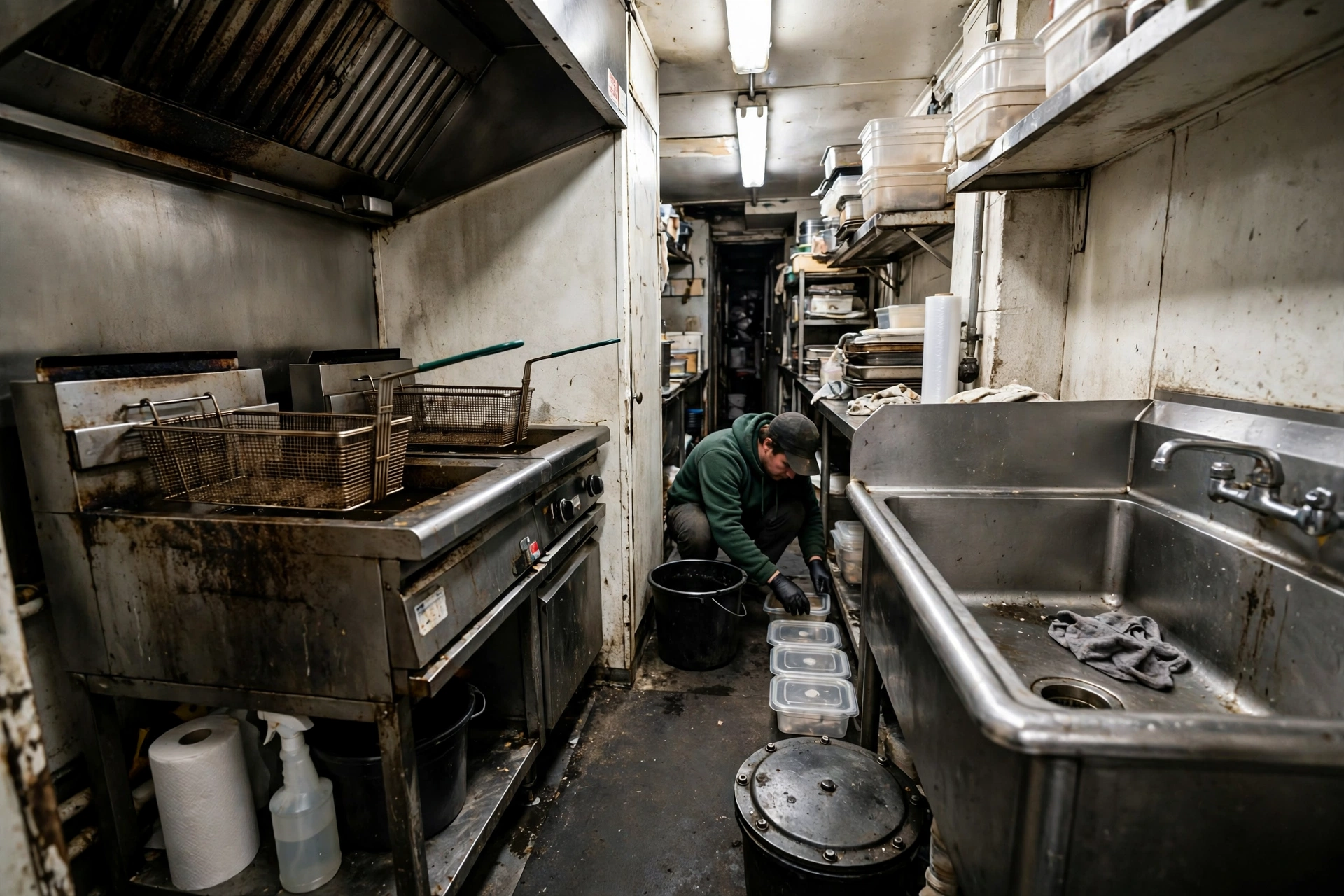
The Nine Mile and Woodward district is almost entirely independent eateries, packed close together. Many are older buildings with small indoor traps under a prep sink or in the kitchen floor. A few larger sites may have an exterior interceptor. Fryers run most of the day, dish machines send hot, greasy water down the line, and the room to work around a trap is often tight.
Two things follow from that. A busy independent fills its trap quickly, and the trap is easy to forget until it fails. Fats cool in the line, harden, and catch everything else that comes down behind them. Cleaning on a schedule is cheaper and calmer than a backup on a Friday night.
The fryer is also why used cooking oil belongs in the same conversation. A kitchen that fries all week makes a lot of spent oil. If it sits in open pails by the back door, it ends up spilled, poured down a drain, or tracked into the kitchen. We pair trap cleaning with collection so the grease is handled in one stop.
What governs this work
Start with what a kitchen owner usually asks: what does the law require? Honest answer, in layers.
- Hauling the waste is state law. In Michigan, grease trap clean-out residue is a liquid industrial by-product under Part 121 of 1994 PA 451. It may be hauled only by a transporter registered and permitted under 1998 PA 138, on a shipping document for each shipment. The restaurant, as the generator, must use a registered transporter and keep its own copies. A septage license does not cover this waste.
- Where your building drains is a local question. Your sewer authority and your city set the discharge limits and any interceptor requirements for your address. This page does not describe any city's local rules for Ferndale, and we do not state one. Ask your city or sewer authority what applies to your kitchen.
- Dearborn is a useful comparison. Dearborn has no FOG ordinance with a fixed interval, no sizing table and no city manifest rule. Its code limits grease discharge to 1,500 mg/L, and the regional pretreatment rules there call for regular cleaning at the owner's expense, with records kept and produced on demand. They set no fixed interval either. The duty is regular cleaning, shown by records.
How often is the trade's working question. The trade's rule of thumb is to pump when grease and solids together reach about a quarter of the trap's capacity. That is a scheduling benchmark that crews use, not a law. What kitchens actually run: high-volume kitchens every 4 to 6 weeks, and low-volume kitchens every 3 to 6 months, with moderate kitchens in between. Your fryer load, your covers and your trap size decide where you land.
What we do for a Ferndale kitchen
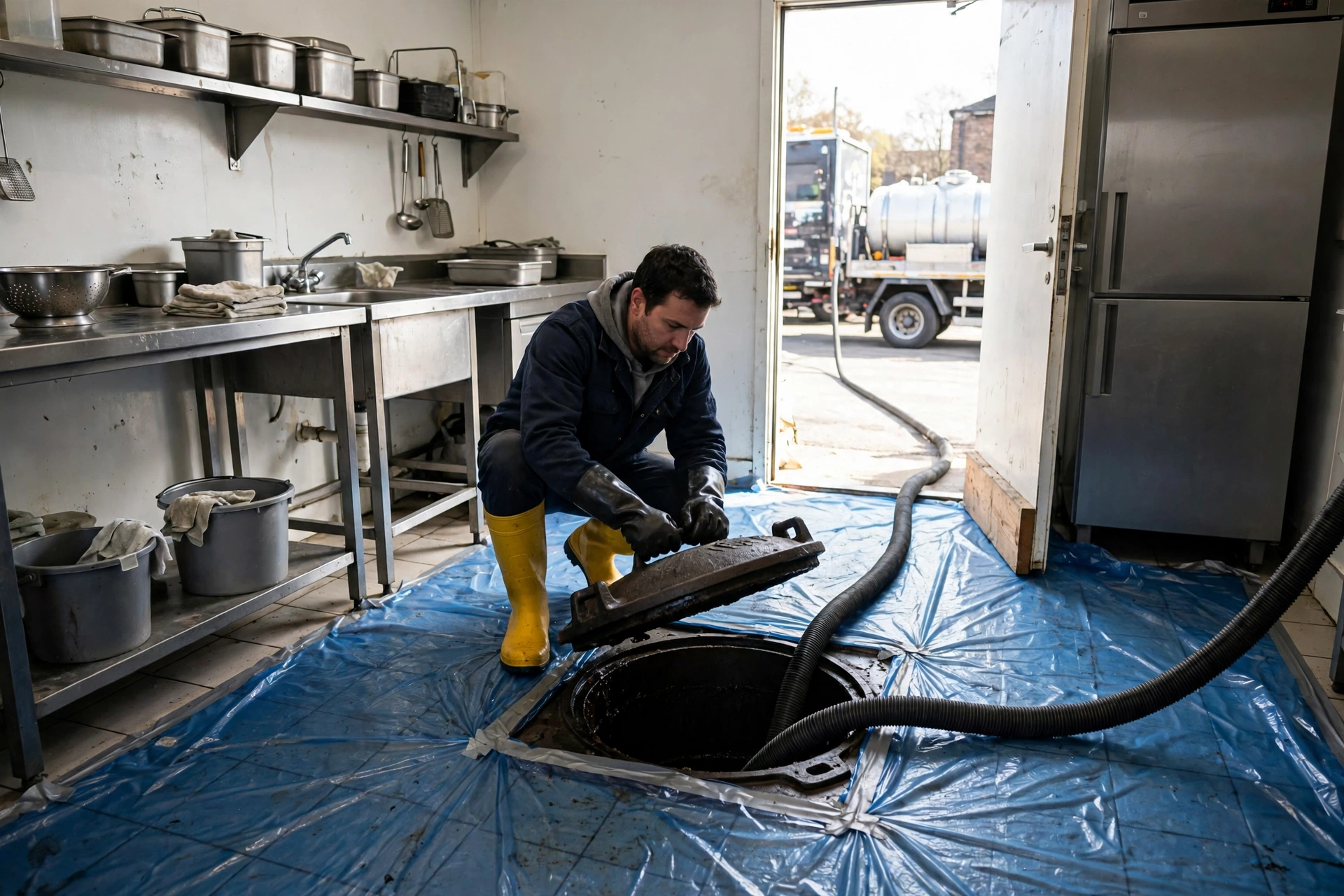
1. Call and a few questions. We ask about the trap size and location, the fryer load, and what has been going wrong. 2. Schedule the visit. We set a time with you that fits your prep and service. 3. Open and measure. The crew lifts the lid and checks how much grease and solid has built up against the trap's capacity. 4. Pump and clean. The grease cap, liquid and sludge come out. The interior is scraped, and baffles are cleared and inspected. 5. Check the parts. Lids, baffles and visible components get a condition check, and anything worn gets named. 6. Collect the oil. Clean used cooking oil is taken from your containers on the same stop. 7. Hand over the record. You get a service record and the shipping document for the waste.
What the visit includes, what the crew documents, what you keep
| The visit includes | Pump-out of grease, liquid and sludge; interior scraped; baffles cleared and inspected; component condition check; used cooking oil pickup where you have it |
|---|---|
| The crew documents | The state of the trap on arrival, what was removed, the condition of lids and baffles, and anything that needs repair |
| You keep | A service record and a copy of the shipping document for your files, ready to show an inspector or the sewer authority |
Line jetting is available when a drain line needs clearing. It is priced with the service visit it rides with.
Prices
These are our prices for grease trap cleaning.
| Service | Price |
|---|---|
| Interior grease trap cleaning, small indoor traps | $150 to $350 |
| Medium traps | $300 to $600 |
| Large exterior interceptors | $500 to $1,000 or more, by capacity and waste volume |
| Emergency call-out | one and a half to two times the standard service price |
| Used cooking oil collection | no charge for clean oil |
Where you land in a range depends on three things: the capacity of the trap, how hard it is to reach, and the volume of waste to be taken out. A trap in a basement or a long hose run costs more than one by the back door. If you are not sure which range you are in, describe the trap on the phone and we will tell you.
Featured job: a fryer-heavy independent on Nine Mile
Chapter 1: The slow drain
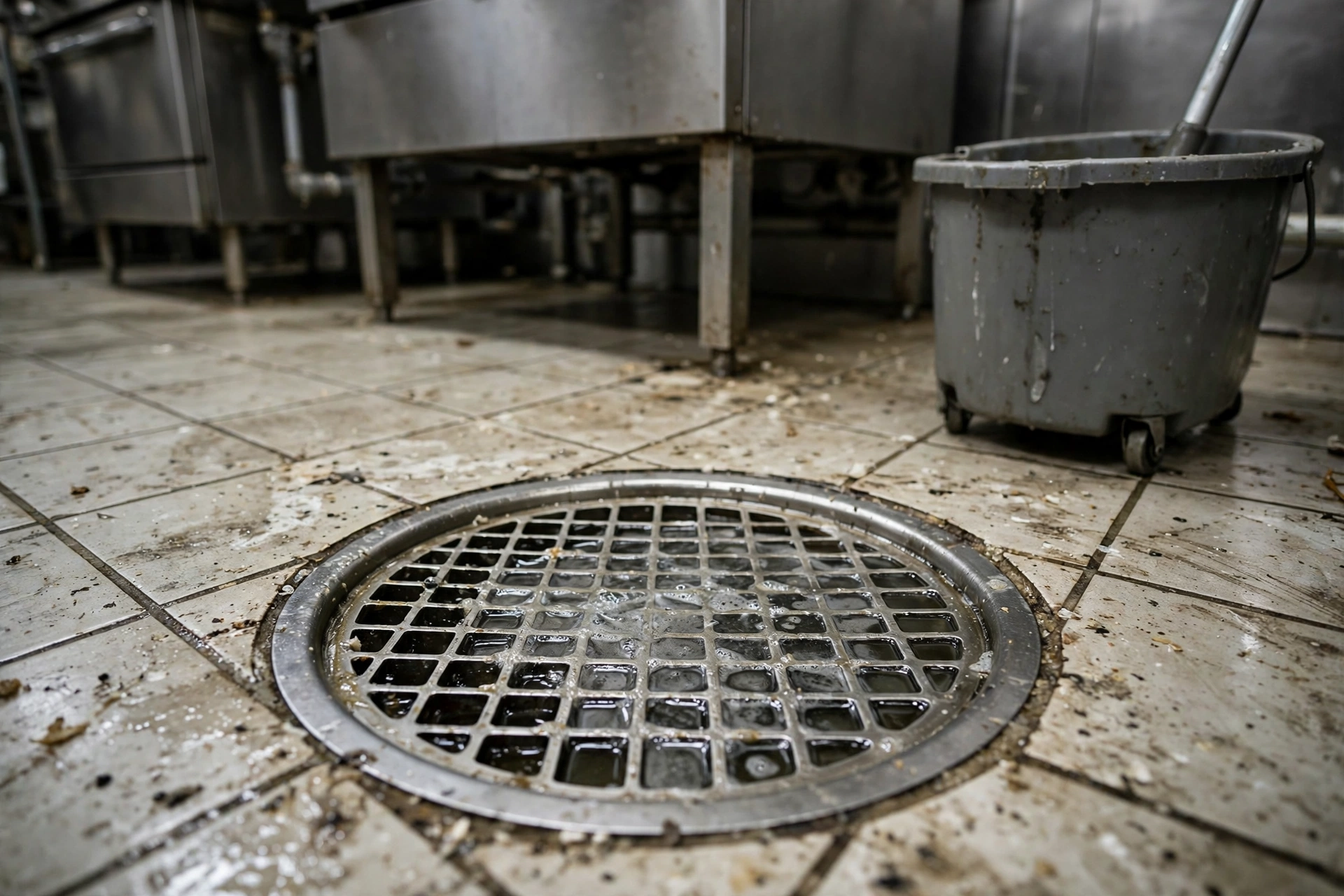
A family-run restaurant on Nine Mile fried most of its menu. The kitchen manager noticed the floor drain by the fryer station was slow after the dinner push, and a sour smell came up when the dish machine drained. Nobody had a record of when the small indoor trap was last cleaned. The manager called us before the problem became a backup.
Chapter 2: Opening the trap
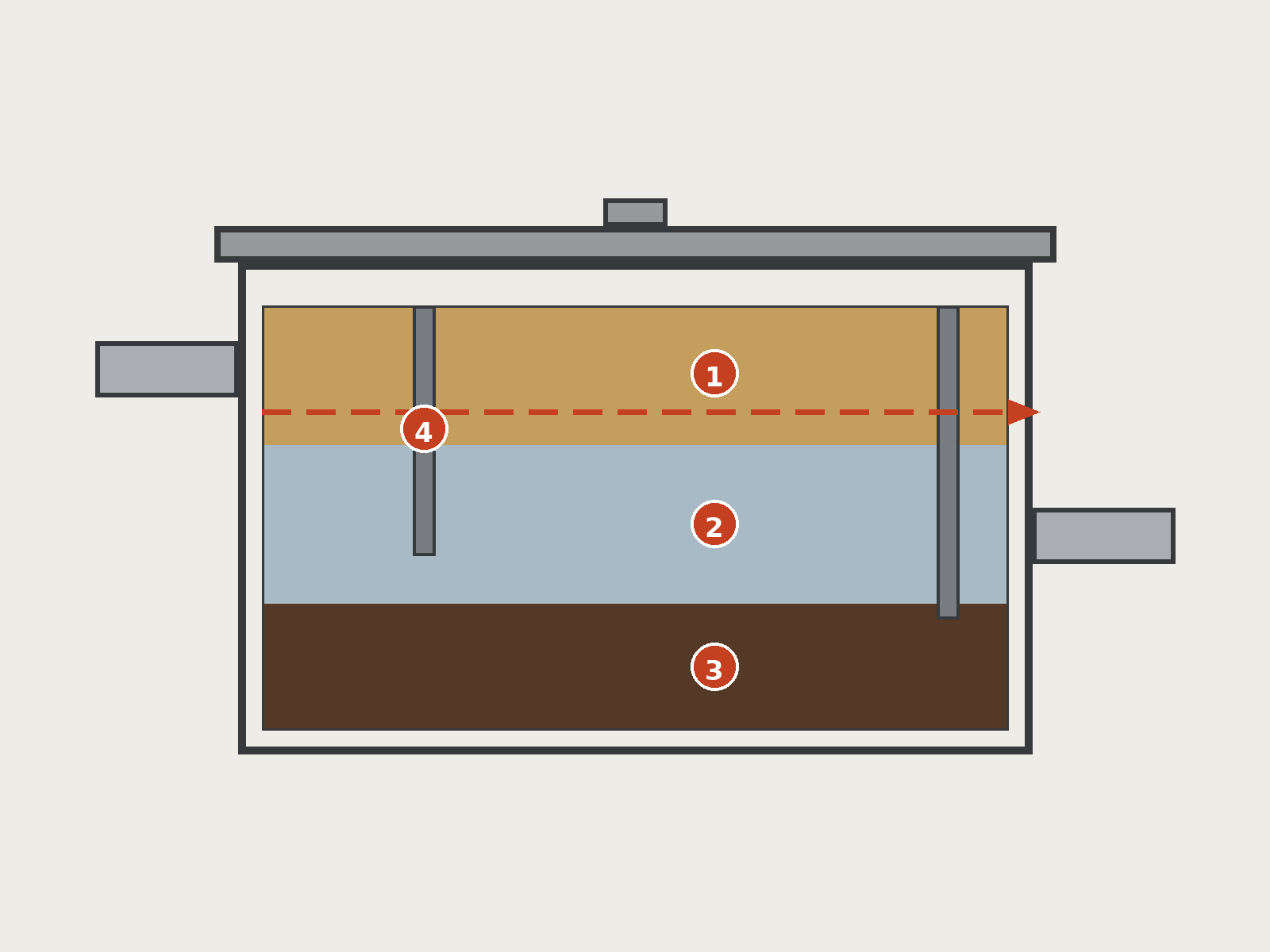
The crew arrived in the quiet hours between lunch and dinner and lifted the lid. The cap of grease and the sludge underneath had built up well past the trade's quarter-of-capacity benchmark. The trap was small and indoor, so it fell in the small-trap range.
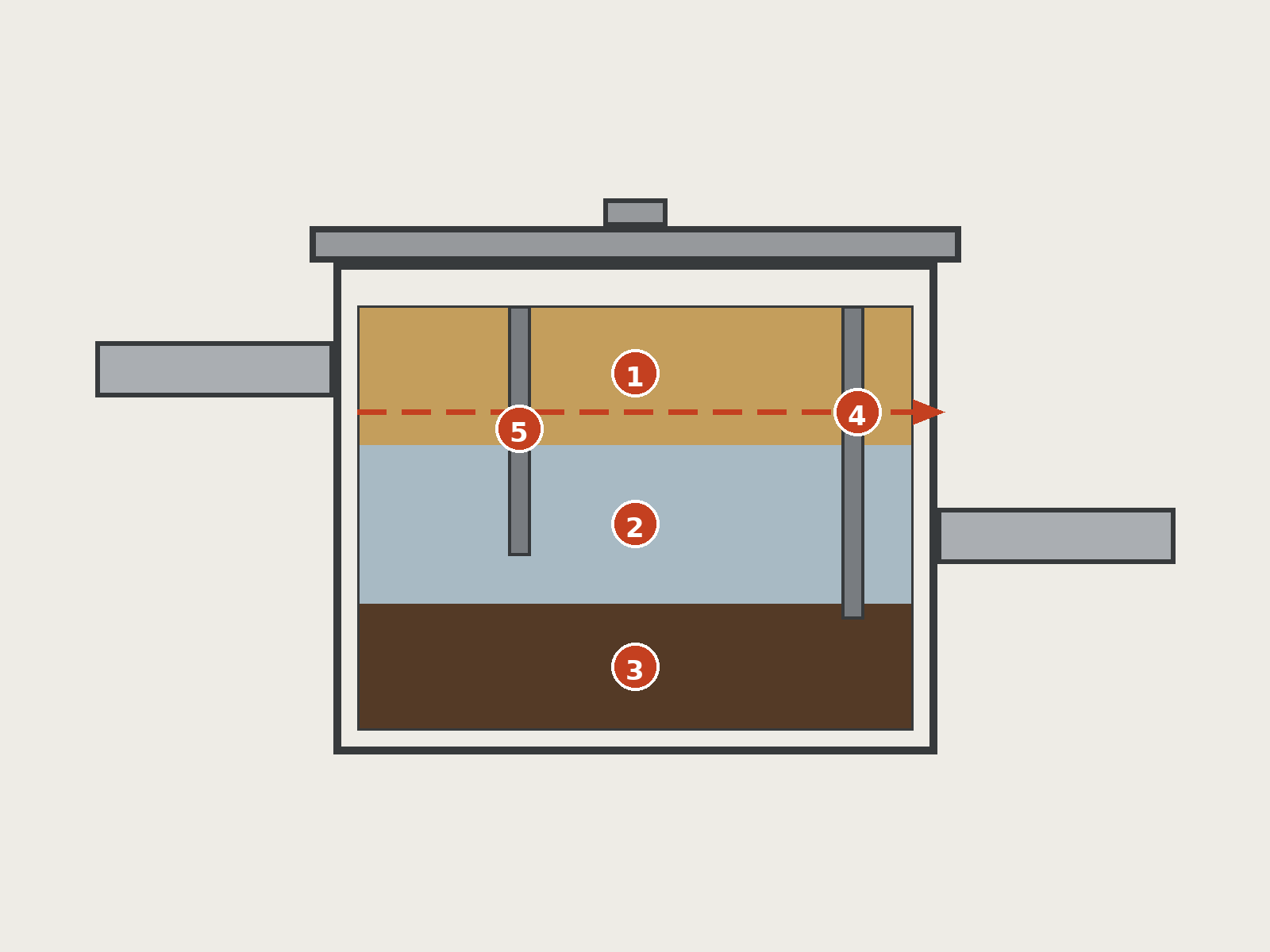
the grease cap floats at the top
liquid sits in the middle
sludge settles at the bottom
the trade's benchmark is to pump when grease and solids together reach about a quarter of capacity, labelled as trade practice and not law
baffles are cleared and inspected on every pump-out
the waste is a liquid industrial by-product under Michigan Part 121 and travels on a shipping document. No sizes, gallons or time intervals appear in the figure.
Chapter 3: Pump, clean, and the oil
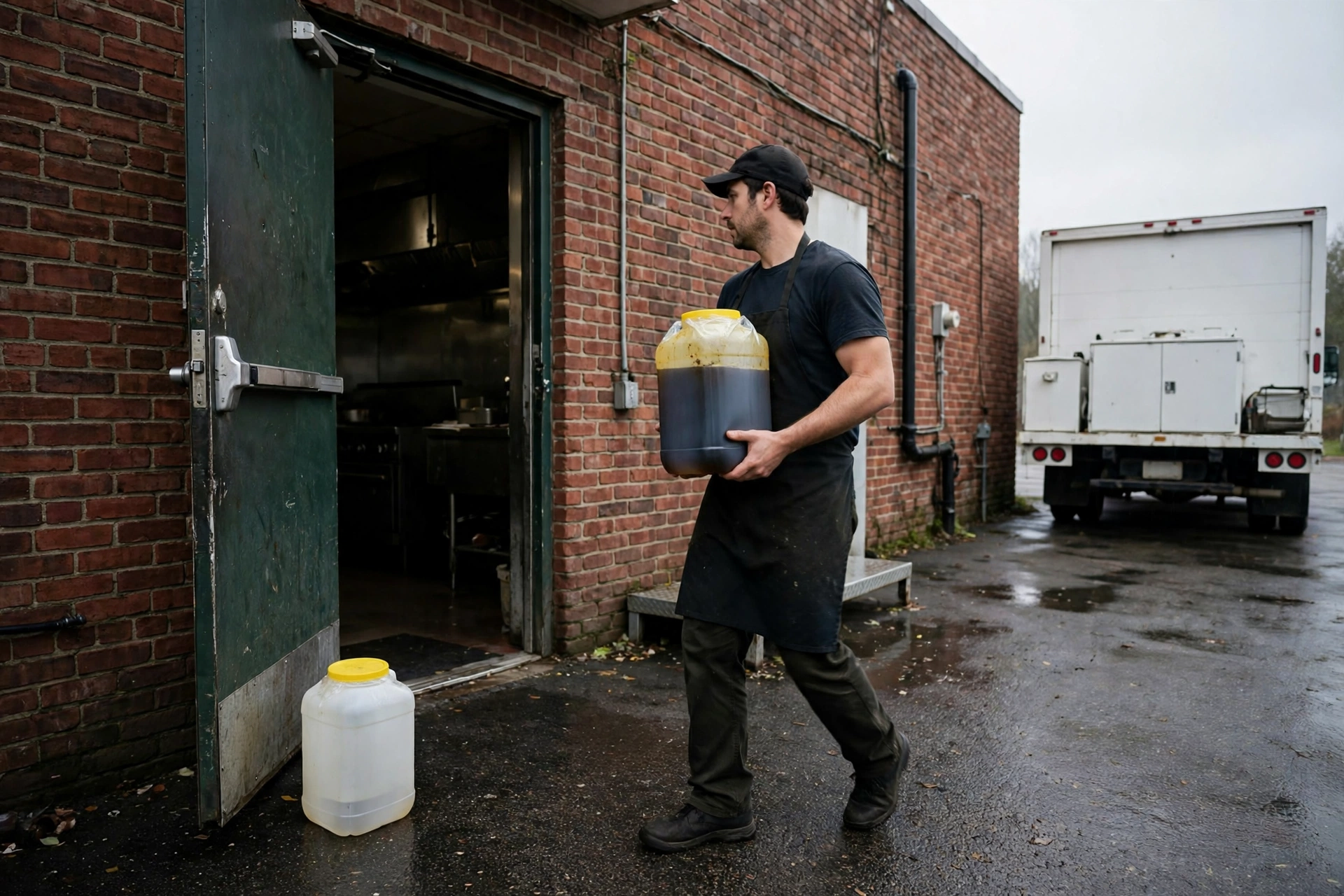
The crew pumped out the cap, liquid and sludge, scraped the interior, cleared the baffles and checked them. The trap cleaning for this small indoor trap ran in the range we publish: $150 to $350. The fryer oil sat in sealed containers by the back door. Because it was clean oil, it was collected at no charge. The manager got the service record and the shipping document, and we talked through a visit schedule that suits a fryer-heavy kitchen. High-volume kitchens commonly run every 4 to 6 weeks, and the manager chose a schedule from there.
Used cooking oil in a Ferndale winter
This is provider guidance from a Dearborn-serving company, and no local authority publishes winter rules for this trade. Still, the point is practical. Fats that stay loose in summer thicken and set as temperatures drop. Hot water cooling in an interceptor drops its grease at the top, and deep cold can freeze and expand it. So traps want more frequent checking in winter, not less. Used oil can freeze in outdoor bins, and the working fix is a bin swap: an empty bin delivered and the full one carried away. Oil poured into pipes can solidify inside them.
Talk it through
Not sure whether you need a trap cleaned this week or in a month? Call (313) 351-8079. Describe what you see, and we will say what we would check first.
When to call
The floor drain by the fryer or dish area is slow, or it smells when the dish machine drains
You cannot remember when the trap was last cleaned, or there is no record
An inspector or the sewer authority has asked for your cleaning records
You are opening a kitchen and want service set up before the first rush
Used oil is stacking up faster than you can store it
A backup is happening now. Emergency call-out is priced at one and a half to two times the standard service price.
Set up service
Fill out the form below and we will call you. Name and phone are required. Everything else is optional. A consent box is required. The more details you give, the better we are able to help you.
Questions
How often should a Ferndale restaurant have its grease trap cleaned?
No rule on this page sets an interval. The trade's working benchmark is to pump when grease and solids reach about a quarter of the trap's capacity. In practice, high-volume kitchens run every 4 to 6 weeks and low-volume kitchens every 3 to 6 months. Your fryer load and trap size decide it.
Does Ferndale require a specific cleaning schedule?
We do not state a Ferndale rule. Your city and your sewer authority set local requirements for your address, so ask them directly. We can keep records that show whatever schedule you follow.
Is the quarter rule a law?
No. It is a trade scheduling benchmark that crews use to decide when a trap is due.
What does grease trap cleaning cost?
Interior cleaning of small indoor traps is $150 to $350. Medium traps are $300 to $600. Large exterior interceptors are $500 to $1,000 or more, by capacity and waste volume.
What decides the price within a range?
Capacity of the trap, how hard it is to reach, and the volume of waste to be removed.
What does an emergency call-out cost?
One and a half to two times the standard service price.
Do you charge to take my used cooking oil?
There is no charge for clean oil. We collect it on the same stop as the trap.
What happens to the waste from my trap?
In Michigan it is a liquid industrial by-product under Part 121. It must be hauled by a registered transporter on a shipping document, and you keep your copy.
What records do I get?
A service record and a copy of the shipping document. They show what was removed and the condition of the trap, ready if an inspector or the sewer authority asks.
Can you clear a drain line as well?
Yes. Line jetting is priced with the service visit it rides with.
Do traps need attention in winter?
Provider guidance says to check them more often in winter, not less. Cold thickens and can freeze grease, and used oil can freeze in outdoor bins, which is solved with a bin swap.
I have a small indoor trap. Do I need an interceptor?
Whether an interceptor is required depends on your sewer authority and your building. We can tell you what you have, and what it costs to service it.