Dearborn Grease Trap serves the fry shops, carry-outs and diners of Ecorse, and the first thing most of them need from us is used cooking oil collection, because a fried fish and chicken menu goes through fryer oil all day. The crew that takes the oil away is the same crew that cleans your grease trap, so the bin and the trap run on one schedule with one phone call. We drive over from Dearborn, about 16 minutes, and we work around the fact that your kitchen is busiest when everyone else is hungry.
Start with a call
If you run a kitchen on West Jefferson or anywhere else in Ecorse and your oil bin, your trap or your floor drain is on your mind, call (313) 351-8079. Tell us what you cook, how the trap smells, and where the oil bin sits. That is enough to start working out a schedule and a price.
Ecorse kitchens and why oil and trap go together
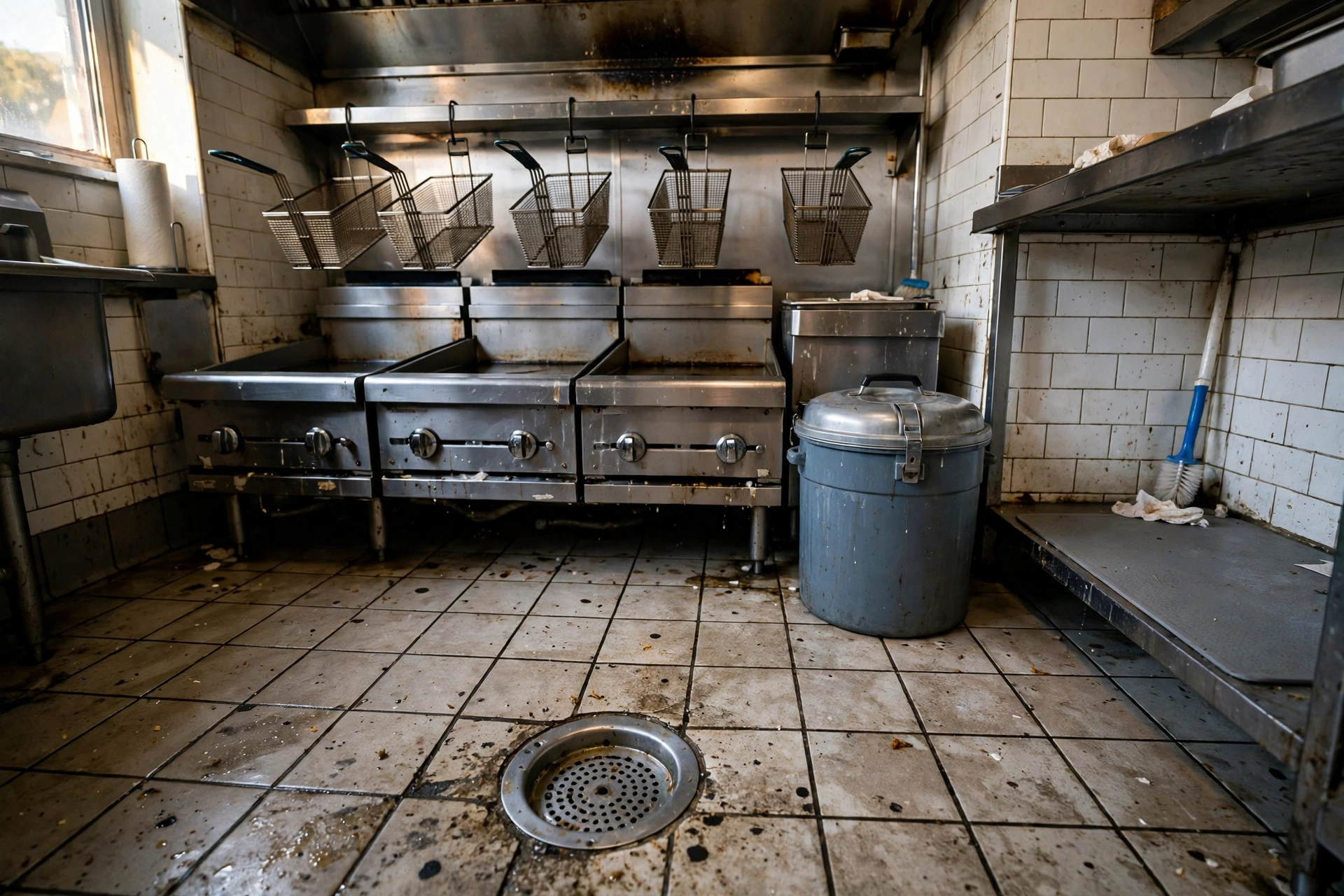
Ecorse is a small city, and its food runs along West Jefferson: fried fish shops, chicken carry-outs, and the occasional BBQ and diner counter. These are fryer-heavy kitchens by menu. Oil goes in, gets filtered and topped up, and eventually gets spent. Everything else that leaves the line, including pan scrapings, batter and the wash water from fryer baskets, heads toward the floor drain and the grease trap.
That is why the two jobs belong together. A trap does best when the oil leaving the kitchen is handled properly at the fryer. Oil that goes to a lidded bin and a collection pickup stays out of the pipes. Oil that goes down the sink ends up in the trap, or past it, and often turns solid inside the line. Kitchens that run both jobs through one provider tend to see fewer surprises, because the same crew sees the bin, the trap and the drain on the same visits.
What governs the work, and what does not
Here is what we can say plainly. Dearborn has no grease ordinance that sets a pumping interval, a trap-sizing table or a manifest rule, and we do not quote one for anyone. What exists is layered:
- City code. Dearborn's own code limits fats, oil and grease in discharge to 1,500 mg/L and bars grease that obstructs flow. That is Dearborn's code, not Ecorse's.
- Regional sewer authority. In Dearborn, the Great Lakes Water Authority's pretreatment rules call for interceptors where the authority deems them necessary, cleaned regularly at the owner's expense, with records produced on demand. They set no fixed interval.
- State law on the waste. Michigan's Part 121 treats trap clean-out residue as a liquid industrial by-product. It may only be hauled by a registered transporter, on a shipping document for each shipment, with papers kept three years. The restaurant keeps its own copies. This is state law and follows the waste wherever it is generated.
We have not researched Ecorse's own code for this page, so we do not state one. For your address, ask the city or the authority that treats your sewage what applies. If a notice has arrived, bring it to us and we will read it with you.
The scheduling benchmark we use is a trade habit, not a rule: pump when grease and solids together reach about a quarter of the trap's capacity. What kitchens actually run follows from that. High-volume kitchens commonly land at every 4 to 6 weeks, and low-volume kitchens every 3 to 6 months. Ecorse fry shops usually sit toward the busy end.
Featured job: a fish carry-out on West Jefferson
Chapter 1: the bin and the smell
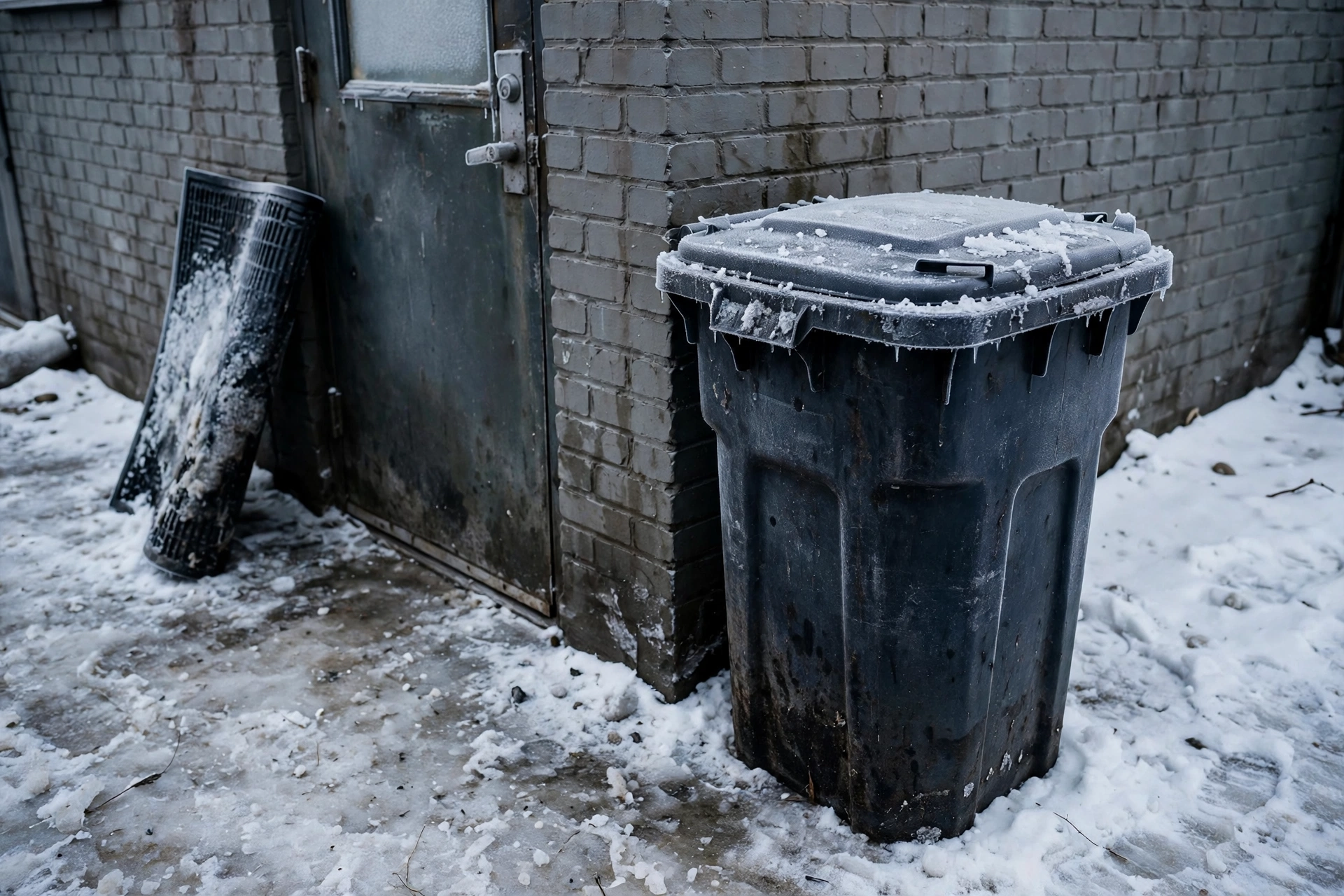
A fish and chicken carry-out on West Jefferson called us in the cold part of the year. The kitchen manager had two complaints. The back floor drain was slow and had begun to smell, and the used oil bin by the back door had turned stiff, with the lid hard to lift and the oil in it thick as paste. Pickups had been irregular, and nobody had looked at the trap in a long while.
Chapter 2: opening the trap
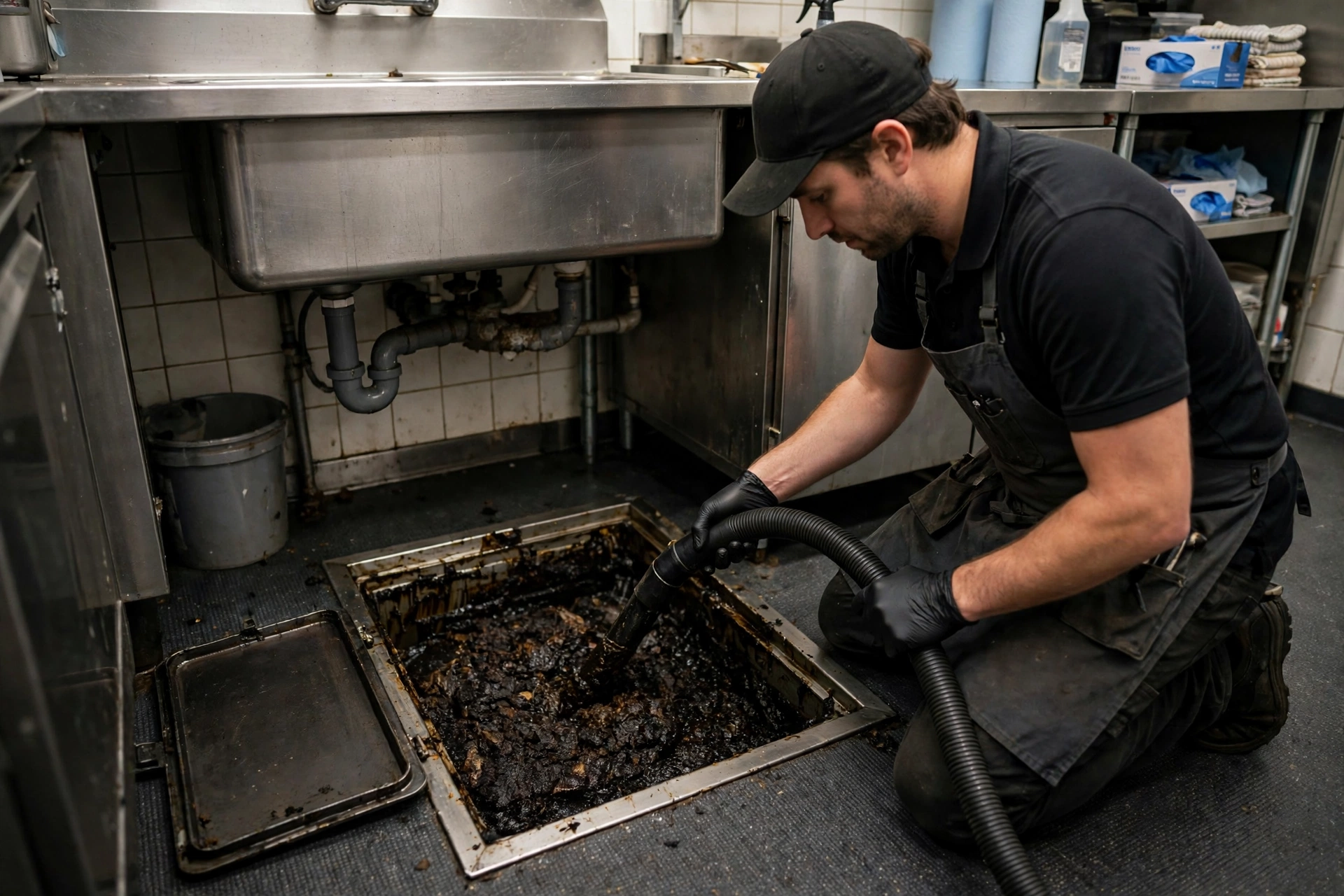
The trap was a small indoor unit under the prep area. The crew lifted the lid and found the grease cap thick and the solids well past the quarter mark we use for scheduling. They pumped the liquid and sludge out, scraped the interior, cleared the baffles and checked the condition of the lid, baffles and fittings. Because the drain had been slow, they jetted the line from the trap outward, which was priced with the service visit.
Chapter 3: the oil
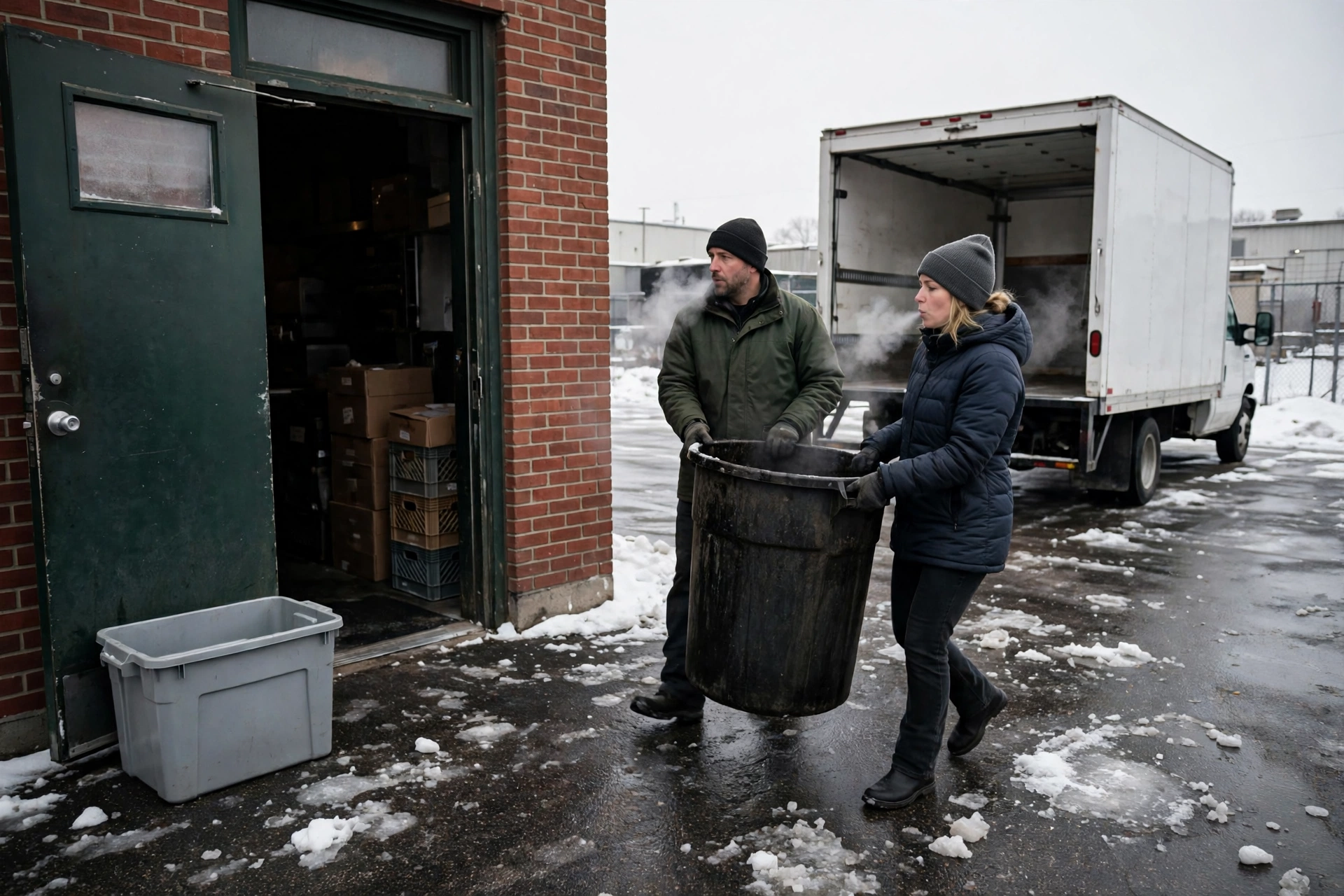
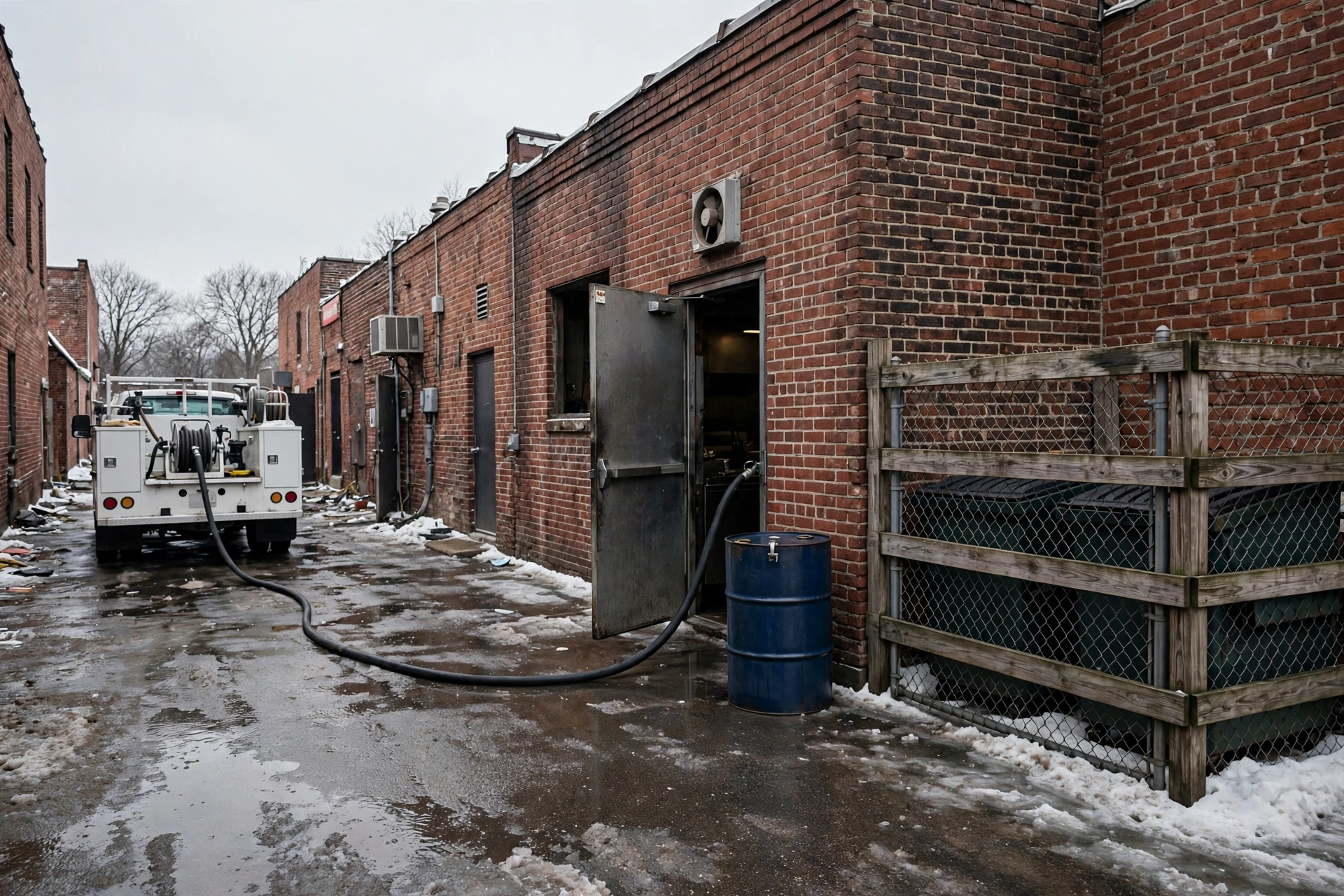
The old bin was swapped out. An empty one came in and the stiff one went away with the crew, which is how cold-weather bin trouble gets solved. Clean oil is collected at no charge. The crew also asked how the kitchen emptied its fryers at the end of the night, and learned that some of the last oil had been going down the mop sink while hot. Hot oil cools in the pipe and sets. The manager moved to a lidded transfer container and kept the bin as the only place oil goes.
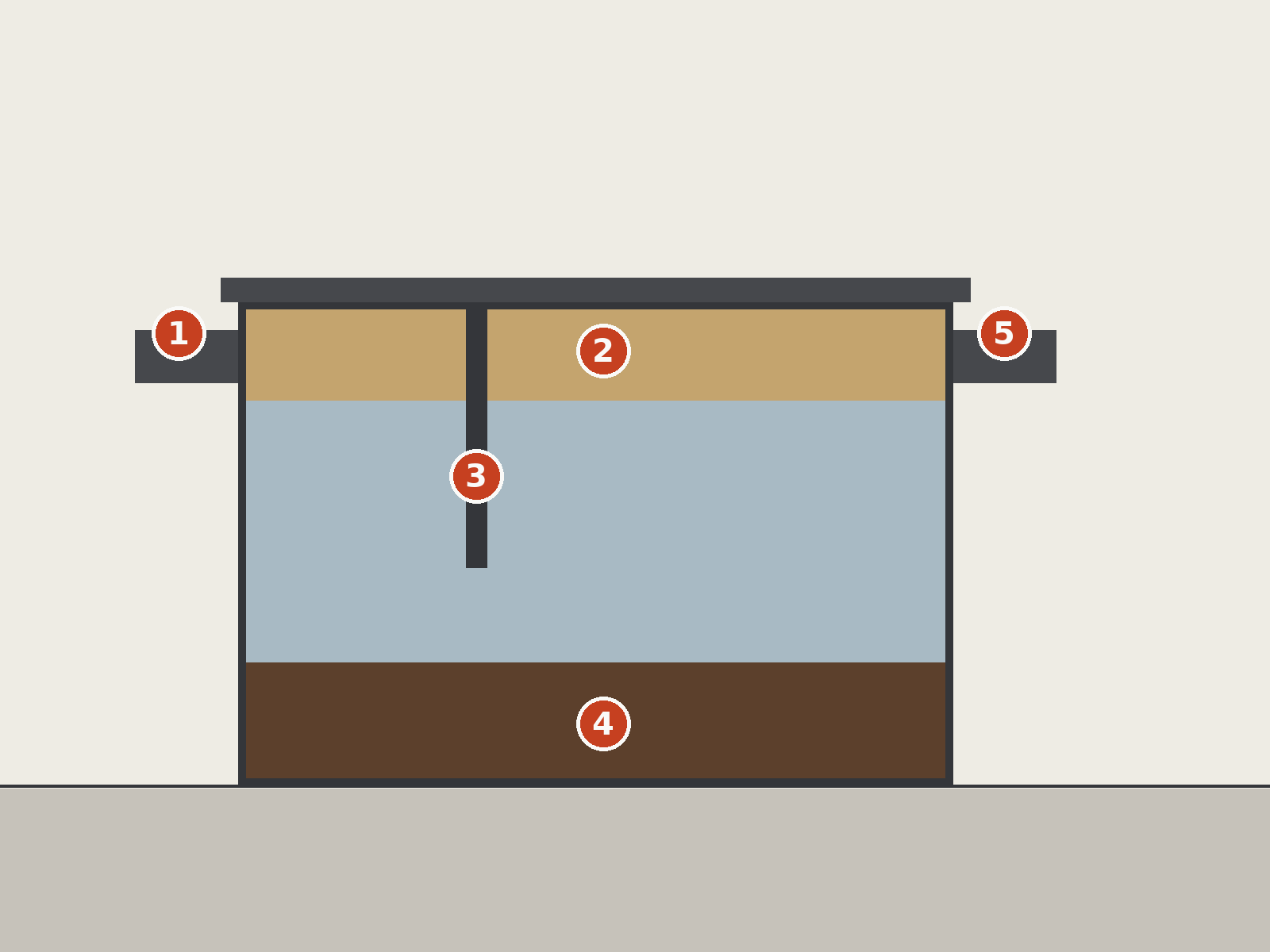
trade benchmark, pump when grease and solids together reach about a quarter of the trap's capacity, labelled as trade practice and never as law
as temperatures drop, grease that stayed semi-liquid in warm weather can congeal into a solid mass, so traps need more frequent checking in winter, not less
hot water cooling in the trap drops its grease at the top, where deep cold can freeze it
oil poured into pipes can solidify inside them
trap clean-out residue is a liquid industrial by-product under Michigan Part 121, hauled only by a registered transporter on a shipping document, papers kept three years
small indoor trap cleaning is $150 to $350. No Ecorse or Dearborn interval appears in any hotspot.
Chapter 4: the schedule
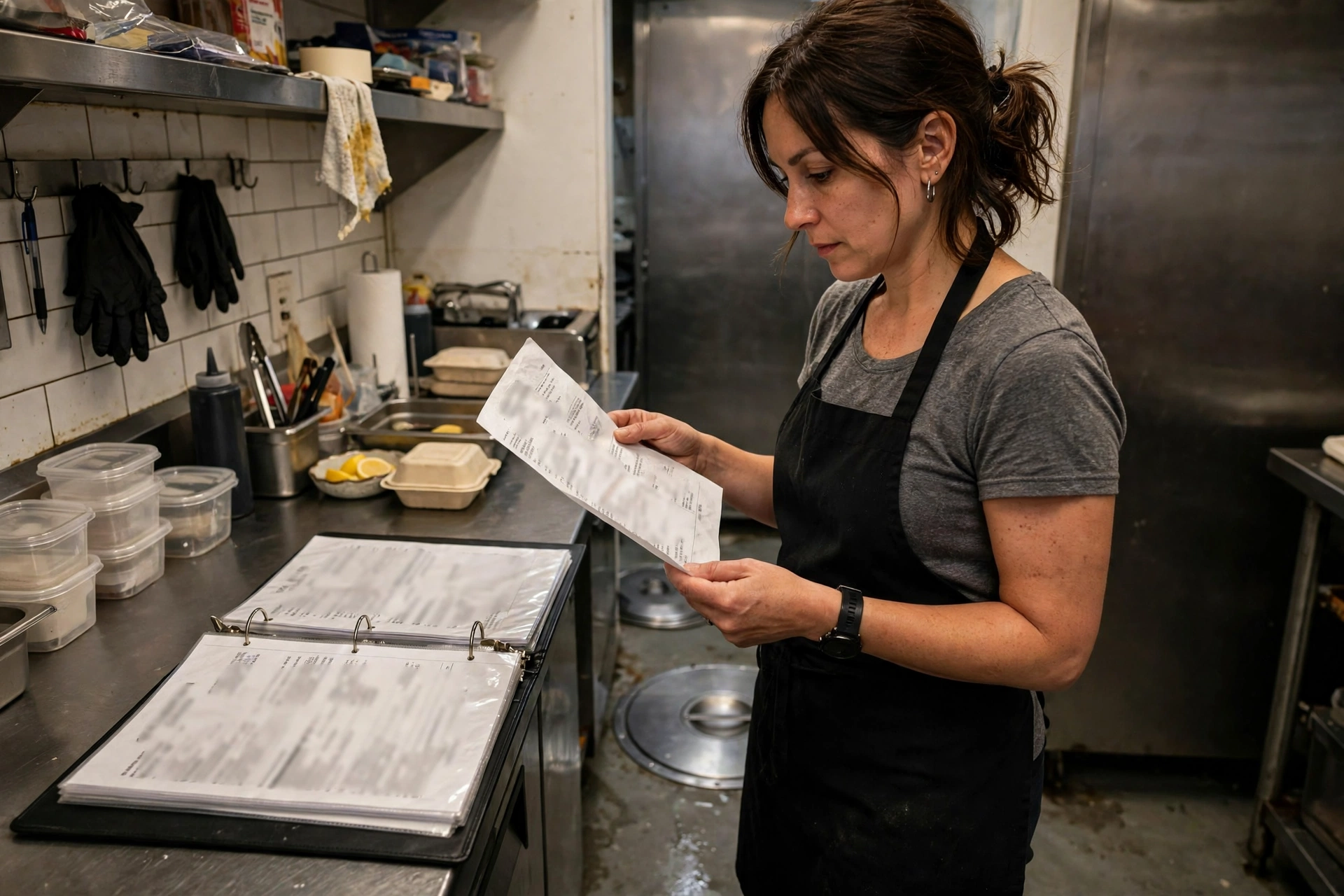
With a busy fry line and winter coming, the kitchen settled on trap visits near the 4 to 6 week range that high-volume kitchens commonly run, with the oil bin on its own pickup and an extra look at the trap in the coldest weeks. The visit for a small indoor trap came to the price on our list, $150 to $350. The crew left a service record showing what was removed and what was found, and the manager put it in the binder with the kitchen's other paperwork.
Talk it through with us
If this sounds like your back door, call (313) 351-8079. We will ask what is in the bin, what size your trap is, and how fast the line fills, then set a schedule that suits your menu.
How the service runs for an Ecorse kitchen
1. The first call. You tell us what you cook, how many hours the fryers run, and where the trap and bin are. 2. The first visit. The crew opens the trap, checks how full it is against the quarter benchmark, and looks at the baffles, lid and fittings. They check the oil bin. 3. The work. Grease cap, liquid and sludge come out, the interior is scraped, and the baffles are cleared. If the line is slow, we jet it, priced with that visit. 4. The oil. Clean used cooking oil is collected from a sealed container sized to your kitchen. In cold weather we swap bins. 5. The record. You keep a service record of what was done and found. The trap waste leaves on the paperwork Part 121 requires, and you keep your copies. 6. The schedule. Together we set how often the crew comes, based on what we saw, not a number from a table.
What it costs
These are our prices, stated the same way wherever you see them.
| Service | Price |
|---|---|
| Interior grease trap cleaning, small indoor traps | $150 to $350 |
| Medium traps | $300 to $600 |
| Large exterior interceptors | $500 to $1,000 or more, by capacity and waste volume |
| Emergency call-out | One and a half to two times the standard service price |
| Used cooking oil collection | No charge for clean oil |
| Line jetting | Priced with the service visit it rides with |
Most Ecorse carry-outs run small indoor traps. If yours is larger, the price follows capacity, how easy the trap is to reach, and how much waste comes out.
When to call
The floor drain has gone slow or begun to smell.
The oil bin is full, stiff from cold, or overdue.
The trap has not been opened in a long while, and you do not know how full it is.
A sewer or health notice has arrived and you need records.
Winter is coming, when traps need more frequent checking, not less.
Water is backing up. That is an emergency call-out, at the price in the table above.
Send us the details
The form below is short. Name and phone are required. Everything else is optional. A consent box is required. The more details you give, the better we are able to help you.
Or skip the form and call (313) 351-8079.
Questions
How often should an Ecorse fry shop have its trap cleaned?
No rule in our kit sets that interval for Ecorse, and Dearborn has no fixed interval either. What kitchens actually run is based on how fast the trap fills. High-volume kitchens commonly land at every 4 to 6 weeks, and low-volume kitchens every 3 to 6 months. Fry shops tend to sit toward the shorter end.
Does Ecorse have a grease ordinance that tells me how often to pump?
We have not researched Ecorse's code for this page, so we do not state one. Ask the city or the authority that treats your sewage what applies at your address. We can read any notice you have with you.
What is the quarter rule?
It is a trade benchmark: pump when grease and solids together reach about a quarter of the trap's capacity. Kitchens use it to schedule. It is not a law in Dearborn or anywhere we quote.
What does used cooking oil collection cost?
Clean oil is collected at no charge.
What counts as clean oil?
Oil from your fryers. Trap contents are a different waste and come out through the trap service. If the bin has picked up water, food scraps or anything from the trap, tell us when you call so we plan the pickup properly. Our kit does not list a fee for that case, so we will not make one up here.
How much does trap cleaning cost?
Interior grease trap cleaning for small indoor traps is $150 to $350. Medium traps are $300 to $600. Large exterior interceptors are $500 to $1,000 or more, by capacity and waste volume.
Is line jetting extra?
It is priced with the service visit it rides with. We do not publish a standalone jetting price.
What happens to my oil bin in winter?
Oil can freeze in an outdoor bin. The working fix is a bin swap: an empty bin delivered, the full one carried away. Traps also need more frequent checking in cold weather, because grease that stays semi-liquid in warm weather can congeal into a solid mass.
Can I pour hot fryer oil down the drain if I flush it with water?
No. Oil poured into pipes can solidify inside them. Put it in a lidded transfer container and into the oil bin.
What paperwork do I keep?
A service record from each visit. For the waste that leaves the trap, Michigan's Part 121 requires a registered transporter and a shipping document for each shipment, with papers kept three years. The restaurant keeps its own copies.
Who is allowed to haul trap waste?
Under Part 121, only a transporter registered and permitted under Michigan law. A septage licence does not cover it. Ask any hauler to show you the paperwork.
What if the trap backs up on a busy night?
Call (313) 351-8079. Emergency call-out is one and a half to two times the standard service price. We do not promise an arrival time on this page.
Will the visit shut my kitchen down?
Tell us your slow hours when you call. We plan the visit around them where we can.
How do I know whether I have a small trap or a large interceptor?
Small indoor traps sit under sinks or prep areas. Large exterior interceptors are outdoor, in-ground units. If you are not sure, describe where yours is when you call.