Dearborn Grease Trap handles grease trap cleaning for Dearborn Heights kitchens, and we do it from our base in Dearborn, just next door. Most of the work is on Ford Road, where the dining street Dearborn built keeps running west into the Heights, and along the Telegraph run. If your trap is slow, smells, or has simply not been looked at in a while, this page explains what the service is, what it costs, and how we handle it without closing your kitchen.
Call us about your kitchen
If you already know what you need, call (313) 351-8079 and tell us what kind of kitchen you run and where the trap sits. We will tell you what the visit looks like. If you would rather read first, the rest of this page covers it.
Dearborn Heights kitchens and why the trap is the work
Ford Road in Dearborn Heights is an independent restaurant street: Middle Eastern grills, coney islands, Italian kitchens and barbecue, plus more of the same along Telegraph. These are working kitchens with real fryer and grill loads. Most of them sit in storefronts with a small indoor trap, usually under a sink or near the dish station, rather than a big exterior interceptor.
A small trap fills fast. It holds little, so a busy grill or fryer line can bring grease and solids to the point where the trap stops doing its job. When that happens the grease travels on into your building's drain line, and that is where backups and odors begin.
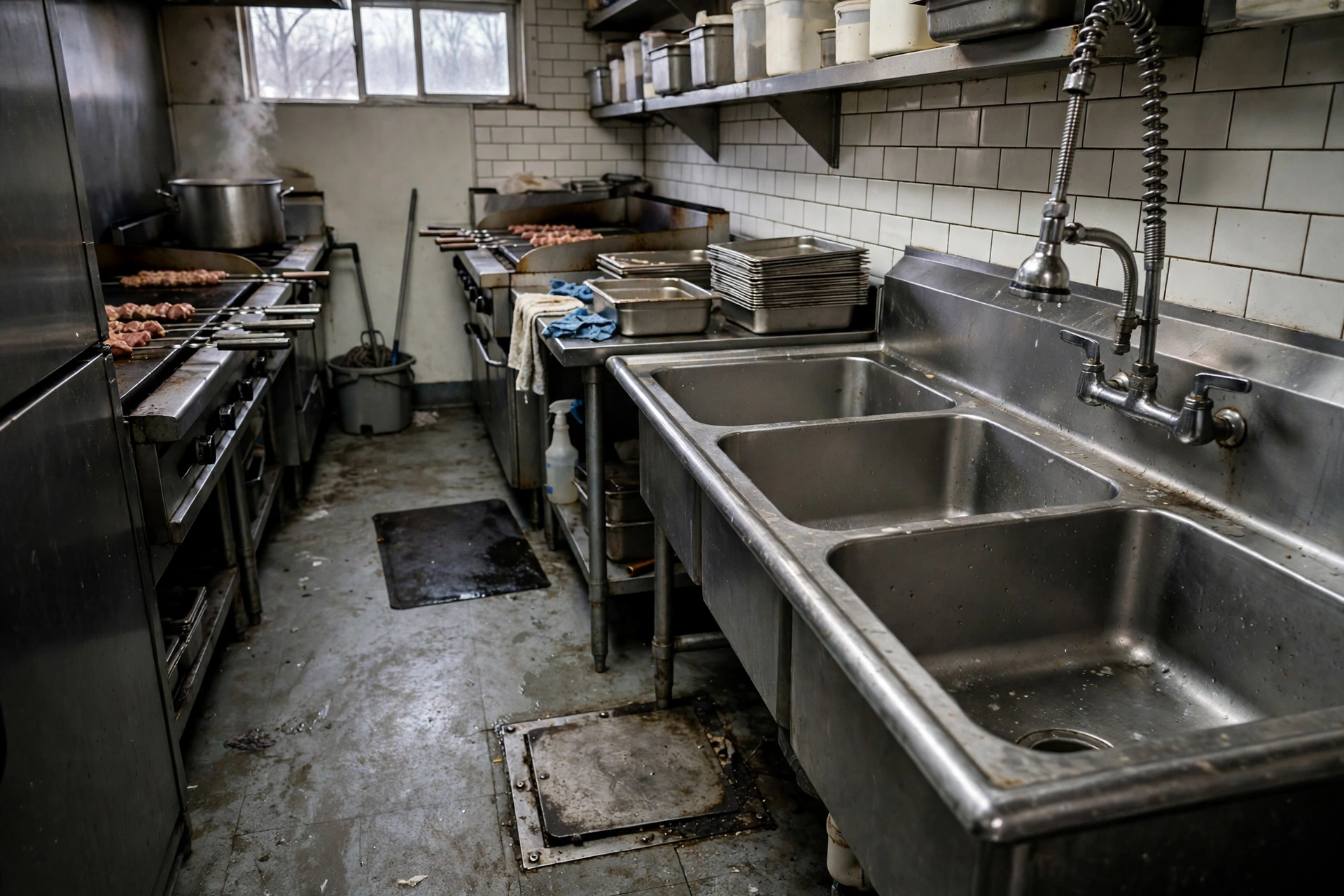
Interior trap work suits these kitchens for three reasons:
- The unit is small, so a visit is short and can be fitted around prep and service.
- Access is usually close, with no long hose runs, which keeps the price in the small-trap range.
- Your records stay simple: one visit, one service record, one shipping document.
Larger chain pads on Telegraph often run exterior interceptors. We pump those too, and they are priced in the pricing section below.
What governs a Dearborn Heights trap
Start with what does not exist. Dearborn has no FOG ordinance, so there is no trap-sizing table, no fixed pumping interval and no city manifest rule. We have not found a fixed interval written into the sources behind this page for Dearborn Heights either, and we will not hand you one that someone else made up. Other communities run their own programs, and those belong to them.
What does apply:
- Your city's sewer rules. Dearborn's own code limits grease discharge to 1,500 mg/L. We have not read the Dearborn Heights code for this page, so ask the city what applies to your connection.
- Your sewer authority's pretreatment rules. Where a regional authority sets them, they generally call for interceptors where required, regular cleaning at the owner's expense, and records you can produce on request. Where they apply, they set the duty to clean regularly, not a fixed interval.
- Michigan's Part 121. Trap clean-out waste is a regulated liquid industrial by-product. A registered, permitted transporter must haul it on a shipping document for each shipment. As the generator, you keep your copies.
The county also licenses and inspects food service in Wayne County outside Detroit. A trap that is clean and documented makes that visit easier.
The trade's working rule is to pump when grease and solids reach about a quarter of the trap's capacity. That is how crews schedule, not a legal requirement. In practice, high-volume kitchens run service every 4 to 6 weeks, and low-volume kitchens every 3 to 6 months. Those are what kitchens actually run, not mandates.
Featured job: a Ford Road grill that stopped waiting
This is a job from a Middle Eastern grill on Ford Road in Dearborn Heights, a family kitchen with a heavy grill and fryer line and a small indoor trap under the dish station.
Chapter 1: The call
The kitchen manager called on a Monday. The dish sink was draining slowly at the end of every night, and a sour smell hung near the station by afternoon. The trap had gone a long time between visits, and nobody could say exactly how long.
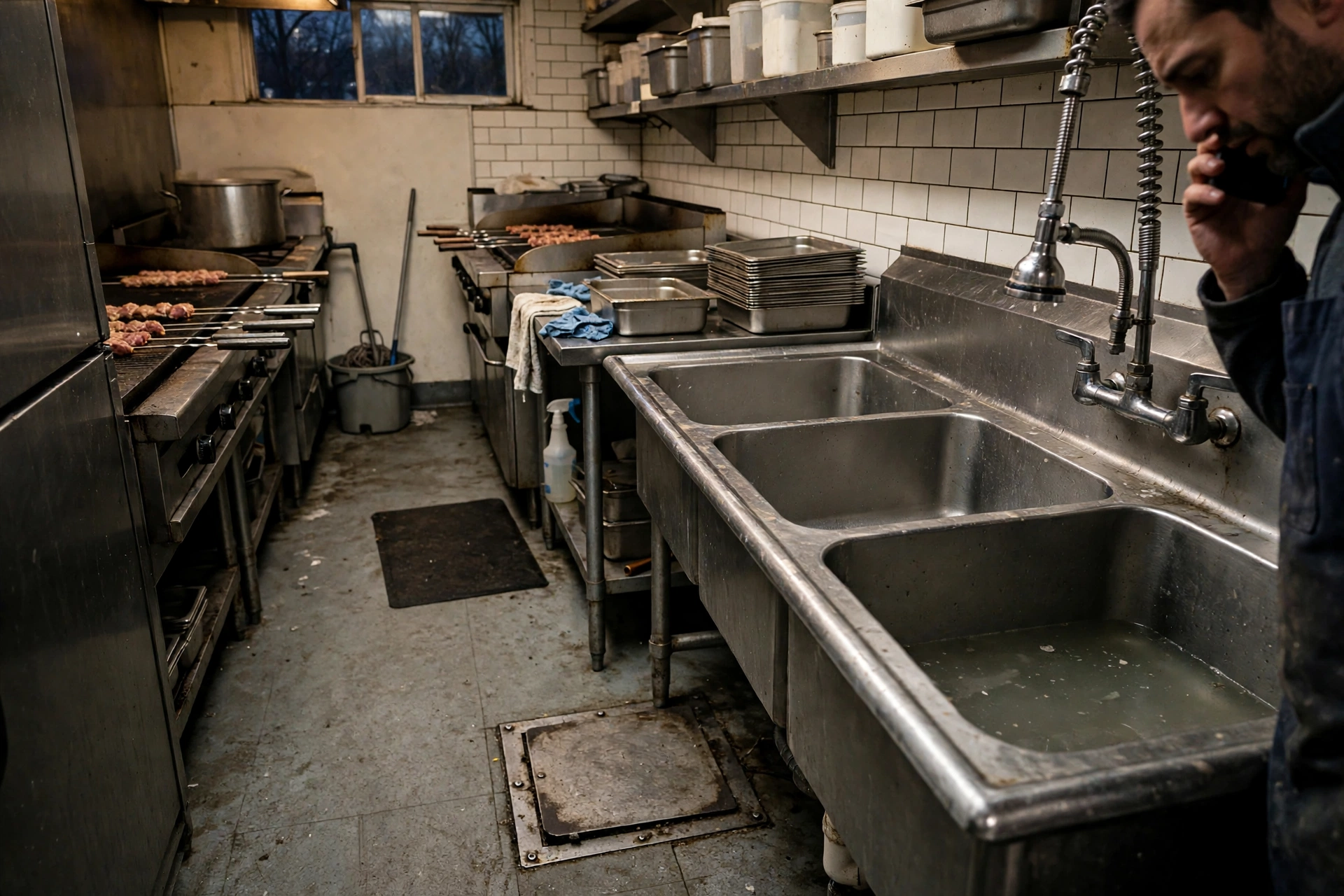
Chapter 2: Lid off
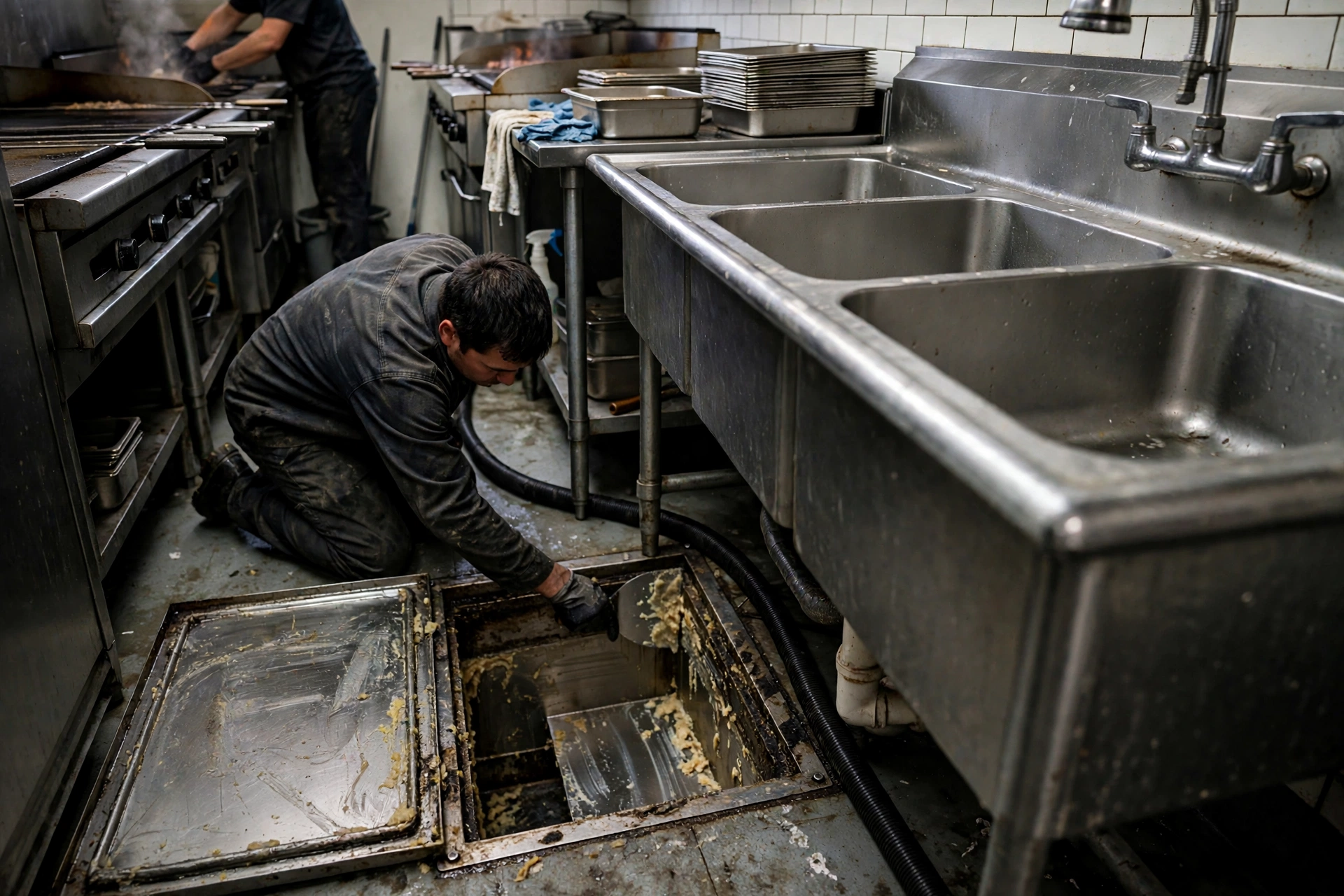
The crew arrived before the lunch rush and put down mats and a drop cloth. The lid came up on a thick grease cap over liquid, with a layer of settled solids beneath. The trap was well past the quarter-full mark the trade works to.
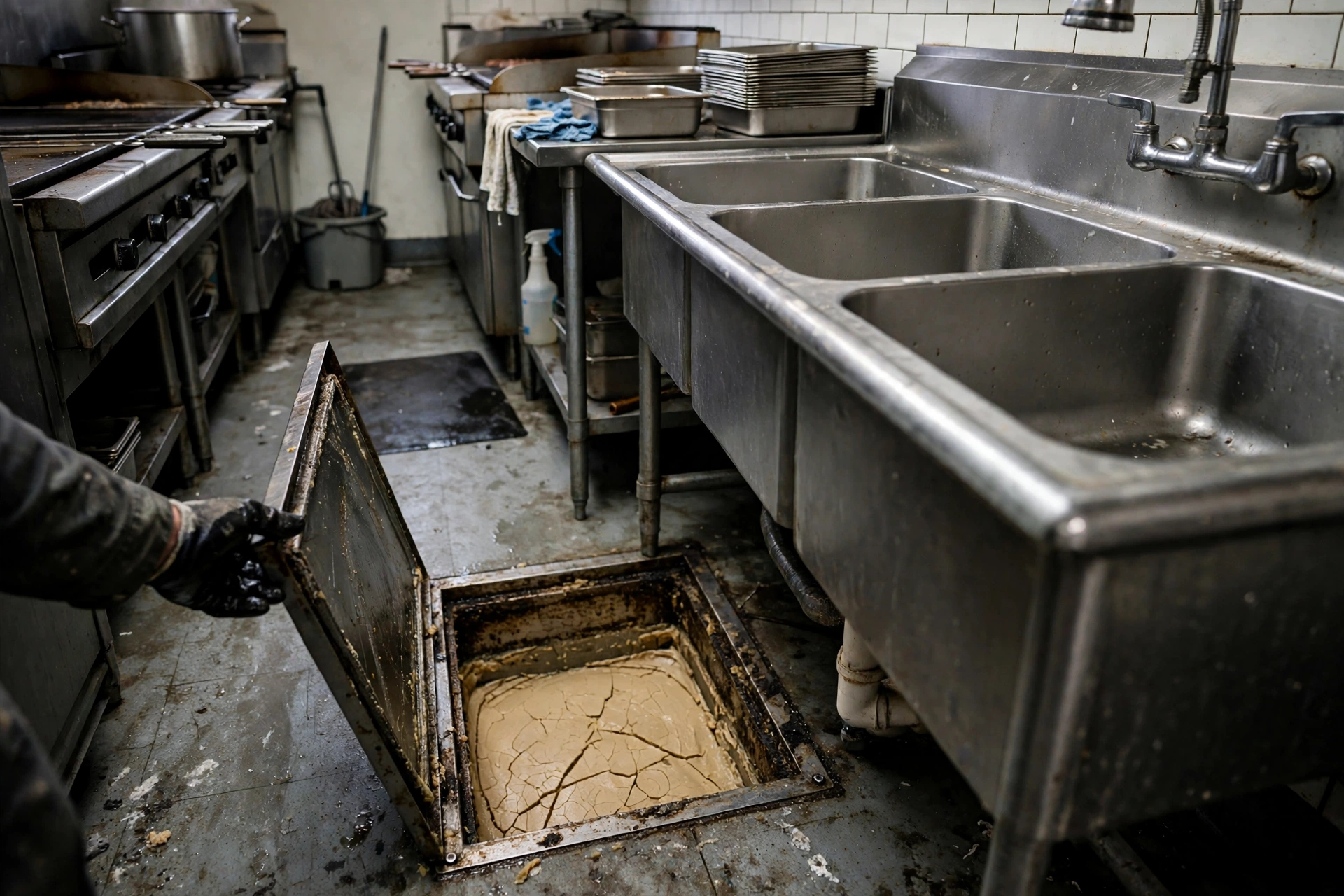
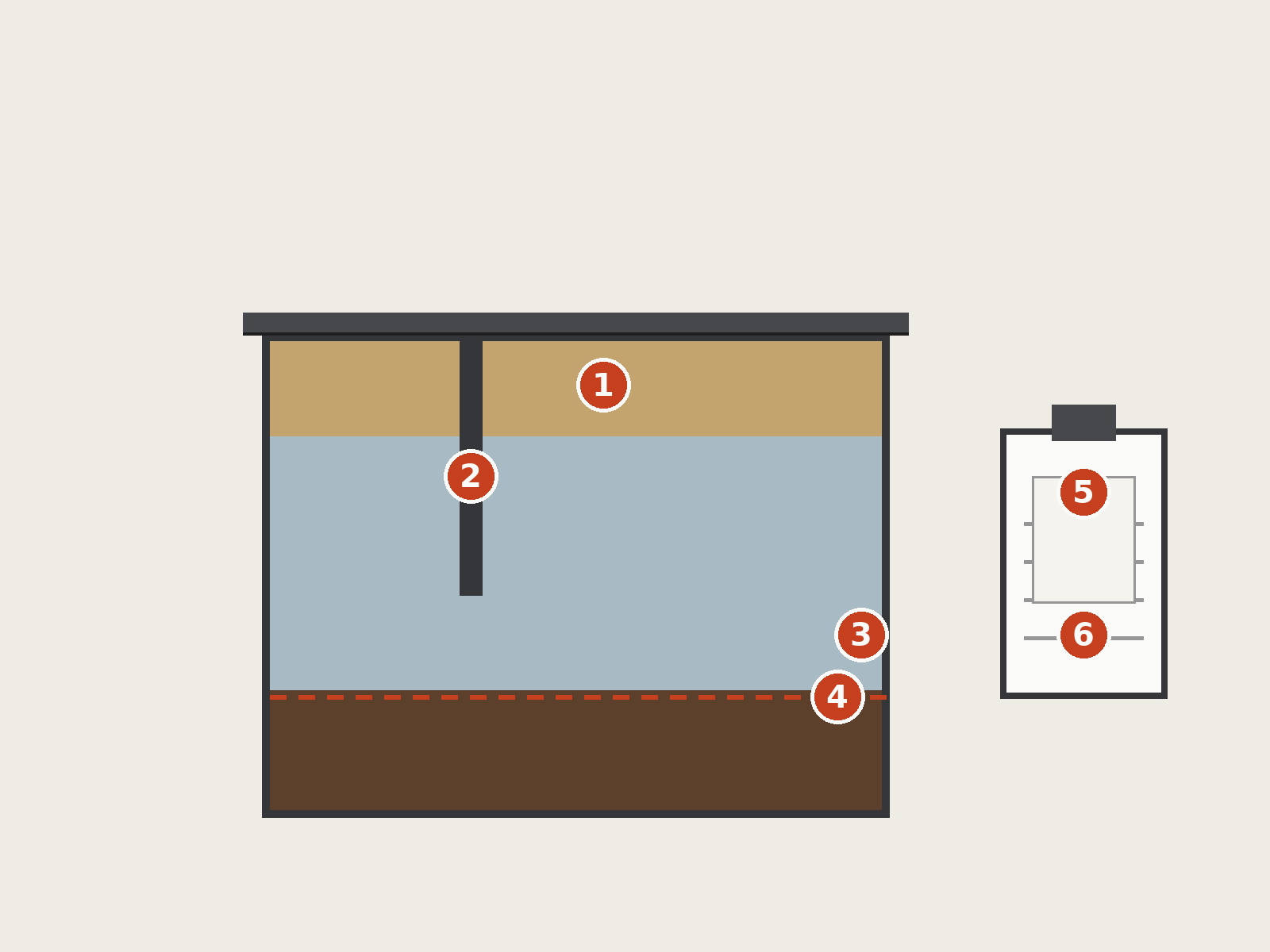
Grease cap: the floating layer comes out first, along with the liquid and the sludge.
Baffles: cleared and inspected on every visit.
Interior: scraped, and component condition checked.
The quarter rule: the trade pumps when grease and solids reach about a quarter of the trap's capacity, a scheduling benchmark and not law.
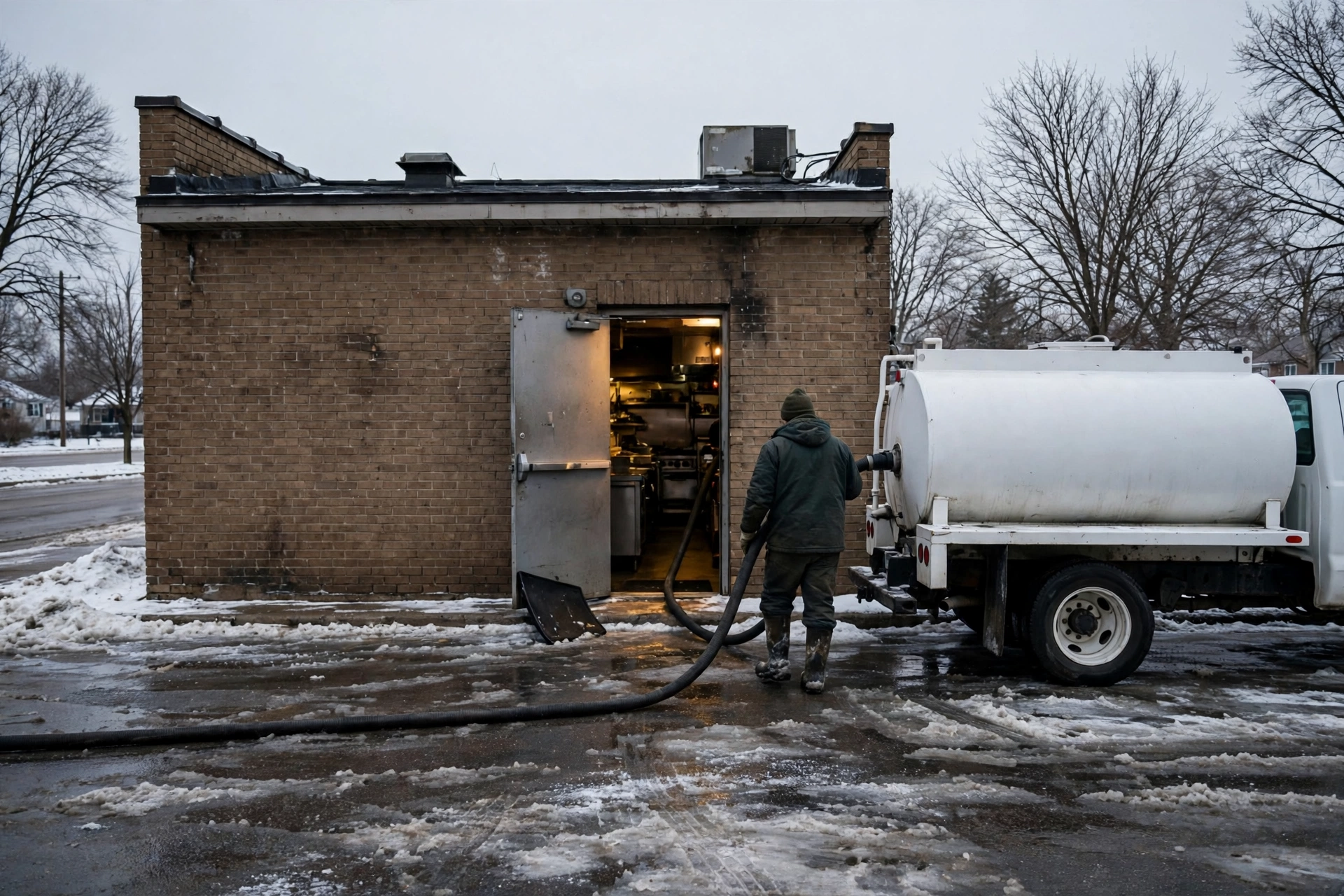
Hauling: the waste is a liquid industrial by-product under Michigan's Part 121, hauled by a registered, permitted transporter on a shipping document.
Your copies: the generator keeps its own copy of each shipping document.
Chapter 3: The work
The crew pumped the cap, liquid and sludge into the truck, scraped the walls, and cleared the baffles. They checked the lid seal, inlet and outlet for condition. The kitchen kept cooking through most of it, because a small trap is a short job and the crew worked around the line.
Chapter 4: The paperwork and the plan
Before leaving, the crew wrote up the service record and handed over the shipping document for the hauled waste, which the kitchen filed with its records. The small indoor trap service was priced in our $150 to $350 range for small indoor traps. Given the grill and fryer load, the kitchen chose to book a repeat visit every 4 to 6 weeks, the rhythm busy kitchens commonly run. Used oil from the fryers now goes out on a collection pickup, at no charge for clean oil.
How the service runs for a Dearborn Heights kitchen
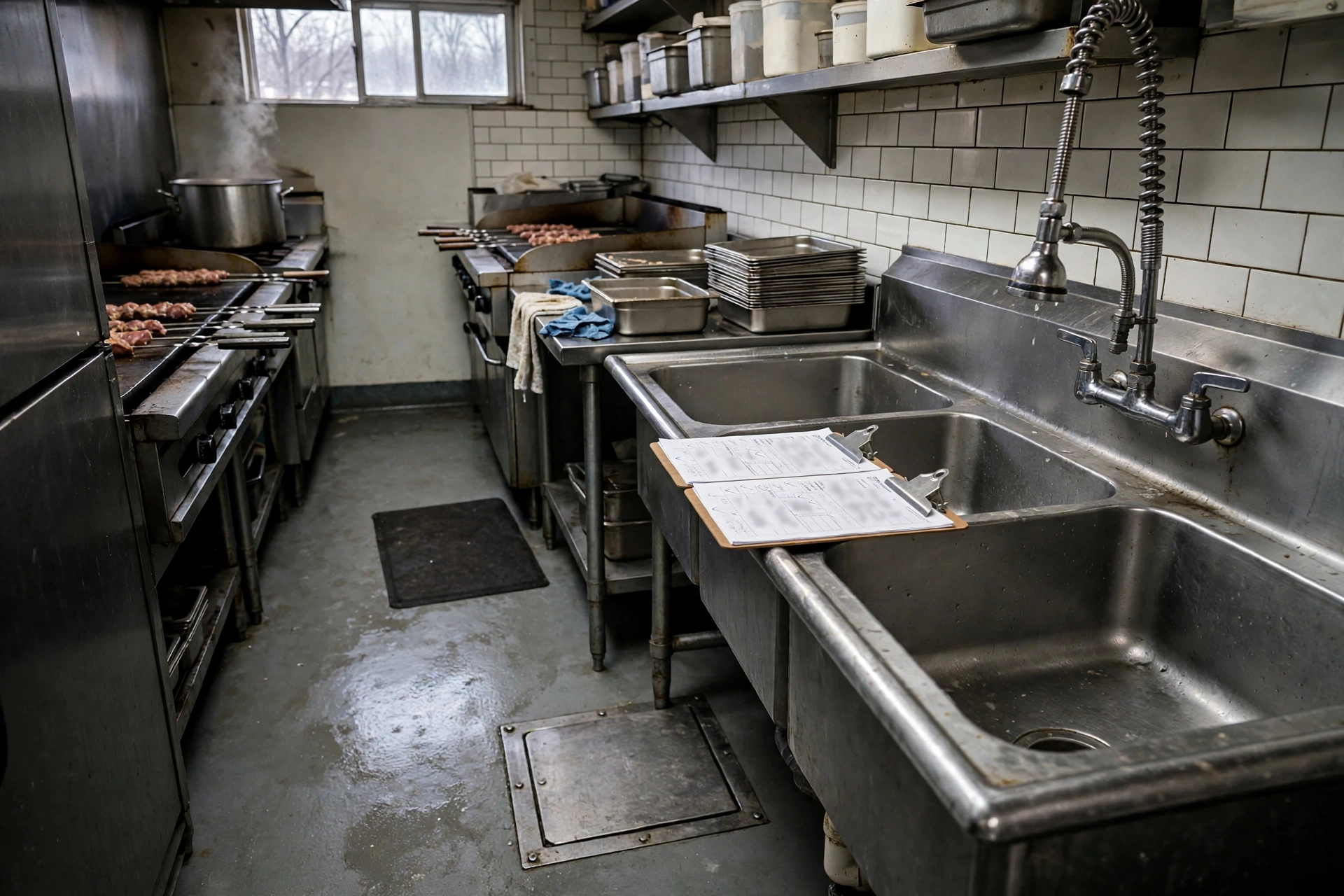
1. You call and describe the kitchen. We ask about the trap's location, rough size, your menu and how long since the last visit. 2. We schedule around service. Interior traps are short jobs, so we aim for the quiet part of the day. 3. The crew protects the floor and opens the trap. They note the grease cap and solids level before pumping. 4. The trap is pumped and cleaned. Cap, liquid and sludge come out, the interior is scraped, baffles are cleared and inspected, and components are checked. 5. The waste leaves legally. It moves on a shipping document with a registered, permitted transporter. 6. You keep the record. Service record and shipping document stay with you for your files and any inspection.
What the visit includes: pump-out, interior scraping, baffle inspection, component check. What the crew documents: the condition of the trap and the work done, on a service record, plus the shipping document for the waste. What you keep: both papers.
Pricing
These are our prices for Dearborn Heights kitchens:
| Service | Price |
|---|---|
| Interior grease trap cleaning, small indoor traps | $150 to $350 |
| Medium traps | $300 to $600 |
| Large exterior interceptors | $500 to $1,000 or more, by capacity and waste volume |
| Emergency call-out | one and a half to two times the standard service price |
| Used cooking oil collection | no charge for clean oil |
| Line jetting | priced with the service visit it rides with |
Where a trap lands in its range depends on capacity, how easy it is to reach, and how much waste is in it.
Talk it through before the trap decides for you
A short call is cheaper than a backup. Phone (313) 351-8079 and we will look at your trap size, your menu and how often a kitchen like yours tends to run service.
When to call
The sink or floor drain is slow, or a sour smell sits near the dish station.
You cannot remember the last time the trap was pumped, and you have no record.
A health inspection or a notice from your sewer authority is coming and you want records ready.
You are opening a kitchen or changing the menu toward more fried food.
A backup is happening now. Emergency call-out is priced at one and a half to two times the standard service price.
Winter is coming. One Dearborn-serving provider advises checking traps more often in winter, because grease congeals as temperatures drop. That is provider guidance, not a local rule.
Questions
Does Dearborn Heights have a grease trap ordinance with a required pumping schedule?
We have not found a fixed pumping interval for Dearborn Heights in the sources behind this page, and we will not state one. Dearborn itself has no FOG ordinance, no sizing table and no manifest rule. Ask the city what its code requires for your building.
How often should I have my trap cleaned?
The trade pumps when grease and solids reach about a quarter of the trap's capacity. High-volume kitchens commonly run service every 4 to 6 weeks, and low-volume kitchens every 3 to 6 months. These are working practices, not requirements.
How much does it cost?
Small indoor traps are $150 to $350, medium traps $300 to $600, and large exterior interceptors $500 to $1,000 or more, by capacity and waste volume. Capacity, access and waste volume decide where yours falls.
Do I have to close the kitchen?
Interior trap work is a short job, and we aim for the quiet part of your day. We cannot promise a particular timing before seeing the setup.
What do I get after the visit?
A service record and the shipping document for the hauled waste. Keep both in your files.
Who is allowed to haul the waste?
Under Michigan's Part 121, trap waste is a liquid industrial by-product. Only a registered, permitted transporter may haul it, on a shipping document for each shipment. A septage license does not cover it.
What is the 1,500 mg/L figure I see mentioned?
It is the limit on grease discharge in Dearborn's own code. We have not confirmed the equivalent in Dearborn Heights' code, so ask the city about your connection.
What if my trap is backing up right now?
Call (313) 351-8079. Emergency call-out is priced at one and a half to two times the standard service price.
Can you take my used cooking oil?
Yes. Used cooking oil collection is at no charge for clean oil.
Do you jet drain lines?
Yes. Line jetting is priced with the service visit it rides with, so we quote it when we know the visit.
Do you pump exterior interceptors too?
Yes. Large exterior interceptors are $500 to $1,000 or more, by capacity and waste volume. Some Telegraph chain pads run these.
Is winter different for traps?
One provider serving Dearborn advises checking traps more often in winter, not less, because grease congeals in the cold. Treat that as guidance, since no local authority publishes winter rules for this trade.
How do I set up regular service?
Call us with your menu and trap location and we will agree on a rhythm that matches how fast your trap fills.
Book your Dearborn Heights visit
Call (313) 351-8079, or send the form. It asks for your name and phone number, and both are required. Everything else is optional: the kitchen, the trap location, the last service date, and what is going wrong. A consent box is required before you send it.
The more details you give, the better we are able to help you.