Dearborn Grease Trap does grease trap cleaning for the kitchens along Berkley's 12 Mile and Coolidge dining corridors, where most of the work is a small indoor trap that has to be opened, emptied and scraped on a schedule that fits the fryer. Our crews come to Berkley kitchens as a regular route stop or a same-problem call-out, and every visit ends with paper you can hand to an inspector. If your trap is slow, smelling or overdue, you can reach us at (313) 351-8079.
Call us about your Berkley kitchen
If a drain is running slow, a smell is coming up at closing, or you are building a cleaning schedule so neither happens, call (313) 351-8079. Tell us what kind of trap you have and where it sits, and we will tell you what the visit involves and which price range applies.
What Berkley's kitchens are like
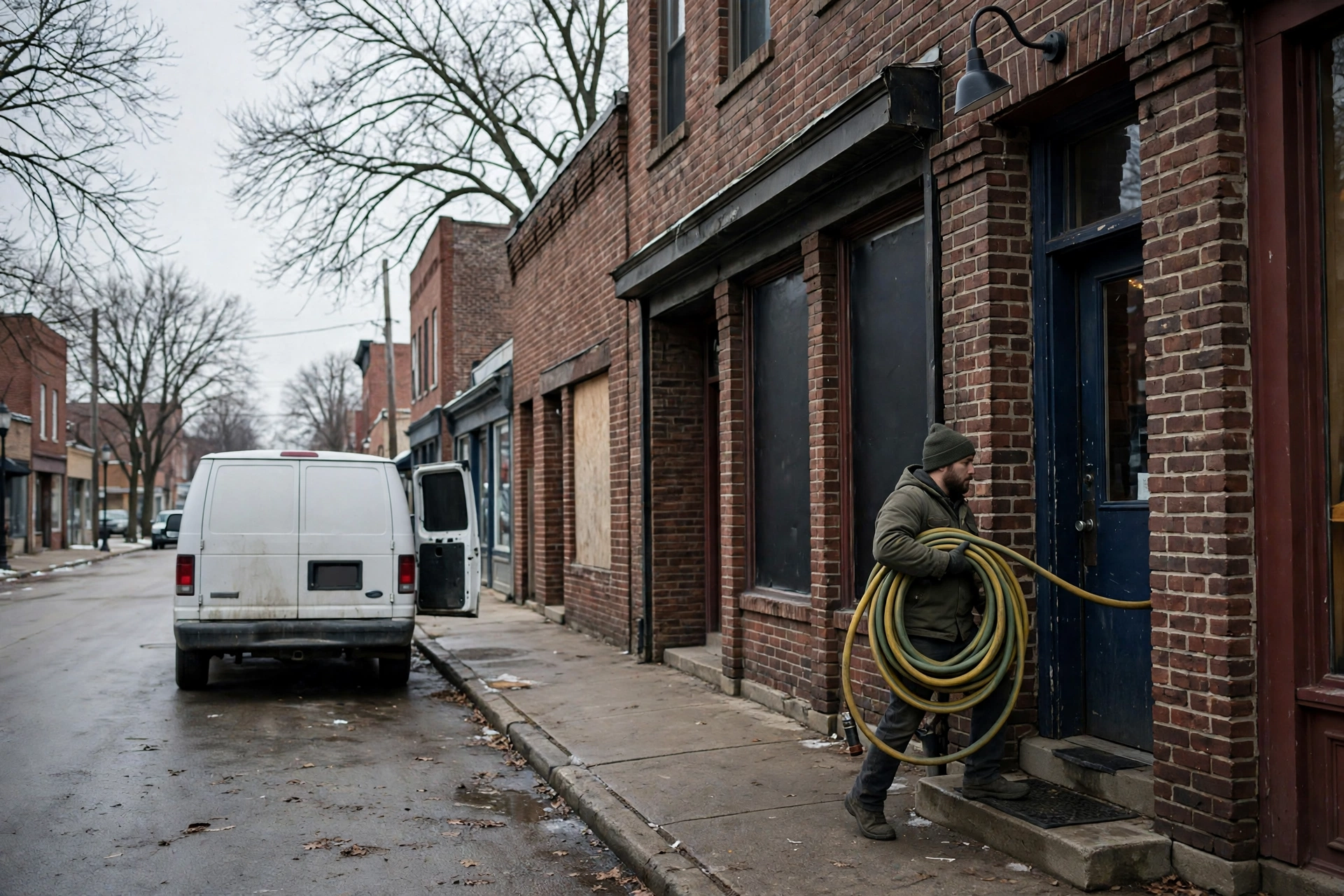
Berkley's restaurants gather on two corridors, 12 Mile and Coolidge, and both sit inside a social district. That changes how kitchens run. Evenings are busy, patios and takeout orders add to the covers, and the fryer and the dish pit work hard in short, heavy stretches.
Kitchens of this size almost always have a small indoor trap, often under a sink or beside the dish station, rather than a large exterior interceptor. A small trap holds little, so it fills fast. It also sits close to the work, which means a neglected one shows itself quickly as a slow sink or a sour smell in the prep area.
That is why interior trap cleaning is the work here. A trap this size needs a short, repeatable visit that does not close the kitchen, and a record that shows the trap was kept up.
What governs grease in a Berkley kitchen
Start with the one rule that is firm: the waste. Michigan treats the residue from a grease trap clean-out as a liquid industrial by-product under Part 121 of the state's environmental law. It can be hauled only by a registered and permitted transporter, on a shipping document for each shipment, with papers kept for three years. The kitchen, as the generator, must use a registered transporter and keep its own copies. A septage license does not cover this waste. Our crews haul under that regime, and you keep your copy of the document.
Local discharge and cleaning rules for Berkley come from the city and its sewer system. We do not quote them here, and we do not present any other city's program as Berkley's. Ask the city what applies to your kitchen. We will not tell you that a fixed pumping interval, a sizing table or a manifest rule is Berkley law, because we have not seen one that is.
What kitchens do in practice is schedule by the trade's working benchmark: clean the trap when grease and solids reach about a quarter of its capacity. That is a scheduling habit, not a legal line. The frequencies kitchens actually run follow from it. High-volume kitchens clean every 4 to 6 weeks, and low-volume kitchens every 3 to 6 months. Where you fall depends on how fast your trap fills.
Featured job: a corner diner on Coolidge
Chapter 1: The slow sink
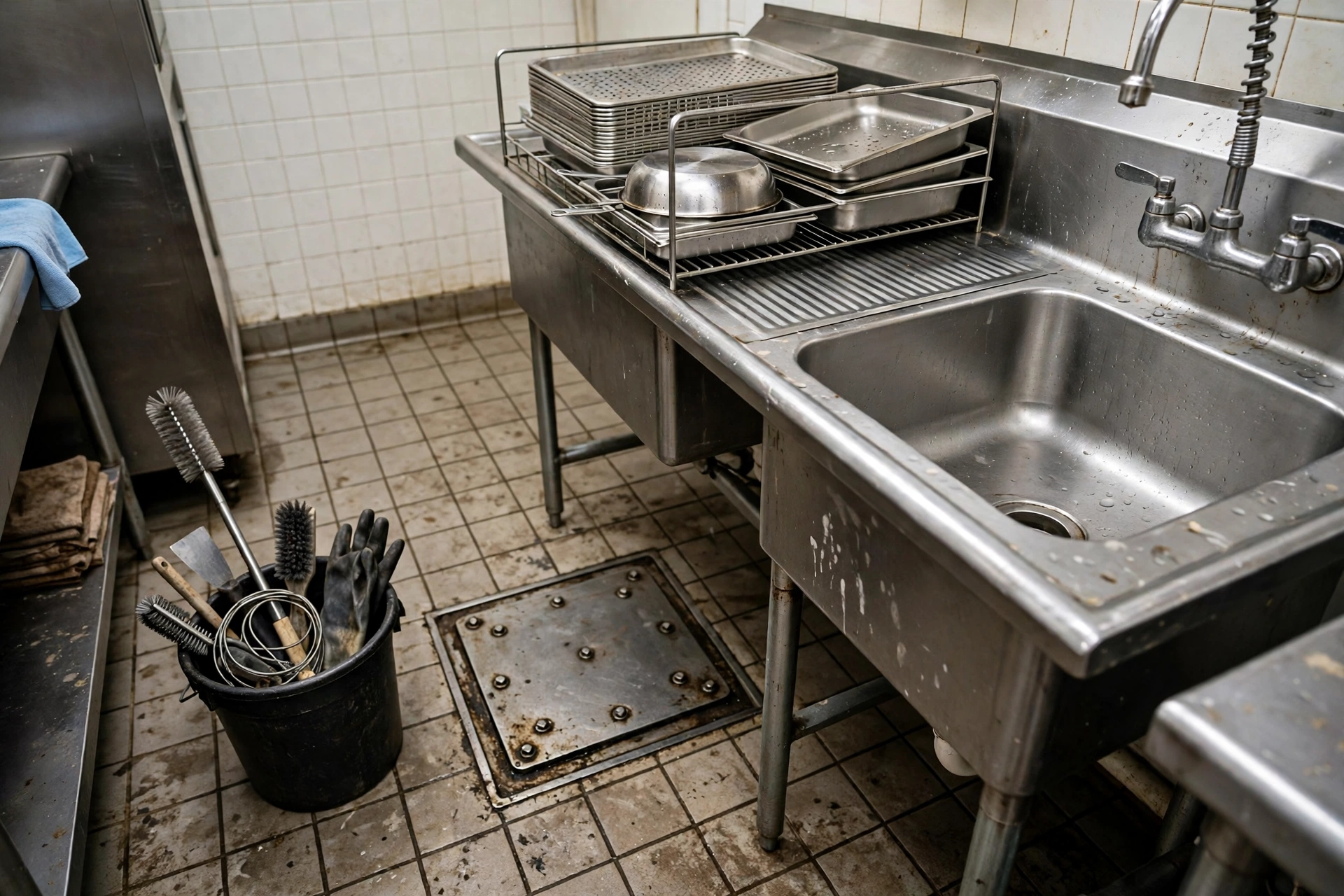
A family diner on Coolidge called on a weekday morning. The prep sink had started draining slowly, and by the end of each night a sour smell hung near the dish station. The manager had not had the trap opened in a while and could not say when. Griddle, fryer and dish machine all ran into the same small indoor trap beside the dish pit.
Chapter 2: Lid off
The crew lifted the lid and checked the trap before touching anything. A thick grease cap sat on top, with a layer of solids packed below it. By the trade's quarter-of-capacity benchmark, the trap was well past due. The slow sink had one cause, and it was in front of everyone.
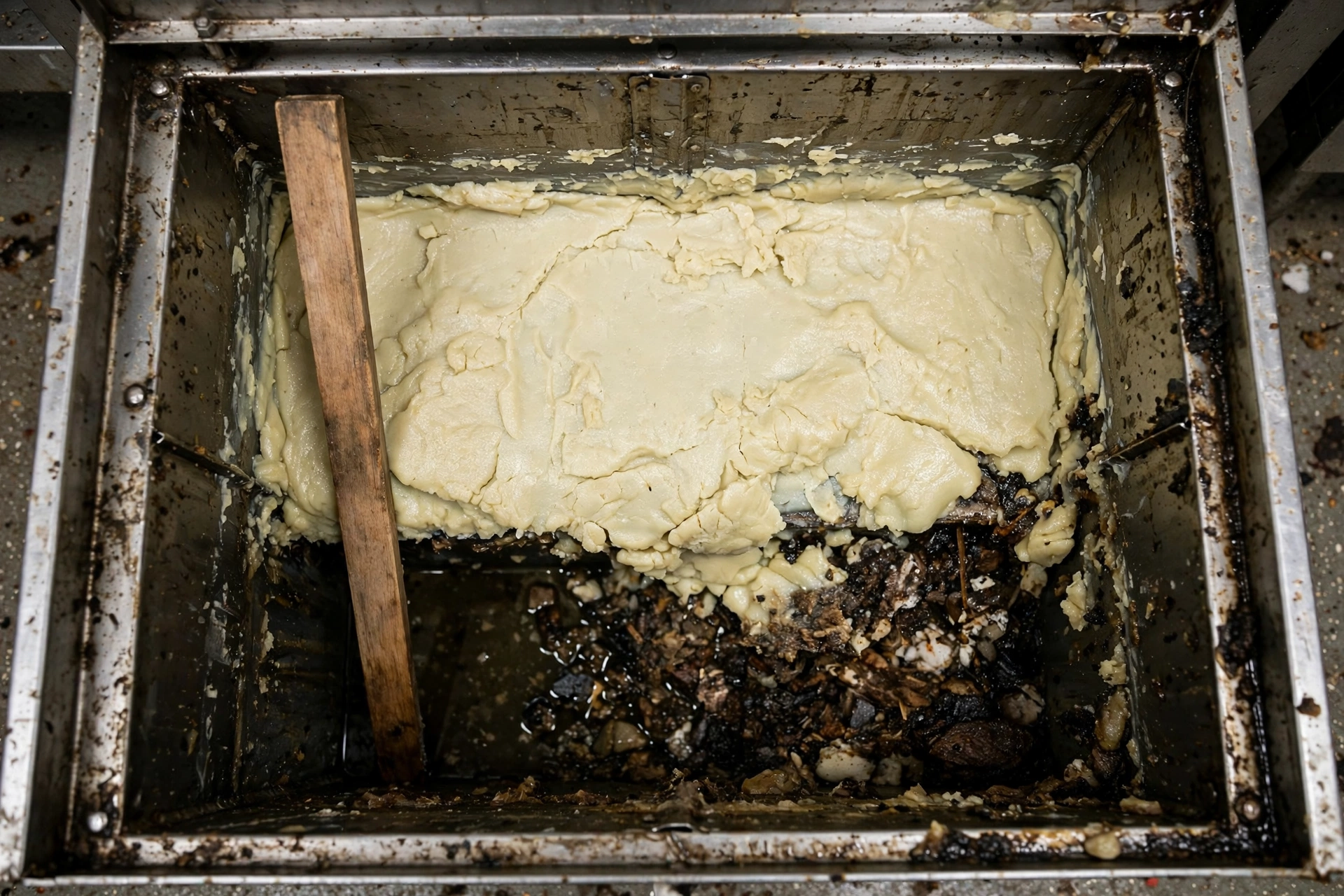
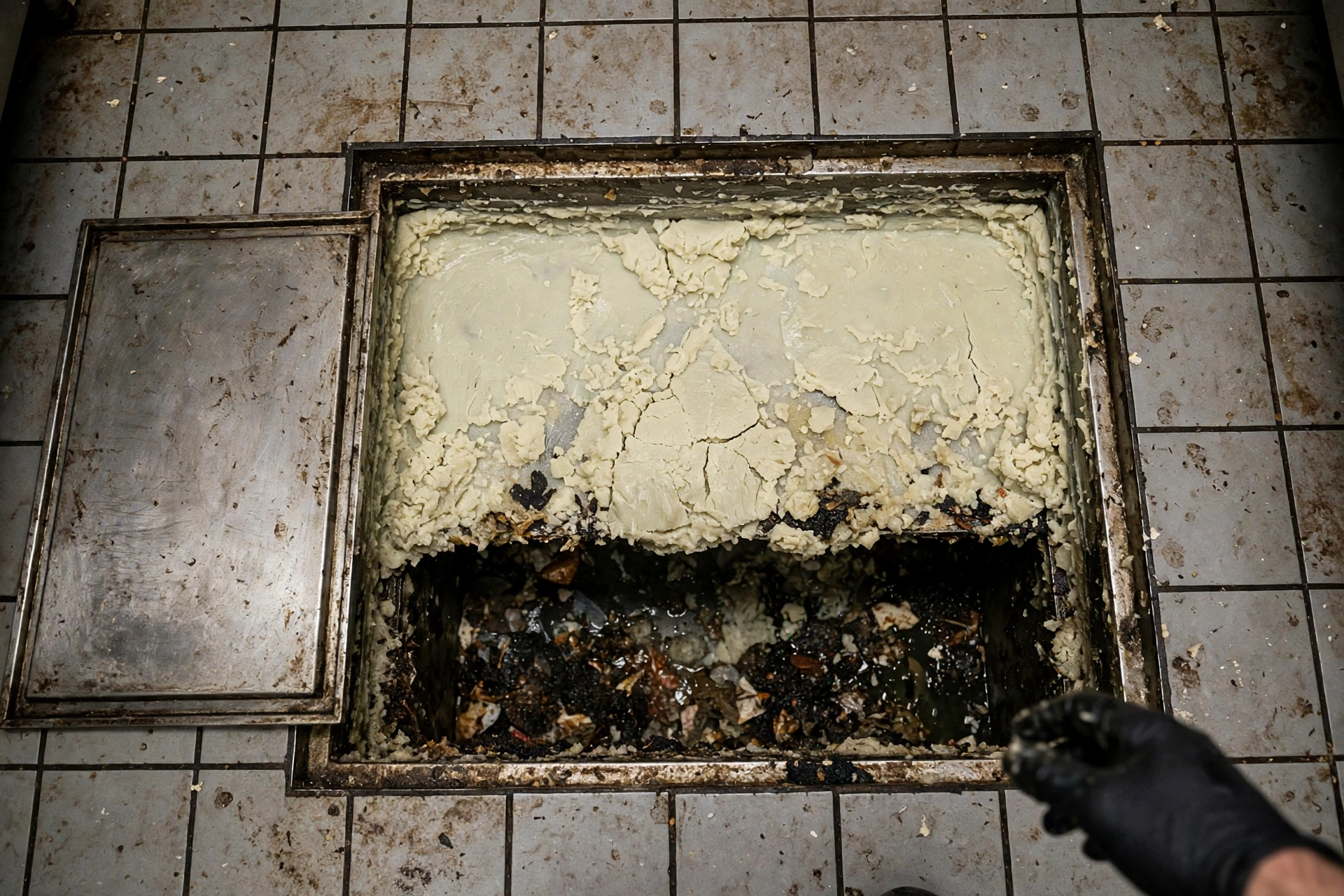
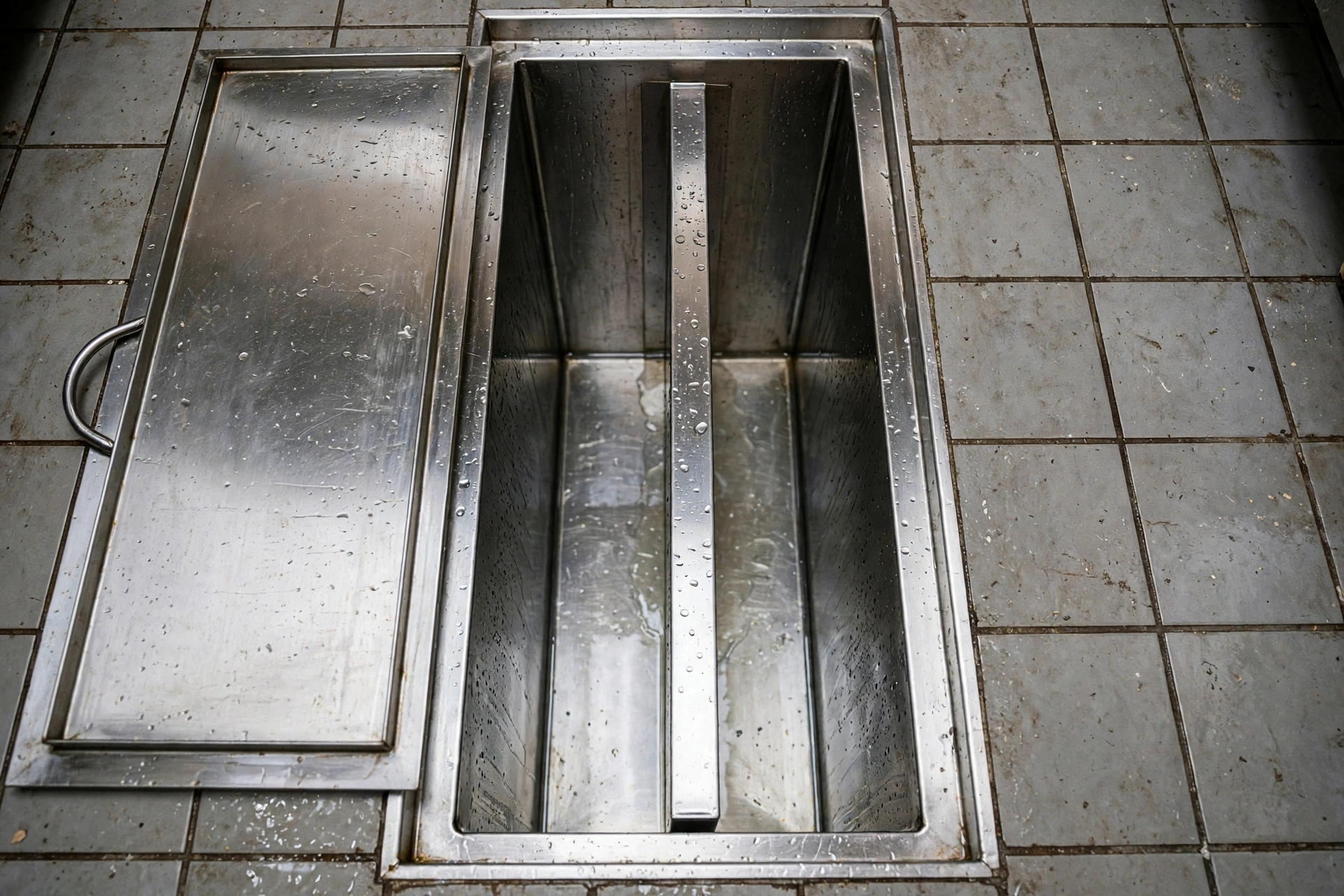
Grease cap, liquid and sludge layers, labeled as they sit in the trap.
The quarter-of-capacity mark: the trade's scheduling benchmark for when to pump, not a legal limit.
Interior walls scraped, not only the liquid pumped out.
Baffles cleared and inspected; condition of lid, inlet and outlet checked.
A shipping document for the load, hauled by a registered transporter; papers kept three years, and the kitchen keeps its own copy.
Working frequencies by volume: every 4 to 6 weeks for high-volume kitchens, every 3 to 6 months for low-volume kitchens, taught as what kitchens run and not as a requirement.
Chapter 3: Pump, scrape, inspect
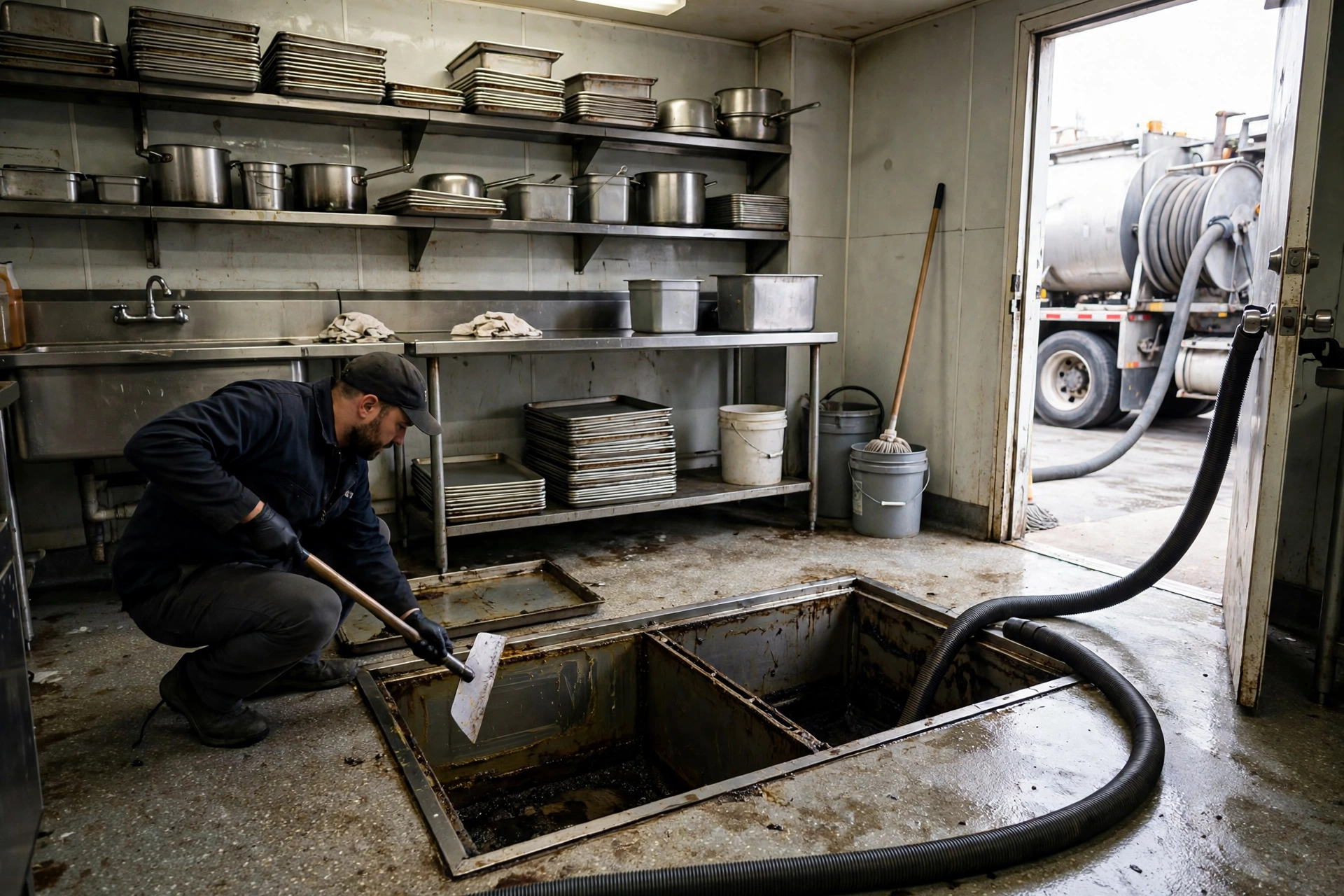
The crew pumped out the grease cap, the liquid and the sludge, then scraped the interior walls so the next buildup did not start on old residue. They cleared the baffles and looked each one over. They checked the lid, the inlet and the outlet. The lid gasket was worn, and it went on the service record as a note. The manager took it up with a plumber on their own schedule.
Chapter 4: Paper and a schedule
The load left on a shipping document, and the manager received a service record for the visit: what came out, what was checked, and the gasket note. A small indoor trap is a $150 to $350 visit, and this job fell in that range. The sink drained clean that afternoon.
The diner started on a short cycle because the fryer runs every day, and they will stretch it once they see how fast the trap fills. They also set up a standing visit so the next one is on the calendar instead of waiting on a smell.
Call us before the next busy weekend
If your trap is past due, or you cannot say when it was last opened, a call to (313) 351-8079 is the cheapest fix. We will tell you how the visit works for your kitchen and when a crew can be there.
How the service runs for a Berkley kitchen
The visit follows the same steps each time:
1. We confirm the trap's size and location, and what the kitchen puts through it. 2. The crew opens the trap and checks the grease cap and solids against the quarter-of-capacity benchmark. 3. They pump out the cap, liquid and sludge, and scrape the interior. 4. They clear and inspect the baffles and check the condition of the lid, inlet and outlet. 5. The waste leaves with a registered transporter on a shipping document. 6. You receive the service record and your copy of the paperwork.
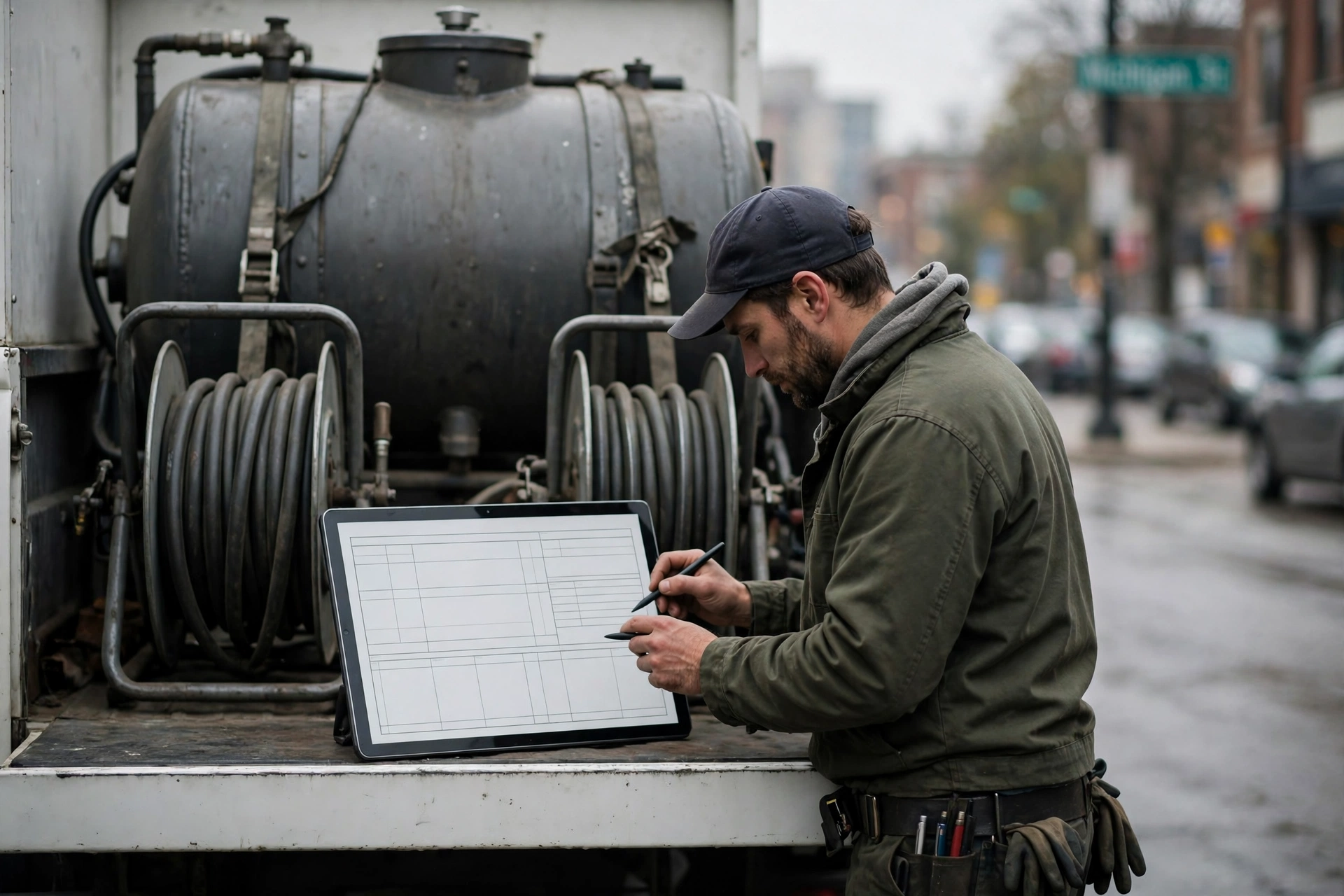
What the visit includes: full pump-out of the trap, interior scraped, baffles cleared and inspected, components checked, and compliant hauling of the waste. What the crew documents: the service record for the visit, the shipping document for the load, and notes on anything worn or out of place. What you keep: your copy of the service record and the shipping document, kept inspection-ready.
Pricing
| Service | Price |
|---|---|
| Interior grease trap cleaning, small indoor traps | $150 to $350 |
| Medium traps | $300 to $600 |
| Large exterior interceptors | $500 to $1,000 or more, by capacity and waste volume |
| Emergency call-out | one and a half to two times the standard service price |
| Used cooking oil collection | no charge for clean oil |
Line jetting is priced with the service visit it rides with. Price is set by the trap's capacity, how hard it is to reach, and the volume of waste. Compliant disposal is part of the price.
When to call
A sink or floor drain is draining slowly, or a sour smell is rising near the dish station.
You cannot say when the trap was last opened.
A busy season or a new patio is about to raise your fryer and dish load.
You want a standing schedule with records you can show an inspector.
A backup has already happened. That is an emergency call-out, priced at one and a half to two times the standard service price.
Your fryer oil is piling up. Clean used cooking oil is collected at no charge, and we can pair that with the trap visit.
Questions
How often should a Berkley restaurant have its grease trap cleaned?
No fixed interval is set for you in anything we have seen from Dearborn or the state. The trade's working benchmark is to clean when grease and solids reach about a quarter of the trap's capacity. High-volume kitchens usually run every 4 to 6 weeks, and low-volume kitchens every 3 to 6 months. We help you find where yours falls.
Is the quarter-of-capacity rule the law?
No. It is a trade scheduling benchmark that kitchens and haulers use. It is not Berkley law and not Dearborn law.
Do you set the rules for Berkley kitchens?
No. Berkley's own discharge and cleaning rules come from the city and its sewer system, and we do not have them in front of us. Ask the city what applies. The state rules on hauling the waste do apply, and we follow them on every visit.
What does the state require for hauling grease trap waste?
Trap clean-out residue is a liquid industrial by-product under Michigan's Part 121. A registered and permitted transporter must haul it on a shipping document for each shipment, with papers kept three years. The kitchen must use a registered transporter and keep its own copies.
What does a cleaning cost?
Small indoor traps are $150 to $350. Medium traps are $300 to $600. Large exterior interceptors are $500 to $1,000 or more, by capacity and waste volume. Capacity, access and waste volume set where your trap lands in its range.
What does an emergency call-out cost?
One and a half to two times the standard service price.
Does the price include disposal?
Yes. Compliant disposal is part of the price, and the shipping document for your load comes with it.
Do you clean only the liquid, or the whole trap?
The whole trap. The crew pumps out the grease cap, liquid and sludge, scrapes the interior, clears and inspects the baffles, and checks the lid, inlet and outlet.
What paperwork do I get?
A service record for the visit and your copy of the shipping document. Both are yours to keep and show.
Do you collect used cooking oil?
Yes. Clean oil is collected at no charge, and it can ride with a trap visit.
Can you jet my drain line?
Yes. Line jetting is priced with the service visit it rides with, so we quote it along with the visit.
Does winter change how often I should clean?
A provider serving Dearborn advises more frequent checks in winter, not fewer. Grease that stays soft in warm weather can harden as temperatures drop. Used oil can also freeze in outdoor bins, and the usual fix is swapping an empty bin for the full one. This is one provider's guidance, not a rule.
Do I need an exterior interceptor?
Most small Berkley kitchens run an indoor trap. Whether a kitchen needs an interceptor is decided by the authority that governs your sewer connection, not by us. Ask the city. We service both kinds.
Send us the details
Fill in the form below and we will call you back about your Berkley kitchen. Name and phone are required. Everything else is optional. A consent box must be checked before you send it.
The more details you give, the better we are able to help you.
Or call (313) 351-8079.